Estonia has secured a prominent role in global child protection diplomacy after its ambassador to the United Nations, Rein Tammsaar, was elected President of the Executive Board of UNICEF or the United Nations International Children’s Emergency Fund.
The appointment, confirmed on 12 January, places Estonia at the helm of one of the United Nations’ most influential subsidiary bodies, responsible for guiding UNICEF’s work in more than 190 countries and territories. Tammsaar will hold the presidency throughout 2026.
Speaking after the vote, Tammsaar said that the role aligned closely with Estonia’s long-standing foreign policy priorities. “Protecting human rights has for many years been an integral part of Estonia’s foreign policy,” he said, adding that children’s rights, equality and access to high-quality public services – particularly education and healthcare – would be central themes of his presidency.
He also highlighted the link between his new role and Estonia’s wider engagement at the UN, noting that the country is currently serving on the United Nations Human Rights Council until the end of 2028, with children’s rights among its declared priorities.
A distinctive focus of Tammsaar’s term will be educational innovation. He said he intended to champion the responsible use of artificial intelligence to improve both access to education and its quality – an area where Estonia’s own experience as a digital state is often cited internationally. “Technology can play a critical role in advancing people’s lives and well-being,” he said, adding that rapid social and technological change had made this need “exponentially greater” for today’s children.
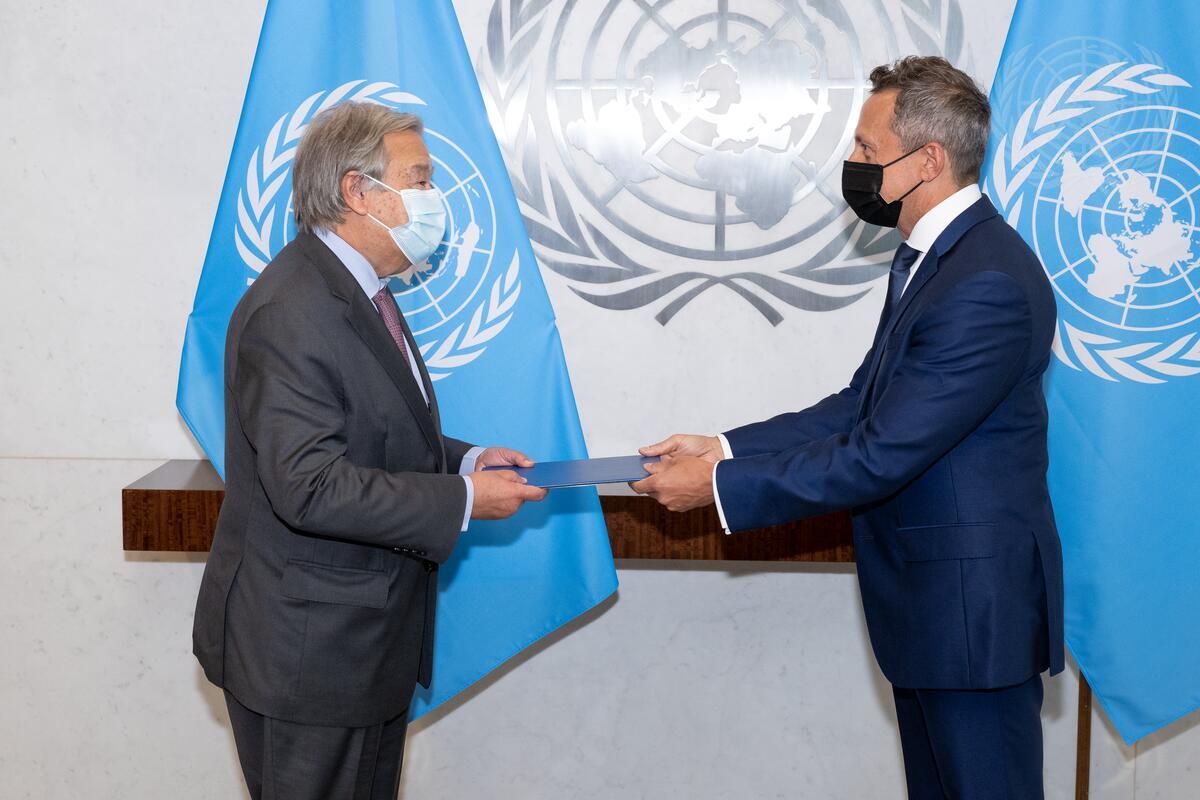
Tammsaar has served as Estonia’s Permanent Representative to the United Nations since August 2022. Born in Tallinn in 1968, he trained initially at Tallinn Pedagogical University before completing a master’s degree in political science and further studies at the University of Tartu, the Estonian School of Diplomacy and the Spanish School of Diplomacy.
His diplomatic career spans three decades. After joining the Estonian foreign affairs ministry in 1994, he held posts in policy planning and public diplomacy, served at the Estonian embassy in Moscow, and worked at the EU level, including in the policy unit of Javier Solana, the former EU High Representative for Foreign Affairs and Security Policy. He has also advised Estonia’s prime minister, led the ministry’s policy planning department and represented Estonia at both the European Union and the UN.
Fluent in four languages – English, Spanish, French and Russian – Tammsaar is married with two children, a personal detail he has cited as sharpening his focus on education and child welfare.