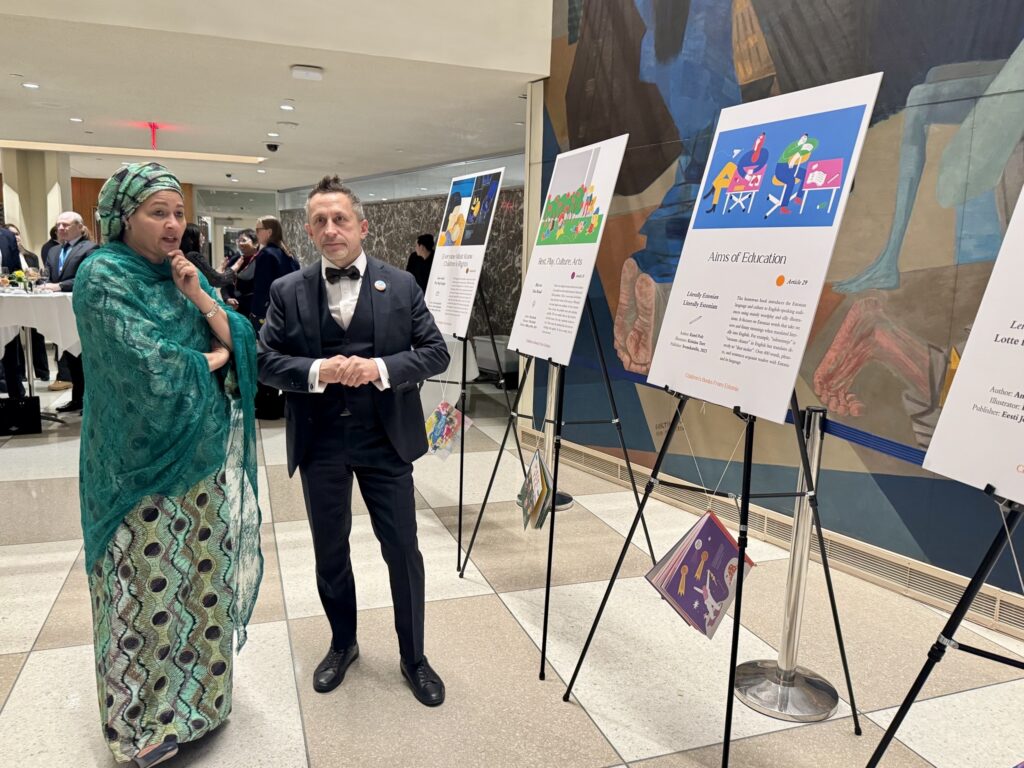
Estonia marked its Independence Day at the UN not with military muscle, but with picture books – opening an exhibition that turns children’s stories into a manifesto for children’s rights.
New York does pomp well. But on 24 February, as Estonia marked the 108th anniversary of its independence at the United Nations headquarters, it chose something subtler – and arguably more radical – than flags and speeches. It chose children’s stories.
At the heart of the reception was an exhibition titled Children’s Rights. Protected Through Stories, bringing together 23 illustrations from Estonian children’s books. The works interpret the principles of the UN Convention on the Rights of the Child – education, protection, identity, participation, development – not as legal abstractions but as lived, imagined worlds.
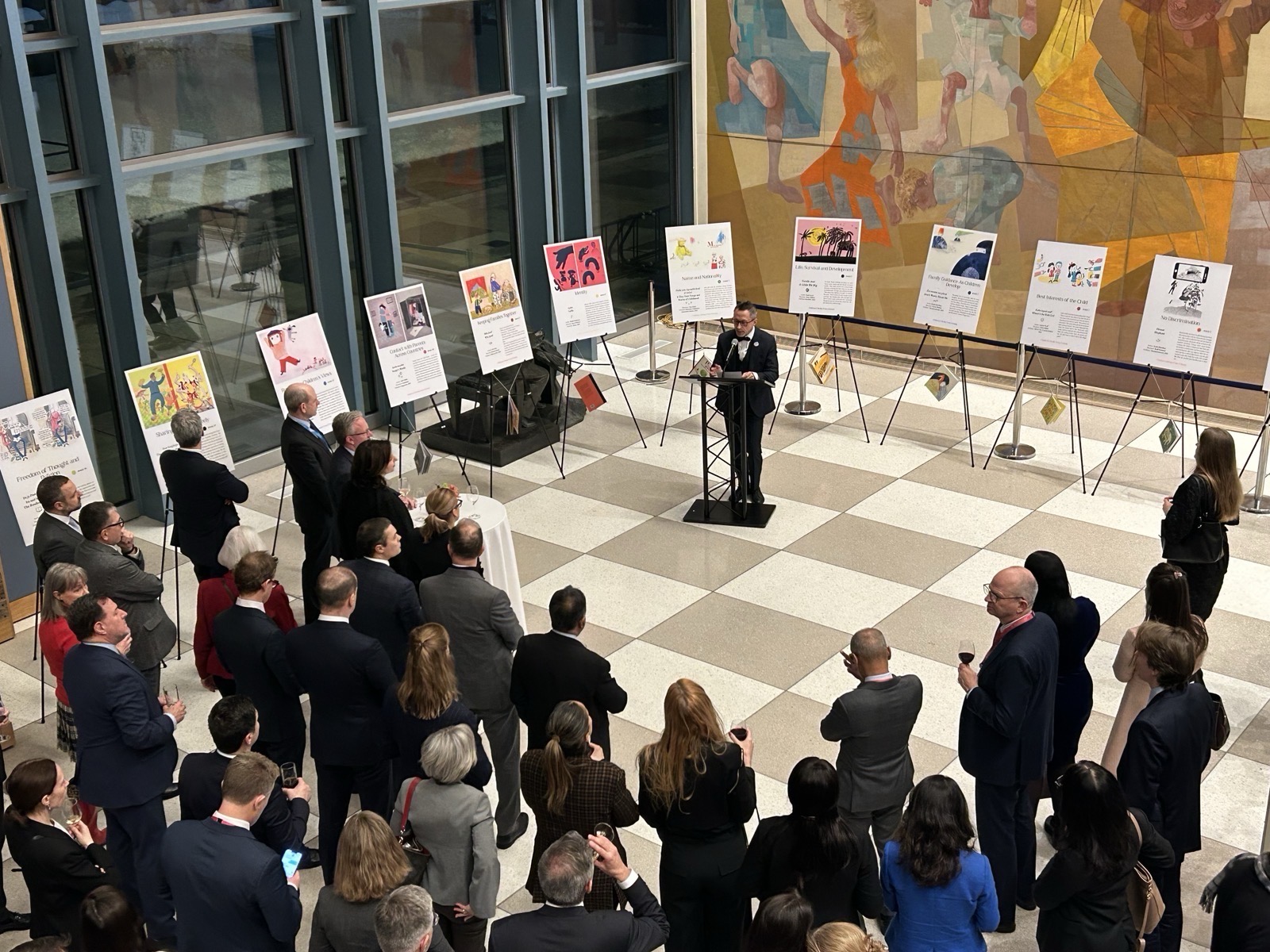
Ambassadors, diplomats and UN officials wandered past forests, fantastical creatures and luminous Nordic landscapes. On the surface: art for the young. Beneath it: a small nation explaining how it survived.
“Estonia’s independence is founded on the conviction that national identity, education and culture are the pillars of a state’s continuity,” said Rein Tammsaar, Estonia’s permanent representative to the UN. Literature, he noted, helped preserve the country’s language and values “even in the darkest of times”. Children’s books, in particular, carried that cultural code forward.
For a country of 1.3 million people, this is not sentimentality. It is strategy.
Estonia knows what it means to have identity threatened and reclaimed. The same nation that once sang its way to freedom now exports digital governance models and cybersecurity expertise. At the UN, it is increasingly vocal on children’s rights, education and the ethical use of technology.
In 2026, Estonia will serve as President of the Executive Board of UNICEF, focusing on innovation in education and the responsible use of digital solutions and artificial intelligence. It is also active at the Human Rights Council, drawing attention to children caught in armed conflicts and humanitarian crises.
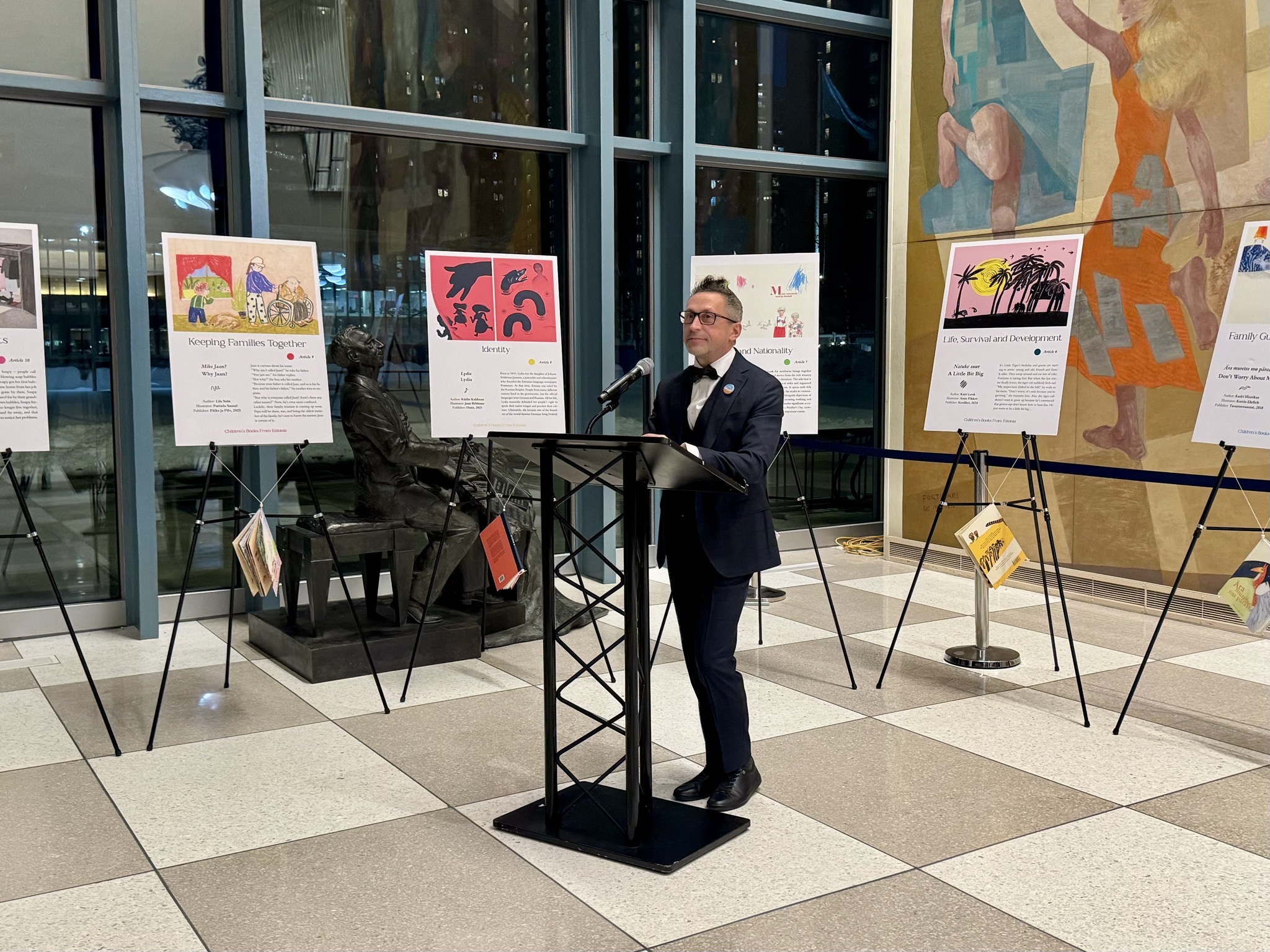
Tammsaar, a father of two, framed it personally as well as politically. Education, he said, must give young people “a strong foundation in a rapidly changing world” – and Estonia wants to back solutions that help children realise their potential.
The exhibition, organised by the Estonian Children’s Literature Centre in cooperation with the foreign and culture ministries and Estonia’s UN mission, offers international visitors a glimpse into the country’s literary imagination. But it also makes a quiet argument: that stories shape citizens long before policy does.
At a moment when children’s rights are under strain globally – from war zones to algorithm-driven echo chambers – Estonia’s message in New York was disarmingly simple. Protect the story, and you protect the child. Protect the child, and you protect the future.
For a nation born and reborn through culture, that is not just a celebration. It is a credo.