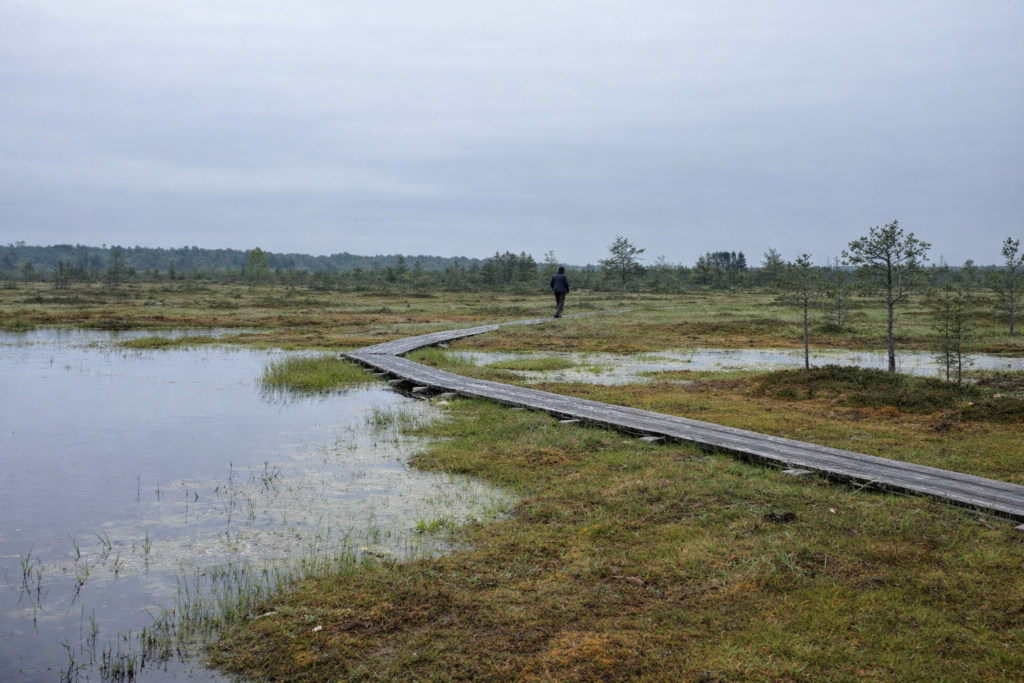
Estonia still has what much of Europe has lost: vast bogs, wetlands and forests that store carbon, shelter rare species and shape a nation’s identity; but if this wild heart is to keep beating, it will need not only protection, but restoration, political will and the courage to value long-term resilience over short-term gain.
If you walk into an Estonian bog at sunrise, you can feel the land breathing. Mist rises over dark pools, cranberries glisten on the moss, and cranes call in the distance. Every season brings a different face to the bog. These quiet places – vast, wet and ancient – are among Europe’s last true wildernesses.
Bogs hold a special place in Estonia’s folklore, cultural identity and natural heritage. In ancient beliefs, they were seen as mystical places between worlds, homes to spirits and mythical beings. People offered gifts there, making them sacred sites of reverence and mystery.
They have also come to symbolise endurance, quiet strength and a deep bond with nature. Estonian writers and artists have long used bogs as symbols of the nation’s resilience and spirit.
At the same time, bogs are vital ecosystems, preserving rare species, storing carbon and protecting the landscape’s ancient beauty. Today, they are celebrated through folklore, art and eco-tourism, reminding Estonians of their timeless connection to nature and tradition.
More than half of Estonia is forested, and around one-fifth is covered by wetlands and peat bogs. Formed after the Ice Age, these landscapes have been evolving for more than 10,000 years. They are a mosaic of pine woods, open mires and blackwater streams – a living archive of the natural world before human drainage and development.
Unlike in much of Europe, where wetlands were long ago drained for farmland, Estonia’s bogs remain largely intact. These rain-fed ecosystems store enormous amounts of carbon in deep peat layers, helping to slow climate change. Growing by just a millimetre or two each year, they lock away carbon for centuries.
A refuge for wildlife
Estonia’s bogs and forests are home to species that have disappeared from much of Europe. Brown bears, wolves, lynx and the elusive flying squirrel still inhabit its forests, while black storks, golden plovers and wood sandpipers nest in its wetlands. Even tiny carnivorous plants such as sundews and butterwort thrive in the nutrient-poor bogs, trapping insects to survive.
With more than half the country forested, and vast stretches of bogs and wetlands still functioning much as they did thousands of years ago, these landscapes form a refuge for plants and animals lost from much of Europe.
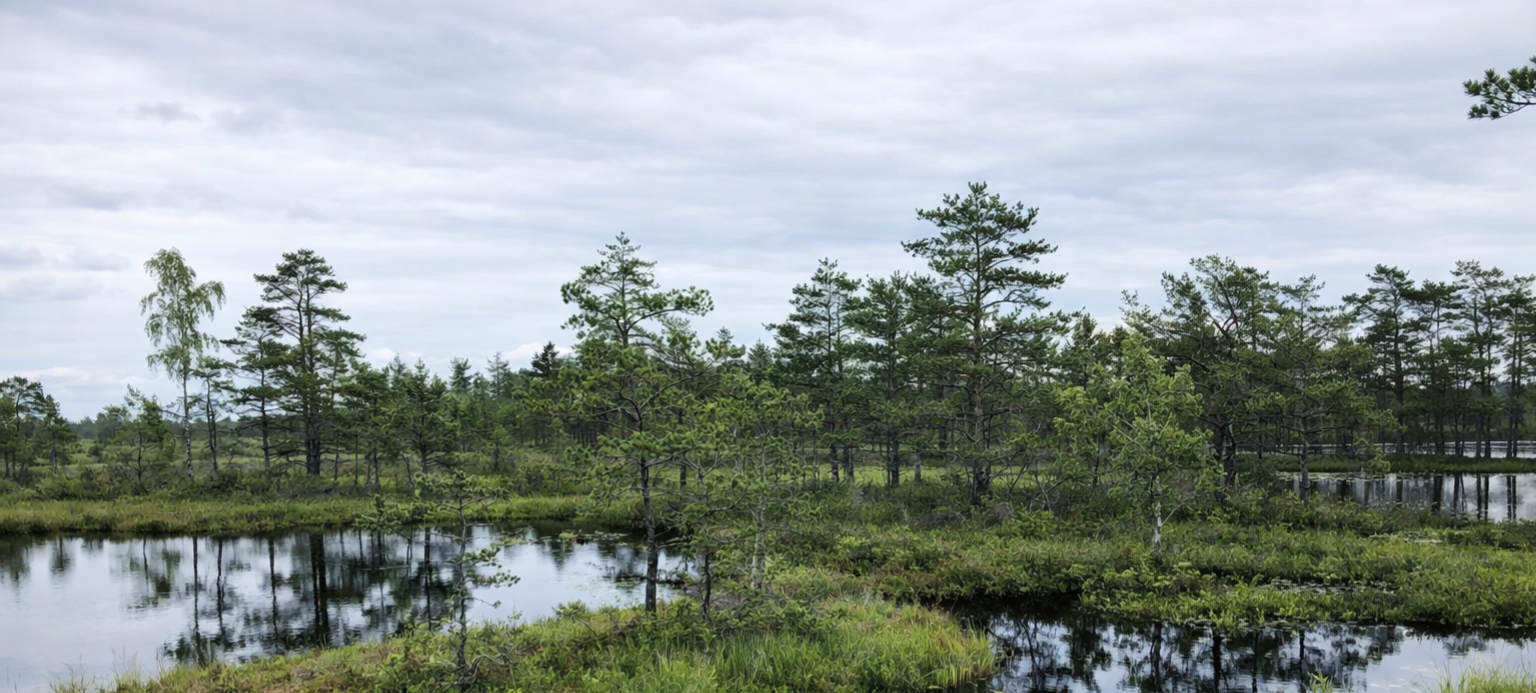
Elsewhere on the continent, intensive farming, drainage and urban growth have erased wetlands and fragmented forests. In Estonia, these ecosystems remain not only a home but a lifeline – a place for migration, nesting and renewal.
They are also vital for people, storing vast amounts of carbon, purifying water, and buffering floods and droughts. In a warming world, their resilience benefits everyone.
The vital role of dead wood in bogs and forests
Dead wood may seem lifeless, but in bogs and forests it is a cornerstone of ecological health and biodiversity. Fallen trees and decaying branches provide habitats for insects, fungi, mosses and birds, including many rare and specialised species that depend on them.
In bogs, dead wood plays an important role in nutrient cycling, slowly releasing minerals into nutrient-poor peat and supporting plant growth. By retaining water and stabilising peat surfaces, it helps maintain the bog’s delicate structure, slows drainage and supports the regeneration of sphagnum mosses and other key vegetation. It also stores carbon for decades, contributing to climate regulation.
In forests, decaying wood enriches the soil as it breaks down, supporting the regrowth of trees and understorey plants. It also acts as a long-term carbon reservoir and reflects the natural cycles of growth, decay and renewal that characterise healthy ecosystems.
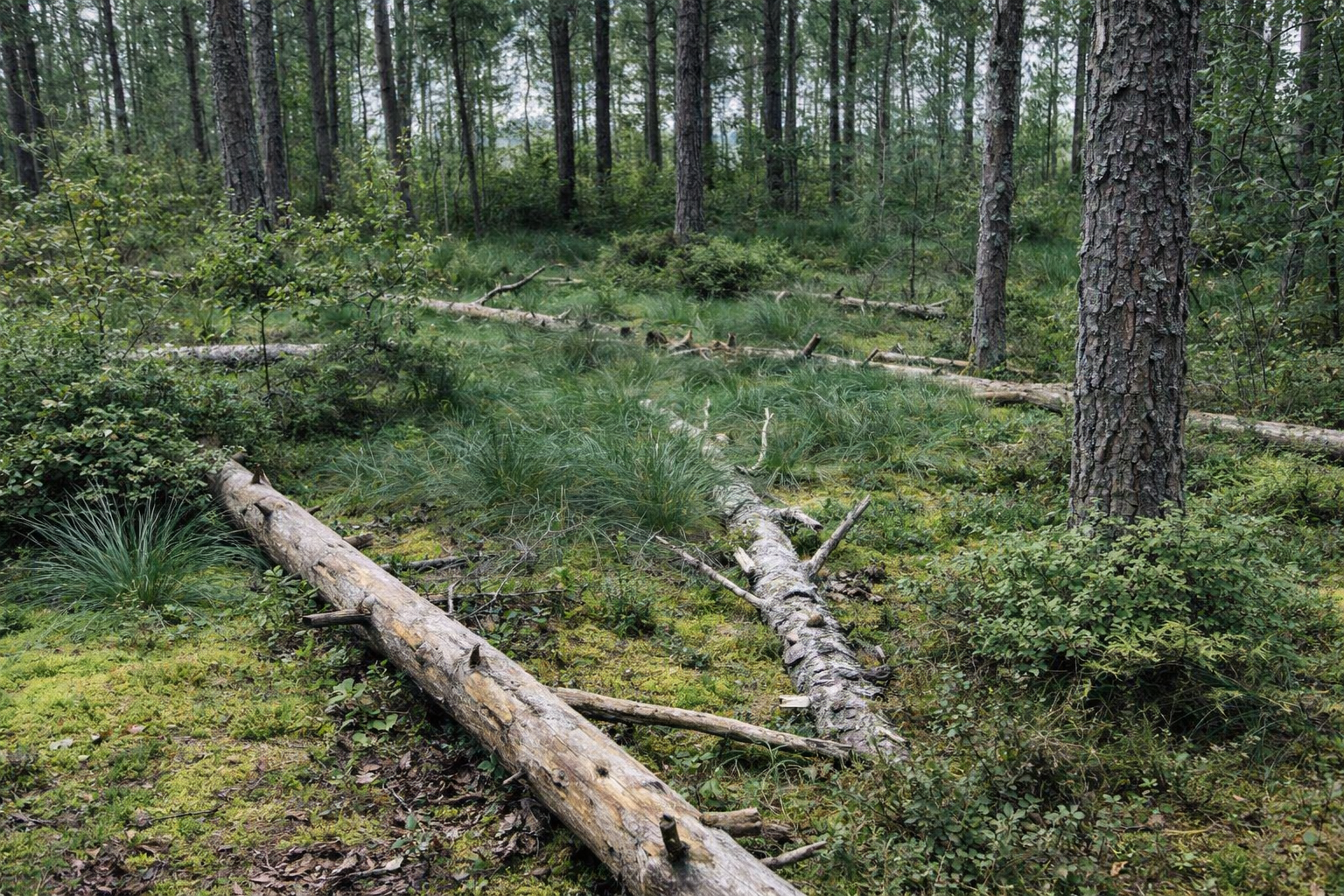
Far from being waste, dead wood is essential to biodiversity, regeneration and hydrological stability in both bogs and forests, making its preservation an important part of conservation and sustainable landscape management.
A landscape under pressure
Despite their resilience, these ecosystems are fragile. Drainage for forestry and peat extraction has already damaged some bogs, lowering water tables and releasing stored carbon. Intensive logging threatens old-growth forests that have taken centuries to form. And as the climate warms, droughts and fires place even greater stress on dry peatlands.
Once a bog is drained, it can take thousands of years to recover naturally – if it recovers at all.
Denmark is taking urgent steps to restore its peatlands and forest hydrology in response to climate change, biodiversity loss and ecosystem degradation. Over the decades, many of its peatlands have been drained for agriculture, while altered forest water flows have degraded soils, reduced carbon storage and damaged wildlife habitats.
In forests, restoration efforts aim to re-establish natural hydrological patterns, stabilise soils and support the regeneration of native trees and understorey plants. One example is the UrbanLIFEcircles project, which focuses on boosting biodiversity and restoring natural hydrology in the 550-hectare Marselisborg, Moesgård and Fløjstrup beech forests in Aarhus, Denmark’s second-largest city.
The Danish Nature Agency has also purchased properties in Store Vildmose for EUR 23 million, an important step in creating one of Denmark’s largest climate lowland projects, covering 3,100 hectares. The purchase forms part of the Agreement on a Green Denmark, a collaborative framework between the Danish government and key stakeholders in the agricultural and environmental sectors. Through land purchases, swaps and compensation agreements, peat-rich lowland soils can be taken out of use, turning climate policy into concrete action.
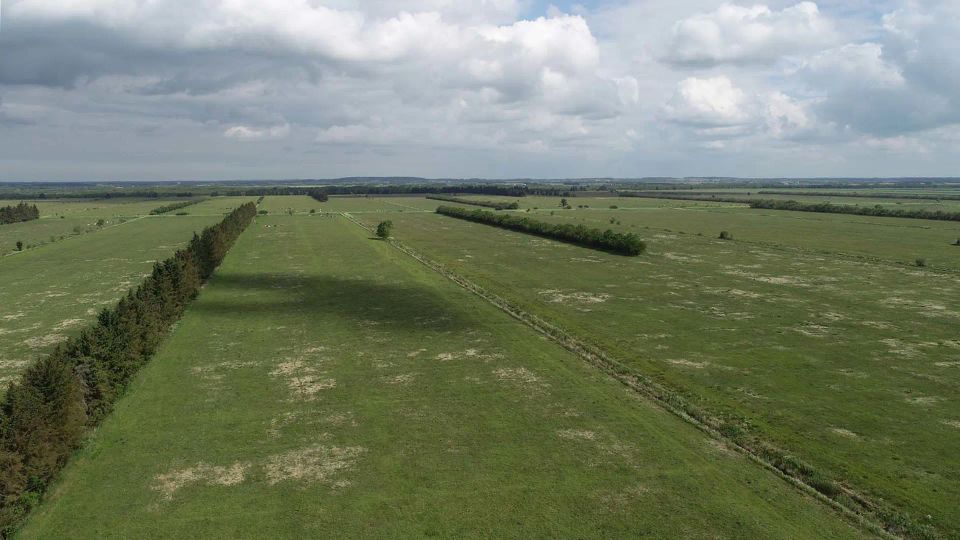
Preliminary studies are now under way across the 3,100-hectare area, with the aim of taking land out of operation and allowing water to return. This would significantly reduce CO₂ emissions and create more space for nature. With this acquisition, the agency now owns 1,444 hectares in the area, bringing the wider project much closer to realisation. As much of the land remains in private ownership, negotiations with other landowners will now begin in order to assemble the full project area.
If fully implemented, the project could reduce CO₂ emissions by around 70,000 tonnes – equivalent to the climate footprint of more than 10,000 Danes – while recreating large, continuous natural areas in one of Denmark’s best-known bog landscapes.
As Jeppe Bruus, minister for the Agreement of Green Denmark, has said, the project shows both the scale of the task and the progress already being made through local planning, land acquisition, nature restoration and climate action.
By prioritising peatland and forest hydrology restoration, Denmark is not only protecting its natural heritage but also contributing to global climate mitigation and biodiversity conservation. Projects such as Raised Bogs in Denmark, UrbanLIFEcircles and LIFE Open Woods show that even near cities, nature can recover if given the space. They protect rare species, cut greenhouse gas emissions and strengthen resilience to floods and droughts – investments in the future for climate, wildlife and people.
Estonian forests and bogs: a source of inspiration for Danish environmental experts
Estonia’s forests and bogs are among Europe’s most pristine landscapes, rich in ecological, cultural and hydrological value. Their well-preserved ecosystems, rare species and successful restoration projects make them an important model for conservation and sustainable management.
Estonia is also taking a leading role in nature restoration. Through major EU LIFE projects such as LIFE Mires Estonia and LIFE Peat Restore, scientists and volunteers are restoring natural water flows, blocking old ditches and allowing wetlands to breathe again.
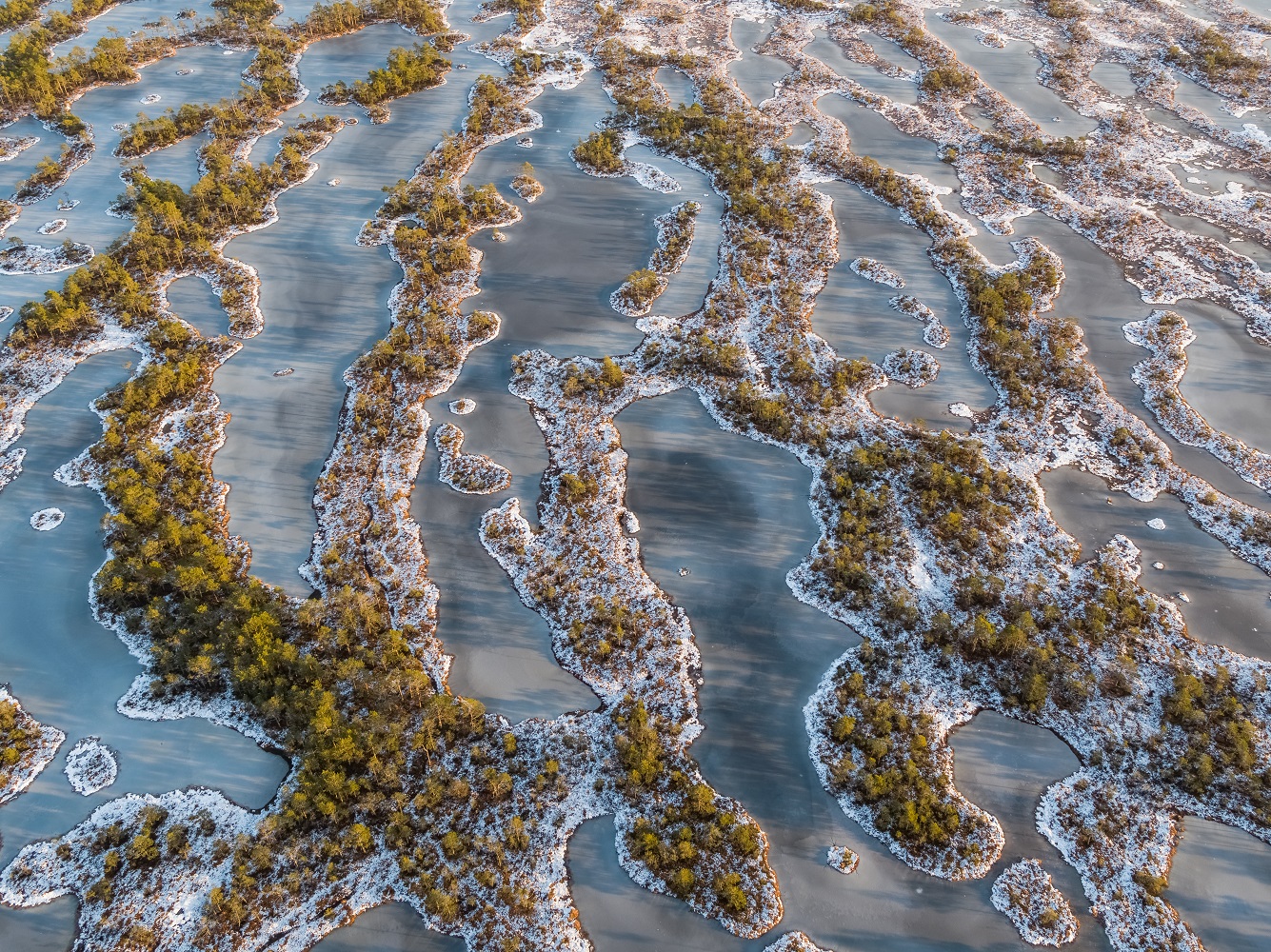
Estonia and Denmark are both strong in environmental work, but in different ways: Estonia still has extensive wild landscapes, while Denmark has longer experience in restoration, stakeholder engagement and integrated land-use planning.
That is why Danish environmental experts organise study trips to Estonia to learn first-hand about bog and forest restoration, biodiversity protection and hydrology management. These visits encourage knowledge exchange, hands-on learning and cross-border cooperation, while showing how cultural heritage, ecological science and community engagement can be combined in environmental stewardship.
Yet Estonia’s wild landscapes are under growing pressure. Intensive logging has reduced old-growth forests, while decades of drainage for forestry and agriculture have dried out peatlands and released stored carbon. Climate change adds further threats, from droughts to bog fires. As restoration expands, Estonia must also coordinate landowners, balance economic and ecological interests, and integrate restoration into wider land-use planning.
Jüri-Ott Salm, a wetlands expert from the Estonian Fund for Nature, told Danish specialists that bog restoration projects in Estonia often raise public questions and sometimes opposition, especially when forested land is flooded. Yet restoration is scientifically justified, and its long-term ecological benefits outweigh the temporary challenges. As he put it: “If we take care of the bogs, they will take care of us.”
Here, Denmark offers valuable lessons – not because its nature is wilder, but because its systems of governance, collaboration and planning are more mature and rooted in community participation. This combination helps turn restoration plans into reality.
Legislation also creates incentives to act. Landowners can receive subsidies for restoring wetlands, re-meandering rivers or managing forests in biodiversity-friendly ways. Legal frameworks connect restoration with flood protection, climate adaptation and water quality, making it beneficial for both communities and nature.
Keeping the wild heart beating
Restoring Estonia’s bogs is vital not only for the country’s environment and heritage, but also globally. Estonia holds some of Europe’s largest and best-preserved peatlands, making it an important player in international climate and biodiversity efforts.
From a climate perspective, bogs are powerful carbon sinks. When healthy, they store vast amounts of carbon in peat layers; when drained or degraded, they release greenhouse gases into the atmosphere. Restoring Estonia’s bogs therefore helps cut emissions and supports climate neutrality and the goals of the Paris Agreement.
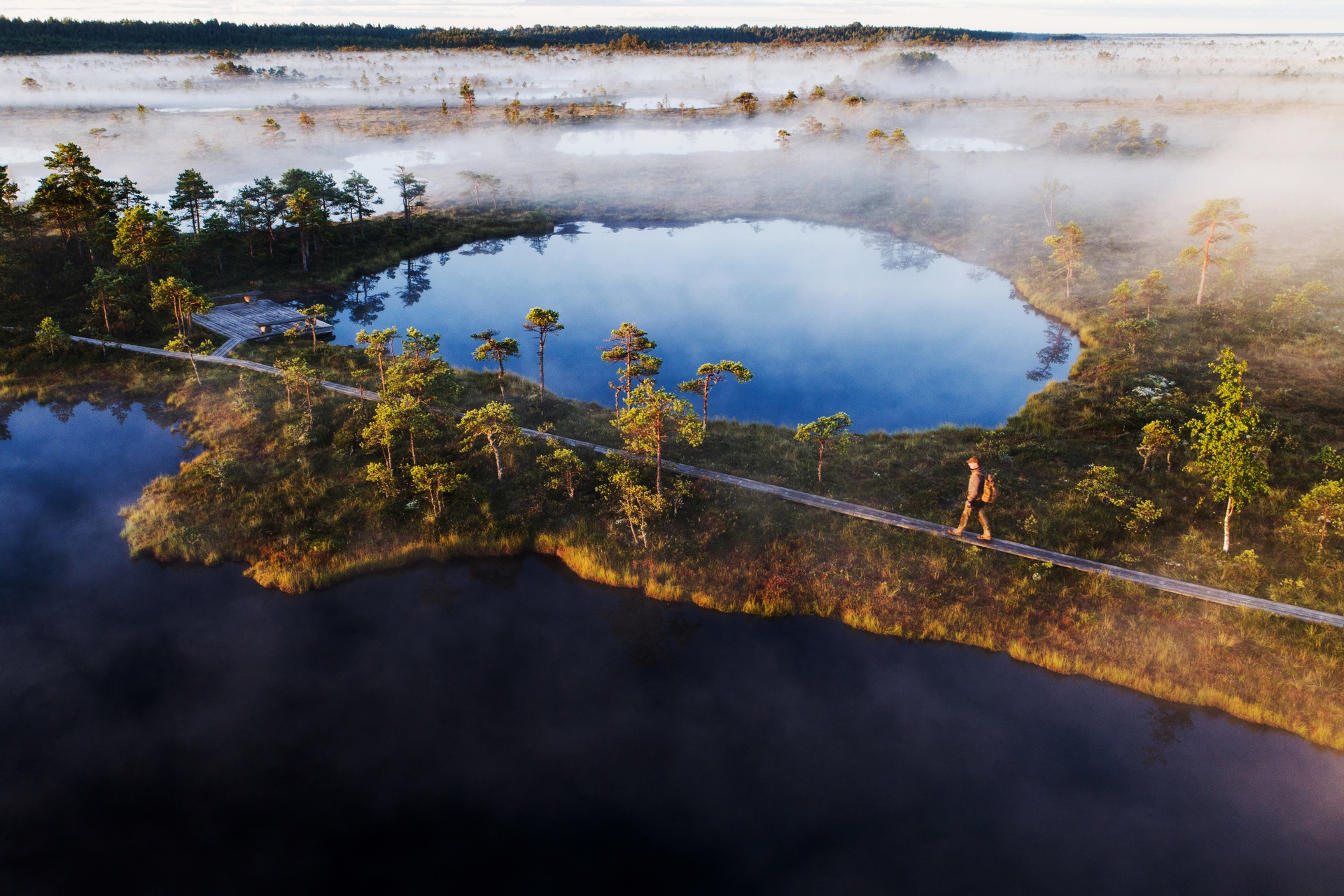
Ecologically, Estonia’s bogs are home to rare and endangered species, from migratory birds to unique mosses and orchids. Restoring these habitats strengthens global biodiversity conservation and protects species that depend on northern wetlands across continents.
Culturally and socially, Estonia’s restoration efforts show how traditional knowledge, science and community action can work together. They offer a model for other countries, demonstrating that wetland conservation is not only an environmental duty, but also a way to preserve cultural identity and strengthen local engagement.
In a wider sense, restoring Estonia’s bogs and preserving natural forests means protecting the planet’s natural balance, supporting biodiversity and showing how a small nation can make a meaningful contribution to sustainability and climate resilience.
As Indian heritage expert Gaurav Singhvi recently said at the Nature-based Solutions conference in Denmark, “When we are emotionally connected, we care” – a reminder that people are more likely to protect nature when they feel a personal bond with it. He added: “Our ancestors left us sacred rivers, trees and forests. The question is – will our children thank us for passing on the same… or curse us for leaving behind only bottled water and concrete jungles?” He also invoked the familiar idea: “We don’t inherit the Earth from our ancestors; we borrow it from our children.”
In other words, emotional connection turns awareness into care, making environmental protection a shared value rather than just a duty. Restoring bogs and wetlands is more than an ecological priority – it is a responsibility. It helps advance climate goals, protect water resources and preserve fertile soil for future generations.
In Estonia, bogs, wetlands and forests are not just ecosystems; they are part of the country’s cultural heritage, folklore, wild heart and identity. Their beauty, mystery and significance foster a sense of attachment and responsibility that encourages conservation, restoration and sustainable use. These landscapes remind us that true wilderness still exists in Europe. Protecting them is not only about conserving rare species, but about safeguarding the systems that sustain all life.
To protect its “wild heart”, Estonia must balance economic forestry with ecological integrity, restore natural water systems and strengthen climate resilience.
If we give water and wildness room to move, the land will take care of itself and continue to offer refuge for generations to come.
The opinions in this article are those of the authors.