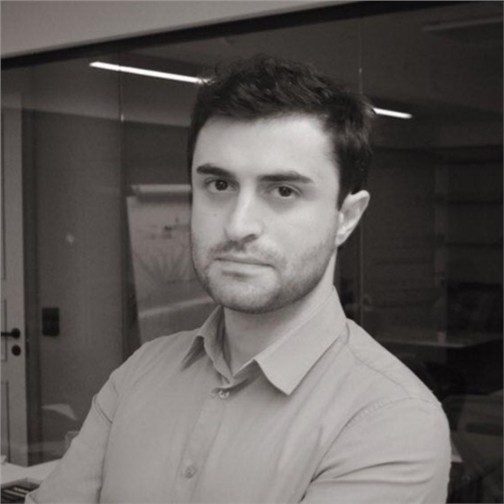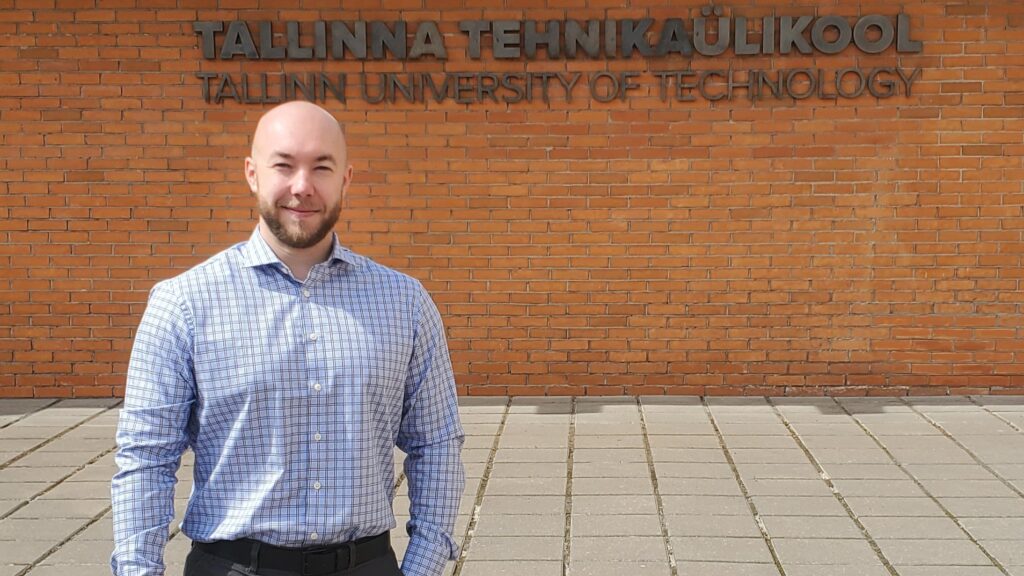
For Brendan Pasco Rajalo, Estonia was never just a country on the map; it was family stories, summer visits to Tartu, a language half-heard but never forgotten – and, eventually, a place to build both a career and a sense of belonging.
Rajalo, a 29-year-old French-Estonian civil engineer born and raised in France, first came to Estonia for an Erasmus exchange semester at Tallinn University of Technology, also known as TalTech. Years later, he has returned to Estonia for a new chapter in his life, working as a site engineer on Rail Baltica – one of the most ambitious infrastructure projects in the region.
In the interview, he spoke about family roots in Elva and Tartu, studying civil engineering in Estonia, the pull of belonging, and why working on Rail Baltica feels like more than just another engineering job.
You have Estonian roots. Could you tell us more about them?
My family is originally from Elva, and my mother was born and raised in Tartu. She later studied at the Tallinn Art School and worked in Tartu for several years before moving to France.
On my father’s side, my family comes from Brittany, which creates an interesting cultural mix between Nordic and Celtic influences.
Although Estonian was not spoken at home every day, my mother always made sure I stayed connected to my Estonian roots. I grew up visiting my family in Tartu almost every year and listening to stories about Estonia’s history, culture and daily life during different periods of the country’s past.
I think this connection naturally shaped the way I see Estonia today – not only as part of my family history, but also as a country I have always felt personally close to.
Did that connection play a role in your decision to do your Erasmus exchange semester at TalTech?
At the time, I was studying at ESTP Paris, a French engineering school specialising in construction and infrastructure.
Unfortunately, there was no existing exchange partnership with Tallinn University of Technology. Since I already wanted to study abroad to improve my English and gain international experience, I began thinking more seriously about Estonia and TalTech.
Rather than choosing another destination, I decided to contact the international offices of both universities and help create a partnership between them. A few months later, the Erasmus exchange agreement was officially signed, and I had the opportunity to become the first student to take part in the programme.
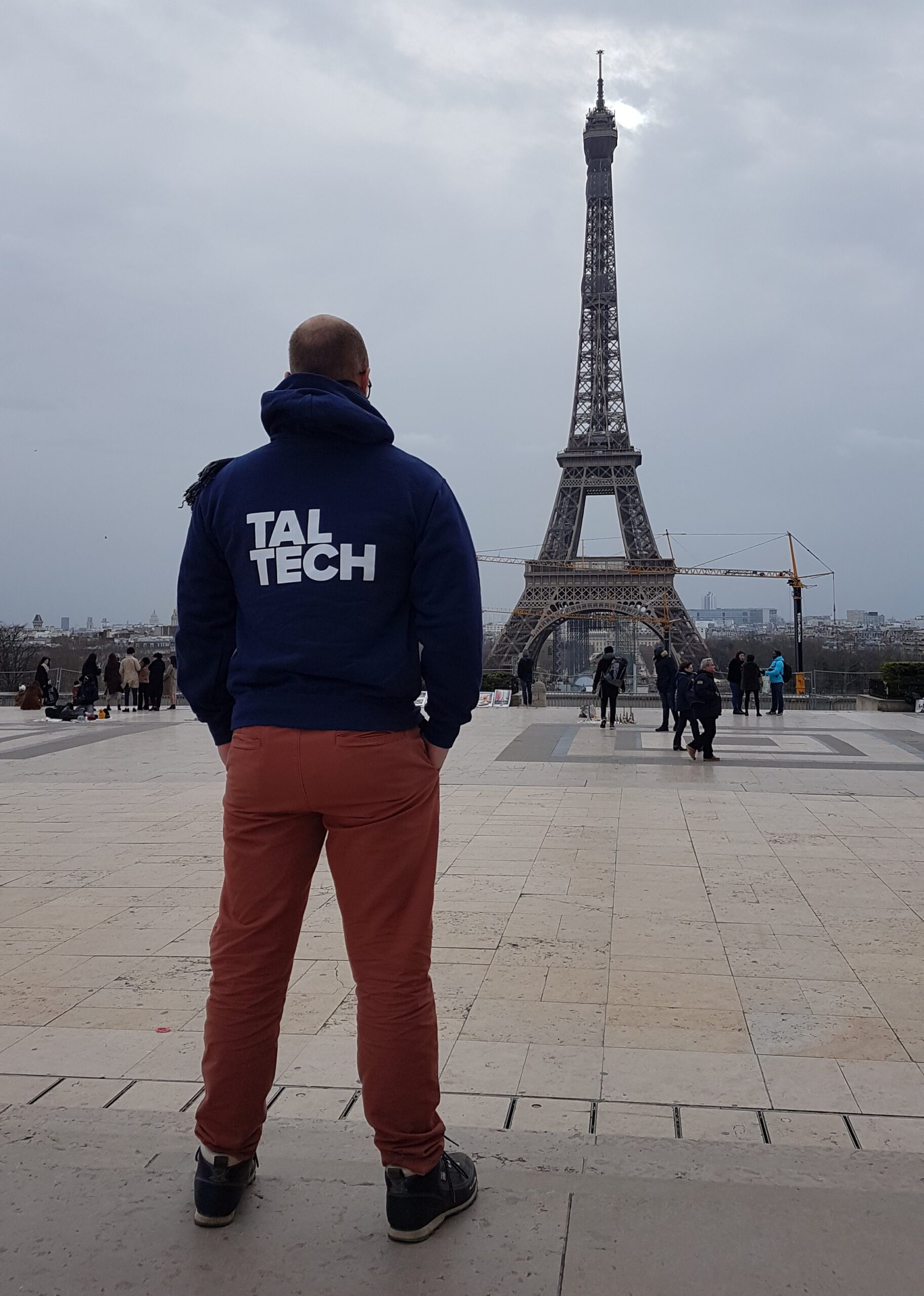
For me, it was both a personal and symbolic experience. I was proud to create a connection between the two schools and, in a way, to promote Estonia and TalTech within my university in France.
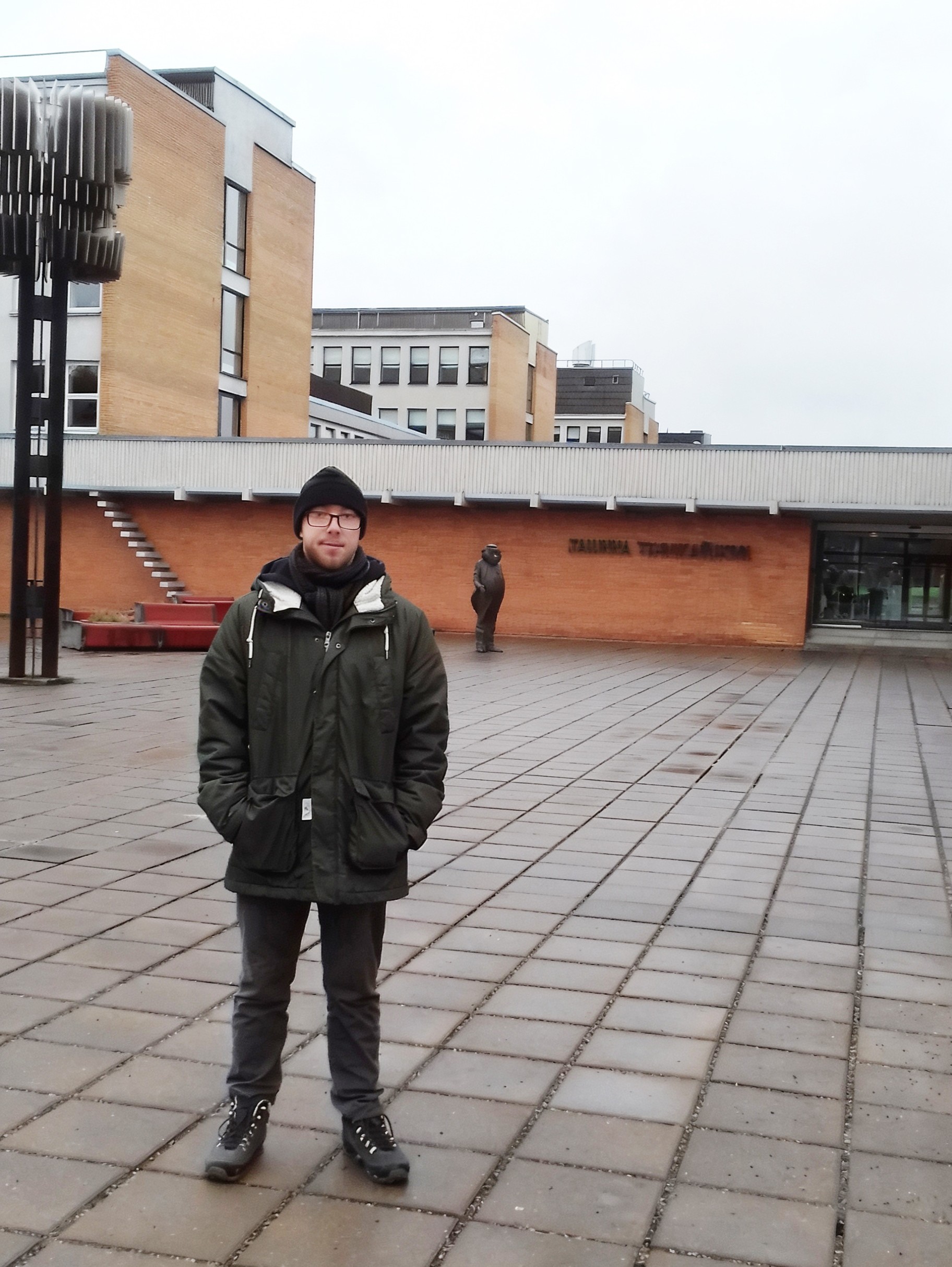
What was your exchange semester in Tallinn like? What were the highlights of your time in Estonia?
It was an incredibly interesting experience.
When I first selected my courses, there were not many subjects related to road construction, which was my main specialism in France. Initially, I enrolled in environmental engineering, finance and other related fields.
However, once I arrived at TalTech, I discovered the local civil engineering programme, Road Construction and Geodesy (Teedeehitus ja geodeesia), which immediately caught my attention. After discussing it with the university, I was allowed to adjust my study plan and join several courses from that programme instead of remaining only within the Erasmus curriculum.
This flexibility from the university made a real difference, as it allowed me to study directly alongside Estonian students. Although my level of Estonian was still limited, the professors and students were very supportive, which made the experience both challenging and rewarding.
I also kept a few Erasmus courses in English, but I particularly enjoyed discovering how civil engineering is taught in Estonia, as well as learning about local technical constraints and practices.
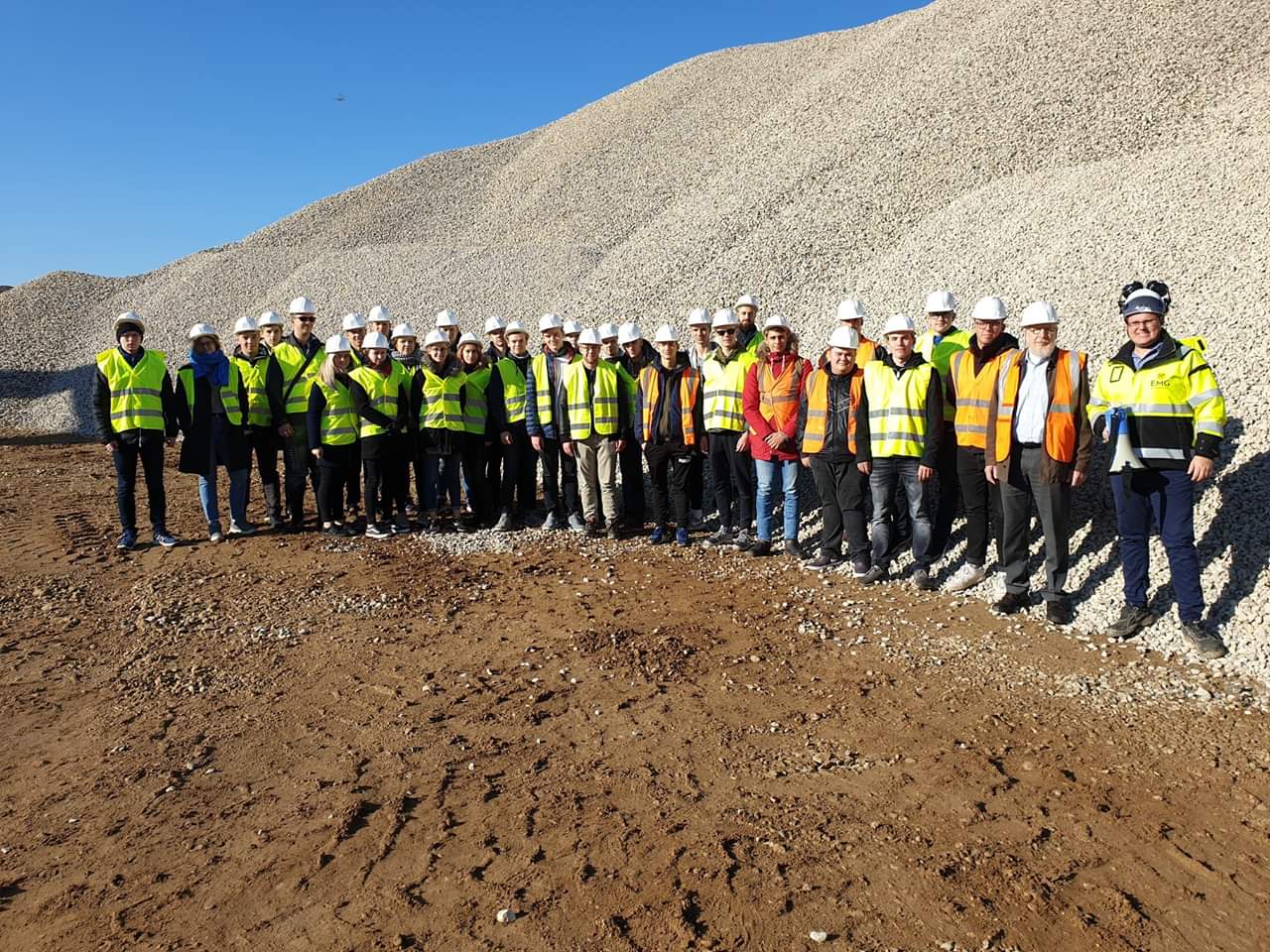
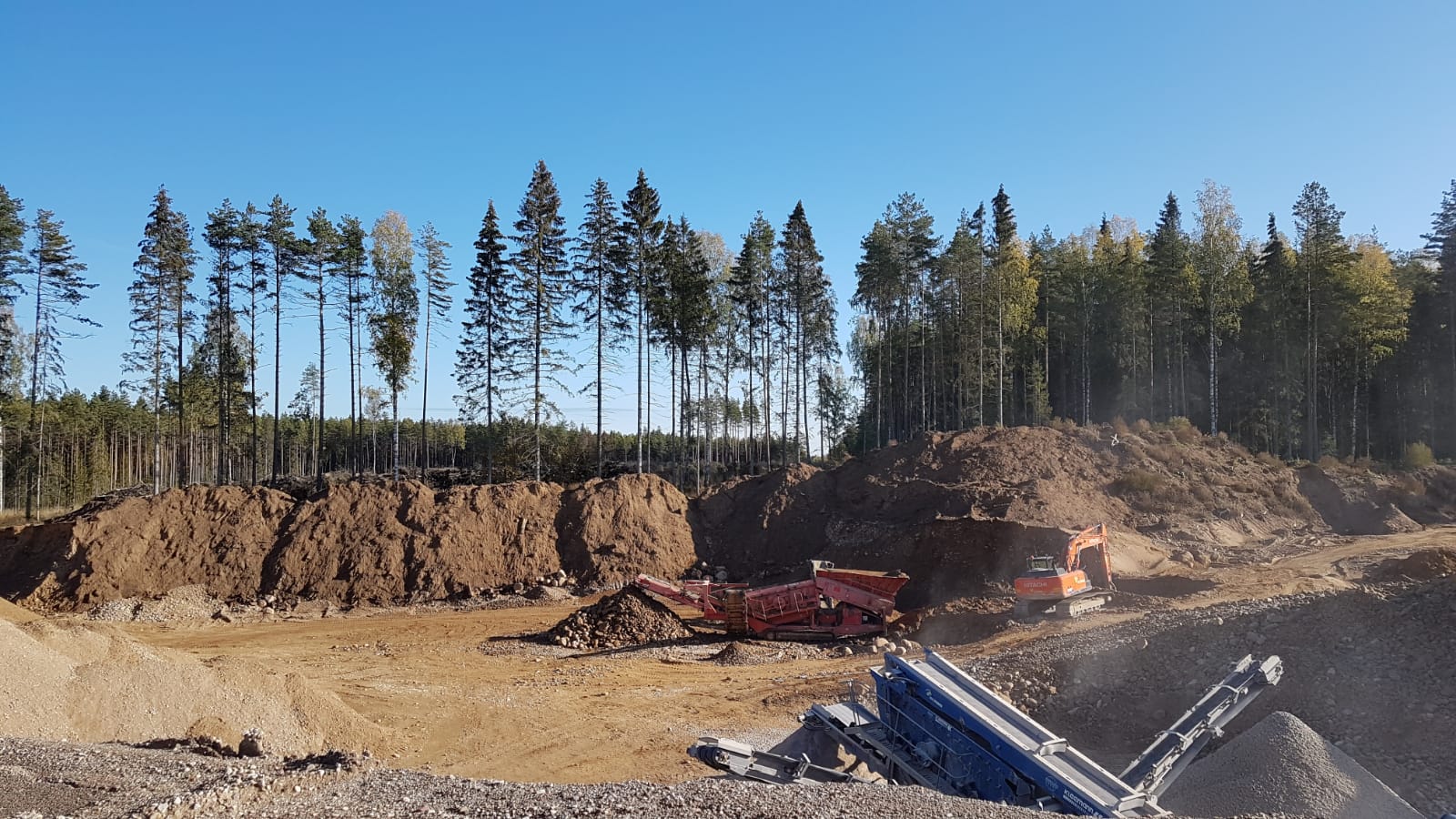
One experience that especially stood out was a site visit to the Tallinn–Tartu highway project, where we visited a bridge construction site and a temporary quarry, and spoke with the contractor on site.
From the perspective of student life, the Erasmus experience was also unforgettable. The Erasmus Student Network organised many events and trips around Estonia and Finland, and the multicultural environment was extremely stimulating. It is quite difficult to return to a normal routine after such an experience.
Six years passed after you returned to France before you decided to move back to Estonia for a longer period. Had you wanted to do that for some time, or did the job offer come unexpectedly?
To be honest, I think I always knew I would come back to live in Estonia one day. I have always felt a strong connection to the country.
After graduating, I first focused on building professional experience in France, working in both the private and public sectors for six years. At that point, I felt it was the right moment to make an international move.
When I started looking for opportunities, the Rail Baltica construction contracts had just been awarded, and I noticed that French companies were involved in the project. For me, it felt like a clear sign.
I had already studied the project during my time at Tallinn University of Technology, so seeing it move closer to the construction phase was particularly exciting. I wanted to be part of it, and that is how I began a new chapter in Tallinn.
Tell us more about the work you do.
Today, I work as a site engineer on the Rail Baltica project, in the Alliance 1 section between Tallinn and Pärnu.
I am involved in close coordination with designers, as well as technical and financial teams, to prepare for the start of construction works. Because we are working under an alliance contract model, collaboration between all stakeholders is essential. In this context, my role is strongly focused on coordination, technical analysis and supporting the optimisation of construction methods and site planning.
Once construction begins on my section, I will also be involved in site supervision.
Although my Estonian is still improving, I use it every day at work. The official language of the project is English, but communication remains a key factor in such a complex international environment. Being able to work in French, English and Estonian is a real advantage.
I really appreciate this multicultural setting, which in many ways reminds me of my Erasmus experience. It is exactly the kind of international infrastructure environment I was looking for.
Did you start learning Estonian while you were still living in France? How is your Estonian progressing?
In 2018, I felt the need to deepen my connection with my Estonian background, so I decided to study at INALCO – the Institut National des Langues et Civilisations Orientales – a Paris-based university specialising in languages and area studies.
For one year, I studied the Estonian language, as well as Estonian culture, history and political context. It was a very enriching experience, which allowed me to reach A2 level in Estonian. More importantly, it helped me better understand my country of origin and its cultural background.
It also later enabled me to follow my studies at TalTech in Estonian during my Erasmus exchange.
Today, I would say my Estonian is around B1–B2 level, and I make the most of being in Estonia by practising it as much as possible in daily life.
I also take part in summer camps for people of Estonian heritage living abroad, where we practise Estonian together and support participants in strengthening both their language skills and their connection to Estonia.
Is there a large French community in Tallinn? Do you have opportunities to connect with people and meet new friends?
Yes, I am often surprised by how frequently I hear French spoken in the streets of Tallinn.
Of course, working for a French company means I have many French-speaking colleagues, but outside work I have also met several French people who have moved to Estonia for its calm environment, green spaces and digital lifestyle.
I find it relatively easy to build new connections here. People are generally open-minded, curious and willing to engage in conversation.
It is also quite interesting that, in a smaller country like Estonia, you often meet someone new and discover that you have mutual connections.
How does your current stay compare with the semester you spent here six years ago? What has changed in your perception of Estonia?
Of course, the experience is very different.
When I came to Estonia as an Erasmus student, I knew I would only stay for a short period, so I was mainly focused on studying, discovering the country and enjoying student life. I also had a long list of places I wanted to visit and experiences I wanted to have during those six months.
This time, I came with a completely different mindset, even though the sense of curiosity is still very much present. I am now more focused on building a deeper connection with the country, its history and its people. For example, I plan to travel through smaller Estonian villages by motorcycle this summer, because I would like to experience the country at a slower pace and take the time to really immerse myself in its landscapes and regional identity.
I am also at a different stage of life, so my expectations have evolved. I am less focused on “discovering everything” and more on understanding and experiencing the country in a deeper way.
The geopolitical context has also changed compared with six years ago, unfortunately. However, Estonia remains very open towards its European neighbours. It is very interesting to discuss these topics with local people and understand their perspectives.
What has also changed in my perception is a stronger sense of solidarity among people here. In a world that sometimes feels increasingly divided, this is something I appreciate even more today.
It has also strengthened my sense of belonging to Estonia. I feel a strong attachment to the country, its language and its way of life, and I value the opportunity to contribute to its development in a meaningful way.
Would you recommend that other students from France study at TalTech, and why?
Definitely.
Studying at TalTech is a great opportunity to learn in a very supportive and high-quality academic environment. The campus offers a calm and focused setting, which is ideal for studying, while Tallinn provides many cultural and social activities. At the same time, the rest of Estonia allows you to truly connect with nature and discover a different pace of life.
I think everyone can find their own experience of Estonia, depending on what they are looking for.
Do you hope to stay longer and settle in Estonia?
Yes, that is the plan.
I feel I am in the right place, both professionally and personally. Being in Estonia also allows me to stay close to part of my family and to continue building my connection with the country.
In the long term, I would like to contribute to strengthening relations between Estonia and France, and to help promote Estonia internationally.
For now, my focus is on the Rail Baltica project, which will keep me fully engaged over the coming years. After that, I will see how my path continues to evolve, depending on new opportunities and projects.
This article was published in collaboration with Tallinn University of Technology.