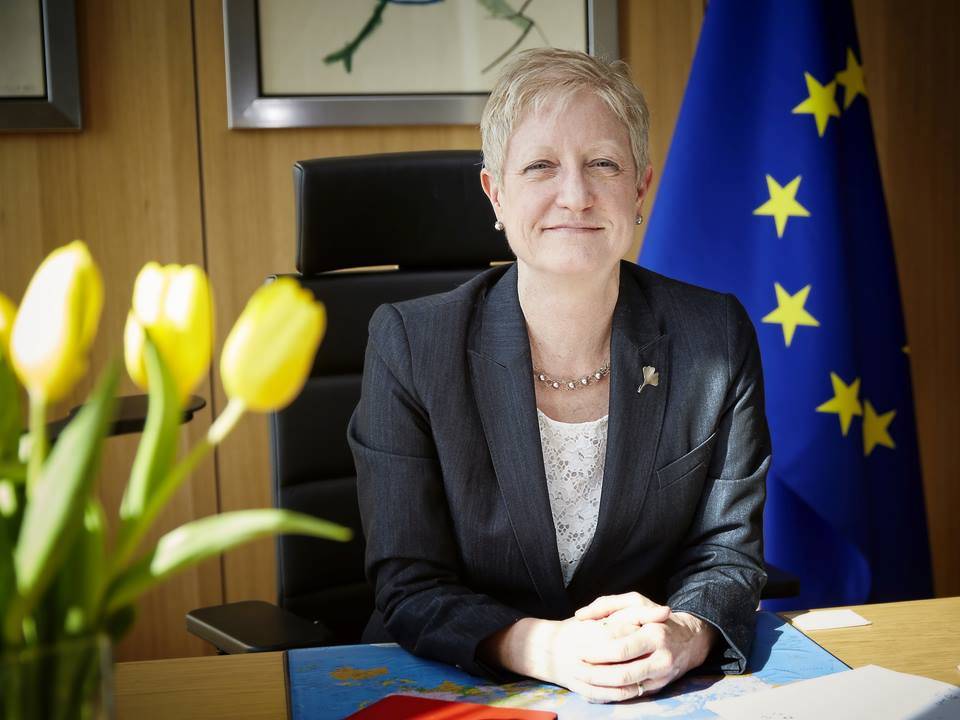
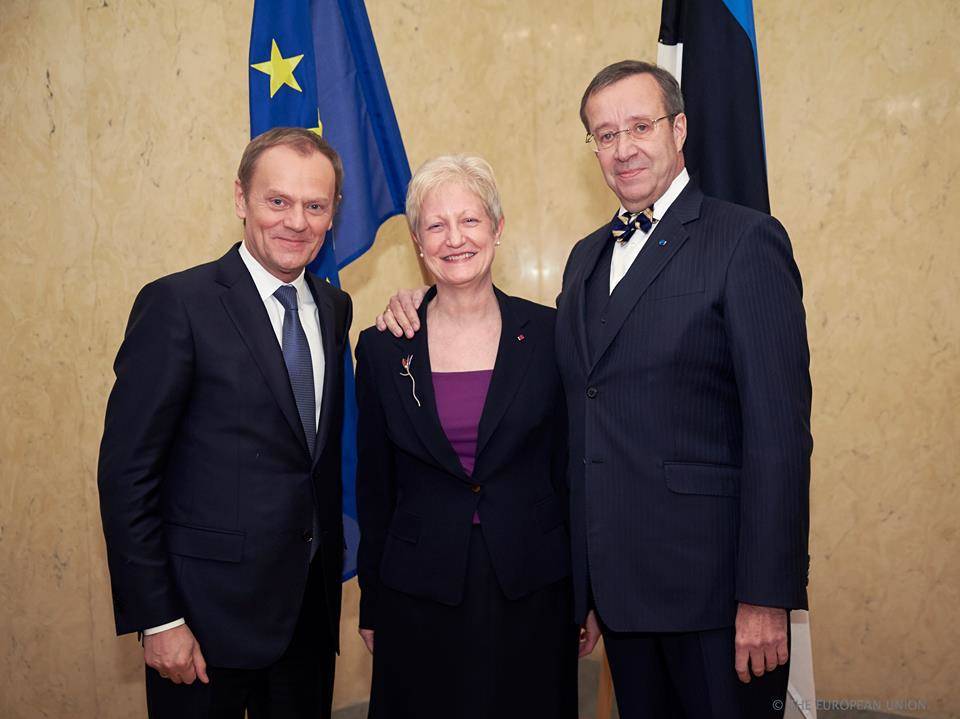
Riina Kionka is the chief foreign policy adviser to the President of the European Council, Donald Tusk, making her the most influential Estonian official in the European Union – somewhat ironically, given that she became a diplomat by accident and, almost until the very last moment, did not believe Estonia would join the EU.
Riina Ruth Kionka was born in Detroit, Michigan – once the capital of the American motor industry – in 1960 to an Estonian mother and an American father of German descent.
Detroit, you might ask? Are there Estonians in Detroit? Well, if history has taught us anything, it is that there are Estonians everywhere. And the Estonian community in Detroit is 90 years old: the Estonian Educational Society of Detroit, Kodu (“Home”), was founded in 1926 – years before the influx of Estonian refugees who arrived in the United States fleeing the atrocities of the Second World War and the subsequent Soviet occupation of Estonia.
It is true that most Estonian refugees who arrived in the United States settled on the East Coast, particularly in New Jersey. But there is a simple explanation for that. “Most Estonian refugees who came to the US ended up near where their first sponsors under the Displaced Persons Act of 1949 were,” Kionka explains.
“That’s why there are so many Estonians in New Jersey – because of Seabrook Farms” – a community that sponsored large numbers of refugees, including not only Estonians but also Latvians, Lithuanians and others. The owner of the farms, C.F. Seabrook, seeing an opportunity to secure additional labour, sponsored more than 600 Estonians who went to work there.
Starting over together with other Estonians
However, once the displaced persons had fulfilled their obligations to their sponsors, they were free to go wherever they pleased – often to places where fellow countrymen had already settled, and where they could help them find work, housing and a sense of community.
“You can imagine that this sense of community was a very important element for people who had lost everything, who had to flee their homeland because of the communist invasion and then spent several years living in limbo in refugee camps. It was important to try to start again together with other Estonians,” Kionka explains.
“That is how my mother came to Detroit. Her family’s sponsors were cotton farmers in Tennessee. My mother lasted three days picking cotton, after which she sent a telegram to her best friend, Juta Paulson – who later became my godmother – and asked her to wire money for a bus ticket. And off she went to Detroit. She found a job and saved enough to bring her parents and younger brother there, where there were greater opportunities.”
From music to law to international relations
As a child, Kionka wanted to become a musician and conductor. Fate, however, had other plans. “At some point in secondary school, I decided I didn’t want to spend the long hours in dingy, windowless basement practice rooms that it would take to become good enough to perform professionally, which is invariably the route to becoming a conductor. So, when I started university, I intended to study law. That lasted until I discovered what lawyers actually do.”
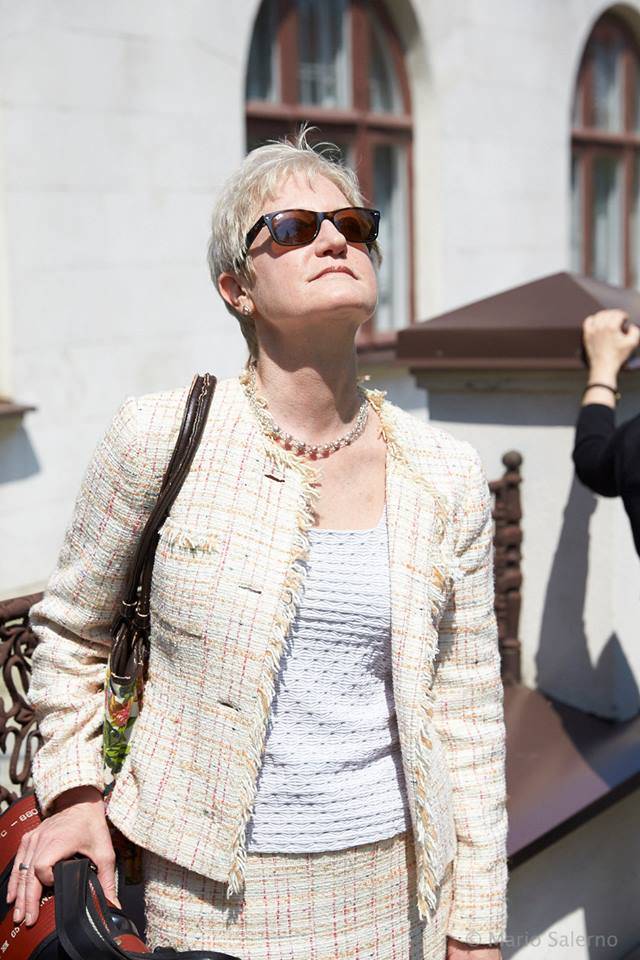
So, rather than pursuing a career in music – or in law, for that matter – she gravitated towards international relations, which, she says, had interested her from a very early age, “for genetic reasons”, as she puts it. “My mother’s and grandparents’ experience as refugees was formative for me,” she recalls.
“My mother maintains that I caught the bug because she took part in anti-Khrushchev demonstrations while she was pregnant with me. There may be some truth in that, as I remember explaining to my fellow kindergarten pupils what communists were. And, of course, with an unusual name, I always had to explain to people where Estonia was and what had happened to it, and by whom. That leaves a mark.”
At school, Kionka’s favourite subject was European history. “I remember one occasion when I nearly lost my copy of The Communist Manifesto, which I had to read for school, at the Estonian church. I had brought it with me so I could do some homework during coffee hour, but then couldn’t find it as we were driving home. My mother was mortified; the community was staunchly anti-communist, of course, and anything like that could easily set people off.”
“The last thing I wanted to do was become a diplomat”
“So it seemed obvious to me that, when I began studying international relations at university, in addition to German, which was my first foreign language, I also started learning Russian. And one thing led to another. It was all fairly clear from the outset.”
She had already considered becoming a diplomat at that point, but, interestingly, that changed rather quickly.
“During the third summer of university, I did an internship with the US State Department in the western sector of Berlin,” Kionka recalls. “After that internship, I decided that the last thing I wanted to do was become a diplomat, because I saw how unhappy the women in temporary posts around me were. There were not many of them at the time – this was in 1982 – and those I was working with were all unhappily single, for one reason or another. They were living with their cats. I did not want that.”
“History entered the picture while I was doing my doctoral research, thinking I would become an academic. I was studying the Soviet Union. And then it began falling apart, piece by piece. I had the enormous privilege of watching it happen from a front-row seat at Radio Free Europe, where I worked from 1989 to 1993.”
She had been an intern at Radio Free Europe in 1986, when Estonia’s future president, Toomas Hendrik Ilves, was working there as an analyst. After Ilves became editor-in-chief of the Estonian section, Kionka was hired as an analyst, effectively taking over from him.
The accidental diplomat
“So, at one point I decided it was one thing to write analyses about what was happening in Estonia from my comfortable perch in Munich, but quite another actually to do the things I was writing about. To write or to do – that was the question,” she says. “And I decided it was more interesting to be present at the creation, to borrow a phrase from Dean Acheson. So, on Estonian Independence Day in 1993, I tendered my resignation and flew to Tallinn to join the fledgling Estonian foreign ministry. That is how I became a diplomat.”
Interestingly, although she joined the Estonian foreign service at its rebirth after the Soviet occupation, much of Riina Kionka’s career has been devoted to the European Union. Was that a conscious choice, or yet another accident – an act of fate?
“Things always look deterministic in hindsight,” she says. “When I joined the Estonian foreign ministry, only a handful of people thought we would ever stand a fighting chance of joining the EU – at least any time soon. I was not one of them. I was much more interested in security policy, taking part in the negotiations on the withdrawal of Russian troops, and focusing on NATO, the OSCE and suchlike. I remained a sceptic to the end and was, in essence, forced to learn about the EU only once it became clear that that was where Estonia was really heading. I moved towards the EU after some differences of opinion with the then foreign minister, and Estonia’s foreign ministry began to feel confining.”
Chinese checkers and three-dimensional chess
“The appeal of the EU for a small country like Estonia, and for me personally, is that there is strength in numbers. There are so many more opportunities to influence the course of world events when you are part of a larger organisation. And with the EU, the range of policies, interests and reach is much broader than it is for a small country,” she explains, reflecting on her interest in and commitment to the European Union.
Naturally, working for a vast apparatus such as the EU must be quite different from serving as a diplomat for a small country like Estonia. Kionka herself describes the difference as being “between Chinese checkers and three-dimensional chess”.
“In the vast machinery of the EU, a person has to be far more conscious of the tactics, the different national preferences, the domestic political frameworks and the bureaucratic politics,” she says. “You need all of that, not just the substance, to turn an idea into policy. In Estonia, it is usually enough to have a good idea, prepare well, know who went to school with whom, and have a modicum of decency. It is certainly much easier to make things happen in Estonia.”
The only woman in the room
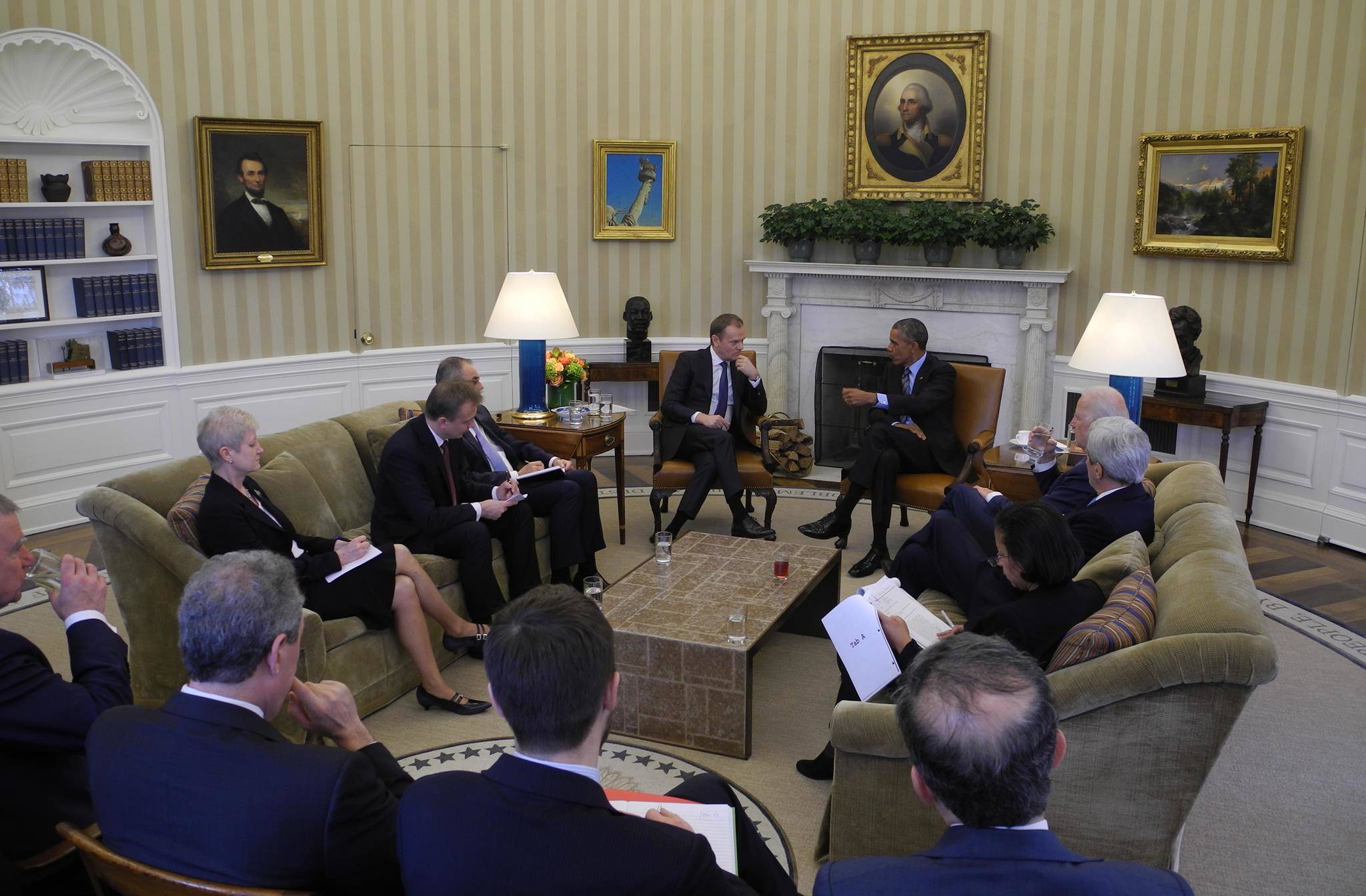
The European Union has traditionally been a male-dominated institution – and, to some extent, still is today. It is probably fair to assume that being a woman in what remains largely a man’s world can be challenging – and Kionka broadly agrees.
“Being a woman hasn’t helped, other than the fact that during breaks in meetings I almost never encounter queues for the women’s lavatories,” she says. “At the lower levels, there are probably more women in the apparatus than men. But in management, there are fewer and fewer women the higher one goes. There are exceptions, and one encounters them more often these days. But I am still usually the only woman in the room.”
Having seen the European Union from closer quarters than almost anyone else, she offers a particularly sharp insight into its present and future. The union faces a series of challenges, from Brexit – the United Kingdom’s decision to leave the EU – to the periodic resurgence of Eurosceptic voices across the bloc.
The latest test came with the French election, in which the Eurosceptic right-wing populist Marine Le Pen reached the second round of the presidential contest earlier in May. Fortunately – for both the EU and France – the centrist candidate, Emmanuel Macron, won the presidency. But that does not mean Eurosceptic sentiment has disappeared. Does Kionka see a flourishing future for the EU?
“After the French and Dutch elections, I feel much more hopeful about the EU,” she says. “With President Macron, there is finally a chance to reinvigorate the Franco-German tandem, which has always been, and will always be, the driving force of the EU. All the more so now that the UK has, unfortunately, decided to part ways with us. So, in fact, I am much more upbeat than I was a couple of months ago. And, sad though it may seem, one of the silver linings of the political change in the US is that Europe has finally realised it has to get its act together on security policy. Even if we see a stronger transatlantic pillar in the future – and I hope we do – it will be better off with a stronger and more confident EU as a partner.”
Sympathy for the frustration
As for the Eurosceptics, Kionka points out that many of them are not fully aware of what the EU is and what it is not. “Often the failings of national policies and choices are ascribed to ‘the fat-cat bureaucrats in Brussels’ when, in fact, the offending decisions come from the national capitals, which find it politically convenient to blame Brussels for everything that is uncomfortable,” she asserts.
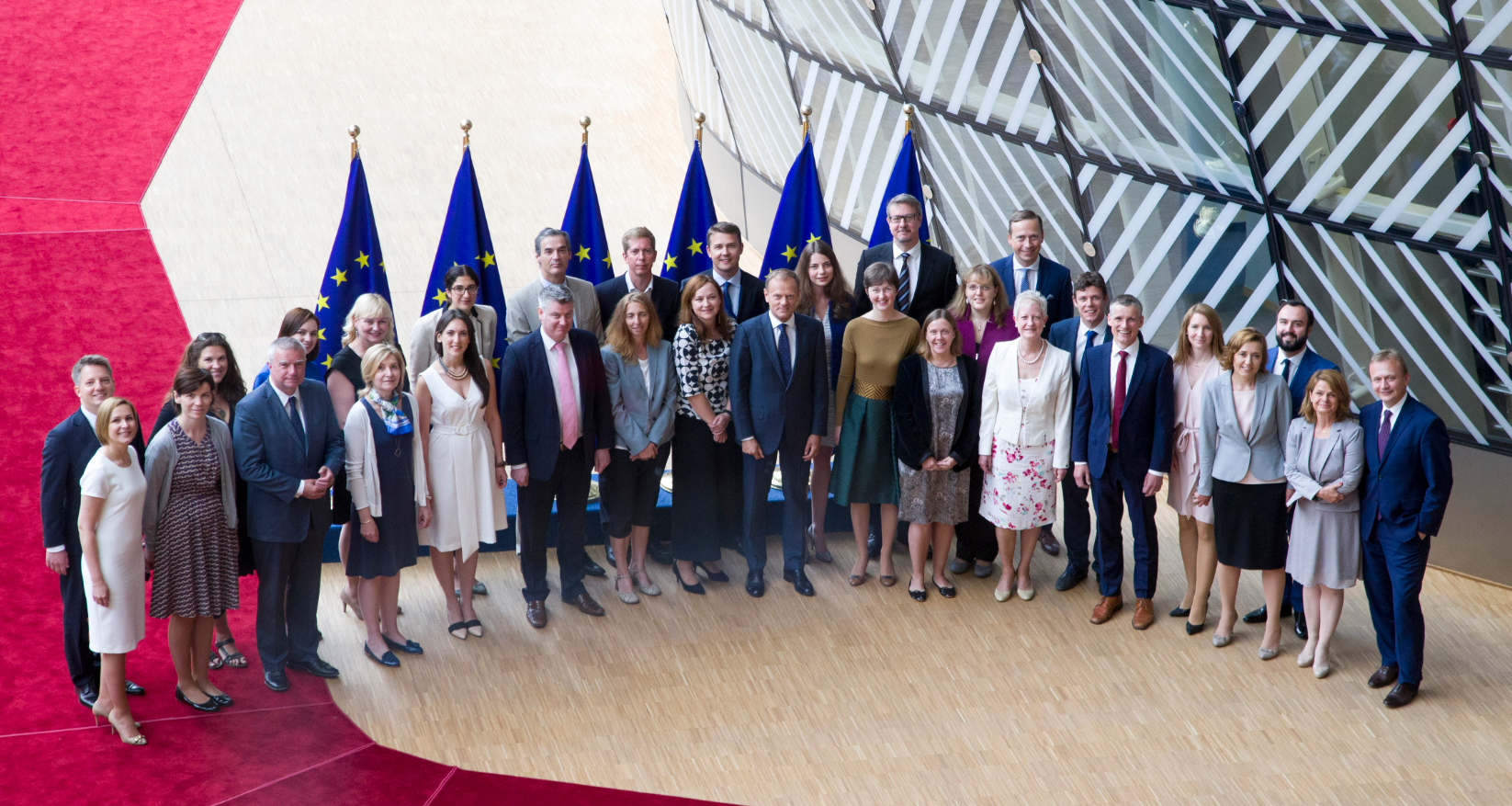
“That said, the EU has become so complicated and all-encompassing that very few people truly understand how it works,” she admits. “There is a problem with regulating certain things at EU level that might be better dealt with at home. So I have great sympathy for the frustration. But one consequence of Brexit has been a rethinking of the whole project. And the core of that rethink must be that it is better to do some key things together than separately. That is especially vital for a country like Estonia. Because if the EU were to unravel, you can guess who the first victims would be.”
So what does she think the EU will look like in, say, 25 years’ time?
“Personally, I think the EU will become more flexible, with some states taking part in certain policies but not others, and with greater influence over how policies are implemented,” she says. “I also think it will be larger in 25 years’ time, but the nature of its relationships – both to the EU and within it – will have changed. So I could realistically envisage a new kind of relationship with the UK that might also extend, for instance, to Ukraine, Georgia, Moldova, perhaps Turkey and the Western Balkan states. But this is only my personal opinion, which does not count for much in the grand scheme of things.”
Estonia’s lack of generosity towards refugees is inexplicable
However, working in Brussels for the European Union does not mean Kionka has stopped following life in Estonia and the country’s development. Her husband, Lauri Lepik, is an Estonian diplomat, and she also has friends in Estonia.
“And also because, within the Tusk cabinet, responsibility for the various member states is divided among the different cabinet members, and I am responsible for Estonia, of course. Because of my position, I am not at liberty to comment on the internal workings of any EU member state, including Estonia. But I do miss the days of ideas and invigorating action.”
One issue Kionka does take personally, however, is Estonia’s – and its people’s – reluctance to help today’s refugees.
“Given Estonia’s history, with so many of its compatriots having been welcomed by other countries as refugees after the Second World War and during the Soviet occupation, I find the lack of generosity towards refugees simply inexplicable,” she says. “I think of my mother, my grandparents. What if they had been from Syria instead of Estonia and had sought refuge in Estonia rather than the United States? What is the difference? In fact, there is none, if you look at it from a humanitarian perspective.”
“There is an economic argument to be made as well – one that Spain, for instance, makes. Or Canada. Namely that inward migration is good for the economy, especially in countries with small populations. So yes, greater acceptance of people from elsewhere is, from my point of view, a win-win.”
No political aspirations
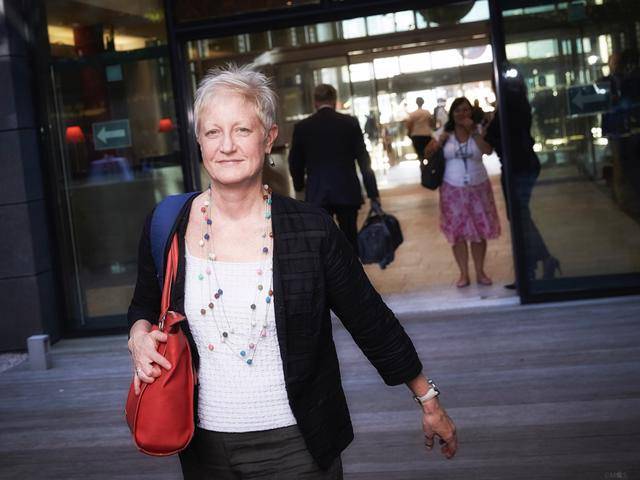
Kionka has had a magnificent career – but surely she cannot yet have done everything or worked everywhere she might have wished to. What are her plans for the future? Might we one day hear the words, “President of the European Council, Riina Kionka”? Or would she rather return to Estonia and become, say, a politician?
“The President of the European Council is chosen from among the EU prime ministers – that is to say, from among the leading politicians of each EU member state,” she explains. “I am not a politician, nor do I aspire to be one. Some of my best friends are politicians, but I have seen how high a price one pays for that sort of path. And besides, judging by how much I learn every day about that business from my boss, Donald Tusk – someone with spot-on political instincts – I am not even convinced I would be good at it.”
“I am interested in foreign policy, not necessarily in political choices ranging from healthcare to environmental issues to pension policy, unless, of course, they become matters of international concern. That is when they pique my interest.”
But what about returning to Estonia? “Never say never.”