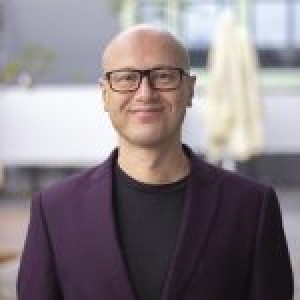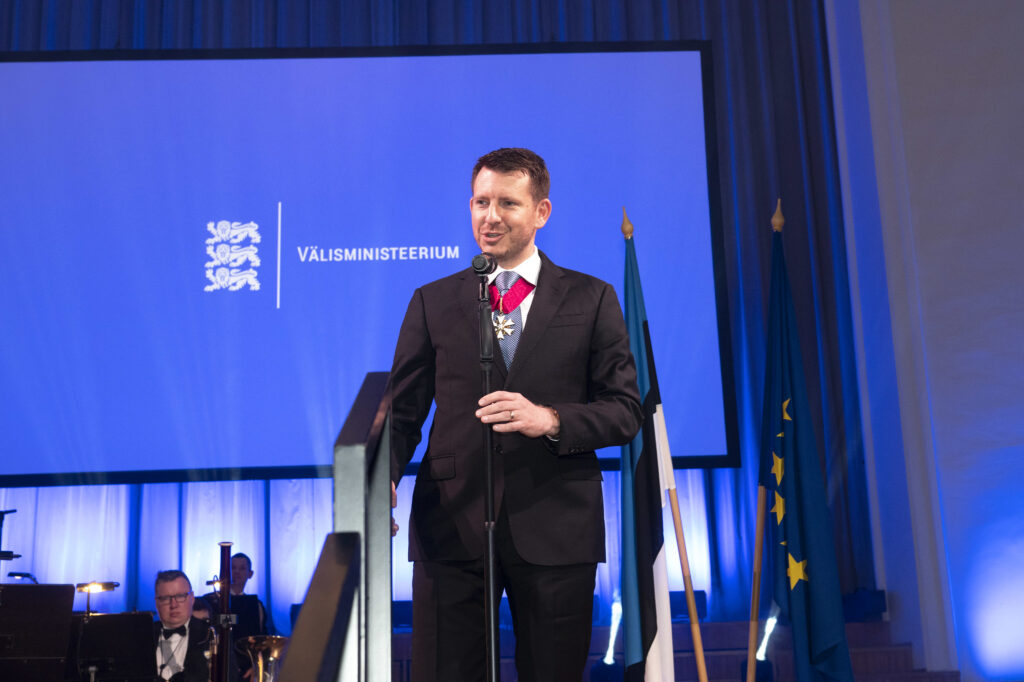
The comforting European belief that history ended in the 1990s has become not merely naïve but dangerous, Estonia’s second-most senior foreign ministry official, Jonatan Vseviov, has warned, arguing that the war in Ukraine is remaking the international order and exposing the price of Europe’s long holiday from hard power.
Jonatan Vseviov, the secretary-general of Estonia’s foreign ministry, told the Estonian weekly Maaleht that the war “will most certainly change the world”. The decisive question for Europeans, he said, is whether they have “enough sharpness to speak ourselves into the rooms where Europe’s fate is being decided” – an unusually blunt formulation from a civil servant, and a revealing one from a country that has spent three decades trying to make itself impossible to ignore.
Vseviov’s central point is that Russia’s endurance is not accidental. The Kremlin still has resources because it has rebuilt the state around war. “Their economy has by now been reshaped into a war economy,” he said, underpinned mainly by energy exports – “simplistically, oil and gas” – and the reserves accumulated before the full-scale invasion. Moscow is “making enormous efforts” to keep the war going, he added, and it does not come easily, but the capacity remains.
That capacity, Vseviov suggested, is inseparable from a political calculation at home. Putin, he said, has sweated to preserve the impression that everyday life continues, treating the invasion as an “operation” rather than a national mobilisation. Hence the reluctance to draw manpower from major cities and the social groups the Kremlin regards as “elite”. It is, in other words, a regime that fears the loyalty of its own foundations.
Western policy should be designed to undermine Putin’s base arguments
From Estonia’s vantage point, that fear is an opportunity. Western policy should be designed to undermine Putin’s “base arguments” – particularly the propaganda claim that democracies are collapsing and leaders are transient. Vseviov pointed to Putin’s recent insult directed at European leaders – “piglets” – as an expression of the same idea: that the West is too decadent and unstable to sustain a long confrontation.
The reply, he argued, is to treat democratic change as a strength rather than a weakness: governments rotate, while institutions endure. Courts continue to prosecute according to law; international justice continues to work at its own tempo. Russia’s expectation that “everything will be forgotten” and that it will return to Europe’s negotiating tables to redraw borders is, he said, a fantasy.
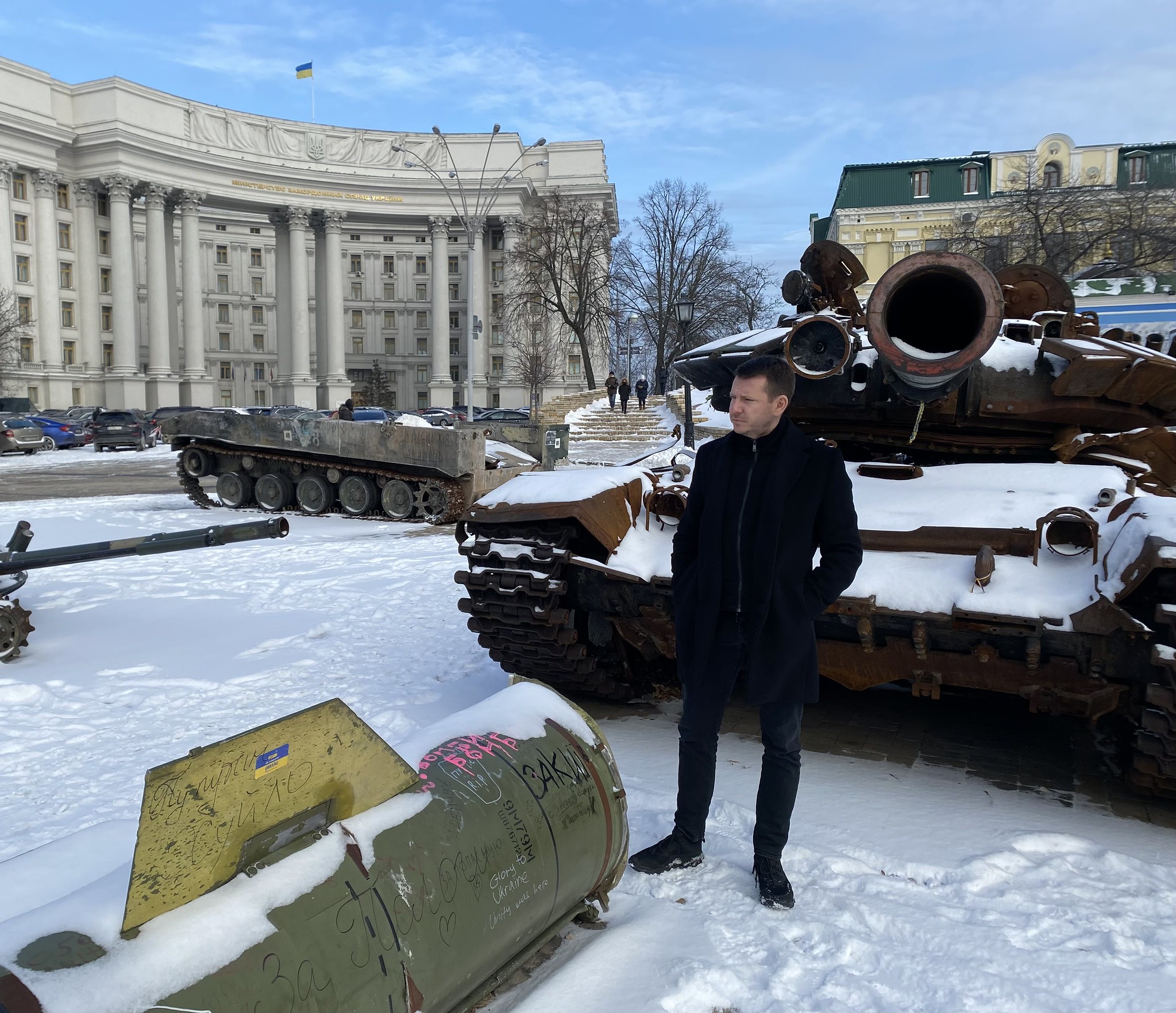
On war crimes, Vseviov was unambiguous: time should not be confused with amnesty. The crimes, he argued, must remain on the record “no matter how long it takes”. He singled out the International Criminal Court’s arrest warrant for Putin as something that infuriates the Kremlin precisely because it makes normalisation harder. “You cannot sit at the negotiating table when you are persona non grata in Europe,” he noted, suggesting that Moscow’s interest in immunity clauses in putative peace deals is not a footnote but a central motive.
Russia is hijacking Western terminology
If language is a battlefield, Vseviov believes Europe has been losing ground. That shift matters, because Russia’s technique is not to invent new terminology but to hijack Western words – calling authoritarian satellites “people’s democracies” in Soviet times, and now draping aggression in the rhetoric of peace. The simplest truth, he insisted, should be said aloud: if Russia stopped fighting, the war would end.
His prescription for changing Russian behaviour is brutally material: make the price of continuing aggression so high that the Kremlin abandons its imperial ambition – the attempt to restore a Soviet-style sphere dominating Central and Eastern Europe. Here Vseviov pointed to what would have seemed implausible only a few years ago: the European Union committing, in legislation, to wean itself off Russian energy. The process is slow, he conceded, because every step consumes political capital. That is democracy’s constraint – and its test.
Nor did he offer comforting metrics of progress. “The only measure of success” is a “just and lasting peace”, he said. Europe should not be satisfied – yet must not become paralysed by the scale of the problem. He also addressed Ukraine’s corruption scandals with a pragmatist’s impatience: uncovering cases and prosecuting them is what an anti-corruption fight looks like. Kyiv, he implied, is trapped between a European demand for reform and a European reflex to panic whenever reform exposes ugliness.
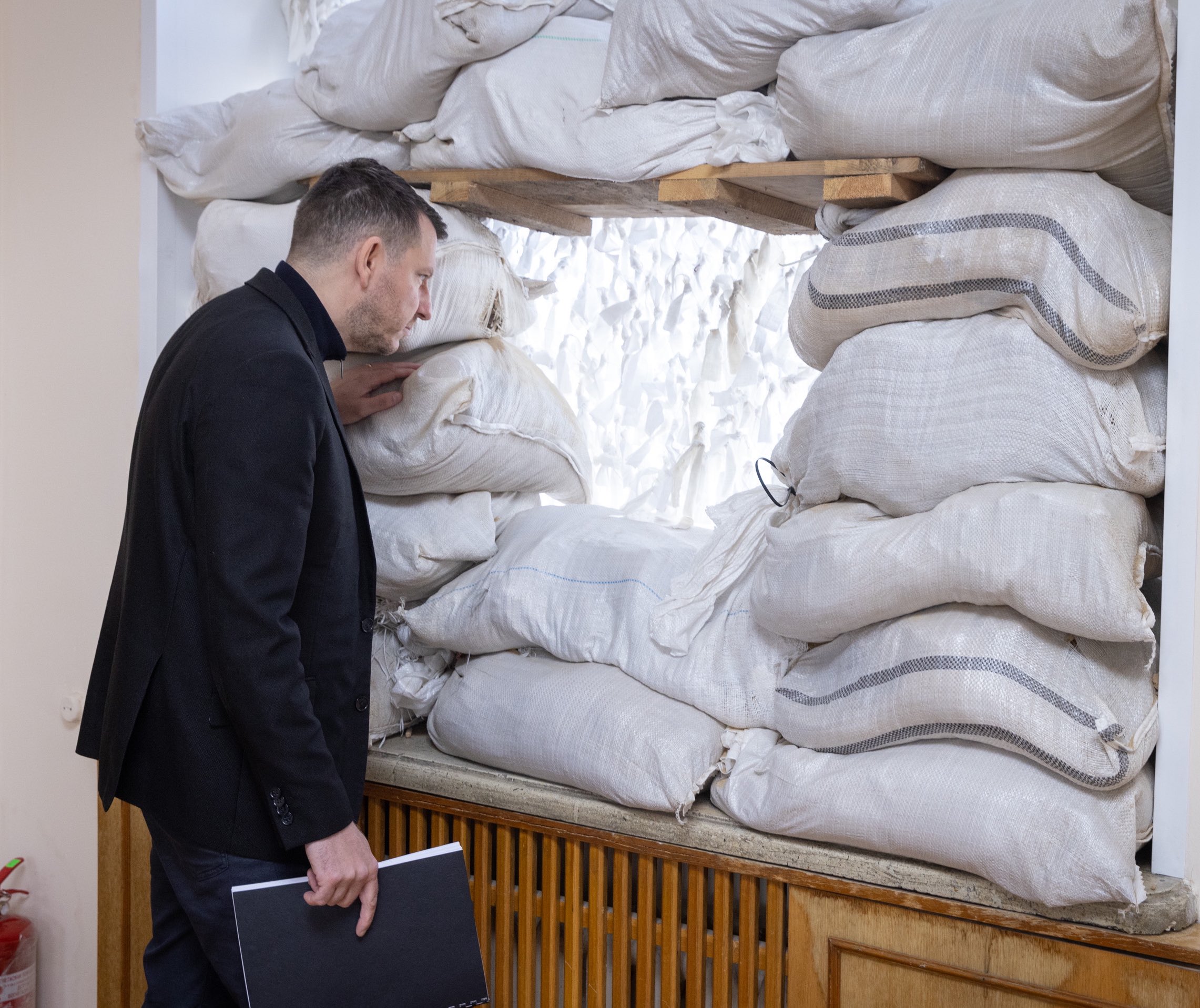
The 1990s were the dream – and the dream is over
On the transatlantic relationship, Vseviov rejected the fashionable European shock at American impatience. US frustration with European defence spending, he said, is not the quirk of a single administration; it has been repeated by presidents in varying tones for years. If some Europeans are only now waking up, it is because they mistook the post-Cold War era for normality. In his harshest line, Vseviov suggested the opposite: the 1990s were the dream – and the dream is over.
America, he said, is not a monolith; “there are many Americas within America”. Yet one strategic fact remains: the period in which the US believed it could solve multiple global crises at once has passed. Europe must accept that “no one other than Europe will take responsibility for our security” – and act accordingly.
That imperative extends beyond Ukraine’s borders. The parameters of any settlement, or even the debate about a settlement, shape Europe’s future security. If territorial integrity can be suspended “under certain conditions”, he warned, the consequences will not stop at Crimea or Donbas. This is why the war’s outcome will define the post-war order “for a long time to come”.
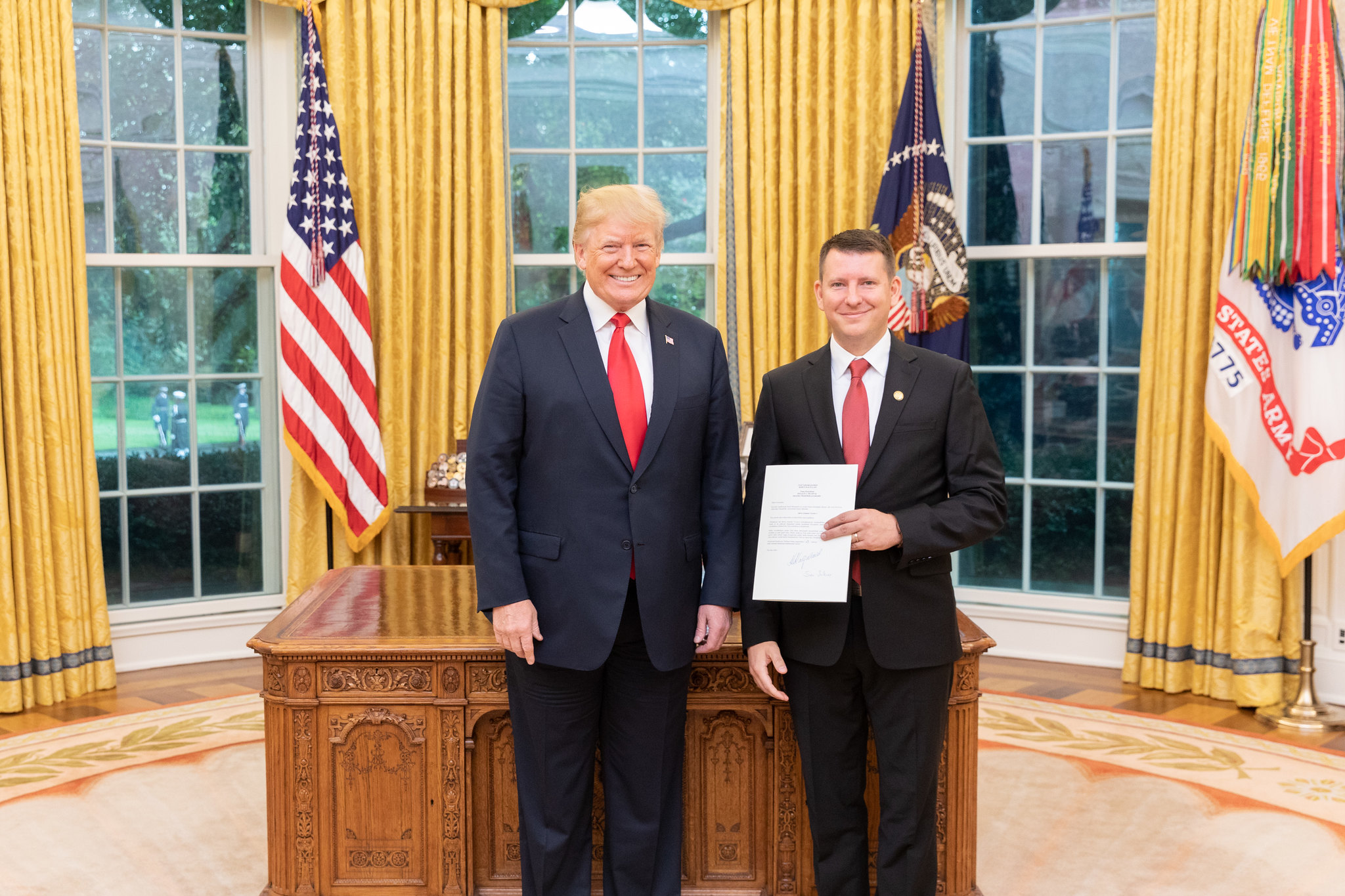
Estonia must project the calm competence
The interview also offered a glimpse of Estonia’s tactical instinct: turning moments of danger into moments of coalition-building. Vseviov cited as a 2025 reference point an incident in which Russian fighter jets spent 12 minutes in Estonian airspace. Estonia, he said, moved quickly, using its NATO and UN experience to gather support: 31 allies backed Tallinn unequivocally, and 50 countries plus the EU stood behind Estonia’s foreign minister ahead of a UN Security Council meeting. More would have joined, he claimed, but Estonia chose speed over a larger tally.
For small states, Vseviov argued, hard power is limited but not absent. The leverage is often “the power of words” – used with judgement, not volume. He invoked Lennart Meri, Estonia’s post-Soviet president, who was not always invited to meetings because his views were welcome, but because other leaders feared what he might say outside the room if excluded. Speaking early, and sometimes alone, carries risks; silence carries risks too. “It requires wisdom and courage” to know when to endure isolation to tell the truth, and when restraint is the smarter path.
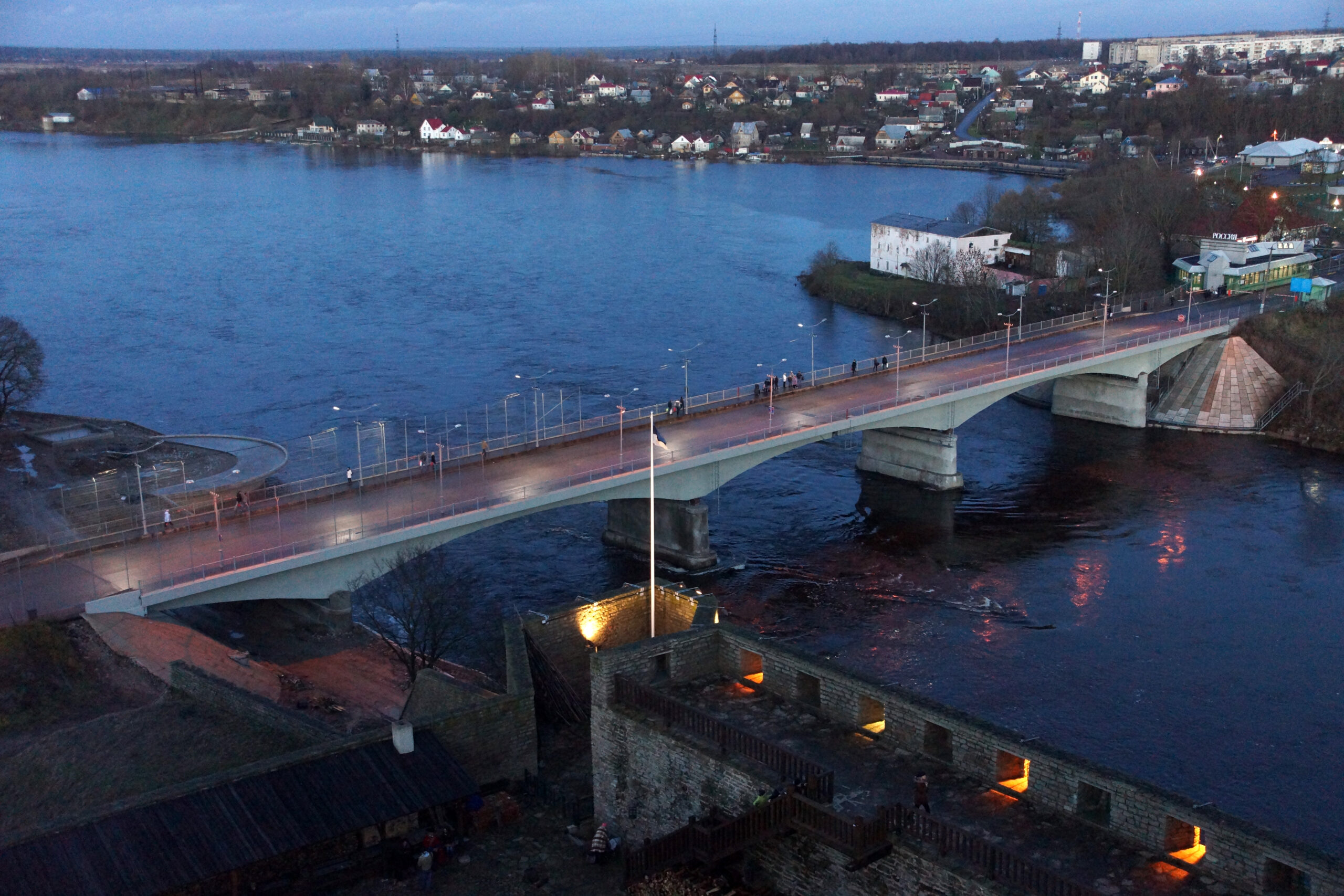
The same logic applies to something as prosaic – and economically vital – as tourism. Vseviov acknowledged that Russia’s war distorts perceptions and deters visitors, but argued that Estonia must project the calm competence of a state that has lived beside a difficult neighbour for centuries. He offered South Korea as the model: Seoul sits within striking distance of a nuclear-armed dictatorship, yet remains a global destination because tourists trust the state’s security system. Estonia, he implied, must convince the world to trust its own.
Europe’s objective weight is larger than its self-image
Asked what he would accelerate if given the choice, Vseviov did not pick a weapon system or a sanctions package. He picked psychology: Europe’s self-confidence. The continent’s objective weight – economically, demographically, institutionally – is larger than its self-image. Close the gap, he suggested, and much else would follow: less dithering, faster decisions, a firmer hand.
“I would place the greatest emphasis on accelerating the growth of Europe’s self-confidence, which in turn would make it possible to act more decisively across all other sectors,” he said.
“There is a glaring contradiction between the objective facts and how we perceive ourselves. The Nordic and Baltic countries alone – eight states that we tend to regard as small nations on a global scale – together constitute the world’s tenth-largest economy. How many are actually aware of this?”
“If you take the Nordic and Baltic countries and add Germany and Poland, we have a larger population than Russia. And I am talking about only part of Europe. If Europe’s self-confidence could somehow be accelerated, the constant foot-dragging over sanctions, data protection, or military assistance would almost automatically disappear,” Vseviov said.
If the interview has a single message, it is that Europe grew used to an unusually calm period – and is now being forced to adjust as history returns. The world order built after 1945 is “ending”, Vseviov said, while the next order is not yet fully formed. In that kind of rupture, fear is understandable but dangerous. Paralysis, he warned, is the one luxury Europe can no longer afford.
This article is based on an interview given by Jonatan Vseviov to the Estonian weekly newspaper Maaleht.