
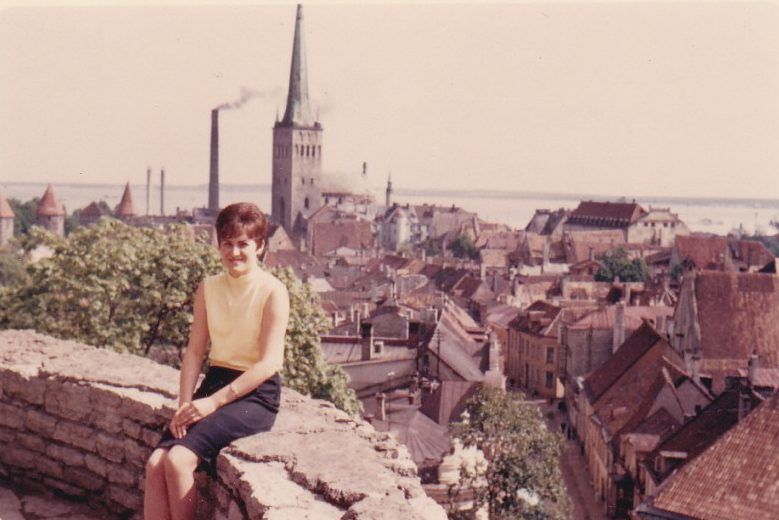
Maie Currie was born in Estonia in 1939. In 1944, her mother fled with her to Germany, and in 1949 they emigrated to the United States. This is Currie’s moving account of her return to Soviet-occupied Estonia in 1968 for six days to meet her father, who had been taken from her in 1941 and sent to a labour camp in Siberia before eventually being conscripted into the Soviet Army.
Maie Currie was born in Estonia in 1939. In 1944, her mother fled with her to Germany, where they spent five years in a DP (displaced persons) camp. In 1949, they emigrated to the United States, where Currie still lives today. Her father, however, had been taken from them by the Soviets in 1941 and conscripted into the Soviet Army.
It was not until 1968 that Currie had the chance to return to Estonia and see her father again. At the time, Estonia was under Soviet occupation, behind the Iron Curtain, and foreign visitors were rare. This is Currie’s moving recollection of her brief journey back to her native land.
*****
Did I know, or even care, what was waiting for me in Estonia the first time I went back? Not at all. I was far more interested in meeting my father for the first time as an adult, in 1968, than in any of the unknown factors that might have been lurking in the shadows.
The fact that Estonia lay behind the “Iron Curtain” lent it a certain air of mystery, unfamiliar and frightening to most people in reality. We heard all kinds of stories, but, as with stories generally, you never knew what was true and what had been exaggerated.
The anticipation of seeing “Eesti”
My excitement mounted as I boarded the ship in Helsinki bound for Tallinn. I would very much have enjoyed a drink from the bar, as it might have calmed my nerves. But, unsure how it might look for a woman to walk up to the bar alone among all the cheerful Finns and order a drink, I refrained.
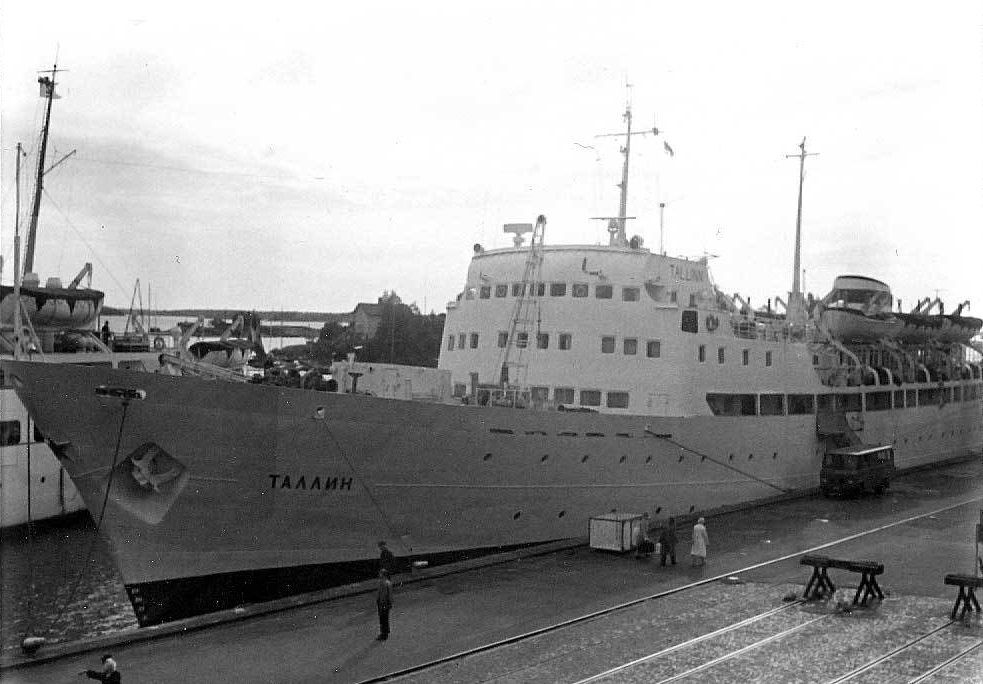
My anticipation peaked as I watched Tallinn’s silhouette draw closer. I could hardly believe that I was about to walk on the soil of the country of my birth – the country I had fled during the war, the country I loved so deeply, and the country now occupied and oppressed by Soviet communism.
In spite of it all, this was my “Eesti” (Estonia), and I had always held it close to my heart. I was on such an emotional roller-coaster that it was hard to contain my feelings. So many questions ran through my mind: besides my father, who else would be waiting for me? Would I recognise them? How would I fit in? Would I be welcomed?
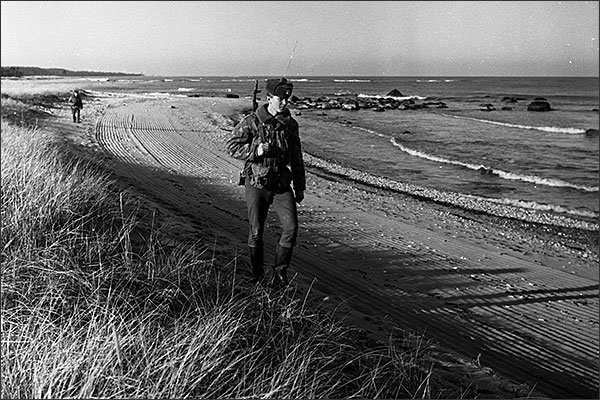
Detained by Soviet border control
I was the last to disembark, and I wondered whether that was because I had come from America.
I had two very large suitcases and always needed a porter. I wanted to bring everyone something, and that was what caused me to be detained at customs for what felt like endless hours. Every bag and piece of luggage was gone through with a fine-tooth comb. Things were removed, and my thrill at being there quickly turned to anger. No amount of arguing helped my situation. There was no winning with the “powers that were”. They were not even Estonian.
By then, it was getting late, and I had no idea where my family and friends were. Had they gone home? Had they endured those long hours of waiting without knowing what was going on? Exhaustion was overtaking me, and I could no longer think straight.
Some items were confiscated, some were taken to a back room for closer inspection; there were questions, and heads were shaken. The bags were in complete disarray, and the suitcases would not close properly. With no help, I had to struggle on by myself. “Oh, God! Did I do the right thing in coming here?” I quickly dismissed the thought, since I was already there and would still see my father.
Family reunion
As I struggled with my luggage and rounded the corner, I heard cheering and greetings from afar. “My God, they are all here!” I thought, as my heart could not have pounded any faster or louder in my chest. I still could not reach them, because an eight-foot chain-link fence separated us. As I was led into the enclosed area, I quickly glanced around to see where my father was.
I saw a very tall man, but I did not remember him looking like that in the photographs. In any case, I dropped everything, ran to him crying “isa” (father), and embraced him.
Finally, I was there with my father – or so I thought. Once we let go and looked into each other’s eyes, the tall man said to me, “I am not your father. I am your godfather.” It was as if a bolt of lightning had struck me. “Where is my father?” No one knew, and everyone was almost as shocked as I was.
Waiting to take me to the Intourist Hotel Tallinn – the Soviet-era, state-owned hotel in the Estonian capital – was an official car.
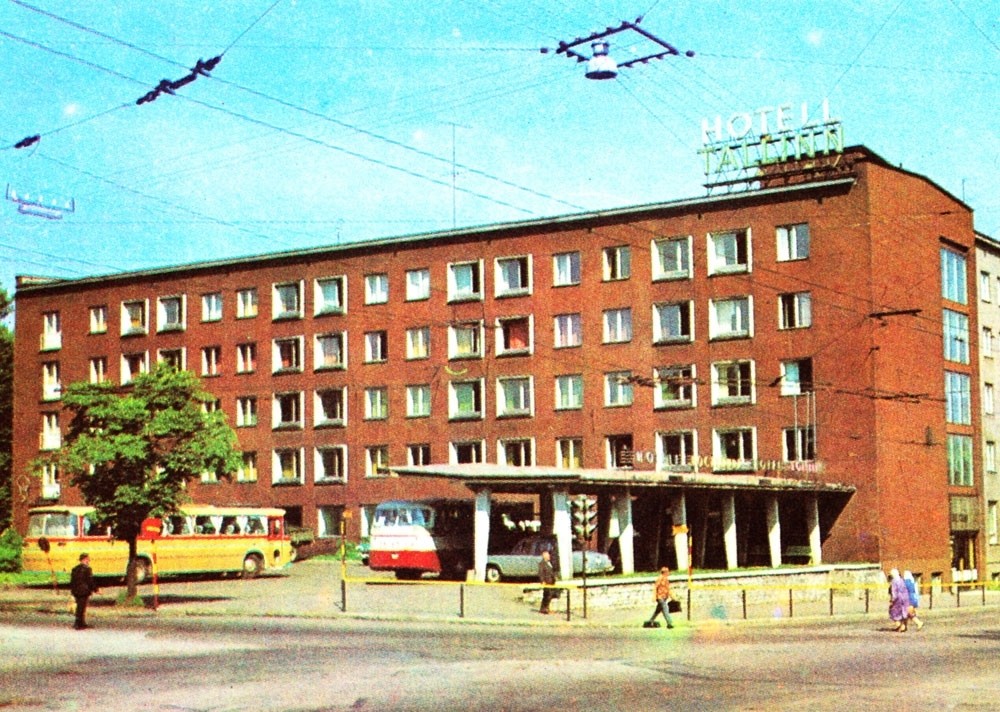
Truth be told, by now I was scared to death, and I asked whether “tädi” (aunt) Erika could come with me. I had initially wanted my godfather to come as well, but I was allowed only one person. “Tädi” Erika told them where we would be going after the hotel, while some had to go home and I would see them another time. I simply went along with whatever “my people” decided.
It turned out that we were going to my godfather’s flat, which was not far from the hotel. Through sign language, I was made to understand that the walls had ears and that I should be careful what I said.
As I would have been too upset to speak to my father on the telephone, my godfather called him to find out where he was. My father wept because he had not known I was arriving that day and was distraught that he had not been there to meet me. You see, because the letters were being censored, “they” had decided not to let my father receive my last letter, in which I told him the date and time of my arrival.
My godfather arranged for my father to take the first train from Kohila and come to the hotel the following morning to meet me.
Counting the crumbs
In the meantime, they seated me in the only comfortable chair in the small flat, at a little round table. “Tädi” Leida placed a pancake on a plate in front of me, along with a small jar of berry preserve.
I immediately asked, “What about the rest of you?” The response was devastating: the preserve had been saved especially for me. They had not had the heart to eat it themselves.
So there I was, sitting alone at the table, eating, while the six or seven of them simply watched me enjoy this “delight”. It broke my heart. I had come from the land of plenty, and here in Estonia they were counting the crumbs.
With the unspoken code of “watch what you say”, I waited for one of them to begin any conversation. My mother had warned me about this even when I was writing letters to Soviet-occupied Estonia, so it was not difficult for me to observe the same rules during my stay. It gave me some idea of what to expect over the next several days – but there was more to come.
KGB everywhere
As “tädi” Erika walked me back to the hotel, she seemed to have eyes everywhere. She may have had only two, but they were darting in every direction. It made me nervous as well. I was sad when she left, because I was not sure when I would see her again.
I needed to change into my nightgown, but I hesitated because of the known bugs. I imagined they might also be watching me with cameras. With that thought in mind, I took off my clothes in the windowless bathroom without turning on the light. I, too, had become paranoid.
Of course, everyone back home had warned me about the lack of toilet paper in Estonia, but I had forgotten to bring a roll. I had checked earlier and discovered that they did have some, but it looked like crepe paper and felt like sandpaper. Luckily, I had brought tissues with me, though I saved them for special occasions and for going out.
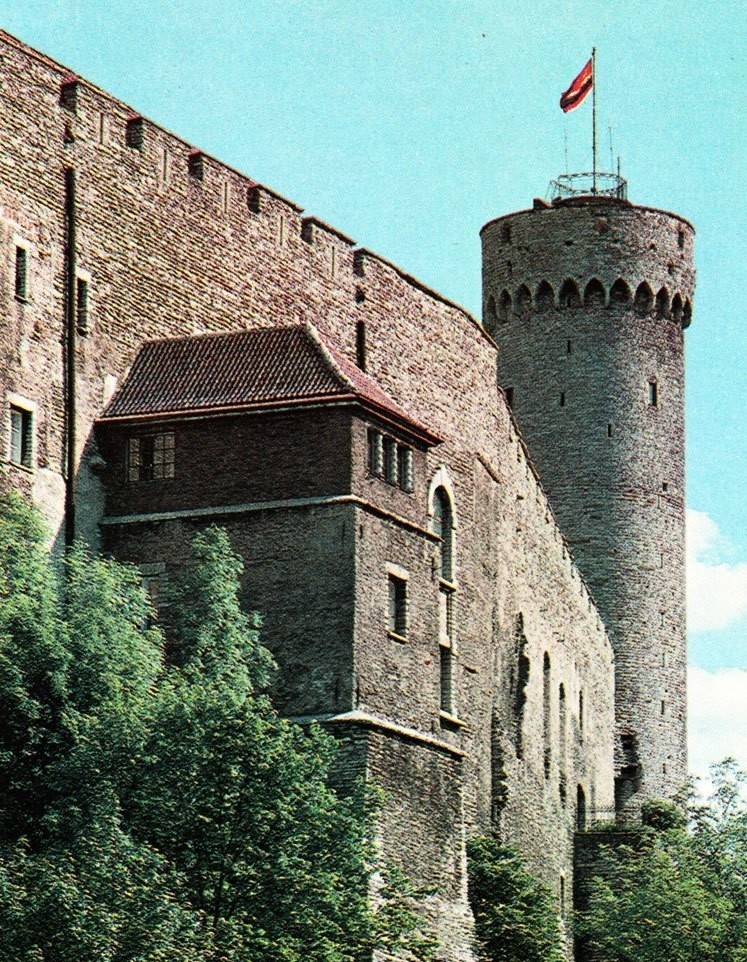
Praying for the blue, black and white flag to fly atop Pikk Hermann Tower
Estonia lies so far north that, in June, the nights were very short. I marvelled as the sky shifted from dusk to dawn and never truly grew dark. I sat on the bed and looked at the round vase of flowers on the windowsill – the flowers I had been given on my arrival. I especially admired the buttercups, since I had not seen any back home.
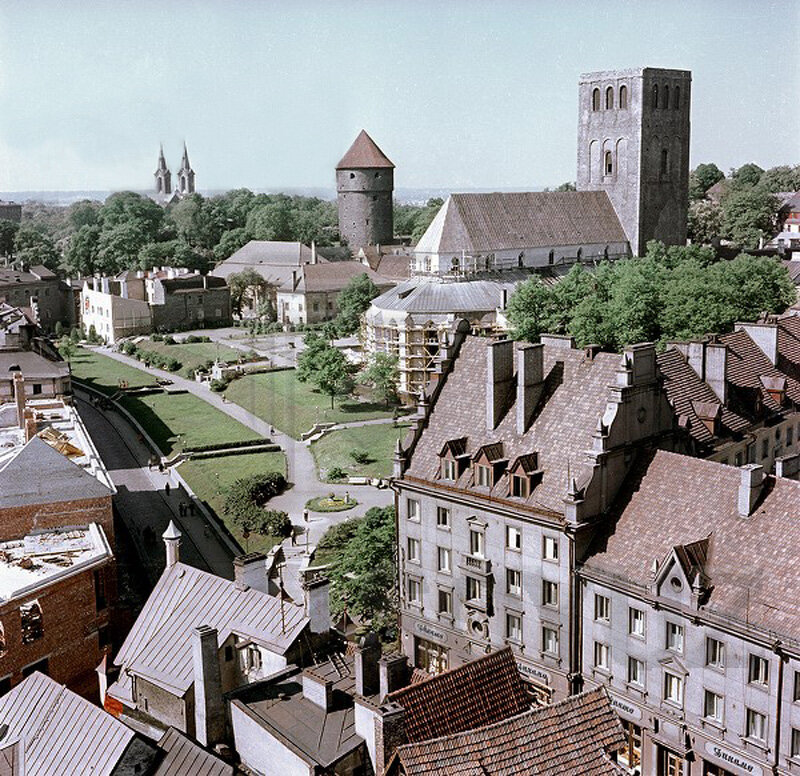
Looking out of the two large windows should have offered the second most beautiful sight after Tallinn’s silhouette. There before me stood the wall of “Vanalinn”, or the Old Town.
A light was projected on to Pikk Hermann Tower, aimed at the flag. It saddened me to see a red flag flying there instead of the blue, black and white flag. I prayed that, one day, the flag of a free Estonia would once again fly there, and that it would be a beautiful sight for all to behold.
Reunion
On the morning I was due to meet my father, I had to rise early. I hurried downstairs for breakfast.
It was not the quick service one would have had back home, but after a while I did manage to get a cup of coffee and a “pisi” ham sandwich. As there was nothing to go with the coffee, such as cream or sugar, I asked the woman at the next table whether she would pass me hers. Rather rudely, she said, “No, order your own.” Welcome to Estonia behind the “Iron Curtain”.
It took two bites to eat the sandwich and a couple of gulps to finish the coffee, and I was done. Surprisingly, “tädi” Erika was waiting for me outside the door. She did not want to disturb me in the dining room, and she seemed a little afraid. She had come early to say “good morning” and see how I was. She suggested that we go for a walk. That was how people were able to talk freely, because of the spying.
She took me to a small shop not far away called “The Dollar Store”. It was not to buy anything, but to show me that only a foreigner with foreign currency – especially American dollars – was able to buy anything there. Even if a local had dollars, they were not allowed to buy anything. Apparently, this was the only shop where one could get anything worthwhile, even though it was overpriced. We quickly returned to the hotel, and she left at once, knowing that I was expecting my father.
At about eleven o’clock, there was a knock at the door. I knew it would be the tall, handsome man I had seen in so many photographs. Yes – my father, for whom I had longed all those years.
It was the father with whom, when I was a teenager, I had made a pact that each night we would look up at the stars and pretend we could speak to one another. That father was now on the other side of the door. Open Sesame!
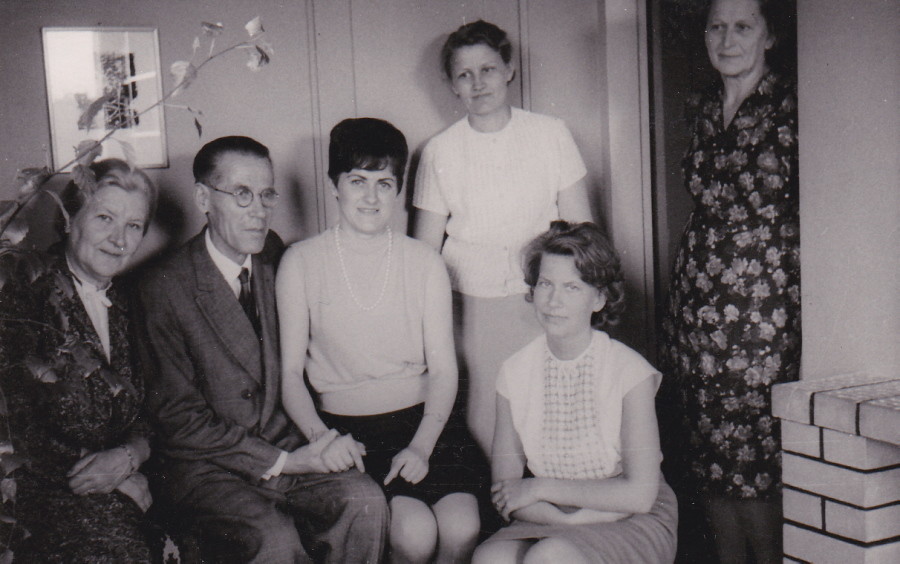
I wanted that magic to continue on the other side of the door, but once it opened, the magic was gone. Instead, it was the shock of my life to see a man hunched over, frail and thin, yet with a broad smile on his face. We embraced without missing a beat, both our hearts pounding wildly. It broke my heart to see him looking so old at 59, and so unwell. What a moment in time!
There was another surprise waiting around the corner. He had brought his wife, Alide, and his two sons, Urmas, 13, and Tarmo, 11. I had known about them and had received photographs and letters, so I was happy to meet them at last.
At last, I had a family of my own, with these two boys as my brothers. I was elated. As I was so much older, they wanted to call me aunt, but I kept insisting that I was their sister, not their aunt.
Alide was very kind, and my mother had known the family earlier and was pleased that he had married her, especially as she was Estonian and a good Christian.
Painful memories
We made the usual small talk, and then Alide allowed my father and me to talk while the boys sat very quietly and listened.
I so wanted to know about his life, but I did not know how, or even what, to ask. I waited for him to speak, and it was clear that he was afraid to say too much. I learned that he had been shot in the neck during the war, and that the wound had struck a vital nerve. His left arm and leg were paralysed, his left hand shook, his eyes twitched, and his speech was slurred. No longer did he stand tall and proud, but hunched and broken.
I held back my tears until nightfall, when I was alone. He did not speak about the labour camps or the suffering he had endured in the forest when he was first forced from our home.
He told me how he had returned home after being released from hospital, where he had spent many months recovering from his injuries.
With joy in his heart and in eager anticipation of seeing the love of his life, Ilona, and the other love of his life, his daughter Maie, he had knocked on the door of what had once been his flat. To his shock and dismay, strangers opened the door – but there was no Ilona, no Maie. No longer joyful, but sad and bewildered, he turned away and, in his pain, walked several more blocks to my grandfather’s house, hoping for better news.
My grandfather, of course, knew what had happened to my mother and me, because it was at his urging that Ilona fled with Maie, leaving everything behind in the hope of returning when it was all over. Ilona never had the chance to return when Estonia was free.
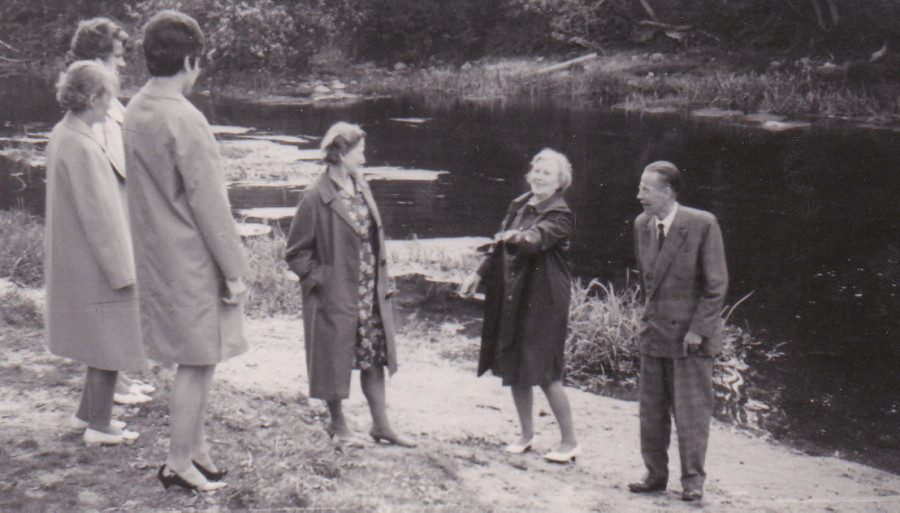
My father waited for several years in the hope that we might return, but that too never happened. Disabled and without a home, he turned to old family friends for help and eventually married Alide. It was a heart-rending story, and I was deeply hurt by it. What anguish and grief he must have endured.
Soviet reality
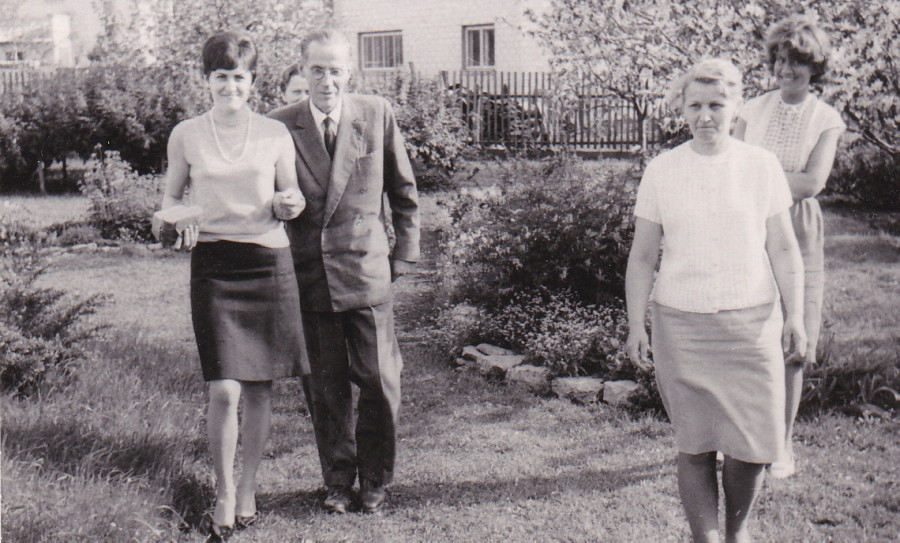
With me there, he seemed to gain new energy and strength. He insisted that we should all go for a walk, and he showed me the building where our former flat had been, as well as my grandfather’s house.
They were all in an extremely poor state, and total strangers were living in them. Everywhere, paint was peeling, fences and gates were in disrepair, nothing green was growing, and everything looked grey and lifeless.
People wore expressions that seemed either sorrowful or angry, and there was a colourless cast about them too. Their clothes were drab, and no one seemed to care very much about anything. It was an image that would haunt me.
He also took us to many of the city’s historic sights – the churches, towers and walls of Tallinn’s Old Town. As we went along, he told me a little of the history behind each one.
My father would lean on my arm much of the time. At other moments, he would hold my hand, look at me and say, “my little Maie”, as though I were still the little girl he had missed so much. He had missed seeing his little girl grow up, and I had desperately missed my father. For him, those moments were priceless – and they were for me too.
My visa was valid for only seven days, and I was not allowed to go beyond the city limits. All but one of those days was spent with my father.
On another day, we went to a department store, and I believe there was only one in the whole of Tallinn. People would go there in the hope of finding something they needed or wanted. The choice was extremely limited and there were very few sizes. Most of the tables were empty, while others held only a handful of items.
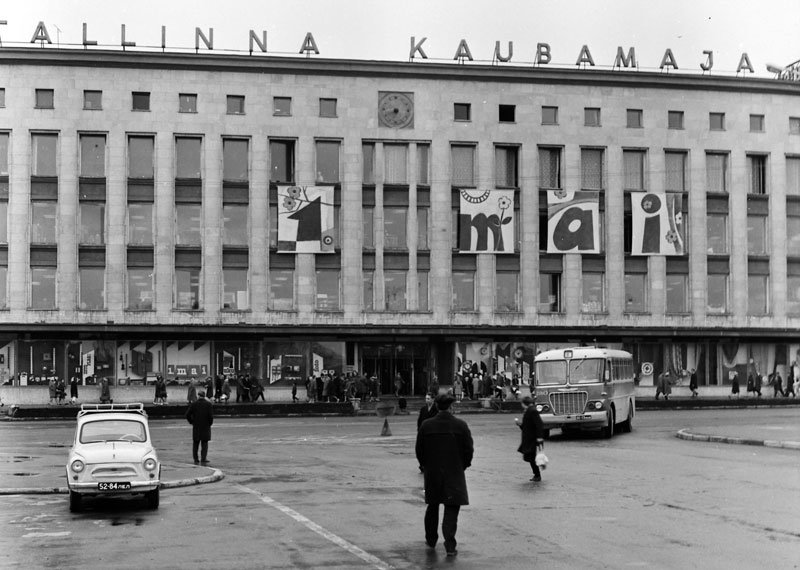
My father also took me out to dinner. The menu offered only a few choices, the waitress was unfriendly, and the wait was extremely long.
We decided on hot dogs and sauerkraut. I do not think my father had been to a restaurant for a very long time and did not realise how much things had changed. He kept complaining and apologising to me about everything – the lack of food, the dirty tables, the poor service, and the absence of tablecloths.
I think that having been a refugee made it easier for me to adjust to this sad situation, but for my father it was clearly distressing.
KGB interrogates
I had requested permission to visit my father’s home in Kohila, and one morning I was called down to the office. My hopes were high, but they were quickly dashed.
I was asked to sit down. The room was long and narrow, with two desks, some filing cabinets, bare walls, and an unadorned window. The two men began questioning me by first telling me about the shooting of Robert Kennedy, then waiting for my reaction before continuing their interrogation for several hours.
They asked why I had left Estonia, what was going on back in the United States – specifically in Lakewood, with its large Estonian expatriate community – and about the Estonian House, the church, the school, and much more. I was frightened and wanted to make sure that I would be able to leave Estonia.
I returned to my room before my father and the family arrived. I was somewhat unnerved, but I composed myself.
We visited all the family graves we possibly could. This was part of revisiting the past, giving it meaning, and making that faraway land real after all. Even after so many years in foreign lands, and after finally making a home in America, I still felt a strong attachment to Estonia.
Leaving occupied Estonia
The day of my departure came sadly and all too soon. To meet my father, along with all the family members and friends, was a dream come true, even if that dream unfolded in a dark place where fear prevailed and nightmares intruded.
Everyone was sad and in tears on that final day, but I had brought them a few days of relief, happiness and smiles. Even so, I was relieved to be going home.
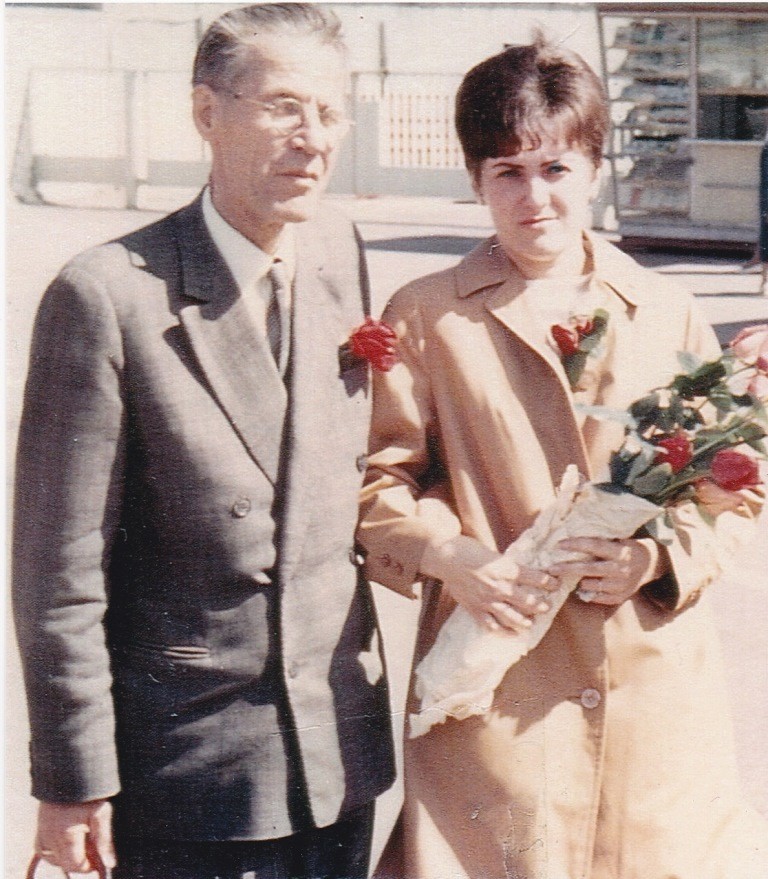
As we gathered on our side of the gates and fences to say our goodbyes, I was given a bouquet of flowers. I took out a red rose and pinned it to my father’s lapel.
I knew that soon I would have to turn my back, walk through the gate, and possibly never see them again. Oh, it was so painful. There were many secrets that could not, or did not have time to, come out, and they will remain locked behind the “Iron Curtain” for ever.
After some persuasion from my godfather, they allowed my father to walk with me to the ship. We walked in silence as we listened to the Oral Roberts Choir singing “Nearer My God to Thee” from on board. They were in Tallinn for a concert, but had not been allowed to sing religious songs. Now, as they were departing, they sang as many as they could.
Last walk together
Our last walk together came to an end when we reached the steps of the ship. How do you say goodbye to your father, knowing you will never see him again? We embraced, we kissed, we wept, and then I had to leave my dear, poor father.
I hurried up on deck, from where I could still see him. Tears streamed uncontrollably down my cheeks as I looked down at him. I felt such love, sorrow and pity.
I could not imagine the pain he must have felt in having his only daughter return to his life, after so many years, for just seven days – and then having to watch her leave for ever. I could almost see him losing his strength and growing weaker and weaker.
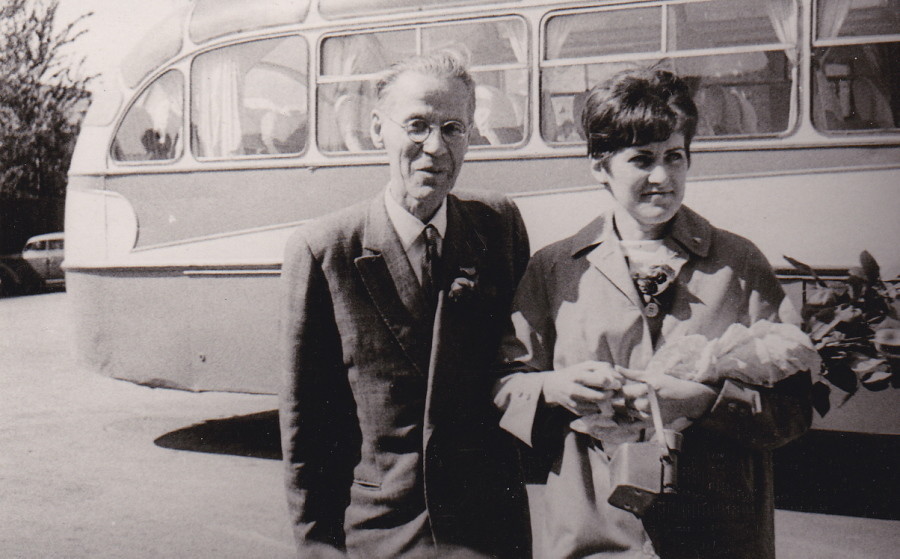
The ship began to pull away from the dock very slowly. My eyes filled with tears, and I kept wiping them so that I could still see my father waving. I took out my scarf and began to wave it, so that he could see where I was.
He stood alone on the dock with my rose pinned to his lapel. He grew smaller and smaller, but I could not take my eyes off him. At last, he stopped waving; he turned, and I watched a broken man limp farther and farther away until I could no longer see him. He did not turn back, he did not wave again, and I knew that he was crying his heart out, just as I was. All I could do was stand there and watch the skyline disappear.
Gone. It was all gone. I was leaving my loved ones with deep regret and sorrow. How I cried for my father – and how he must have cried for me. During the three-and-a-half-hour journey back to Helsinki, I reflected on where I had been and all that I had seen.
The happiness was understandable. It was the depression, the sadness, and the sense of doom among the Estonian people that would remain etched in my heart. It was the importation and forced mingling of foreigners, the lack of food and clothing, the devastation left by the war, the disrepair, the fear in people, and so much more that had transformed a once beautiful country into a land marked by wounds and scars, and a people living in pain and hopelessness.
Unless you lived there or visited during those hard times, you could not begin to understand. You may read or hear their stories, but you cannot fully comprehend them until you have been there and seen and heard what I did.
The mental and physical suffering of an oppressed people cannot truly be put into words; it is something you carry with you once you have seen it and felt it.


Keep it coming! Estonians don’t talk that much about these sort of things.
How are you connected?
I hope to, as long as there are readers.
So interesting, I look forward to the rest of the story!
Thanks! If you liked the first part, I’m sure you’ll like the rest.
Maie
Great article, I have similar experience but could not return till 1991. I spent 1945 -1949 in DP camp in Kempten and the came to America. I have been back to Estonia many times in search of family and have found my sister, brother and cousins. We have now all connected and see each other almost every year. I just returned from Estonia last week and it is doing great.
Thank you for your story .
To George Raunam – I now have published my book, “Shattered Lives,” which can only be purchased directly from me. Contact me on email at maie.currie1@verizon.net for more info. As a matter of fact I also was in Kempten. Maie Currie
Did you get to read Part II of my story, Tuula?
This is great stuff. Palun kirjutage edasi!
Thanks! That was only Part 1. I don’t know if they decided to divide the story into 2 parts or ever 3, but there’s more to come.
Maie
Whoever reads this story and finds it interesting, please share it with your friends.
Thanks,
Maie
Wow. This is the best article I’ve read on this site, to be honest. Even the small details like toilet paper give a sense of what things were like back then. Please continue, and post as many photos as possible. They’re fascinating!
Thanks! Part 2 should be up within a week, as I was told. It’s up to Estonian World to pick what pix they post. I appreciate your comments. It’s people like you that give me inspiration.
thank you for this
I will definitely share this article with my daughter who is half Estonian born in the United States. She has had many arrivals to Estonia but none of them so shocking, I hope. Thank you for writing this story and will be waiting for the next instalment. Meanwhile many blessings to you!
Thank you for your comments. Last year I published my book, “Shattered Lives”, where I talk about my life from the time I was 4 years old and how my mother and I escaped the Soviet Communism in 1944, lived as refugees in Germany for 5 years before making it to the US. Most of it is from the view of the young child (me). The last chapter is when I returned to Estonia in much more detail than the article.
The price of the book is $15. and the postage in the US is $4. The postage would be the same for 2 books and you could probably sell or gift the other one if you’d like. My email address is maie.currie1@verizon.net You can write me there and let me know if you are interested. Maie Currie
I am a young Estonian living abroad, I appreciate your love for the country even from far away. Thank you for sharing your story, I must admit I do not know much besides the facts of everyday life during that time and I think it is important to remember that time period and talk about it or we will forget about the joys of freedom.
You are absolutely right. It is not that we’re living in the past, but we should never forget what happened in the past.
Yes, I think we should not forget the past, including the painful and dark days of the occupation. When I was in Estonia, I was shocked to learn that many young Estonians voiced the opinion that older people should stop talking about it (the pre-war and occupation)and move out of the way for the young to take over positions of power. This sort of attitude seems to be naive. If the past is not remembered, it can easily be repeated. A balance of understanding what occurred in the past with moving positively into the future will ensure good decisions are made in the future.
My mother also left around 1944. I know she was in Germany then. Unfortunately for me, she cut all ties. But she was still very proud of her heritage. I was told families left Estonia together, she was by herself. I know little about what went on. “The Singing Revolution,” a documentary, has given me a picture of life there. Your story makes it all so more important to hear the truth. I do not know if I still have relatives.
That’s unfortunate that your mother cut all ties, Christine. It’s true families tried to leave together but there were many that didn’t and some who found each other years later. Do you have any Estonian friends who could help you search for lost relatives in Estonia? If you ever have an opportunity to visit Estonia, do it. You’ll never forget it or regret it! I have a problem in reaching other relatives I know I have, but I think I’ve given up on that. It’s possible they don’t want to be found. Charles (Kalev) Ehin has written a book “Coming Home” where he describes his return to Estonia in 1982 which is very interesting and full of historical info. I’m in the process of working on mine, as well.
Hi Christine, I was in a similar situation to you and didn’t know if there was any of my family (Father’s side) still living in Estonia. He went to Germany with the retreating German Army, was later classified DP and immigrated to Australia. My Father died when I was three and half, so never got much cultural or linguistic input…. let alone our family story. I joined several family tree sites on the net and found Geni was the most useful for Estonia. I found my Father’s younger sister and her two daughters (my first cousins) and the three children of one and two children of one of theirs. I visited Estonia two summers ago, with my daughter. It was eye opening…. in a good way and with some shocking realities as well. I strongly recommend that you try something similar. It does give some reconciliation to one’s own story. Now I am filling in the blanks with regard to culture. X
Please write me malmetsirje@gmail.com and I help to find your relatives. I have done that before. Greeting Sirje
great read! I felt the pain behind the story and feel the same way every time I visit my family. Obviously a huge difference since I do get to see my family but there’s always a hole in my heart when I leave Estonia. The bond is as strong as it always has been. My children love to visit and want to move there (they’re 9 and 7), they see Estonia thru children’s eyes which seems to be a very magical place. For me it’s a home first and foremost, even though now I have lived half of my life in the states. Thank you again for your story and I hope you get to reconnect with your family again. Estonia today is different than during soviet times but lot of the heartache is still there.
It is amazing how everyone who visits Estonia finds the land to be almost magical whether they have relatives there or are tourists.
Last year I published my book, “Shattered Lives”, where I talk about my life from the time I was 4 years old and how my mother and I escaped the Soviet Communism in 1944, lived as refugees in Germany for 5 years before making it to the US. Most of it is from the view of the young child (me). The last chapter is when I returned to Estonia in much more detail than the article.
The price of the book is $15. and the postage in the US is $4. The postage would be the same for 2 books and you could probably sell or gift the other one if you’d like. My email address is maie.currie1@verizon.net You can write me there and let me know if you are interested. Thanks for your comments. Maie Currie
Your article is very interesting because our Estonian grandparents escaped from Russia and arrived in Canada in 1902. In 1968 we had no idea that people were still being mistreated. Please continue to share your stories.
Last year I published my book, “Shattered Lives”, where I talk about my life from the time I was 4 years old and how my mother and I escaped the Soviet Communism in 1944, lived as refugees in Germany for 5 years before making it to the US. Most of it is from the view of the young child (me). The last chapter is when I returned to Estonia in much more detail than the article.
The price of the book is $15. and the postage in the US is $4. The postage would be the same for 2 books and you could probably sell or gift the other one if you would like. My email address is maie.currie1@verizon.net You can write me there and let me know if you are interested. Thanks for your comments. Maie Currie
Maie, Thank you for this touching life story. I live in Estonia, now for 3 years. I cant explain why or how much I love this land, Im from Costa Rica. I cant imagine how people were living at that time, not when I see all the beauty of the culture and love of the people here. Estonia is getting what it always it should have, Love and Freedom. Thank you so much for this.
David.
Last year I published my book, “Shattered Lives”, where I talk about my life from the time I was 4 years old and how my mother and I escaped the Soviet Communism in 1944, lived as refugees in Germany for 5 years before making it to the US. Most of it is from the view of the young child (me). The last chapter is when I returned to Estonia in much more detail than the article.
The price of the book is $14. and the postage to Estonia is $25. The postage would be the same for 2 books and you could probably sell the other one to cover the postage. My email address is maie.currie1@verizon.net You can write me there and let me know if you are interested. Thanks for your comments. Maie Currie
Tere Maie!
thank you for sharing this story with us. I’ve now read it twice. (Tulid küll pisarad.) I agree it’s very important to remember the past. Estonia and Latvia and Lithuania must remain free and independent countries now and forever more.
Tartu is like my second home in my heart and in my soul. I’m happiest when I’m there.
I saw you wrote that there is a second part to your story. I would very much like to read it if I could find the link.
Parimate tervitustega,
Jerry
P.S. Minul ise on tugev ühendus Eesti rahvaga. Mul on eesti tütar, ja tema, nii armas ja kallis, on parim asi ikkagi minu elus.
Hi Jerome,
Thank you for your kind remarks. The article in the September Estonian World was a complete article. The earlier (2013) article was in 2 parts. They have done such a great job and we should donate what we can in order for them to keep up the good work they do with all the articles they publish. I have written a book, Shattered Lives, and soon you should be able to get it on Amazaon.com or contact me on my email maie.currie1@verizon.net Thanks, Maie
to Jerome Walker, You might be interested in my book, “Shattered Lives”. If so, email me at maie.currie1@Verizon.net
Marie Currie:
This is good that you write of your experienced and the experiences of the Estonians as a once oppressed and captive people.
Here is my Story of how I went to Help the Fledging Estonian Republic back in 1995.
My later father was an Estonian Army Soldier who had to endure the illigal humiliating Soviet Terrorist invasion,takeover and Occupation in 1940 and subsiquently serve in the Soviet,German and Finnish Armies as a rest of the brutal situation Estonia Channing occupiers.
My mother was born in Germany of mixed background, German,Polish and Lithuanian East Prussian.
I was born in the USA and always felt sad never to know my Estonian Grand Parents.
My father was marked by the KGB for his service to Estonia and could not safely go to visit his parents and family during the illegal Soviet occupatuon. He died in exile in 1978.
I remember seeing my father cry on Jaani paev when the Eesti humm was sung in exile at the Long Island Eestikodu in the early to mid 1970’s. All had a major impact on me.
I decided to dedicate my life to fight Communism and Free Estonia, Latvia and Lithuania from Soviet oppressive illegal occupation and protect Liberty and Freedom So I started to learn to be a warrior, Lawenforcement Officer, learning Karate and Marital Arts, studying Criminal Justice and Military Science. I joined the US Army as a Military Police Officer.
I was stationed in Germany from 1988 to 1992 during the time when the little Mouse that Rored
(The Estonian SSR) challenged Moscow, the Baltic Chain and later Lithuania took the lead. I remember when the Putch came and Estonia declared Full Independence from the Soviet Union, something I feel should have happened in unison along with Lithuania and Latvia a year earlier.
In 1994 came a pivital moment, I felt the need to spring into action. I started to formally study the Estonian language at the NY Estonian House.
My intuition told me to apply my skills, knowledge and experience to help build and strengthen the New Estonian Army to never allow the horrific disasterous events of 1939/1940 to ever occour again.
I was contacted by a Retired US Army Colonel who became the New Estonian Defense Forces Head. General Aleksander Einseln. Who said to me that he needs help to properly organize the fledging Estonian Defense Forces he made promises to me as well that he never keep.
In 1995 I kept my side of the deal with General Einseln, I arrived in January as a
“probe”. Later coming back to full serve almost 3 years. I was appointed the Provost Marshall of Tallinn in the Guard Battalion
This was amazing here I am serving in an Independent Estonian Army with it’s new Military Police being issued new ID card and Uniforms, something my late father did at the last leg of the Republic of Estonia in 1940. In my father’s and Grandparent’s memories did I dedicated my service to Estonia.
Within several months I observed difficulties
General Einseln did not fufill his promises to Commission me as a Second Lieutenant, the other Commissioned Officers were not accepting me because of this and that I was born outside of Estonia, I was labeled a
“Foreign Estonian”, mocked, ridiculed and started to become marginalized. My plans and ideas were plaugarised.
Part of my duites was to supervise and train the Estonian Presidental Palace at (Kadriorg) Guard detail which I dilegently performed.
Several times I had to physically defend myself from violent attack from other Servicemen who did not like me because I was born in America.
I was mocked,harassed on a daily basis some called me ” Mickey Mouse”.
Finally Estonia sent myself and several others in a Peace Keeping Military Police Mission to former Yugoslavia in Croatia.
There we were out under NATO British control as a Partnership for Peace member State, Nit a full NATO member State.
I was the senior ranking Estonian as such I handled administration and representation of Estonian Military personnel to the leadership of the Command and Mission.
I was in for a suprise. One Austrian member of the Peace Keeping Mission informed me that ” Estonians have a bad reputation here as bring incompetent”.
I asked him to elaborate, to which he explained that there was a traffic accident that Estonian Military Police were dispached to process and those Estonians responding could not properly conduct an investigation,
and process the case. That others including himself had to come out and take over and conduct the investigation and process the case”.
Shortly thereafter the two British Commanders in charge met with me and plainly stated,” We know your American”. Here your Estonian and Estonia is a former Soviet Republic that is nothing. Austria although not a full NATO member is much more advanced Militaraliry then Estonian is”.
Immedetly thereafter Estonian Military Police Personnel including myself were given the lowest jobs on the mission in violation of protocall. Austrian Mission members who were several ranks lesser were put in charge as supervisors.
I protested this disparging treatment to the British Commander who refused to change the ongoing situation with was clear marginalization and discrimination.
I attended several official gathering’s with the Acting Commanding General A British General of Polish Decent there a Canadian Lieutenant Colonel befriended and mentored me. Canadian Lieutenant Colonel Springer partly was witness to the Marginalization and Discrimination that myself and the other Estonians had to endure. He wrote a statement to this which I have to this day.
Shortly the Marginalization and Discrimination got worse and I again approached the British Military Police Commander and informed him that such treatment is unwarranted,Illegal and unexceptable. I was released of duty and sent back to Tallinn thereafter.
Upon arriving in Estonia I was summoned to the Defense Forces Head Quarters where Colonel Sirel a former Soviet Polkovnik ran a Kangaroo Hearing telling me a decision was made to release separate me from Active Duty in the Estonian Defense Forces.
I asked the Colonel why am I not given an opportunity to defend myself against all allegations and that I have evidence a witness statement from a Canadian Lieutenant Colonel who stated that my actions as a representative of Estonia was that of a professional Soldier, Lawenforcement Officer and Diplomat.Thst my actions and behavior were of a good Soldier and Diplomat.
Colonel Sirel said in English Sorry and I was told my career in the Estonian Defense Forces was over. I was given a discharge other then Honorable.
The US Military Attache Commander Peter Hendrickson made efforts to interceded for me to the Kaitsevae Juhataja General Johannes Gert to no avail. General Gert allowed this Arbitary Injustice to stand.
Because of this I was thrown out of my Quarters with threats to gave me evicted by calling the Civilian Police by a certain Captain Noe.
Now I had no choice but to flee Estonia ironically as my father did in 1944 except this is now 1997 and Estonia is Independent albit infested with former Soviet Officials.
I had to flee my second Homeland to go back to the USA as I was falsely charged and convicted of Arbitary trumped up charges for standing up for Estonian Military Personnel who were being marginalized and discriminated against by the British leadership on that Peace Keeping Mission.
When I arrived back in the USA. I made several attempts to clear my name if any wrong doing. I was able to call Lieutenant Colonel Springer on Canada and informed him of being discharged unbecoming for doing the right things,standing up for Estonian Military Personnel. Lieutenant Colonel Springer said he sticks by what he witnessed and write in his statement which I mentioned was not even taken into account.
Back in the USA I joined the State of New York’s Military Police Forces and later the National Guard. I presented Letters of Recommendation from several Military Attache’s such as Commander Peter Hendrickson to the Military Police Unit leadership one who was of Polish Decent kept asking me ” Why did you go there,etc”
This man was also a local Town Police Detective who had a bastards reputation for harassing town residents. One day this so called Detective threatened me he pressed me what I did for Estonia. I told him it was classified information and he became enraged.This situation with him got worse the Detective begin to threaten to search my home etc this was in 2006-2006.
I was already hired as a US Department of Veterans Affairs Federal Civilian Police Officer in addition to being a Military Police Officer in the National Guard.
What happened next is very disturbing.
I was further targeted by local Town of Orangetown Civilian Police Terror on myself and elderly mother. Our house was raided and searched, my mother’s collapased during this, one of the searchers bragged that he protected the Estonian President, this goon threated to handcuff my mother and myself in our home. Mind you all this time I myself am a US Federal Police Officer.
I was also targeted as a legal firearms owner something that’s supposed to be protected under the Second Amendment to the US Constitution which the Town of Orangetown Civilian Police Department did not care about, ironically this Police forces Terroristic illegal actions were eerily similar to that of the Soviet KGB. My mother’s health condition worsened after this terrible act if Government sponsored terror directed against us. She died shortly thereafter, her doctor stated to me this Government sponsored terror killed your mother.
At the same time our family mail was being cut open and retaped something that reminds me of letters from my grandfather to my late father that the Soviet KGB opened and taped up. I was also being followed by Orangetown Police cars and even pulled over and had a gun pointed at me threatening my life.
I was informed by a credible source that this is being done as I am an alledged ” Spy” and Assisin for Estonia. I told the person that Estonia is one of the best US Allies on the war on Terror, this should not be happening to.me and my family and that we will go to Federal Court over this I will legally pursue justice with those responsibile the Detective and all.
Then at my job as a Police Officer I was referred to a Fittness For Duty Psycoligical evualation which I passed. I was again refered to another Psycoligical evualation which I again passed. Then again and again.
Finally I retained an attorney who sat in 2 of these so called evualations which amounted to Soviet Style abuse if Psychology. I was then refered to a Seventh Psycoligical evualation which I declined and had my job as a Federal Police Officer promptly terminated. I took the US Government to Court over this and won,I got reinstated as a Federal Police Officer and was awarded some money for going g through the hell on Earth in what is supposed to be a ” Free Country,The ” Freest” they claim.
With in a year of bring back on the Job as a police officer I was retaliated and fired Again.
I took the US Government back to Court and won again this time I retired from the US Department of Veterans Affairs Police Department. As I knew they would not stop violating the rule of law and harassing me.
America is not the Free Country it’s billed as
My case is proof of that. Ironically my layer father an Estonian refugee fleeing Communist oppression and trynee is turning in his grave at what happened to my mother and me.
My Attorney and myself have written the Estonian Consul Erriki Kirikimae in New York for Assistance which Was Not given.
I have also written several Estonian Presidents including ex Patriot T.H. Ilves to
have my name cleared with an Honorable Discharge from the Estonian Defense Forces as well as to be promoted to Second Lieutenant as was long promised to Mr by General Einseln to no avail.
As well as to have the local Orangetown NY Police Authorites investigated and held accountable for their gross terrorism and Criminal misconduct for Violating my Late elderly Mother and my rights.
A big part of this occoured because I was set up because of my service to help develop the new fledging Estonian Defense Forces Military Police. I know that to some this all may sound crazy, it all occoured and witness and evidence are there to establish these incidents as facts.
I am no longer a Big Estonian Patroit as to being rejected by my own people and being Discriminated and marginalized mistreated by them.I do not trust most Estonians at all.
Or Americans either as both countries did not treat me well according to my Church Pastor who observed this.
I am a man of principal and honor. I went to the aid and Assistance of the fledging Republic of Estonia when it needed help.
Yet that same Estonian Republic would not help me in my hour of need. That I will Never Forget!
I will fight till the day I die to clear my name with the Estonian Defense Forces and be given the rightfully rank promised to me so many years ago.