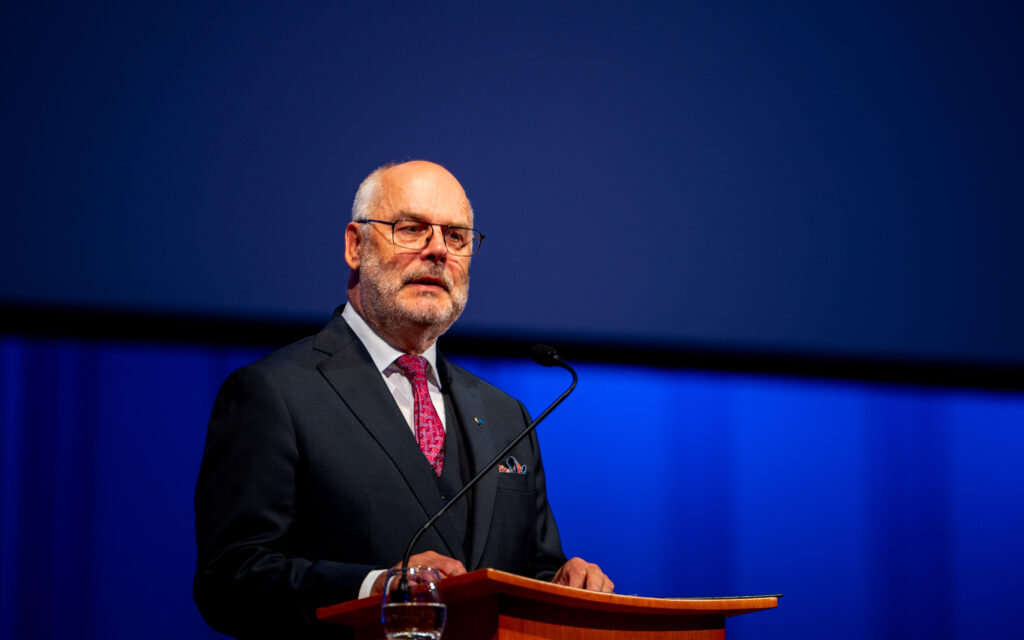
Estonia’s president Alar Karis has called for Europe to re-enter diplomacy with Moscow – only to be slapped down by the country’s foreign ministry and foreign minister, who warn that engaging the Kremlin now would weaken Ukraine and hand Vladimir Putin a propaganda victory.
The unusually open dispute began after Alar Karis, Estonia’s largely ceremonial head of state, told Euronews in Dubai that the European Union should appoint a special envoy to take part in negotiations with the Kremlin aimed at ending Russia’s war in Ukraine.
“The European Union should also be involved in these discussions,” Karis said at the World Governments Summit. “Although we are not fighting Russia directly, we have supported Ukraine for many years already and will continue to do so.”
He argued that Europe had arrived late to the diplomatic track. “We should have a say as well, but as you can see, we are a little late… A couple of years ago, we were in a situation where we did not speak to aggressors, and now we are concerned that we are not at the table.”
Karis declined to name potential candidates, but said any envoy should come from a major European country and enjoy credibility with both sides.
Latvia backs the idea – but Tallinn hits the brakes
Karis’s stance was echoed by Evika Siliņa, Latvia’s prime minister, who also supported appointing a European envoy, while insisting that any engagement with Moscow must be coordinated with Kyiv and accompanied by continued sanctions.
“In my view, diplomacy is necessary. Dialogue is always necessary, but at the same time we must isolate Russia and maintain sanctions,” Siliņa told Euronews.
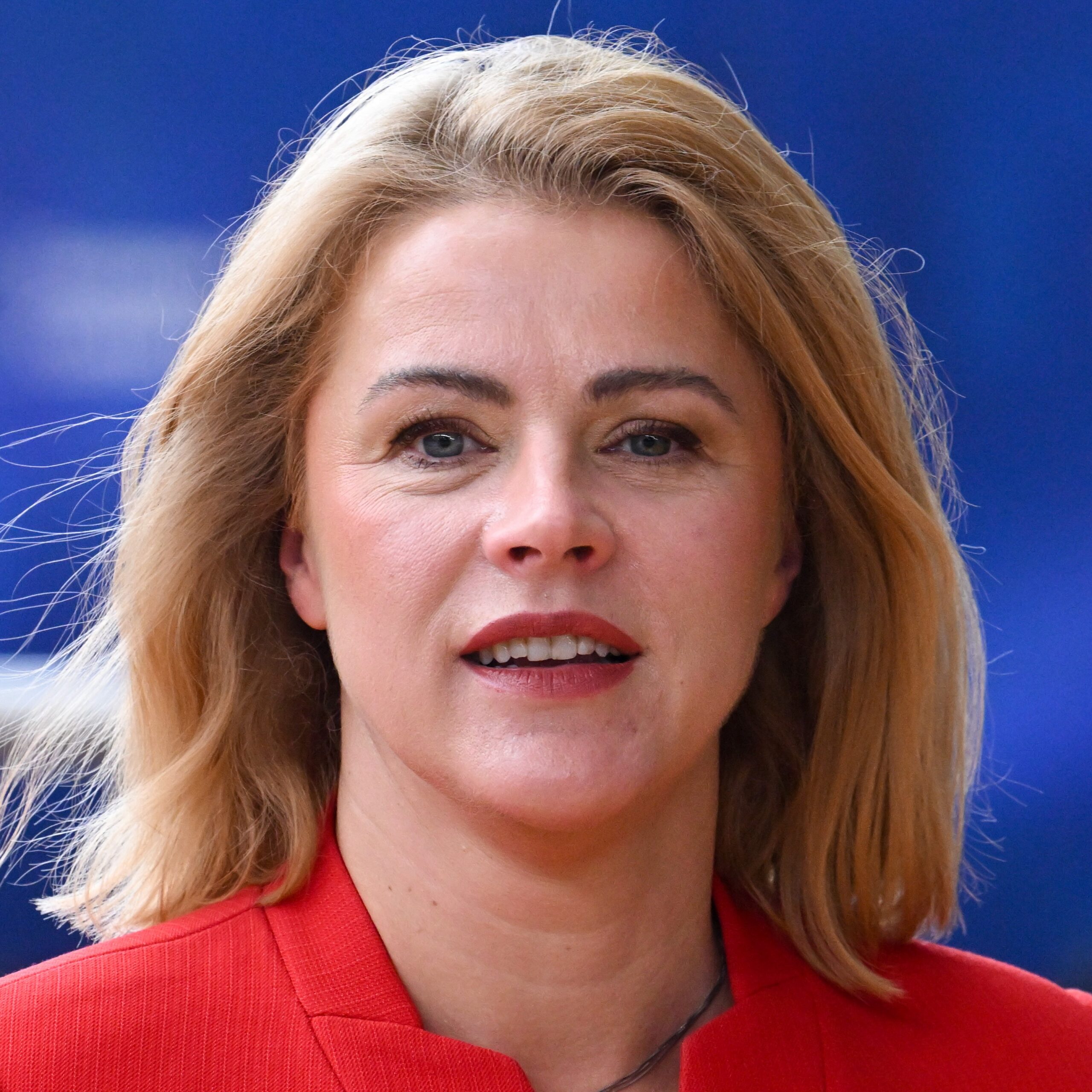
But in Tallinn, where foreign policy is set by the government rather than the president, Karis’s remarks immediately ran into institutional resistance.
In a statement to Euronews, Estonia’s foreign affairs ministry warned that, so long as Russia had not changed its actions or objectives in Ukraine, it was “neither possible nor appropriate” to engage in negotiations – and Estonia should not offer Moscow “a way out of international isolation”.
A blistering rebuttal from Estonia’s foreign minister
The strongest response came from Margus Tsahkna, Estonia’s foreign minister, who rejected the president’s line in a sharply worded press release titled: “Scratching at the Kremlin’s door weakens both Ukraine’s and Europe’s positions.”
“The desire to initiate dialogue with the Kremlin and build good relations with Putin is disastrous for Ukraine, directly threatens Europe’s own security, and runs completely counter to Europe’s policy of pressure and isolation,” Tsahkna said.
His argument was that Russia is escalating rather than moderating, making diplomacy at this moment not merely futile but damaging. Talks, he said, would give Putin the spotlight he craves and open the door to demands designed to weaken Europe’s security.
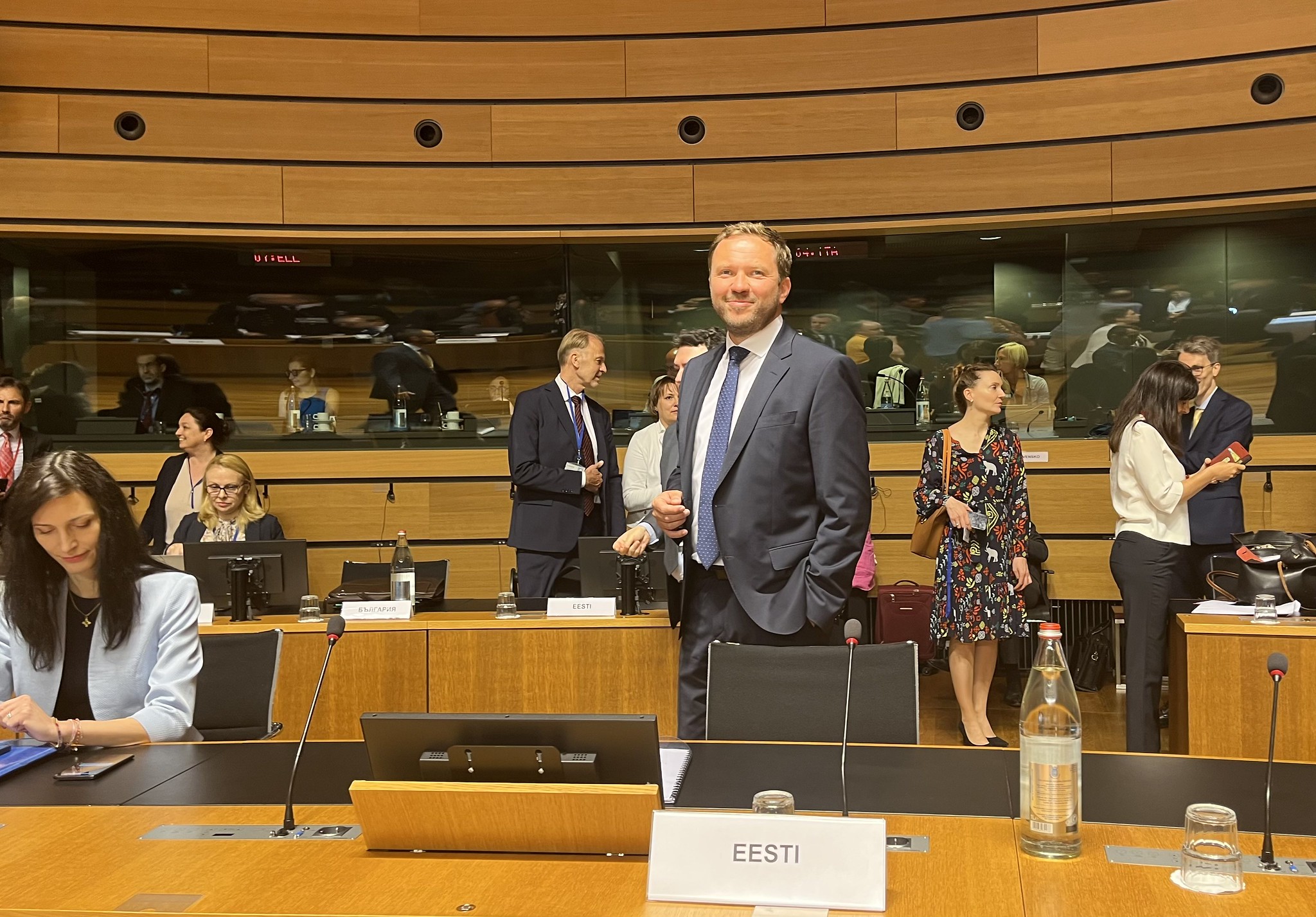
Tsahkna also warned that a European willingness to sit down with Moscow would signal Western weakness, allow Russia to play EU states off against one another, and help Putin present negotiations as evidence of a break-out from isolation.
He invoked the failures of earlier engagement, pointing to the West’s muted response to the 2008 Georgia war, Russia’s annexation of Crimea in 2014, and the Minsk negotiation process as proof that goodwill did not change Moscow’s course. The only viable road, he argued, was continued support for Ukraine and sustained pressure on Russia.
Karis’s office sought to clarify his position without retreating from it. His press secretary told the Estonian Public Broadcasting, ERR, that the president had repeatedly argued there should be more room for diplomacy and negotiations in foreign policy.
The real concern, the presidency said, was Europe’s marginal role: “Many parties are holding talks, yet the European Union is only indirectly involved… Europe must be more visible in the process.”
Senior politicians warn the split itself is harmful
The dispute quickly drew criticism from senior figures.
Marko Mihkelson, the chair of the Estonian parliament’s foreign affairs committee, said he wanted a direct explanation from Karis to Estonian journalists to rule out any distortion, warning that the Euronews account was “extremely regrettable” and damaging to Estonia’s foreign-policy credibility.
Russia, Mihkelson argued, had spent the past year misleading Western leaders with false hopes of peace while continuing what he described as genocidal methods in Ukraine. Putin’s place, he said, was not at the negotiating table but before the court in The Hague.
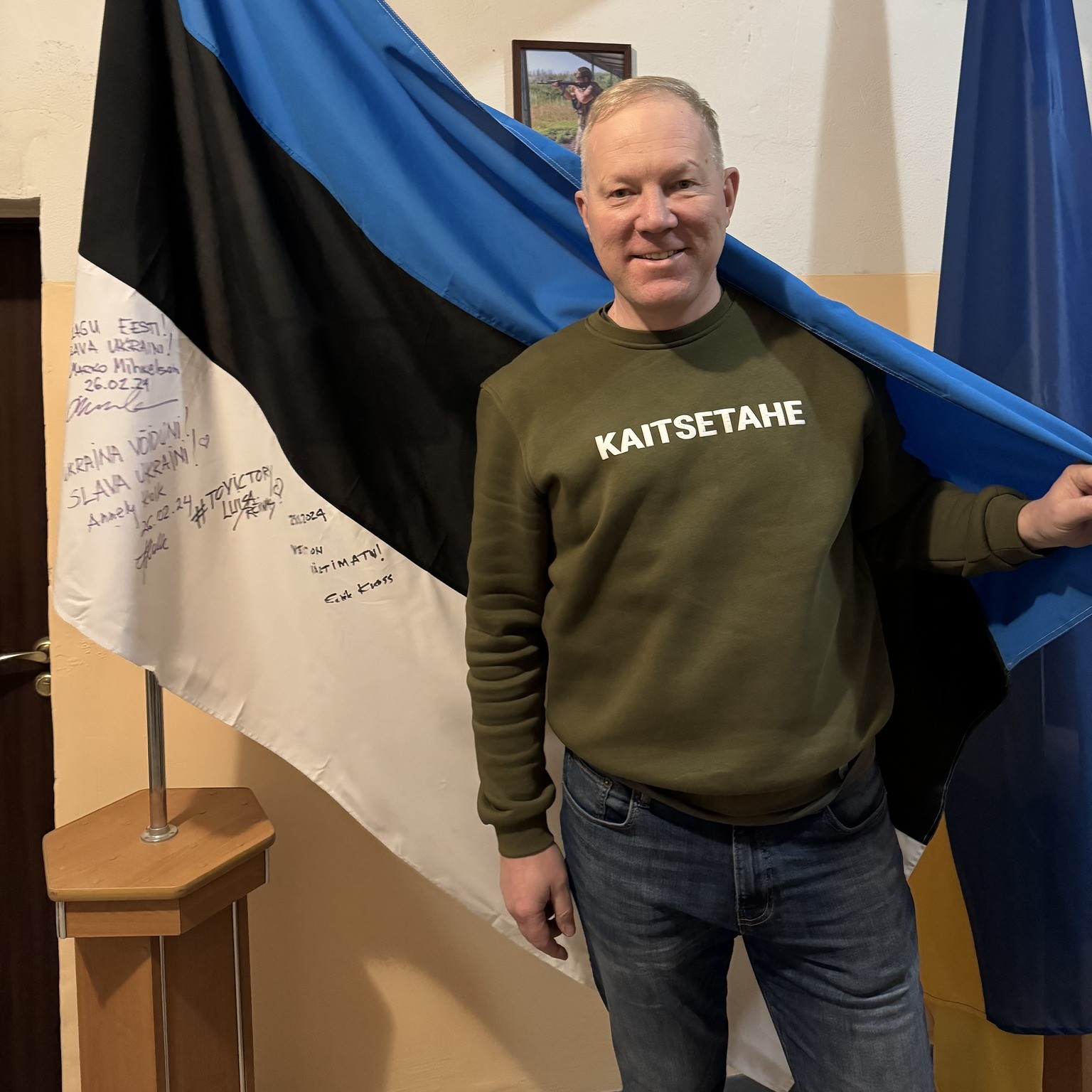
Another prominent voice, Raimond Kaljulaid, a member of parliament’s national defence committee, called the situation “entirely unacceptable” for a small state. Allies would not weigh who was right, he warned; they would simply see a lack of professionalism. Moscow, he added, would be delighted to watch Estonia’s president and foreign minister publicly quarrel over whether to talk to Russia.
Paet: no envoy needed
Backing the foreign ministry line, Urmas Paet, a long-serving former foreign minister now serving as an MEP and vice-chair of the European Parliament’s foreign affairs committee, argued that the EU already has an adequate channel: the EU delegation in Moscow.
“There is no need for any additional special envoy at present,” Paet said, pointing to continuing Russian war crimes in Ukraine and Russia’s hybrid campaign against Europe.
The row in Tallinn comes as Europe remains split over whether to reopen diplomatic channels with Russia, largely closed since February 2022. Euronews reported that France, Italy, Austria, Luxembourg and the Czech Republic are among the states supportive of exploring direct talks, while Germany has opposed the idea, citing Moscow’s continued bombardment and maximalist demands.
For Estonia, the episode lands at an awkward moment. Karis was elected president in August 2021 and sworn in on 11 October 2021 for a five-year term. The next presidential election is due in late August 2026, as his term nears its end.
Whether the EU ultimately appoints an envoy is unclear. What is already clear is that Estonia – normally among Europe’s most disciplined and hard-edged voices on Russia – has found itself airing an internal disagreement in public at precisely the moment when unity is often treated as part of deterrence.