
Estonia has built a global reputation for digital governance; that reputation is now at risk, as its new AI advisory committee reveals a striking absence of multidisciplinary expertise, ethical oversight and diversity, Karen K Burns, an artificial intelligence expert, writes.
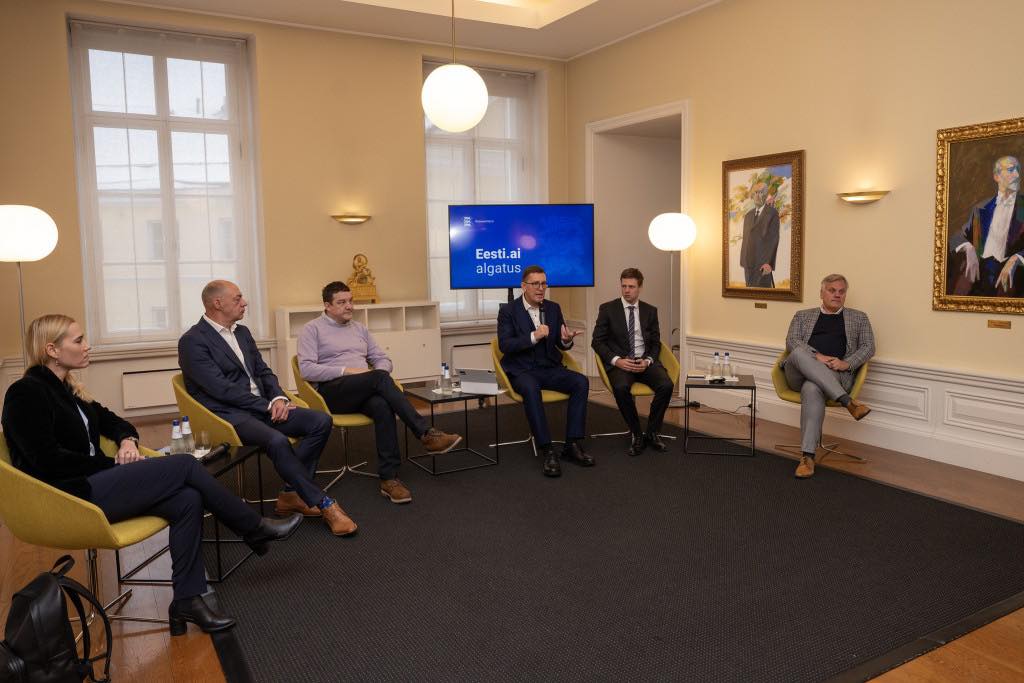
On 27 January, the Estonian prime minister, Kristen Michal, announced the formation of an AI advisory committee to guide government policy on artificial intelligence.
Its composition? Five men: three entrepreneurs, one venture capitalist and one IT figure whose relevance peaked years ago. No member has deep experience in building or researching AI systems. Not one woman. Not one ethicist, sociologist, legal scholar or representative of the vulnerable communities this technology will profoundly affect.
This is not merely tone-deaf in 2026; it is dangerous policymaking that risks squandering Estonia’s hard-won digital advantage.
Our data deserves better protection
This is not simply taxpayer money being wasted on yet another advisory board. It concerns Estonia’s most valuable asset: its digitised public data. Decades of digital transformation have placed us in an enviable position, but that advantage evaporates if policy authority is handed to a narrow group lacking the expertise to steward it responsibly.
Ironically, one committee member, Sten Tamkivi, recently co-authored a piece [in Estonian] in Fomo.Observer, identifying precisely the kind of complex societal questions that demand ethical and multidisciplinary oversight. Writing about Estonia in 2030, he outlines three scenarios for how AI could reshape our economy and social contract: the “super-efficiency paradox”, in which automation decimates the tax base; the “10X elite paradox”, where a tiny group of AI-enabled workers effectively holds the economy hostage; and the more hopeful “AI enlightenment”, in which technology lifts productivity across society.
These are not technical questions about model architecture or computational efficiency. They are fundamental questions about taxation, inequality, social stability and the very structure of our economic model. Tamkivi himself writes, “AI integration isn’t just an IT project, but a question of our new economic model… We’re at a crossroads where these numbers will start moving in directions our current state structure and social contract aren’t prepared for.”
Public data demands robust ethical and legal oversight. It requires experts who understand not only how to deploy AI for efficiency gains, but how to ensure fairness, protect privacy, maintain security and preserve human agency. The goal cannot simply be to “double Estonia’s output by 2035” when we face an aging population and already significant skills gaps in technological knowledge.
Who benefits from this efficiency? Who bears the risks? How do we prevent the “10X elite paradox” from becoming reality? These questions require diverse perspectives, not groupthink.
So why does the committee advising the government on these very issues include no one equipped to grapple with them? Where are the economists, sociologists, education experts and ethicists? The legal scholars who understand how to build frameworks for taxing machine-generated value? The AI researchers who were working in machine learning and data science long before ChatGPT was released? The academics studying algorithmic bias? The health-care professionals who understand medical AI applications? The social scientists who can assess impacts on vulnerable populations?
They exist. We have them. The Prime Minister’s Office simply chose not to include them.
The global standard Estonia is ignoring
Countries that take AI governance seriously understand that effective oversight requires multidisciplinary expertise. The US National AI Advisory Committee includes 27 members spanning academia, civil society, industry and non-profits, with an explicit focus on civil rights, ethics and workforce impacts.
Singapore’s Advisory Council on the Ethical Use of AI brings together technologists, consumer advocates and legal experts. The UK’s approach incorporated input from the Alan Turing Institute, alongside ethicists and researchers examining fairness, transparency and societal impact.
These models are not perfect, but they recognise a fundamental truth: AI governance requires voices beyond the tech industry’s usual suspects.

Why multidisciplinary expertise matters
AI is not synonymous with “tech entrepreneurship”, nor is it interchangeable with large language models – although you would not know it from the reductive framing of this committee’s announcement. When one committee member described AI as equivalent to “your village IT man (sic!)”, it revealed just how limited this group’s understanding of the technology truly is.
Serious AI governance must grapple with computer vision systems that could help detect child abuse – or be weaponised for mass surveillance. It must consider how algorithmic decision-making affects employment, social services and access to health care. It must address the risks posed by AI-generated deepfakes impersonating officials or manipulating elderly citizens. And, crucially, it must confront the very questions Tamkivi raises: how do we maintain a functioning tax base when productivity decouples from employment? How do we prevent extreme inequality? How do we ensure AI’s benefits are broadly shared rather than captured by a tiny elite?
These are not abstract thought experiments. Singapore’s framework explicitly addresses how AI deployment affects different societal groups. The US committee has a dedicated subcommittee on AI and law enforcement examining bias and civil liberties. Finland’s approach combines technical AI research centres with ethics advisory boards and anti-discrimination training for public officials deploying AI systems.

This should be a scandal
In almost any other developed country, announcing a government’s primary AI advisory committee with this composition would provoke immediate outcry. The Prime Minister’s Office has clearly prioritised speed and recognisable names over competence and legitimacy. The press release should have waited. Time should have been taken to build something credible, rather than assembling what looks like a networking event guest list and calling it strategic governance.
This is taxpayer-funded policy development concerning technology that will fundamentally reshape our economy, labour market, tax base and social fabric.
Estonia has the expertise: researchers, ethicists, legal scholars, social scientists and AI practitioners who have been doing this work for years. What we apparently lack is a Prime Minister’s Office willing to look beyond five famous tech names and acknowledge that serious policy development requires more.
Perhaps most troubling is that these committee members – educated, internationally experienced professionals – apparently saw nothing wrong with joining an all-male panel lacking genuine AI expertise. In 2026, how do you accept such an appointment without asking basic questions? Who else is on this committee? Why are there no women? Where are the actual AI practitioners? The ethicists? The social scientists who can help navigate these fundamental questions about our social contract?
The cognitive dissonance is staggering.
Our digitised public data – and our international reputation for digital governance – demand serious engagement with these challenges. The profound questions AI raises about our economic model demand the same. In 2026, with everything we know and everything at stake, this committee’s composition is not merely inadequate. It is simply embarrassing.
The opinions in this article are those of the author. This opinion article was originally published in English by Fomo.Observer and in Estonian by ERR.