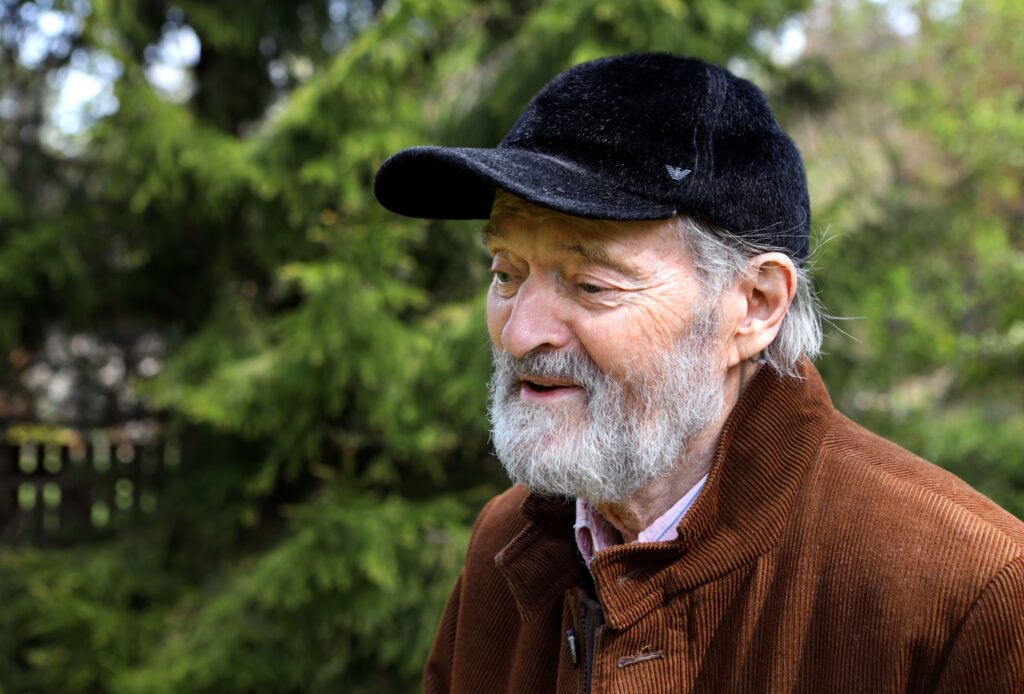
Arvo Pärt, the internationally acclaimed composer, is to receive the Goethe Medal, one of Germany’s most prestigious cultural honours, becoming the first Estonian to be awarded the distinction.
Pärt, one of the world’s most performed living composers and the creator of the meditative tintinnabuli style, will receive the award alongside the Italian translator Anita Raja and the Greek theatre director Prodromos Tsinikoris.
The medal will be presented by Gesche Joost, the president of the Goethe-Institut, at a ceremony in Weimar on 28 August 2026. The award will be accepted on Pärt’s behalf by his son, Michael Pärt, the chairman of the board of the Arvo Pärt Centre.
Connecting people all over the world
Since 1955, the Goethe-Institut has awarded the Goethe Medal annually as an official decoration of the Federal Republic of Germany. It honours figures who have made an outstanding contribution to the German language and to international cultural exchange. The medal is regarded as the most important award of Germany’s foreign cultural and educational policy.
Previous recipients include the theatre director and visual artist Robert Wilson, the conductor and pianist Daniel Barenboim and the composer Sofia Gubaidulina.
In its citation, the Goethe Medal jury described Pärt as an outstanding and influential figure in contemporary music, whose work had reached listeners across borders and generations.
“Over the course of his long artistic career, Arvo Pärt has found a unique compositional language that touches and connects people all over the world,” the jury wrote.
“The combination of spirituality and structural depth in Pärt’s works is unique,” the jury said, adding that his music is performed regularly by leading orchestras and interpreters around the world.
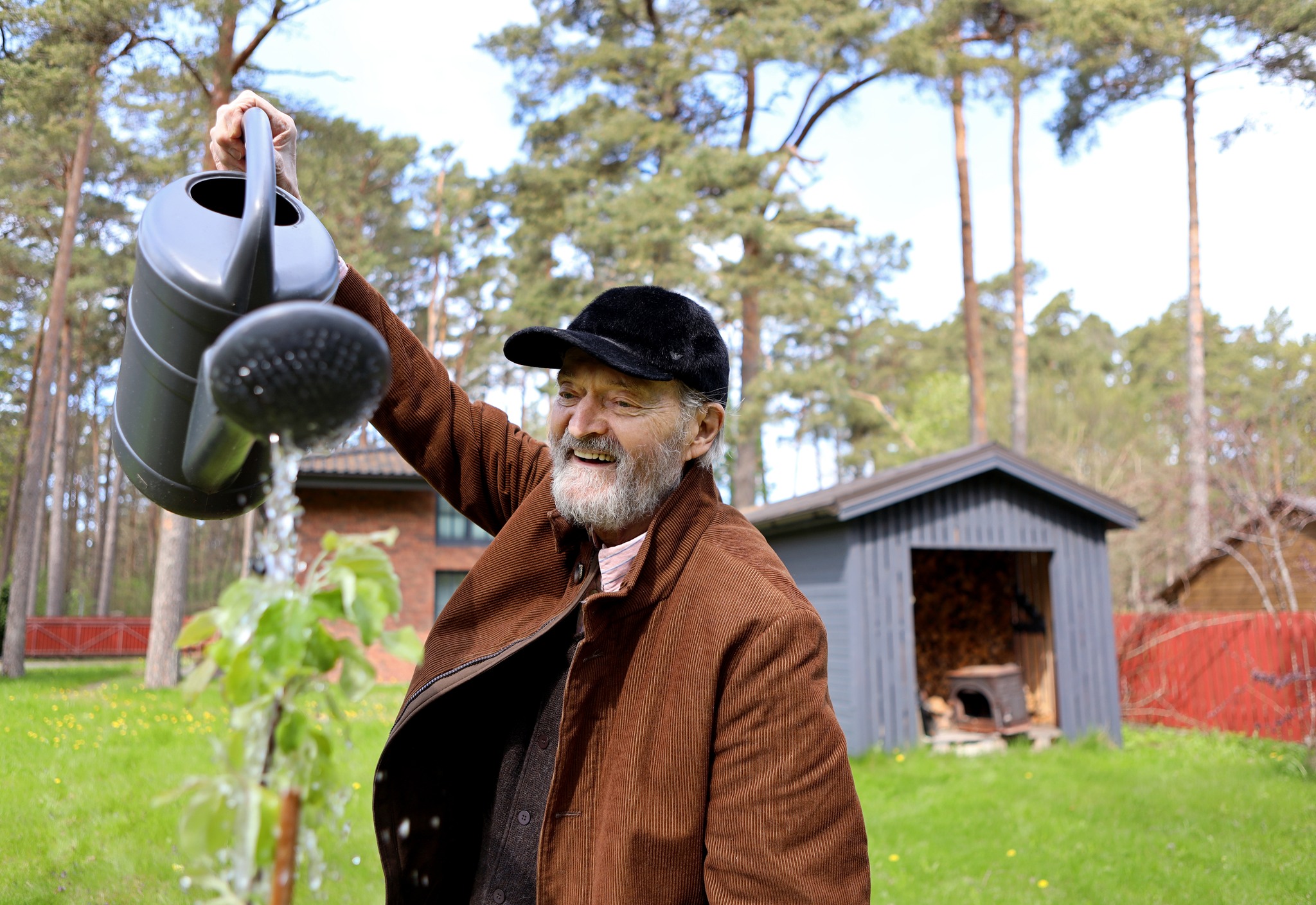
The award also follows a year in which concerts were held internationally to mark Pärt’s 90th birthday, underlining his status as one of the defining composers of the late 20th and early 21st centuries.
Berlin years at the centre of Pärt’s creative life
Pärt’s connection with Germany is not merely biographical, but central to his artistic development. After leaving Soviet-occupied Estonia in 1980, Pärt settled in Berlin, where he spent nearly three decades and wrote many of his major works.
Among them was Berliner Messe, composed for the 90th German Catholic Church Days in Berlin in May 1990 – the first such gathering after the fall of the Berlin Wall.
Arvo Pärt’s Berliner Messe, performed by the SWR Vokalensemble under the direction of Krista Audere, with Lars Schwarze on organ.
His German-language choral cycle Sieben Magnificat-Antiphonen, based on liturgical texts and commissioned by the Berlin RIAS Chamber Choir for its 40th anniversary, also belongs to this period. So do several of his large-scale sacred works, including Passio, Te Deum and Miserere.
Pärt’s long collaboration with the renowned German producer Manfred Eicher also began in Germany. Through Eicher’s ECM label, many of Pärt’s works received their first recordings and reached a broad international audience, helping to turn his music into one of Estonia’s most powerful cultural calling cards.
Later works also reflected his German connections. Vater unser, based on the German text of the Lord’s Prayer, was dedicated to Pope Benedict XVI.
Arvo Pärt’s Vater unser, performed by soloist Endrik Üksvärav, with Ulla Krigul on harmonium.
Born in Estonia in 1935, Pärt has long occupied a singular place in contemporary music: at once austere and popular, deeply spiritual yet formally rigorous, rooted in silence yet capable of filling concert halls across the world.
His music has been embraced by classical performers, film-makers, choirs, orchestras and listeners far beyond the traditional boundaries of contemporary composition. Works such as Spiegel im Spiegel and Fratres have become among the most recognisable pieces of modern classical music.