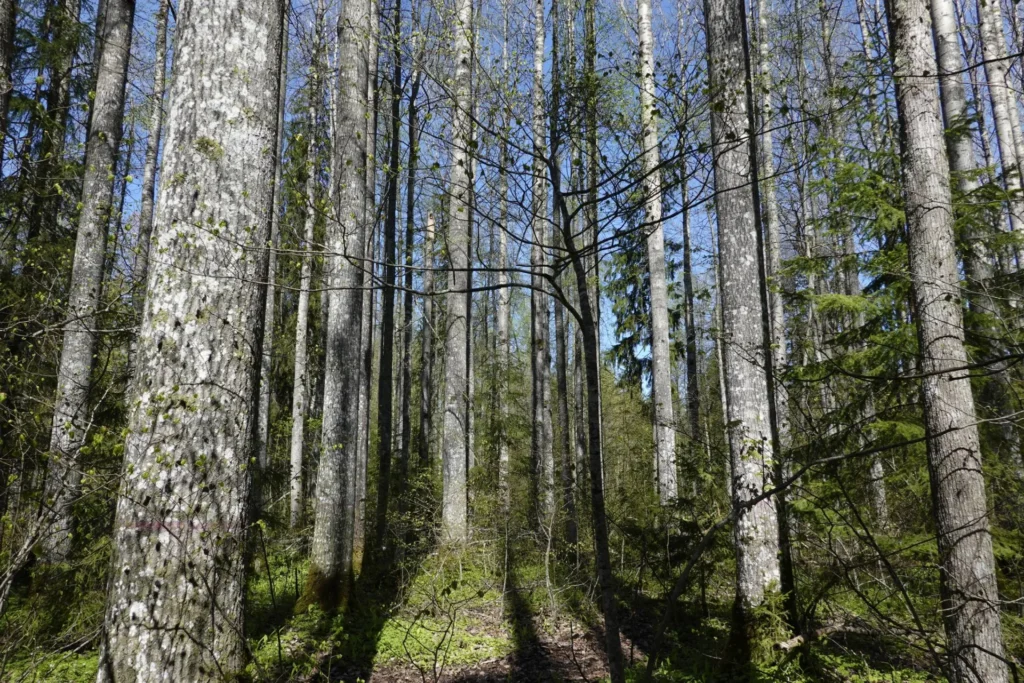
A towering aspen in south-west Estonia has been confirmed as the tallest of its kind in Europe, in a discovery that places a remote corner of Pärnu County among the continent’s most remarkable natural sites.
The tree, growing deep within the Nigula Nature Reserve near the Latvian border, was measured at 45.5 metres, comfortably surpassing the previous European record of 41.4 metres, held by an aspen in Poland.
Established in 1957, Nigula is one of Estonia’s oldest and most revered protected areas, known for its ancient bog landscapes, old-growth forests and rich wildlife. Its sense of seclusion and ecological integrity make it one of the country’s most pristine natural sanctuaries.
The record-breaking specimen was not the only surprise. In the same protected forest, researchers identified two further aspens rising to 44.8 and 43.7 metres respectively, both of them taller than the previous Estonian champion.
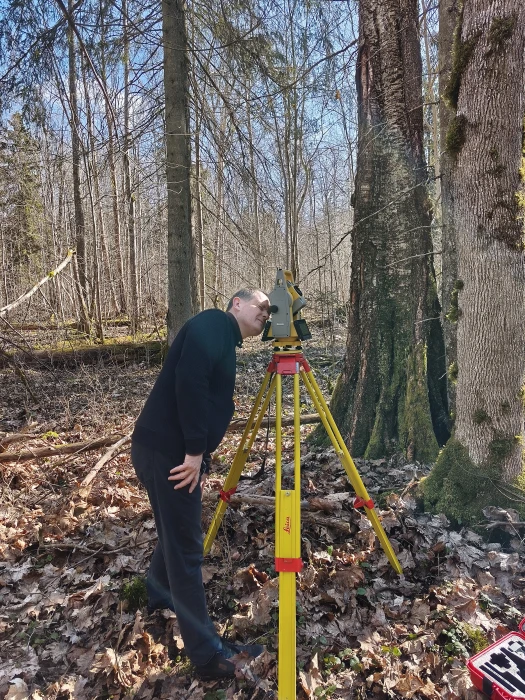
The final measurements were carried out with an electronic total station, an instrument capable of accuracy to within ten centimetres, by Harli Jürgenson, a geodesy specialist at the Estonian University of Life Sciences.
The discovery followed painstaking groundwork. Enn Pärt, chief specialist at the Forest Department of the Estonian Environment Agency, first analysed forest height maps to identify possible contenders and then checked the trees in the field using a standard electronic height meter. The maps led him to the correct strictly protected zone in the Nigula reserve, where the towering aspens were eventually confirmed.
The find has now elevated the Nigula forest to international significance. According to the global Monumental Trees database, which records exceptional trees around the world, no taller European aspen has so far been documented on the continent.
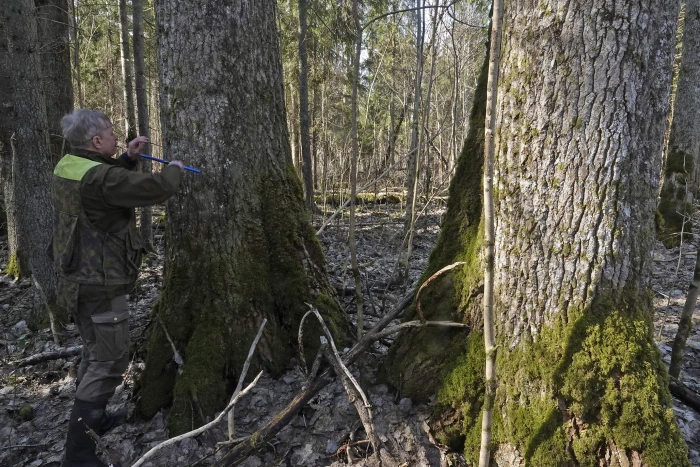
Researchers also examined the health and age of the tree by taking a core sample from the trunk. The analysis showed that the aspen is about 110 years old, in notably good condition and still growing. Crucially, the sample revealed no serious rot extending into the heartwood – an unusual sign of vitality in a tree of such age and scale.
The setting is as striking as the tree itself. The aspen stands in an isolated part of the reserve, in forest that is in places so untouched as to feel almost primeval. Human visitors are rare. Experts have urged would-be sightseers not to venture there casually, both because of the difficult terrain and the need to protect the fragile natural environment. Anyone wishing to visit, they say, should do so only with an experienced guide.
This year, the aspen was named Estonia’s Tree of the Year. As timing goes, the discovery could scarcely have been more apt.
Among all tree species in Estonia, the newly measured aspen now ranks as the country’s second tallest tree overall. Only the Ootsipalu pine in Põlva County, at 46.6 metres, stands higher.
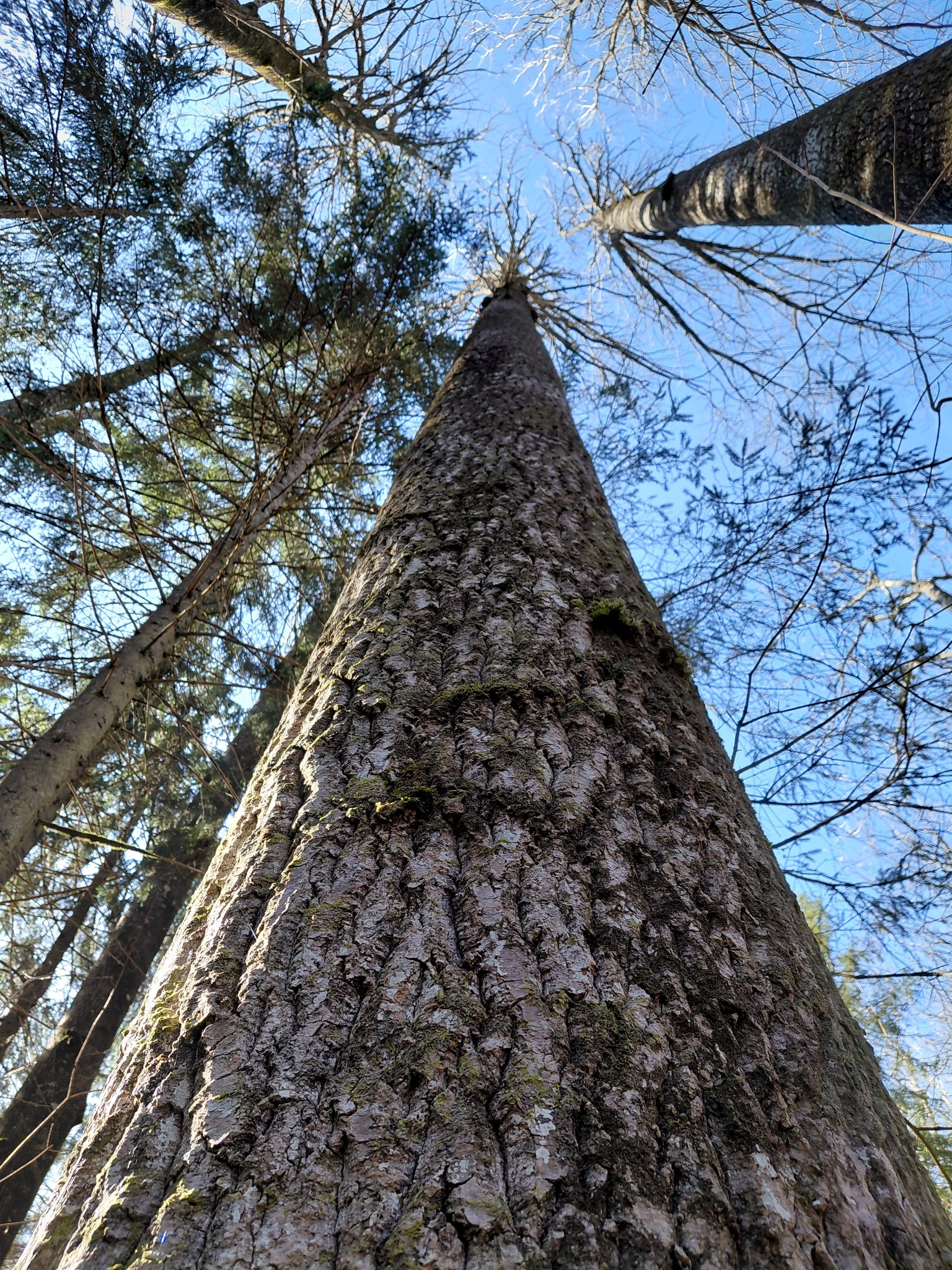
There may yet be another distinction to come. Preliminary calculations suggest that the record aspen could also be among the country’s most voluminous trees by trunk size – a giant not merely in height, but in mass as well.
In a country more often celebrated for its digital ingenuity than for arboreal superlatives, the discovery is a reminder that some of Estonia’s most extraordinary achievements still grow quietly in the dark.