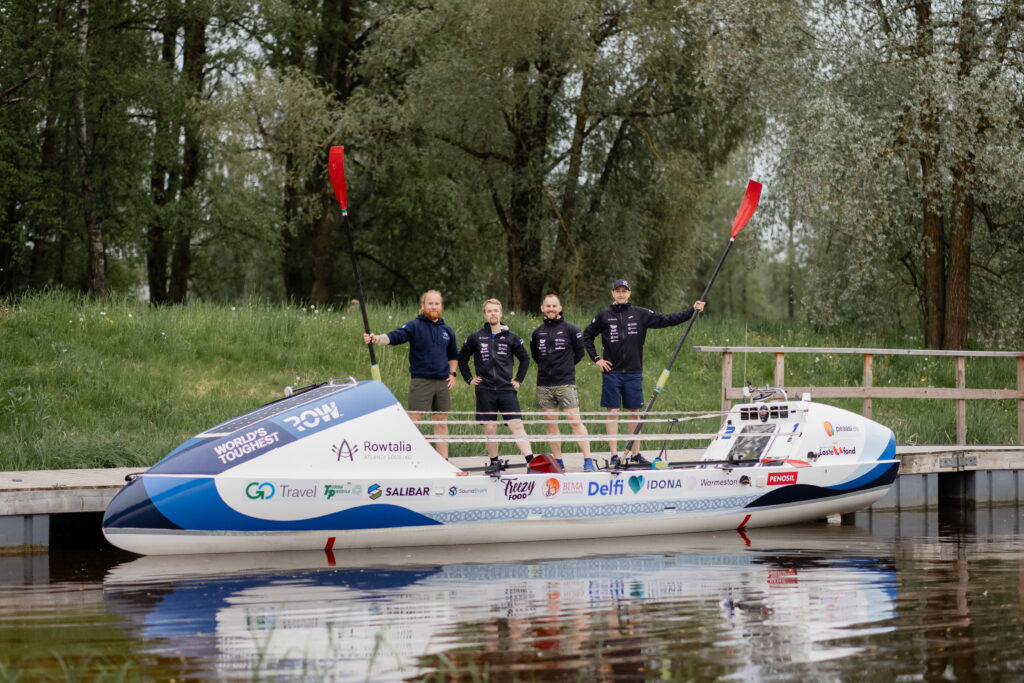
Four Estonians competing as Team Rowtalia arrived in Antigua just after 1pm Estonian time, completing an unassisted Atlantic crossing in the World’s Toughest Row, one of the most demanding endurance races on water.
Rowing from San Sebastián de la Gomera in Spain’s Canary Islands to Nelson’s Dockyard in Antigua, the crew covered roughly 4,800 kilometres (3,000 miles) across the Atlantic in just under 40 days, rowing around the clock in rotating shifts. Their arrival marked the first time an Estonian team has completed the race.
Four Estonians competing as Team Rowtalia, completed an unassisted Atlantic crossing.
The crew – teamwork psychologist Andres Käosaar, educational innovator Arnold Rein Tatunts, wood chemist Kait Kaarel Puss and geneticist Karl Jürgenstein – had set out to demonstrate that extreme ocean challenges are not reserved for professional athletes alone. Ahead of the race, they said their aim was to “put Estonia on the world map once again” and to test the limits of endurance, cooperation and mental resilience.
The route followed the classic westward Atlantic crossing, shaped by trade winds and currents that have guided sailors since the age of exploration. Yet even with favourable winds, the conditions demanded relentless physical effort. Two men rowed while two rested, typically in two-hour shifts, squeezing eating, washing and sleep into narrow windows. The crew carried more than 50 days’ worth of supplies, relied on solar power for essential systems and produced drinking water on board.

Preparation for the crossing took several years. None of the four had rowing experience at the outset, learning the discipline from scratch before progressing from inland waters to open-sea training. Beyond physical conditioning, the project focused heavily on teamwork, stress management and decision-making under pressure – themes central to the team’s professional backgrounds.
Rowtalia also linked the crossing to a charitable cause, raising funds for peaasi.ee, which works to promote mental wellbeing in Estonia, and the Tartu University Hospital Children’s Foundation, which supports children requiring specialised medical care. The team has said that any surplus funds, including proceeds from the sale of their ocean rowing boat after the race, will be shared between the two organisations.