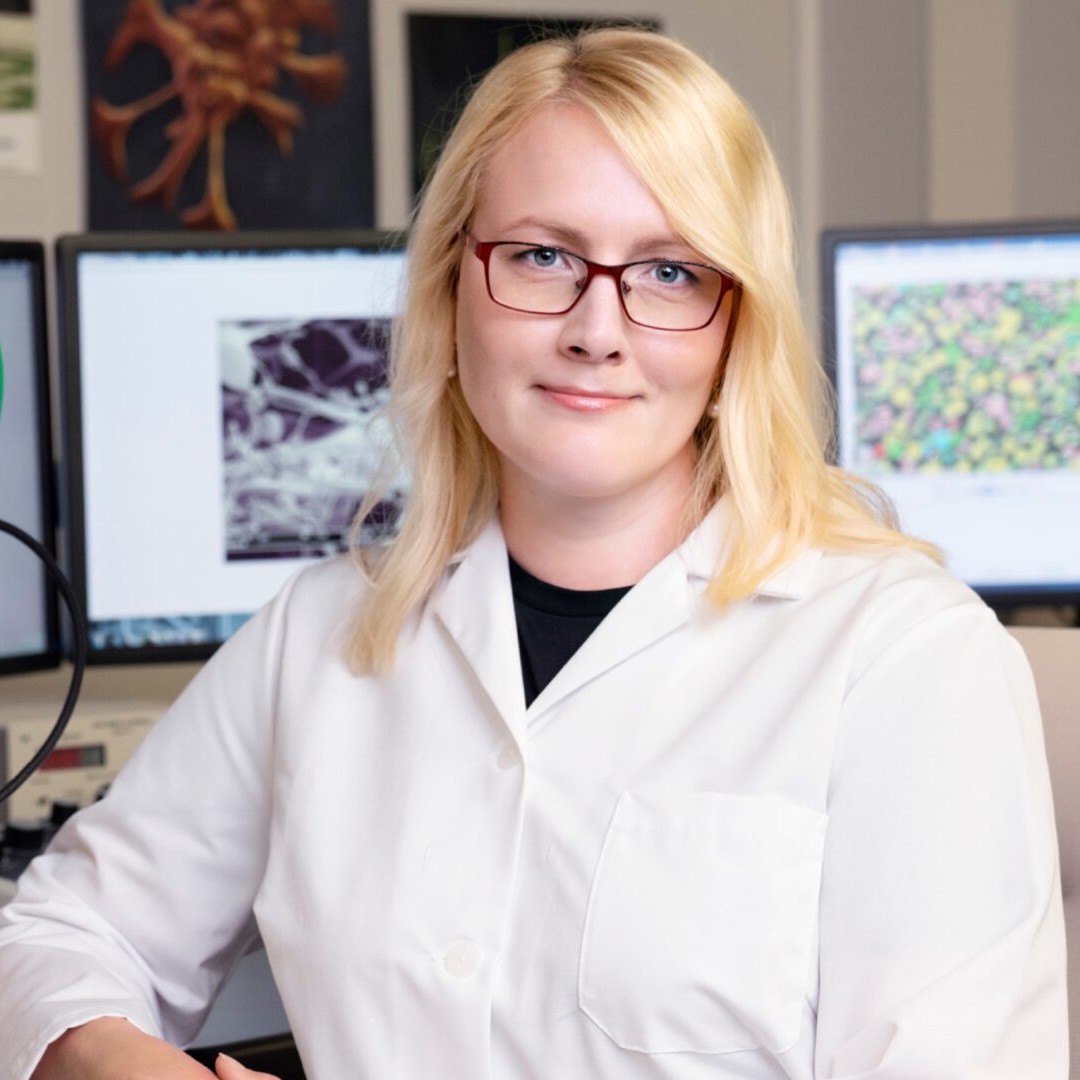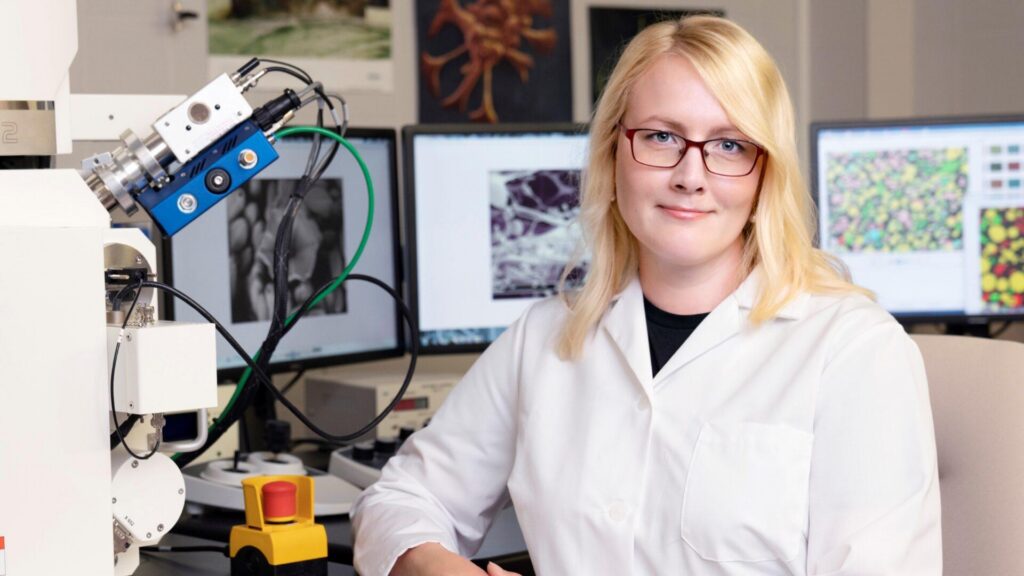
Materials scientist and professor Maarja Grossberg-Kuusk reflects on how a childhood curiosity in the pine forests of Nõmme led her to a physics laboratory – and why women bring fresh light, flexibility and wisdom to Estonian science.
This article is based on a speech delivered at the Zonta Club charity conference “I Am a Woman”. It was originally published in Estonian on Tallinn University of Technology’s portal, Trialoog.
On 20 May 1981, under the watchful eyes of medical students in Tallinn, a small baby girl entered the world. Did she know what career awaited her? Of course not.
She grew up in Nõmme, among slopes draped in pine forest, where she and her friends had endless room to explore, experiment and ask questions of the world. At home, books lined the walls. The atmosphere was quietly academic – one that encouraged questions and creative doubt.
If you mix blue and yellow, do you always get green? Best to try.
Why does the electricity sometimes cut out? A far more intriguing puzzle. Why does it happen at all? (This particular investigation prompted several safety briefings.)
At the large oak dining table in the living room, her grandfather would gather students around him, sketching strange shapes he called graphs, scribbling rows of numbers and symbols that later revealed themselves to be formulae. What were they for? What could they possibly explain? As it turned out, they could even explain why the lights sometimes flickered out at home. These were, in fact, domestic consultations with university students.
The girl would occasionally attempt to join in, settling into an armchair with a book and an expression of grave importance – even if the book was upside down. It was fascinating simply to observe. The same ritual later unfolded with her father, who became a secondary-school electronics teacher.
Do grown-ups know everything, she wondered? It turned out they did not.
She learned that questions matter – and that answers can be found, even when they are not immediately available. Everything can be learned. Sometimes you must experiment.
At the end of lower secondary school, she discovered a biography of Marie Curie on the family bookshelf, without quite knowing who she was. She devoured it. What kind of woman had Marie Curie been? So courageous. So certain of her ideas. She, too, had conducted experiments – and discovered radioactive elements. There had once been a time when no one knew of radium or polonium. Extraordinary.
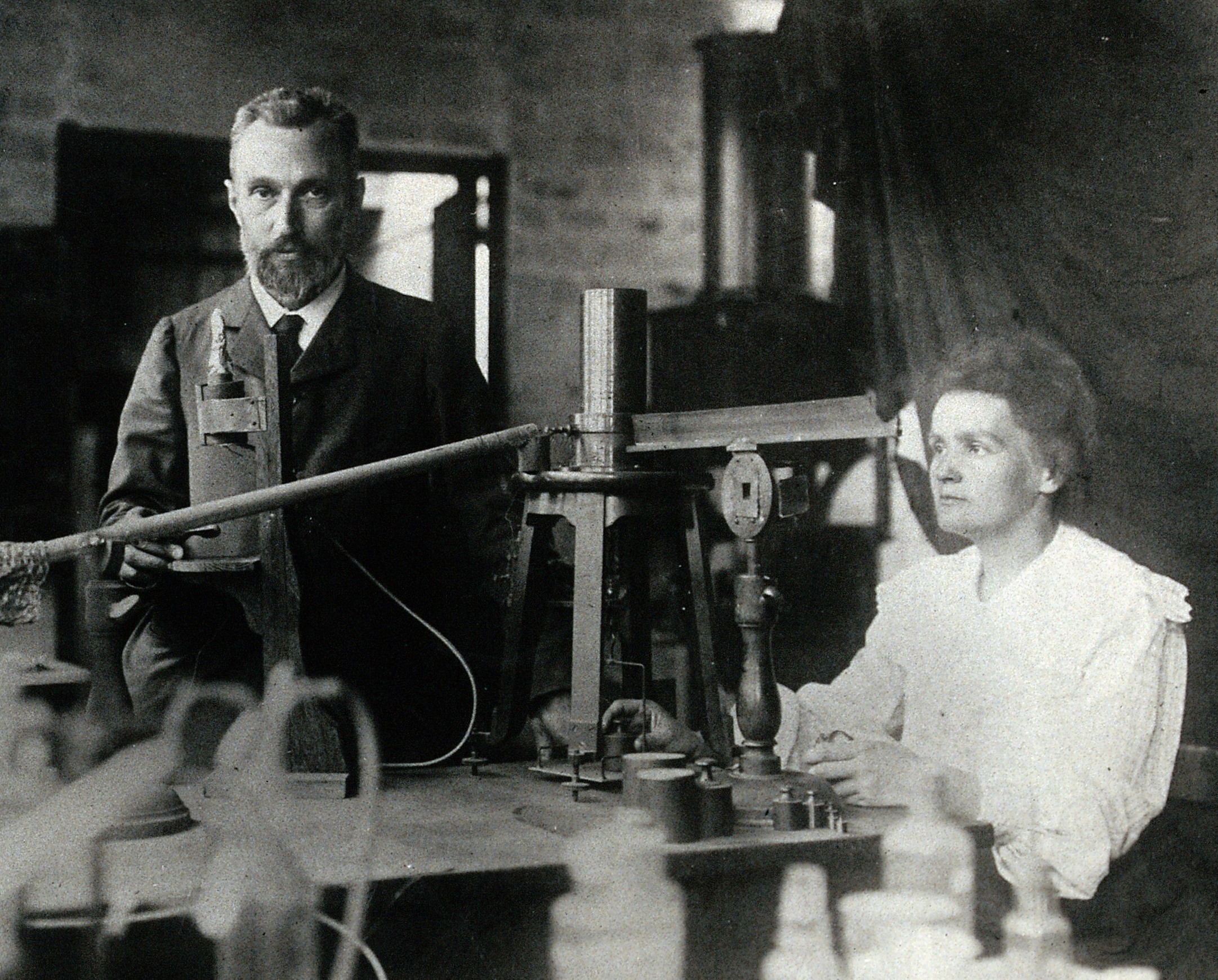
Curie had been a daughter, a mother, a wife – and yet she had done work of profound consequence.
“Why shouldn’t I?” the girl thought.
The seed had been planted.
As you may have guessed, that small girl stands before you today.
The beauty within science
To reach real scientific work requires direct contact with the laboratory. That moment arrived in the final year of university, when I found myself in a materials science laboratory focused on solar energy – and was immediately captivated.
For Marie Curie, science contained beauty. A scientist was not merely a diligent researcher in a lab coat, but also a child before whom natural phenomena unfolded like fairy tales. That child within us does not disappear; sometimes we simply forget to notice her.
In 2002, solar energy was not yet part of daily life. It was a promise of the future – of cleaner energy production and, through it, a better living environment. The possibility of contributing to such a purpose drew me firmly into solar energy research.
Today, the choice seems self-evident. Solar power is everywhere – and with it come ever more pressing questions. Which solar panel solutions are best? What happens when panels reach the end of their lifespan? The sun does not shine constantly – how do we address intermittency? Vast solar parks alter landscapes – what alternatives exist?
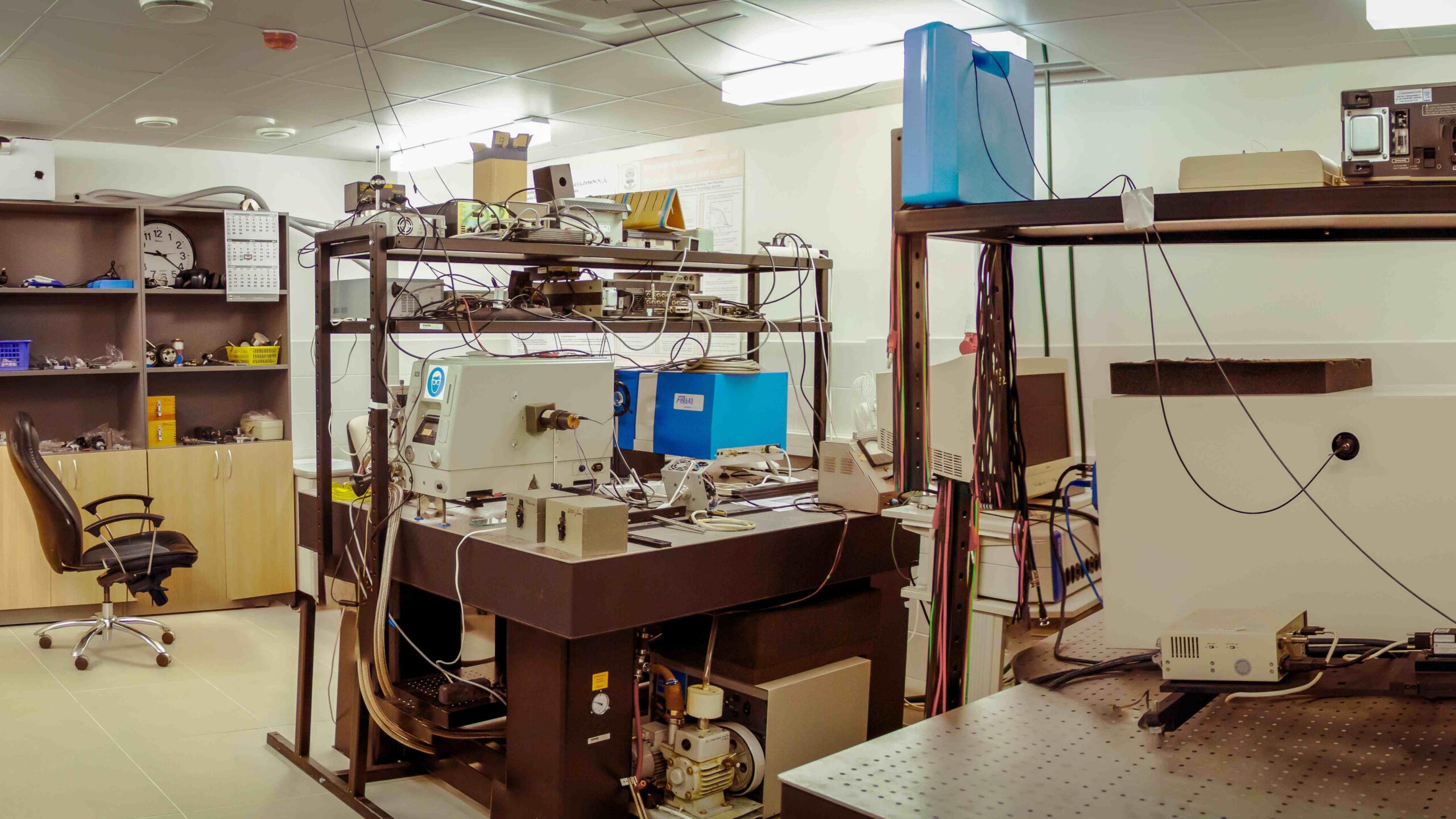
When technology becomes widely used, it must also invite scrutiny and improvement.
The task of scientists is to answer society’s questions and create innovation.
Women at the helm of innovation
In Estonia, research in solar materials – much of it led by women – is focused on developing innovative technologies and materials with versatile, flexible and environmentally sustainable properties. We are, among other things, developing extremely lightweight and flexible solar cells.
Our research group is led by professor Marit Kauk-Kuusik, head of the Solar Energy Materials Science Laboratory and a recognised developer of materials technologies. My own role is to investigate the physical properties of the materials and devices under development.
Another significant area is semi-transparent solar cells – materials that efficiently absorb sunlight while allowing thin layers to be manufactured for applications such as electricity-generating windows. This work is carried out in the Thin Film Energy Materials Laboratory at Tallinn University of Technology, led by professor Ilona Oja Acik.
In our field, several research groups are headed by women professors. Yet, across Estonia more broadly, female professors remain in the minority. At Tallinn University of Technology, women account for roughly a quarter of all professorships. In science-related faculties the figures are lower still: 25% in engineering, 15% in natural sciences, 13% in information technology (2024 data).
At the classical science institutes of University of Tartu – physics, chemistry, mathematics and statistics, computer science – there were 39 professors in 2024. Only five were women.
Interestingly, among lecturers – the first rung of the academic ladder after a doctorate, and often the heaviest teaching load – the gender balance is roughly equal. The data suggest that while many women enter academia, comparatively few reach its summit.
Why?
Research shows that differences between individuals are greater than differences between genders – including in the sciences. I would argue that environment plays a decisive role. From an early age, girls are often told, subtly or otherwise, that science, engineering and IT are for boys.
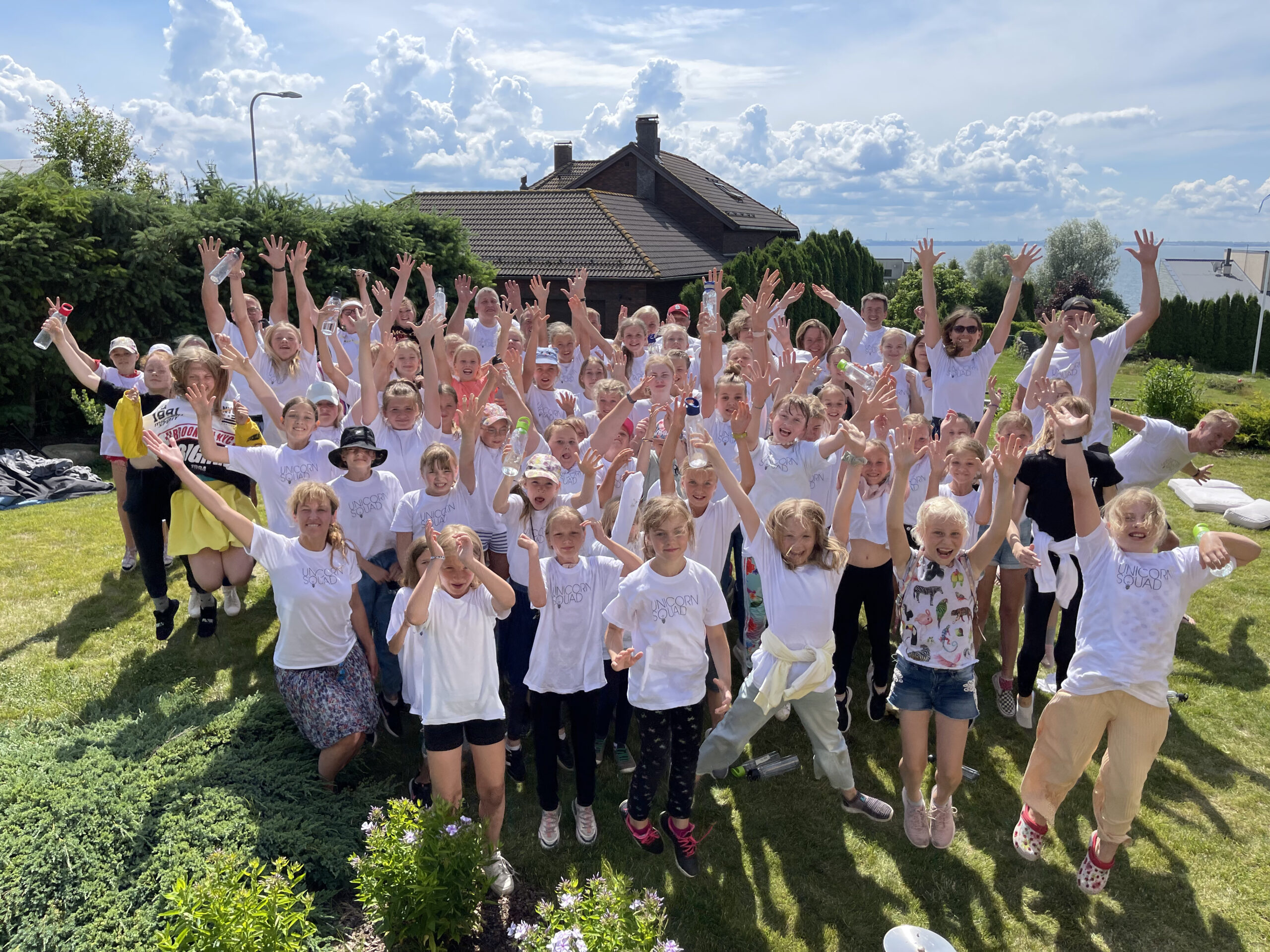
Fortunately, that mindset is beginning to fade. The role of women in technical and scientific disciplines is increasingly valued. Each success story serves as an example for the next generation. Initiatives aimed specifically at girls are already in place – among them the inspiring Unicorn Squad.
Support makes the difference
The most intensive phase of a scientific career often follows the defence of a doctoral thesis – the moment when one must begin building a research group. This frequently coincides with one’s thirties, when many women are starting families. My own children were born when I was 27 and 33.
At such a stage, the support of employers and colleagues becomes critical. Without it, advancing a scientific career can be exceptionally difficult.
I have been fortunate. I have worked under male leaders who understood and supported both my professional choices and personal challenges. For that, I am profoundly grateful.
Support for women scientists matters enormously. Let us begin by supporting one another.
I have received immense encouragement from the women academicians of the Estonian Academy of Sciences and from the network of women leaders at Tallinn University of Technology. When I was elected the youngest female academician in 2023, I was welcomed with open arms. It is a small but strong community – formally part of the Academy, yet far more than a structure. It has been an unexpected source of inspiration.
Let me end with this: women are extraordinary. They carry wisdom – particularly the wisdom of life – along with warmth and resilience. Sensitivity and care are among the foundations of life itself.
Our task is to notice – and to support. We often underestimate how much a single act of recognition can mean.