
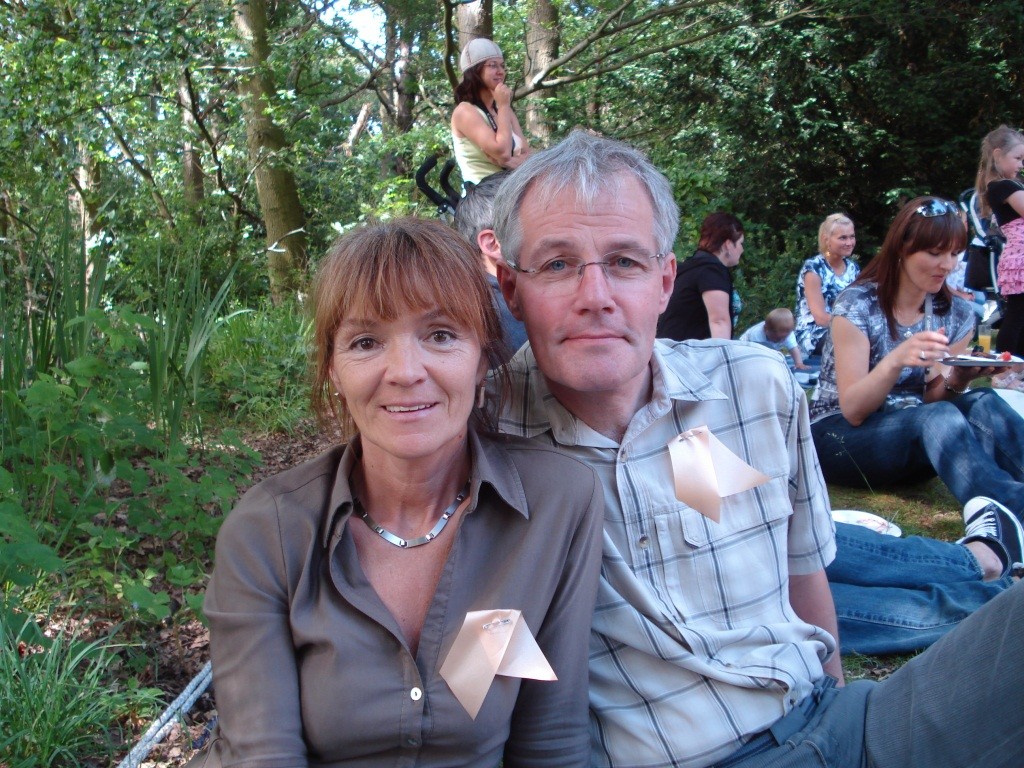
David Foreman, an Englishman who splits his time between London and Pärnu, shares his thoughts about Estonia and Estonians.
At the forefront of the English person’s outlook on life is a concern with what others think about what they do. I wouldn’t say this is absent from a typical Estonian viewpoint, but it certainly doesn’t seem to carry the same weight. To me, this suggests a lack of insecurity – something the average English male, in particular, possesses in ample measure.
The English need reassurance that what they do is “normal”. From my experience, the average Estonian is not particularly interested in comparisons with others and simply gets on with his or her own business, with very little concern as to whether it is of interest to their neighbours.
So does this mean that Estonians are confident people? I suspect the answer is not necessarily, but the mere absence of this type of self-conscious “baggage” in their thinking probably makes their lives more straightforward.
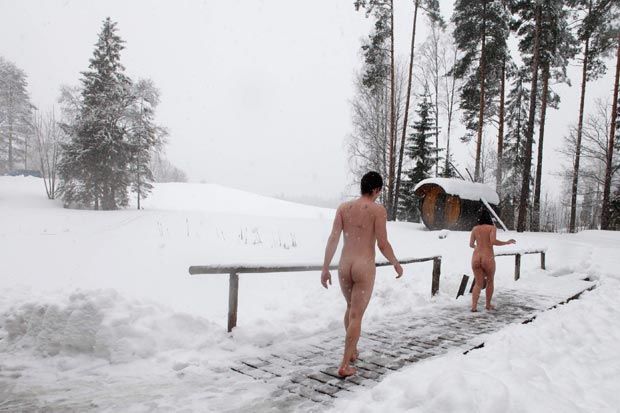
An interesting example of these differences is the attitude towards the sauna. Put an Englishman in a room full of native Estonians and the mere mention of the word is enough to make the hapless visitor break out in a sweat. The English simply do not do “naked” with others, and the thought that they might be coerced into participation against their will – while at the same time not wanting to offend their hosts – creates a paradox that generates a great deal of embarrassment all round. And here, once again, you can see this lack of confidence coming to the surface.
Estonians simply do not give a fig what others think. They want to have a few drinks, get naked, and enjoy themselves. What do other people’s thoughts have to do with what they themselves are doing?
And then there is the business of massage. This alone deserves a book in its own right. My own experience is probably typical, and is borne out by the experiences of other expatriates.
You see, to an Englishman, massage carries certain connotations. If one accepts the initial premise that the English lack self-confidence, it follows that they are also inhibited. This has produced a rather peculiar national characteristic when it comes to sex: it is regarded as something illicit and secret, not to be openly discussed. The massage parlour in London was – and to a certain extent still is – a place associated with naughtiness rather than health, and certainly not somewhere you would tell your mother you were going.
So the staid visitor arrives in Estonia and is innocently asked by his companion whether he would like to go to the sauna, followed by a massage. Hmmmm. “Maybe” is the initial response, swiftly followed by a cascade of questions: will there be others there? Will the massage be given by a woman? Will I have to be naked? Lie on my back? Where, exactly, on the anatomy does the massage begin and end? How long will I be subjected to this?
And all of this takes place against a backdrop of losing control, being too embarrassed to say no, and simultaneously assuming the worst – or hoping for the best – possible outcome.

As a visitor, one of the things you soon notice, of course, is that Estonians instinctively understand their guests’ shyness and derive considerable pleasure from the awkwardness it creates. Yet my Estonian partner insists that Estonians are reserved – more of a British characteristic, which at first seems contradictory. But perhaps it is not. Keeping one’s thoughts to oneself is something we have in common, as is the quiet delight taken in observing the embarrassment of others.
The country run by women
I have visited Estonia on several occasions, but it was only recently that something very obvious struck me. Virtually every shop and business you encounter is staffed by women. I bought a small property – admittedly, the developer was a man – but the notary was a woman. I paid my electricity bill to a woman. I set up my bank account with a woman. I went to the insurance company, and a woman arranged my cover.
Having adopted Estonia as my second home, I decided to obtain an ID card. I went to the local parish offices, where a very kind woman registered me. I then went into town, to the government office, to collect the card, where a whole team of women fussed over me and informed me that the lady in the neighbouring parish had made a mistake with my application and that I would have to start all over again. In the meantime, I was hungry, and this same team then fussed once more – only this time they were concerned solely with where I might find something to eat.
I think one of the few places where I encountered a man was at the water board, where it was clear that the individual assisting me spent most of his working life digging up the mains – something that, for the time being at least, men in Estonia still seem better suited to..
Get on with it
In Latvia the drivers are dangerous. In France, I believe, a Frenchman considers it his national duty to try to run down pedestrians guilty of crossing the road. In Italy, a roundabout is a racing track with no concept of stopping. The Germans drive as fast as they can in straight lines, and in Spain nobody does anything in the afternoons.
But what of the Estonian driver? They simply go about their own business (recognise the recurring theme?) and ignore everyone else. They do not care what lane they are in. They do not mind other drivers cutting them up. They do not use their horns, lean out of windows, or hurl abuse at one another. They do not speed. They just get on with it.
But where else in Europe can you not even cross the road where you please? In Estonia, you can be fined on the spot for crossing at an inappropriate place. This is a completely alien concept to visitors from Britain, and something to be wary of.
Of course, in Estonia it is possible to do things that you simply cannot do in Britain. To a certain extent, we have lost a sense of personal responsibility for self-preservation, preferring – and often encouraging – the populace to blame others for any misfortunes visited upon them by the vicissitudes of daily life. In Estonia, for instance, you can enjoy a walk by the sea without the benefit of numerous signs declaring DANGER: DEATH BY DROWNING should you be unlucky enough to enter the water having forgotten that you cannot, in fact, swim.
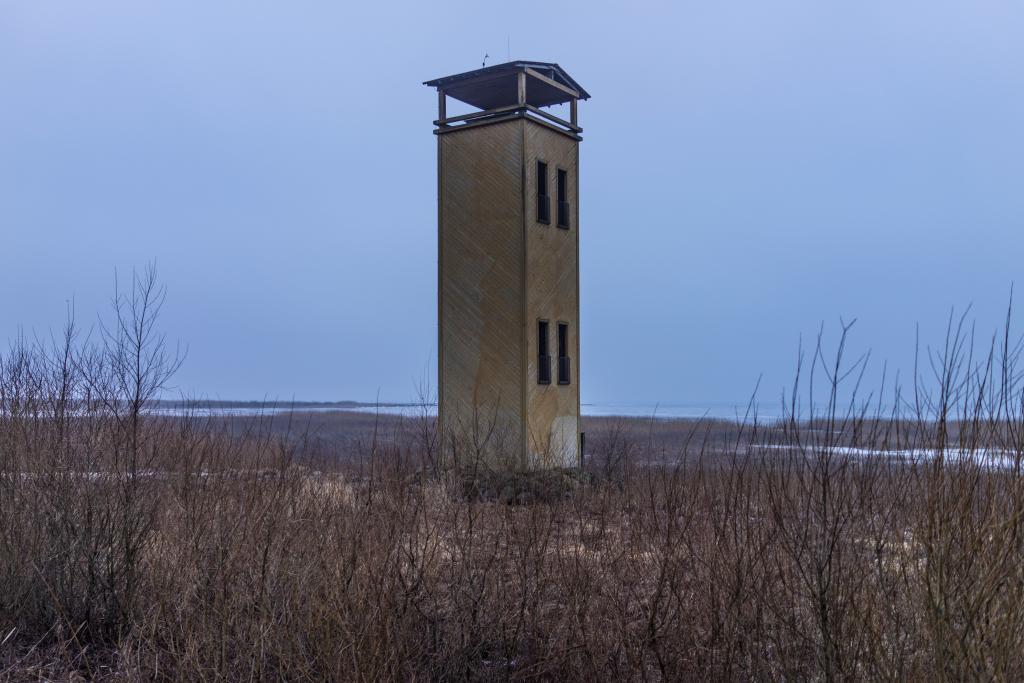
Another thing that surprised – and delighted – me was the opportunity to explore the Estonian countryside. While out driving on my first visit, we came across a large and remarkably tall wooden tower. To my surprise, it had been built for visitors; more than that, it had been left unguarded and open to any suicidal individual to climb unassisted to the top. Moreover, once there, it became abundantly clear that, had I chosen to do so, I could have attempted a base jump or simply thrown myself into the void, entirely without the aid of wings. There was not even a sign reminding me DEATH BY GRAVITY should I have been remiss enough to attempt bungee jumping without the rope.
I

Great one, can’t wait for the second part! By the way, those signs in the UK are pretty ridiculous, aren’t they? Mind the gap! Danger of drowning! (no shit?) Do not… blah blah blah…
Great article. I myself am an Estonian currently studying in England and oh… I sure miss the absence of all these “caution death by drowning”, “we’re watching (out for) you”, “going outside at your own risk”, and whatnot signs.
I also visit Parnu several times a year from the UK and sometimes meet up with other Englishmen there. Perhaps we could meet up for a beer sometime…
…in other words you, me and Robbie (just like last summer)!!!
A very nicely written and entertaining artice, at the same time filled with true facts! I must say, I did wonder when visiting London, why people need to be warned about the obvious so much. Seems that even people from London wonder about the same thing 🙂
I was very happy thinking I was the ‘only Englishman in Pärnu’.
well i have been living just outside pärnu for 4 years
I take some comfort from the ‘just outside’ 🙂
I take some comfort from the ‘just outside’ 🙂
Seems like an “English Expat Club in Pärnu” is on the cards… 🙂
i also no 2 others who have a flat there who visit often
In Estonia’s defense about the crossing of roads and fining- the cars are required to stop at an unregulated pedestrian crossing and let a person cross the road (whereas in rest of the Europe you just have to run for your life and hope you’ll make it across before the car – no slowing down there). In that light, I think it makes sense that crossing in a wrong place means you can get a fine. A safe place to cross is created for you – the knowledge that you can be fined for crossing in a wrong place keeps the safe system working 🙂
The traffic part is SO true … Here in Scotland, the Estonian students are the only idiots waiting for the light to go green (even if there are no cars). There was an incident were me and my friends were thinking of crossing the street before the light went green and then we saw policemen walking on the street and instantly went back to waiting .. only for the officers to cross the street from a totally random place with the red light still on, diagonally across the street! It was like being in a zoo 😀
A lot of generalizations here, as there are many classes of Brits, and a few classes of Estos too. As for laughing at the foreigner’s embarrassment in a sauna, I don’t think a genteel estonian would do that. I know that for the Brits, gentility and civility or simply good manners requires that you put the other person at ease. As for those signs cautioning us on this and that, that is very Brit- Canadian (which is easily accepted from the newcomers from semi totalitarian nations) , and irksome. Possibly as Estonia keeps playing catch up with other bigger Western nations that kind of additional concern for safety will affect them too putting unnecessary restrictions on the majority’s freedom. Estonian educators are already doing things like visiting Canada and praising our school system based on tours they took. In actual fact the do-as-you-are-told approach and blind application of rules with no thought of their purpose is what we get in Canadian education system — with little emphasis on creativity and reasoning. Possibly it’s best if Estonia avoids imitating too much of what we call social engineering here. But I do caution against too many comparisons that might just apply to the individuals or classes of people you are comparing and not their ethnic stripes.
You seem to be a bit confused. Estonia has regained independence 21 years ago, so if it is Estonia you are referring to as “semi-totalitarian nation” and playing catchup, then you do need to catch up with reality yourself.
Estonia’s education system is something I can’t grasp. Looking at results, they are among the top countries in the world regarding literacy, math, languages etc (just below the Asian smarties and Finland). I have no clue how they achieve that and I’ll explain using my experience from Belgium (where I grew up) and Estonia (where I now live):
– In Belgium, the results of these kinds of international tests have been very good as well, but in my opinion this is because children have very little place for being creative and choose their own favorite topics. So because all children have to learn all this stuff they don’t actually want to, they get good results on tests that measure exactly these things.
– In Estonia however, the results are even better than in Belgium, despite teachers earning a ridiculously low amount of money and students having quite a lot of freedom to study what they want even in early age. Creativity is very much stimulated and they only have to go to school from 8:30 to 14:30.
I hope Estonia won’t be imitating those other systems too much, because I feel the current education system is the reason why there is so much culture and creativity here at the moment.
As for the main article, it makes me dreamy because the people you describe are the type of Estonians I would want every Estonian to be. But sadly there are plenty of greedy businessmen, corrupt politicians and middle-aged people with 5 loans on their backs who only think about consuming and have to spend all their time working and stressing out because of that. I especially feel bad for the last kind.
To finish off, I’d like to say that Estonian for me still is a fairytale. For other people it won’t be perhaps, but you see what you want to see and you do what you want to do, so I do things that make me feel like I’m living in the fairytale and try to stay true to it :).
I don’t quite know what Estonian schools you have been introduced to. I used to be at school from 8am to 4pm-4.30pm often! I wouldn’t say there was much choice in subjects either – most schools study ALL possible subjects from grade 1 through 12..
November 17, 2014 sees the first anniversary of the publication of my The Indrawn Heart, a work of travel literature which incorporates an enquiry into the Estonian national character. Those interested in such ‘ethnic stripes’ might find the book stimulating. The Indrawn Heart is available at http://www.lakeshorepressbooks.com and Amazon websites. A review can be seen at http://www.baltictimes.com/news/articles/34040/.
a young Englishman had a good laugh once. he was walking around Tartu with his Estonian companion. he asked his companion to translate a sign on a window that had a familiar looking word in it. it stated “Meie teine traditsiooniline väljasõit Peipsile toimub … mingil kuupäeval”. it translates into “Our second traditional field trip to lake Peipus takes place on … “. second traditional. just saying …
wow! this article made me think as of a better person again:) I really travel a lot and can´t answer all these questions- like-why are you still standing?-there are no cars:) But really- I sometimes admire the Estonian people myself ( being an Estonian myself)- when moving around with foreigners and answering the questions about “strange” but safe behavior of MY PEOPLE… And the situation with the watching towers so familiar- I have unfortunatelly been asked why there was no guardian or at least 3-meter-high fence up there. I answered- there are much easier ways to kill yourself:)))))))))))
And again-thanks for seeing positive things in us:))))
Grreat to read about your adventures and insights in Estonia, beautiful nature country and people, thanks Eric
Hahaa…well done!
I never gave a second thought to stripping off and getting in the Sauna (with Beer in hand) with my Estonian friends, Driving rules of the road, as in parking and changing lanes only apply to non BMW/Audi owners.
“The English just don’t do ‘naked’ with others”
I have always been wondering what makes drunk English lads to flash their bare bums and girls their boobs. Just the English seem to have that irresistible desire. Being naked in sauna at least makes sense 🙂
When i visited outskirts of London, it was really funny to see signs like “Lammas court” on a small piece of grass. Why label 3×5 meters of grass? And yes, i don’t really care that someone named a tiny piece of grassland. I really liked the way your bus drivers drive, fast and dangerous, I got to see places quicker than usual. And your country is beautiful and organised for sure, proud citizens and healthy English humor. Bacon and eggs in the morning, splendid!
As a Welshman, this guy knows nothing about our nation and does not speak for Wales when he uses the term Britain.
– Signs in the UK are pretty much there for Tourists.
– Drivers here are nowhere near as bad as Macedonia, but drivers in Wales are safer.
– Welsh people do not care what you think of them, thats an English thing.
Rest of this is true.
Source: Welshman with Estonian GF living in Parnu and Rapla, just moved here after 6 years in Macedonia