
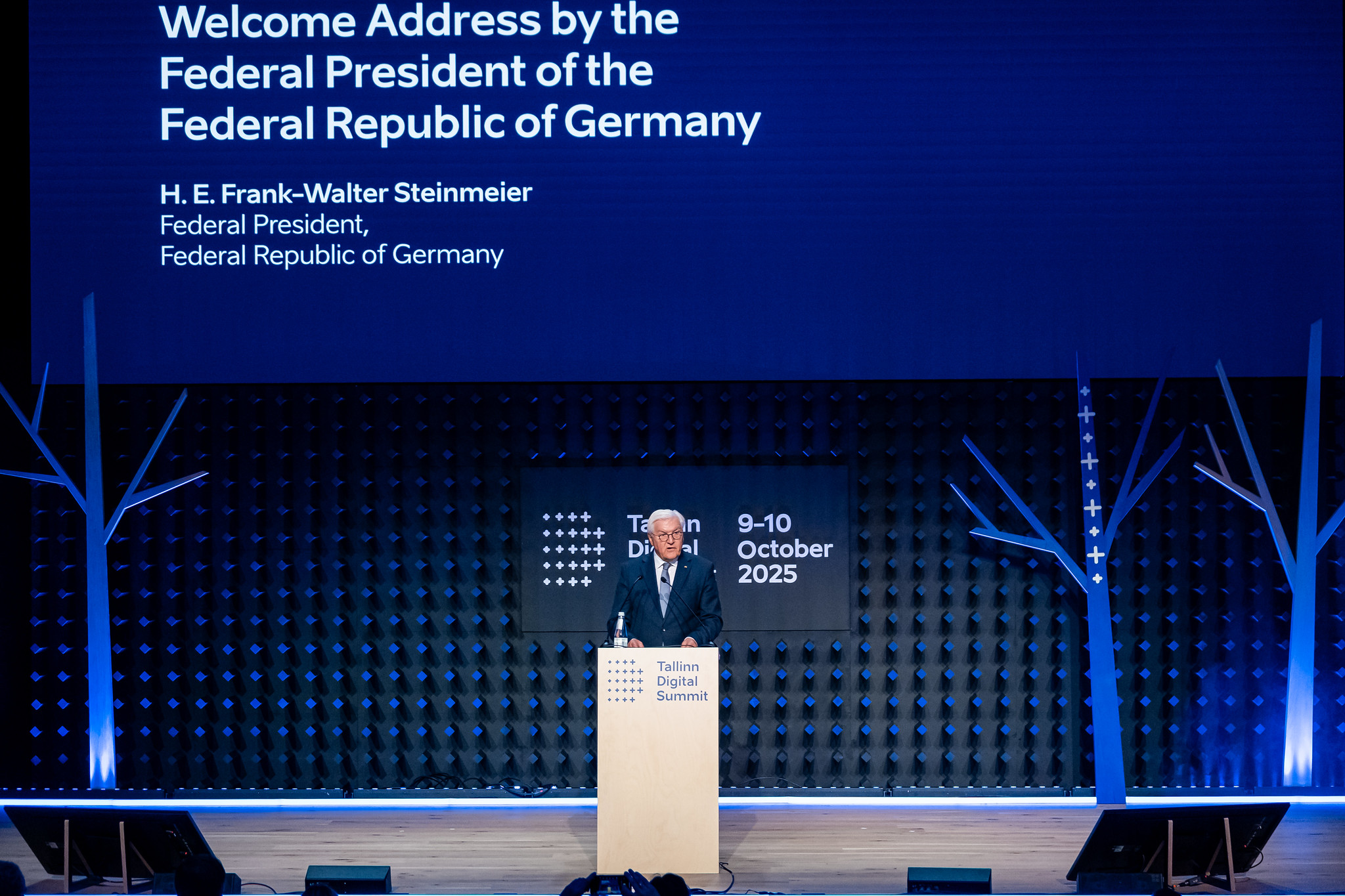
On 9–10 October, the Estonian capital hosted one of Europe’s most forward-looking gatherings on technology and governance: the Tallinn Digital Summit 2025.
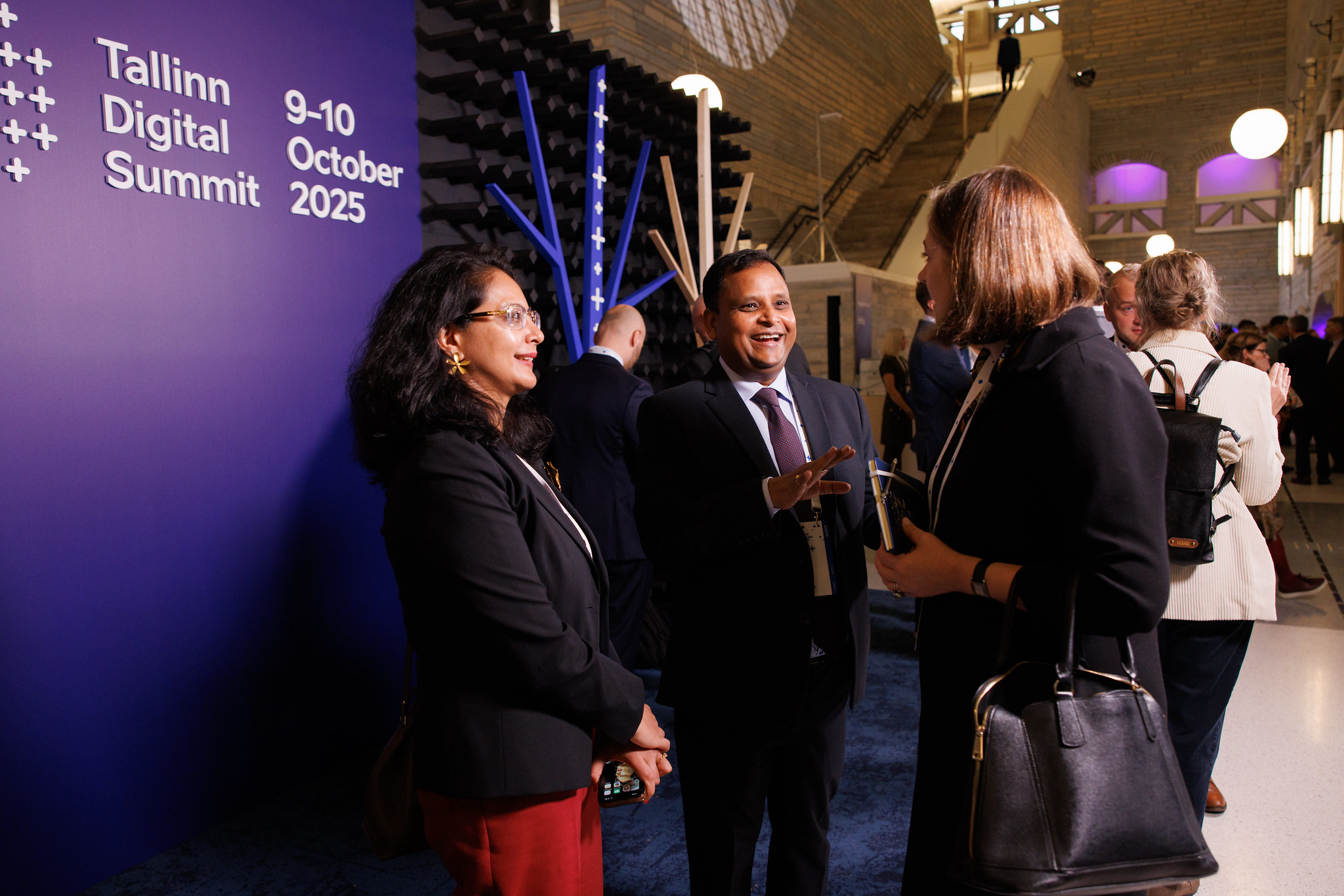
Held at the Estonian National Library and attended by more than 1,000 participants from over 60 countries, this year’s summit centred on the theme “Collectively at the Crossroads: Towards Secure and Resilient AI Futures”. Ministers, digital-policy experts, technology executives and academics gathered in Tallinn to examine how artificial intelligence can be deployed without eroding the principles of security, trust and inclusion.
For Estonia, hosting the summit is about more than prestige. It is a reminder that the country remains a pivotal testbed in the global experiment of digital governance. Estonia demonstrated not only its technological prowess but its insistence that digital innovation must uphold democratic values rather than supplant them.
Digital resilience
Artificial intelligence has moved swiftly from technical experiment to a central question of statecraft. Governments around the world are realising that data, algorithms and digital infrastructure are no longer neutral tools but the foundations of power, competitiveness and sovereignty.
For countries on Europe’s periphery, such as Estonia, the challenge is both existential and strategic. Positioned on NATO’s eastern flank and still marked by past cyberattacks and disinformation campaigns, Estonia regards digital resilience as an essential pillar of national defence.
Over the past two decades, Estonia has built one of the world’s most advanced digital societies: a country where almost every public service is online, where citizens vote electronically and where identity is secured through trusted e-governance systems. Yet as AI reshapes economies and institutions, even the most digitally mature nations face a new dilemma: how to preserve human oversight and public trust in a world increasingly governed by code.

AI in focus
The Tallinn Digital Summit 2025 set out to confront precisely this question. Over two days of panels and keynote discussions, participants examined how to balance innovation with accountability and how to ensure that AI systems remain transparent, explainable and aligned with human values. Opening the event, Estonia’s prime minister Kristen Michal reminded attendees that “artificial intelligence is an ability, not a gadget”. His message was clear: technology should empower people, not define them.
This year’s programme was arranged around three principal pillars. The first examined governance and trust, exploring how to construct institutional frameworks that render digital infrastructure both secure and equitable. The second turned to AI in education and the future workforce, with Estonia setting out its ambitious AI Leap initiative. The third considered security and sovereignty, assessing the geopolitical implications of data, cyber-resilience and emerging defence partnerships.
The Estonian education minister Kristina Kallas presented AI Leap as one of Estonia’s flagship programmes for the decade ahead. Its purpose is to weave artificial intelligence into classrooms and public administration – not to supplant teachers or civil servants, but to enable them to work with greater intelligence and creativity. “We must learn with AI, not about AI,” she said, capturing a wider cultural shift: that digital competence is fast becoming as essential as literacy itself.

Subjects that defined the summit
One of the most striking discussions centred on education and human capital. Estonia’s approach casts AI as a partner in learning – an assistant that strengthens creativity rather than stifles it. Schools are trialling new digital tools, while the government channels investment into teacher training and ethical-AI standards. The ambition is to ensure that every citizen, whatever their age, can engage with technology both confidently and critically.
The second major narrative emerged from the realm of security and defence. Since the 2007 cyberattacks on its government networks, Estonia has cultivated a comprehensive ecosystem of cybersecurity expertise, housing NATO’s Cooperative Cyber Defence Centre of Excellence in Tallinn. At this year’s summit, participants underscored how AI is set to reshape both cyber offence and defence – turning automation into a shield as readily as a weapon. The challenge now is how to preserve stability amid an increasingly digital arms race.
The third strand of the summit was linguistic and cultural. As AI systems evolve into the gatekeepers of global communication, smaller languages face the prospect of digital extinction. For Estonia, safeguarding the Estonian language within algorithmic environments is a question of identity as much as access. Linguists and engineers outlined work to train large-language models in Estonian, ensuring that citizens can use voice assistants, public-service chatbots and translation tools in their own tongue.
Challenges and critics
Beneath the optimism, several speakers conceded that ambition alone will not guarantee success. Estonia faces the same pressures as any digital pioneer: limited resources, uneven implementation and the increasing complexity of safeguarding data. Some critics warn that the gap between the country’s digital vision and everyday experience – particularly in rural areas – remains considerable.
Ethical concerns also surfaced throughout the summit. If AI becomes integral to public administration, who carries responsibility when algorithms err? And how can citizens make sense of decisions taken by systems they played no part in designing? Participants stressed that transparency and explainability are not technical niceties but democratic necessities.
Another tension lies in balancing openness with security. Estonia’s e-governance model rests on public trust, yet as cyber threats evolve, so too must the safeguards that protect citizens and institutions. The Tallinn Digital Summit made clear that even the most digitally advanced societies are still seeking an equilibrium between innovation, regulation and public confidence.

For Estonia, the 2025 summit reaffirmed its standing as a strategic model for digital transformation – a small state helping to shape global debates more often steered by larger powers. It showed how agility, competence and trust can outweigh size in the digital era. Estonia’s governance experiment continues to inspire others, from Ukraine’s efforts to build digital resilience to EU-wide attempts to establish common standards for AI ethics.
Globally, Tallinn’s message was no less resonant. The summit underscored that digital transformation is not merely a question of efficiency or market expansion, but of the values woven into technology itself. As AI systems exert growing influence over elections, economies and public discourse, the demand for democratic oversight grows steadily more urgent. Estonia’s experience offers a possible blueprint – yet also a reminder that digital leadership demands continual renewal.
The event also pointed to fresh opportunities for collaboration between governments, start-ups and academia. Estonia’s tech sector, already home to several unicorns, is well placed to pioneer public–private partnerships in ethical AI and data security. Yet inclusivity will be crucial: digital progress must not entrench inequality or estrange citizens who already feel unsettled by the pace of change.