

Welcome to Estonia: if no one is speaking, it means everything is perfectly fine.
If you come from a culture where silence is suspicious — a sign that someone is angry, bored or plotting your downfall — Estonia may initially feel like a nation full of people waiting for you to leave. But give it a moment. Once you understand the rules, you’ll discover that silence in Estonia is something different entirely: a national comfort zone and perhaps the country’s most underrated cultural export. Many Estonians don’t simply tolerate silence. They cherish it and occasionally fall into it the way other people may fall into long conversations.
Researchers at the University of Tartu have even documented this, confirming what most locals could have told you between two long pauses: you only speak when you have something to say. Otherwise, there is absolutely no need to make verbal confetti. To talk when you don’t mean it feels unnatural — a bit like laughing at a joke you didn’t find funny, or pretending you like coriander. In interviews conducted for studies on small talk, estonian participants repeatedly described silence in surprisingly positive terms: Comfortable, natural, respectful. You would almost think they were describing a beloved family pet.
Foreigners, meanwhile, often experience a bit of culture shock. They approach Estonians with the best intentions — “Lovely weather today, isn’t it?” — only to be met with a polite nod, a thoughtful “mh-hm” or a contemplative gaze toward the sky. No one is upset. No one is avoiding you. Estonians simply do not understand why you are describing the temperature out loud when it’s already obvious. This doesn’t mean that Estonians don’t talk, they may come up to you on the road to compliment you or even comment on something, but they aren’t making small talk, they actually want to tell you something.
Even mid-conversation, silence has a role. An Estonian may stop speaking and stare thoughtfully into the air, leaving you to wonder whether you should call an ambulance or simply leave the country. In reality, they’re thinking — carefully and without hurry. Conversations aren’t supposed to be always full of words, silence actually has its own meaning. This is not a breakdown; it’s a cultural feature.
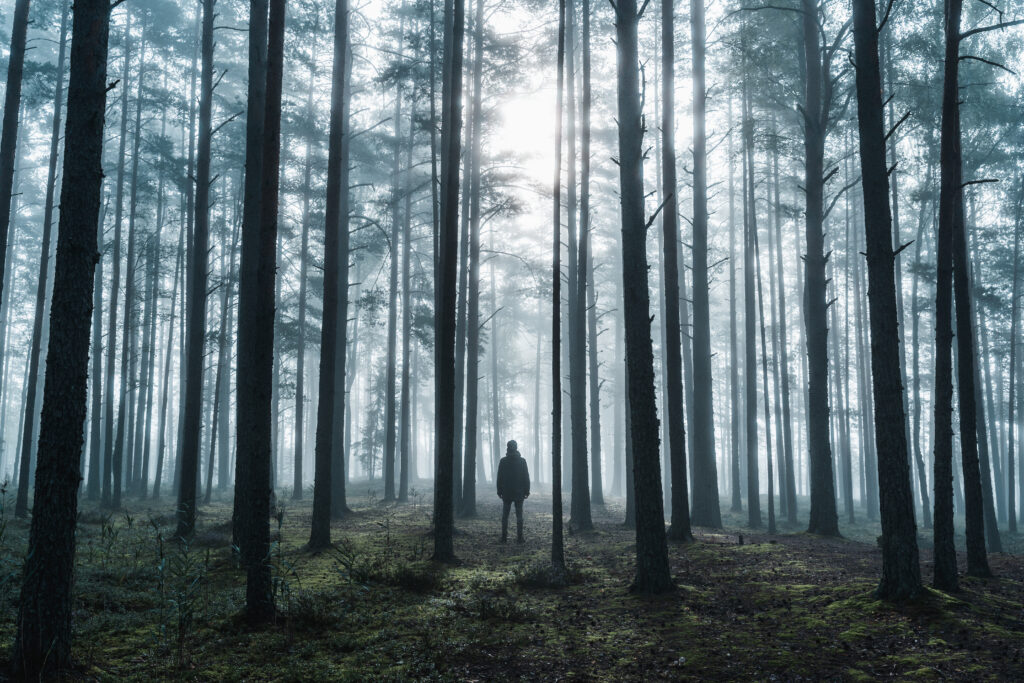
To truly understand this national quietude, you have to step outside the cities and into the forests. Estonia’s landscape feels built for silence. The bogs, the dark green forests, the long stretches of coastline — all of it teaches to lower your voice and listen. Even the wind seems to speak quietly here. It’s no wonder conversation follows the same pattern.

Interestingly, younger Estonians are becoming more fluent in the global language of small talk. They can do it and maybe sometimes enjoy it. But even the most internationally seasoned Estonian will eventually retreat into their familiar pocket of silence.
For foreigners living in Estonia, there is a moment — a kind of cultural click — when silence stops feeling awkward and starts feeling like a shared space. When you stop filling the air for the sake of it and start appreciating that people can be together without the need to talk.
And once you’ve adapted, you may find yourself going back home and shocking your own family by not commenting on the weather, the traffic or the neighbor’s dog. At that point, Estonia has actually won, leaving your family to wonder if you are fine or they need to call an ambulance.
Silence in Estonia is not empty. It is full — full of thought and the gentle belief that words are valuable and should not be spent carelessly. To understand Estonians, you have to first understand their silences .

