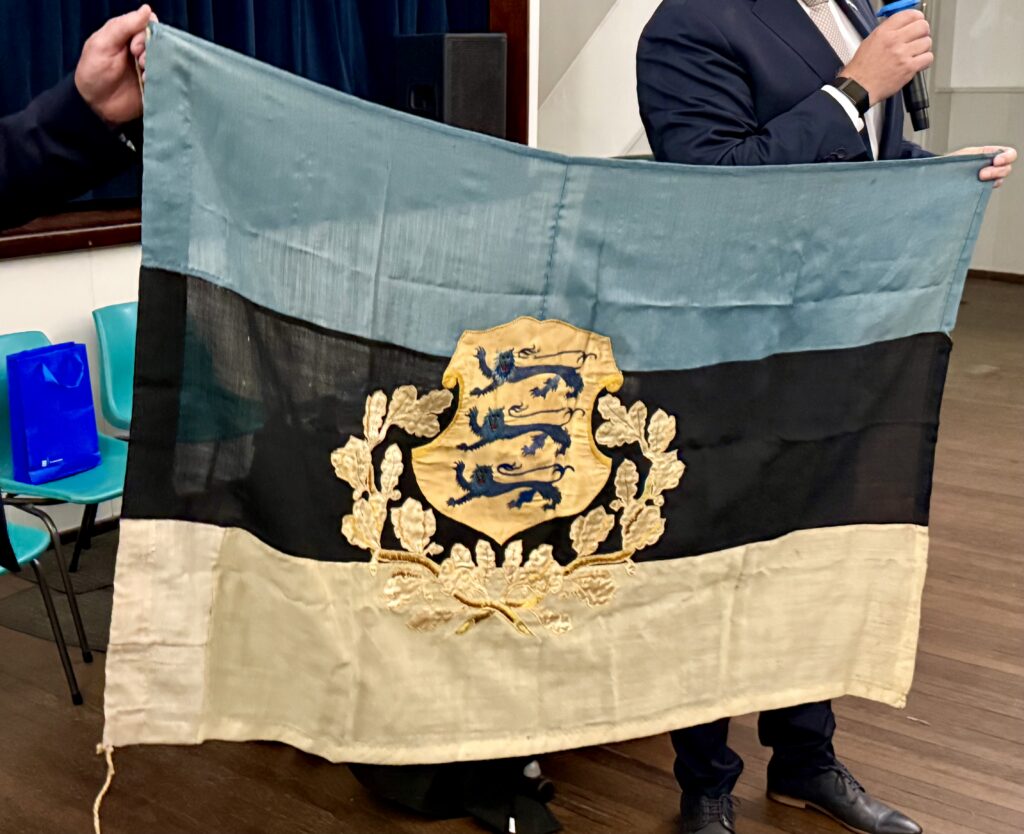
A historic Estonian flag rescued from Kadriorg Palace as Soviet forces closed in on Tallinn in September 1944 is set to return home after more than 80 years in exile.
The blue-black-white flag, which flew above Kadriorg during the short-lived government of Otto Tief, resurfaced in Sydney last year after being kept for decades by Eugen Vilder, the young Estonian who is said to have taken it down before the Red Army arrived.
This was not just any blue-black-white banner: it was the flag raised at the seat of the Estonian head of state, in the Kadriorg presidential complex, giving it the weight of a state symbol as well as a national one.

According to the account preserved by his family, Vilder climbed the palace flagpole around 21 September 1944, removed the flag and hid it under his clothes before fleeing Tallinn with his mother and younger sister. It was a risky act at a moment when Estonia’s brief restoration of lawful authority was collapsing and Soviet occupation was about to be reimposed.
It is still not known who first raised the flag at Kadriorg during those few days in September 1944. But the story of how it was saved has now become central to its significance.
After escaping Estonia, Vilder eventually reached Australia via Germany in 1949, following a path taken by many wartime refugees. He kept the flag until his death in 2021. It was discovered by his heirs at his home in Australia last August.
The relic was handed over in Sydney on 10 March during a visit by Estonia’s foreign minister, Margus Tsahkna, and will now be taken to the Estonian National Museum in Tartu, where the country’s first flag is also on display.
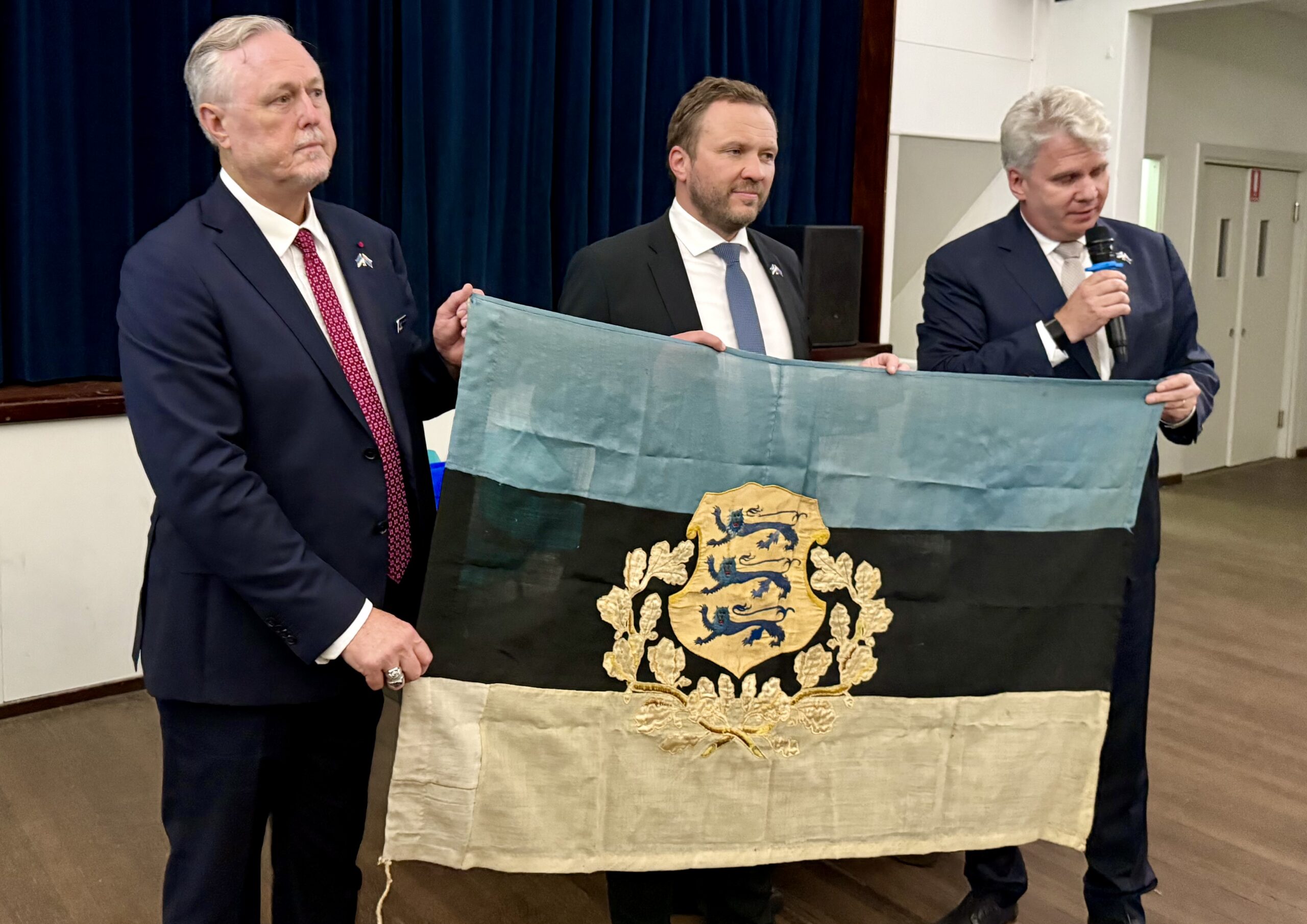
Its return is more than a ceremonial moment. The flag is a reminder of one of the most dramatic episodes in Estonia’s modern history, when the country’s legal government briefly reasserted itself before being overwhelmed by Soviet forces. For Estonians in exile, such objects carried more than symbolic value: they represented the continuity of a state that had been occupied but not extinguished.