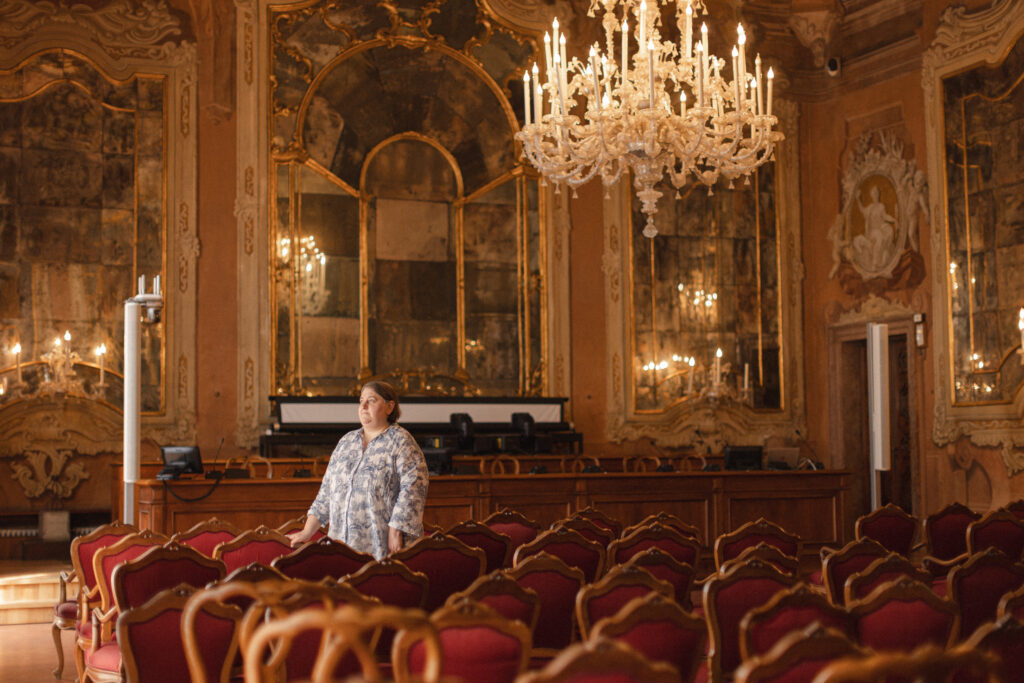
Estonian ethnobotanist Renata Sõukand, an associate professor at Ca’ Foscari University of Venice, studies what societies remember through plants – and what they lose when that knowledge is broken; in Venice, she spoke to Estonian World about Soviet rule, foraging, artificial intelligence, Ukraine, and why the future of local knowledge may depend on something as simple as taking your grandmother into the woods.
For Sõukand, the story begins not in a laboratory or lecture hall, but in the forest. Long before she became one of the most cited scholars of Estonian local knowledge, she was a child roaming freely among trees, watching her mother collect medicinal plants and beginning, without yet knowing it, to notice how fragile such knowledge can be.
You’ve spent your career studying how people relate to plants. Do you remember your own first connection with them?
As long as I can remember, I was in the woods. As a child, I had a great deal of freedom to roam. My mother was interested in medicinal plants. She collected them and eventually became a well-known healer. But we travelled through different countries, so she always had to adapt to a new landscape. I saw her mistakes – how she sometimes misidentified plants. I didn’t really reflect on it then; I only understood it later, when I went to study pharmacy.
Actually, I wanted to study medicine and follow her. She was not a doctor, but a chemist who healed people with plants and massage. I was afraid of the medical school entrance exams, so I went into pharmacy because it was easier to get in. Already in my first year, I went to the Literary Museum in Tartu and started studying local knowledge from the archive. I didn’t know any of the definitions yet; I just read archival texts about healing with plants. I can’t say it was a calling, but it was something that touched me deeply, and I followed it.

You are not a conventional ethnobotanist. How would you describe your place in the field?
There is a disciplinary divide. In some countries, ethnobotanists come from the humanities; in others, from biology and chemistry. In Europe, the West is more biology-oriented, while the East and North are closer to the humanities. I have both.
Pharmacy gives me knowledge of plants, while semiotics and cultural studies give me a deeper understanding of people. For me, ethnobotany is not just a list of plants people use – although that is how the field began, as a kind of biopiracy that extracted knowledge from communities. For me, the field is part of my life. Relations with people are the most important thing.
You’ve said Estonians have a particular relationship with nature. Where does that come from?
I think the deepest reason is in the language. Finno-Ugric languages treat plants as more or less equal to humans. In Estonian and Finnish, the pronoun we use for plants is the same one we use for people: tema – meaning “he”, “she” or “they”, depending on the context. There is now a debate in Estonian scientific discourse about whether it should be tema or see – “it” – but deep in the language, it is tema. We have been influenced by Germans and Russians, in whose languages plants are not animate. But in the Finno-Ugric worldview, plants are animate. Language does not lie, and language has much deeper roots than new ideas.
In this sense, we are close to many indigenous peoples – Native American tribes, for example, and Australian Aboriginal cultures – who have the idea of Mother Earth. And we are indigenous to the land we live on. Italians look more for culture; we look more for nature. You will never hear an Estonian saying, “The forest is invading my territory.” We attend to it, we take care of it, but with respect. The Baltic cultures, Lithuanian and Latvian, share this. Slavic, Germanic and Italic cultures have quite different relationships with nature.
If you had to name one plant that is truly Estonian, would that be possible?
Not at the level of the plant itself. Estonia’s flora is relatively limited, and most plants grow across borders; there is no single species I could say belongs uniquely to us. Perhaps something exists at the level of relationship – how we relate to certain plants – but not at the level of the plant itself.
Today, much of Estonia’s medicinal plant knowledge still follows the Soviet pharmacopoeia, reinforced by the popular herbal books that flooded the country in the 1990s, beginning with those of the Austrian herbalist Maria Treben. They all tend to repeat more or less the same plants.
And personally, do you have a favourite plant?
It depends on the time of day or the season: oak, birch or rowan. I’m drawn less to herbs than to trees.
Is the Estonian relationship with nature also different in practice – for example, in how people forage?
A huge one: foraging rights. In Estonia, you can just go everywhere during daylight hours. The forest is “open”; you walk in, you forage what you need.
Here in Italy, you can’t forage on private land. You can only go where there is common property, but only if you are part of that community, and only a few communities have that. In most places, you have to pay in advance – for example, buy a permit to pick two kilograms of mushrooms. This affects the relationship with nature enormously. When you can’t forage freely, your knowledge of wild food gains an extra layer of restrictions.
You speak about Estonians as people of the land – maarahvas. Has that relationship changed?
Estonians are historically very land-based. We were the people of the land, maarahvas. The community has incorporated everyone who arrived after the plagues, after the wars. We found historical records on plant use that were very similar to local knowledge found in nineteenth-century Polish historical sources. But we’ve been losing the knowledge holders, generation after generation, and you cannot replace them with a book.
One of your most cited recent studies looked at Kihnu island. What did that research reveal?
We weren’t looking for peculiarities; we were looking for systems, and for change. We had material collected in the 1930s by Theodor Saar, a Kihnu primary school teacher whose correspondence with Gustav Vilbaste preserved valuable records of local plant knowledge, so we had a point of comparison.
When we did fieldwork around St John’s Day, we compared contemporary knowledge with the medicinal plant knowledge recorded on Kihnu in the 1930s. Out of the entire historical repertoire, only eight specific uses overlapped. That tiny overlap showed how thoroughly the older system had been overwritten by Soviet medicine and its standardised view of useful plants – a view also reflected in Soviet-era Estonian herbals by Johannes Tammeorg, Oskar Kook and Gustav Vilbaste, the authors of the influential reference work Eesti NSV ravimtaimed. The plants people had used historically had been replaced by plants and uses that were “scientifically approved” by Soviet pharmacopoeia and the official plant lists canonised by the central government.
But ritual use was relatively well preserved, because it was constantly practised. The communist rituals didn’t really exist, or at least they weren’t related to plants, so the state never controlled that area. Food plants actually gained many new uses, but that is more related to recent popularisation.
So the conclusion of my DiGe project – Ethnobotany of Divided Generations in the Context of Centralisation, funded by the European Research Council and studying how political and cultural centralisation changes local plant knowledge – came down to one thing: policy. The state defines a great deal of our relationship with plants, wherever the area is institutionalised. When I started, I thought maybe the Soviet influence on local knowledge wasn’t that bad. After the research, I understood it was much worse than I had thought.

You’ve drawn graphs showing local ecological knowledge declining sharply. How worried should we be?
Local knowledge is the accumulation of countless experiences. If you imagine it on a graph, from the start of humanity, it didn’t rise smoothly; there were wars and population extinctions. But globally, until about 200 years ago, the trend was upwards. In the last two centuries, with overall industrialisation and the depopulation of the countryside, it has been falling. We have probably lost more than half of what we have accumulated as humanity. With artificial intelligence, it is going to get worse.
Let me tell you an anecdote. There is a mushroom called Kevin. Why? Because someone called Kevin ate it and died. Thank you, Kevin, for letting us know. That is how local ecological knowledge is often created: through experience, sometimes painfully, and passed on so others do not have to make the same mistake. Every land, every valley, every soil type requires its own knowledge. If we lose the people who carry it, we have to rediscover everything from the beginning.
A good example was Alles Finster, the German-Austrian television series about a blackout that was recently shown on ETV, Estonia’s public television channel, and featured the Estonian actor Tambet Tuisk. Within days, a community kills its only breeding boar because people do not know any better, and a woman dies after eating a poisonous mushroom. It was quite a realistic representation of what can happen in a crisis when local ecological knowledge is missing.
Can social media – or artificial intelligence – help save that knowledge?
This is exactly the trap. You may go into nature to film a video and share it on social media, but did you really experience nature? A video does not teach you how to find your way to a plant, when to collect it, or what obstacles you will meet in the forest. To pick blueberries in a moment of need, you must already have gone blueberry picking before. The window may be only two weeks, the forests may be far from the city, and there are things you can learn only by going.
Artificial intelligence cannot solve this either. It can process a great deal of knowledge that has been written down, but much local ecological knowledge has never been written down – and some of it cannot be written down at all. It is tacit, bodily knowledge, and it depends on doing things. You cannot have contact with nature through a computer; at most, you can admire its image. The danger is that digital tools create the illusion that, whenever we need this knowledge, we can simply retrieve it. That is a dangerous illusion.
If there is one thing every person could do to keep this knowledge alive, what would it be?
Take your granny or grandpa outside. Go into nature. Do the things they did as children or when they were younger; return to their favourite places, if those places still exist. If you don’t have grandparents, take an older relative, or someone else willing to share what they know.
Children today may get bored quickly because they are used to fifteen-second clips. But once they get through that first impatience, there is a great deal to do in nature. Then you need to make time to practise. Repeat it, repeat it, repeat it. Practice gives you confidence.
You also lead a university spin-off that has created the card games Plantasia and HexaLEK, now available free of charge in Estonian libraries. What are they designed to do?
The games are about intergenerational exchange. One of Plantasia’s playing mechanisms is based on Dixit, the storytelling card game. But instead of abstract illustrations, Plantasia uses 48 cards featuring 24 plants. The more you know about plants, the greater your advantage, so the game motivates you to learn.
On the other side of each card are the plant’s cultural uses, which allows players to learn from a knowledge holder, such as a grandparent. You tell the story of how you have used the plant, collected it, or what you know about it. The game is based on Polish and Lithuanian plant use, but it can also be played internationally.
HexaLEK connects habitats, uses and species in a biocultural landscape that changes with every game. There are two versions: one focused on plants and another on mushrooms. Because each player brings different experiences and stories, the landscape that emerges is never quite the same.
The game can be played alone or in groups, either collaboratively or competitively, depending on the situation. It is accompanied by a booklet explaining the uses and habitats of the species, based on South Estonian local knowledge. As with Plantasia, HexaLEK can also be played internationally, because the selected plants and mushrooms are widely recognisable.
The idea behind all the games is the same: learning happens gently, through conversation. We no longer talk about plants enough. A fact on its own is not very useful unless you can connect it to a real plant, in a real place, through real experience.
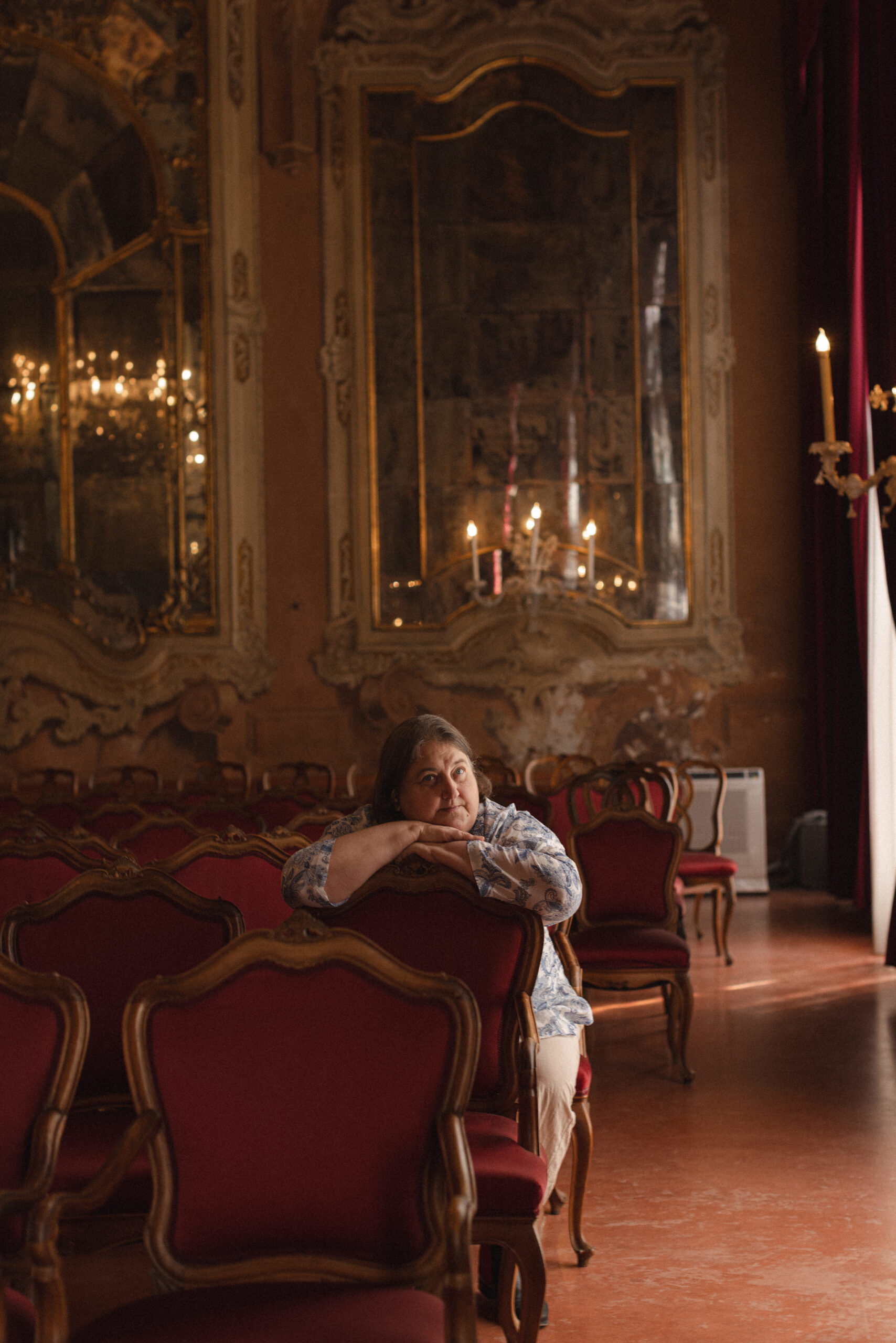
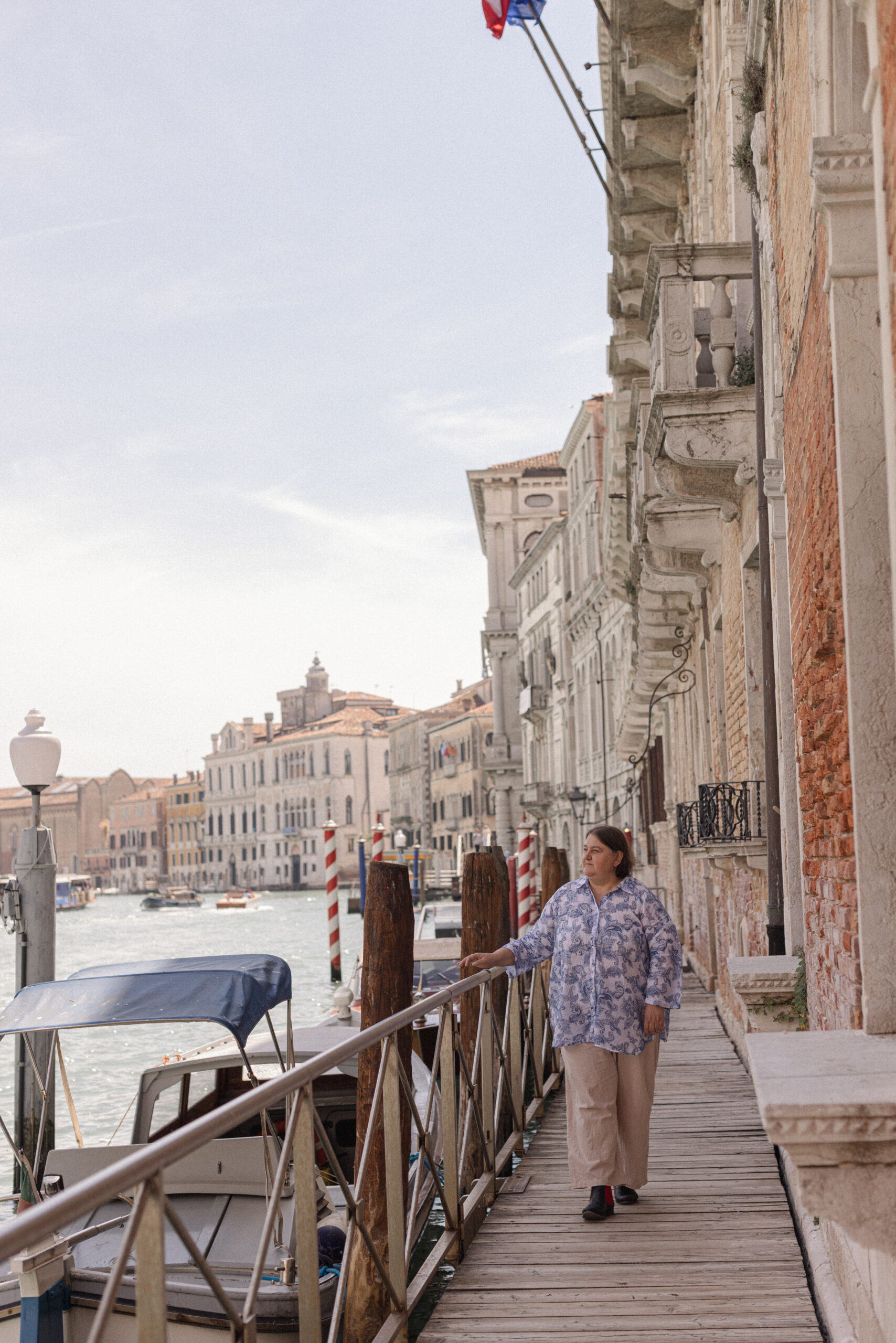
You moved to Venice nine years ago. What brought you there?
After a difficult institutional period, I found myself on my own professionally. I began looking around and found a few universities offering permanent positions, which was very important to me at the time; I was exhausted by instability. Ca’ Foscari University of Venice attracted me because of its genuine interest in my research. It also offered me a tenured position, which is very rarely given in Europe, even to a European Research Council grantee.
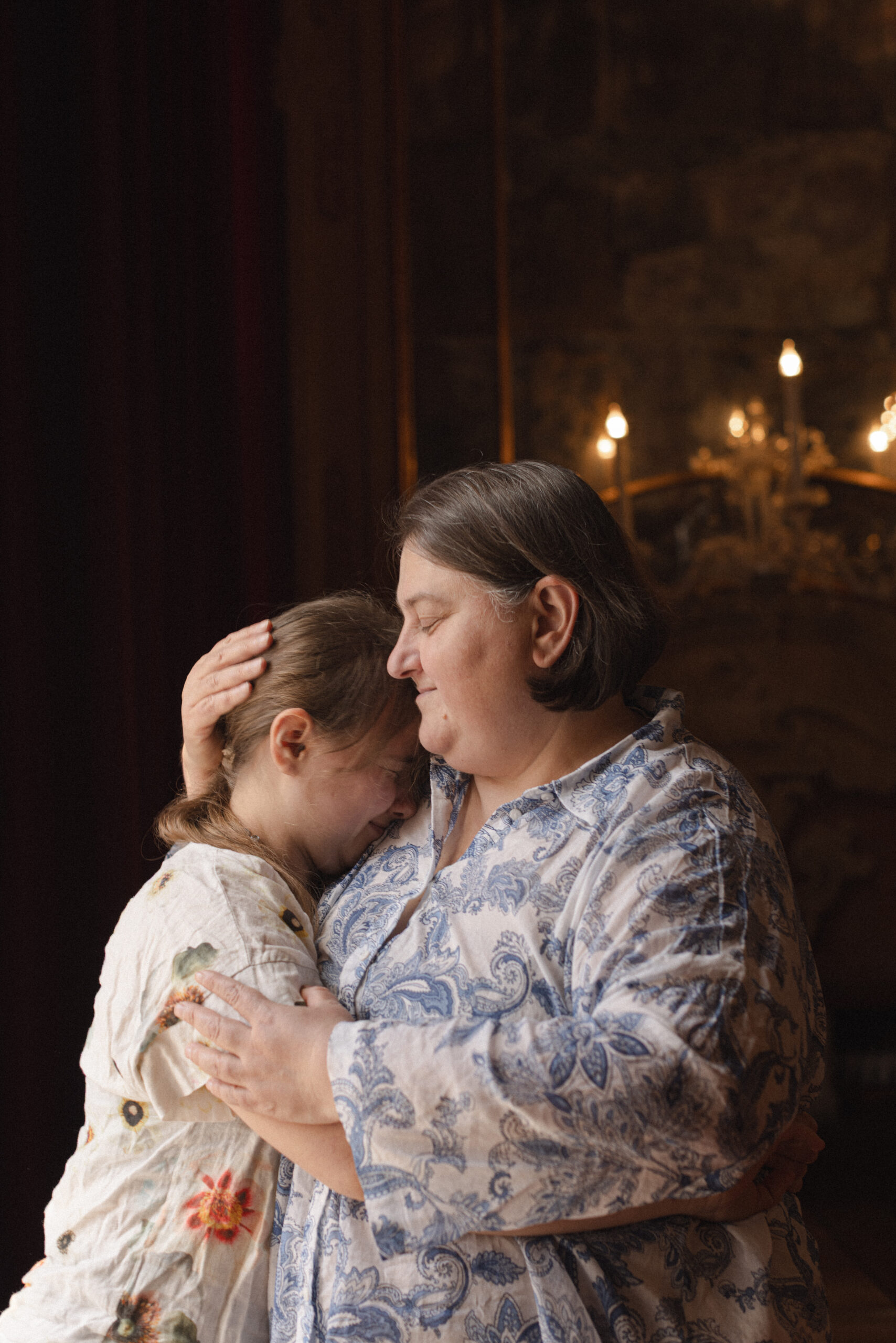
The first two years here were survival mode. We came with our older daughter, who has Prader-Willi syndrome, a rare genetic condition that can involve physical symptoms, learning difficulties and behavioural challenges. Italy offers far fewer possibilities for people with special needs than Estonia. The Estonian social system is more flexible and, in a sense, more just. She is now an adult and lives in Estonia, in supported residential care. Not everyone has that possibility, and not everyone would agree to such an arrangement, but we could not manage otherwise. It was simply too much.
Little did I know that this leap into the unknown would change the way I see things. After the first years, I learnt to manage a life with three or four languages running in parallel. Italian belongs to a completely different language family, so it adds another layer of complexity, but it also gives you new tools. You begin to see parallels and differences that you could not see from within one system.
There is a beautiful study by my colleagues comparing how ethnobotany is done by locals and by outsiders. They got quite different results, not because either perspective was wrong, but because each asked for a different part of reality. The more entry points you have, the more complexly you see things.
What surprised you most about Italy?
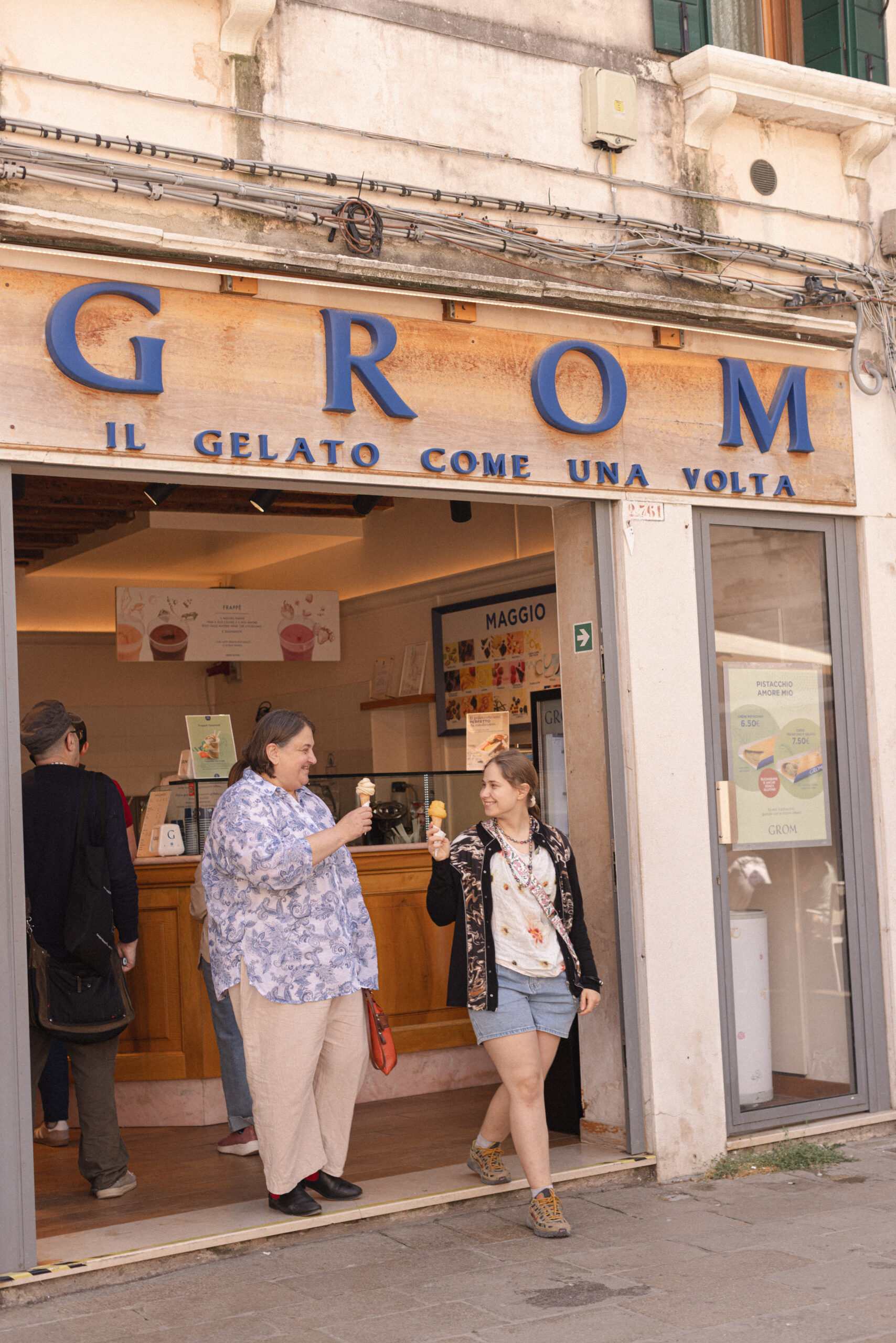
The concept of friendship. In Italy, a “friend” can be someone you know, someone you spend time with; even a good colleague may be called a friend. In Estonia, friendship means something more intimate. A friend is someone you can call at ten at night, who will let you in and support you, whatever you need. There are not many people like that, and you would not call random acquaintances friends. You would say colleague, classmate, someone I know.
The other thing is that, in Italy, much depends on how a particular official interprets the law. My name contains the letter Õ, which is unpronounceable here, so my students simply call me Prof Renata. When I received my social security code, one official wrote it with an O. Later, at another office, I was told this was wrong – it should have been written as OU. They consulted practically the whole building and eventually decided to leave it as it was, because all my other documents had already been issued.
Italian law is so complex and old that a great deal depends on the person you meet at a particular moment. Officials often prefer not to risk making a mistake by doing something new or unfamiliar, because they fear being punished for it. In that respect, it is actually quite similar to the Soviet system.
In Estonia, the laws are transparent: you know your rights, and you can demand them. In Italy, being genuinely nice to people can feel like a kind of survival mechanism. Italians are genuinely happy when a stranger makes even a simple gesture of sympathy – saying thank you, paying attention or offering a seat. There is so much sun there; people seem to have the energy for it. I had to learn to remember to smile even when I had no energy, and it actually lifts me up.
You are half-Ukrainian. How does that feel now, living in Italy during Russia’s war against Ukraine?
My mother is Ukrainian, so I am always aware of what is happening in this war. When someone asks me how I feel, I try to respond politely: “OK.” Those who know me well understand that I carry in my heart a wound shaped like Ukraine.
The first year of the full-scale war was especially difficult, because not everyone understood why I was so emotional about it. Luckily, I work in a science department, and my colleagues understood the situation quite quickly. It also helped when I realised that my European Research Council project was, conceptually, very close to the heart of the problem.
I have worked in Ukraine, and I will definitely continue to do so after Ukraine wins this war. It is important to recreate the conditions that support the vitality of local knowledge there – such as strong village communities that still keep cattle and grow their own food. That is one of the criteria for whether knowledge survives.
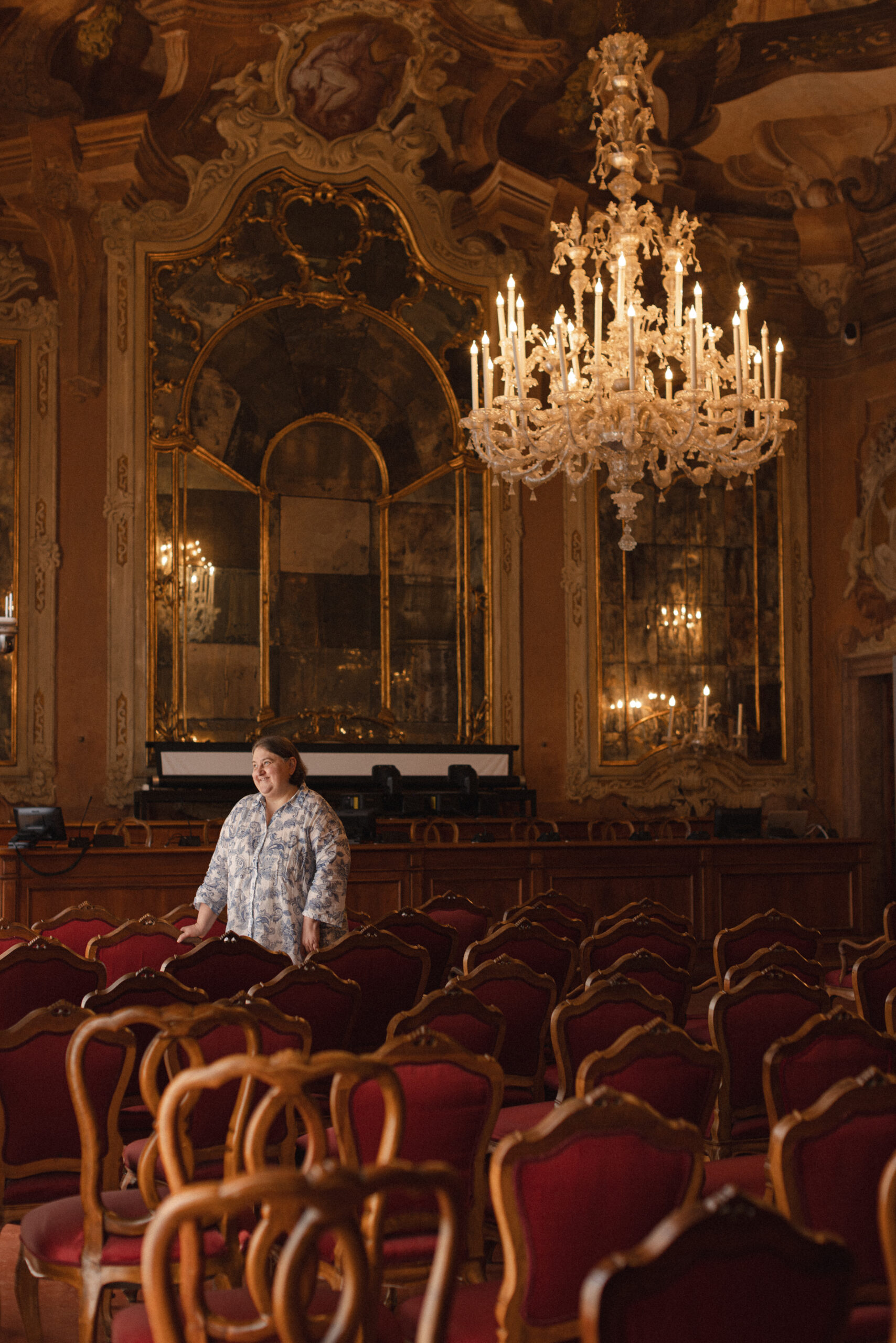
How do you describe Estonia to Italians who know little about it?
During my first year here, someone I met casually asked me why I had come to Italy. I said, “For work.” She was astonished: “You didn’t have work there?” I said yes, of course I had. For her, it was almost unthinkable that someone might come from elsewhere to Italy for work. So I told her: Estonia is a beautiful country with beautiful people. We have clean nature and clean air. We have very good social security. We have good healthcare. We have everything you need. But Italy made me an offer I could not refuse.
Professionally, I describe Estonia as an example of environmental education in practice – a country that has made a real effort, at state level, to cultivate a relationship between people and nature. Not always in the right direction from the point of view of local ecological knowledge; it is more focused on science than on relationships. But the possibility of connection is there, and Estonia could be a good example for the rest of Europe.
And how would you describe Estonians as people?
Estonians are actually very warm, but you have to get to know them first. Once you enter someone’s heart in Estonia, you stay there. It is not easy to get in, but it is not easy to fall out either. That, I think, is the real Estonian thing.
One last, much smaller question: what did you have for breakfast today?
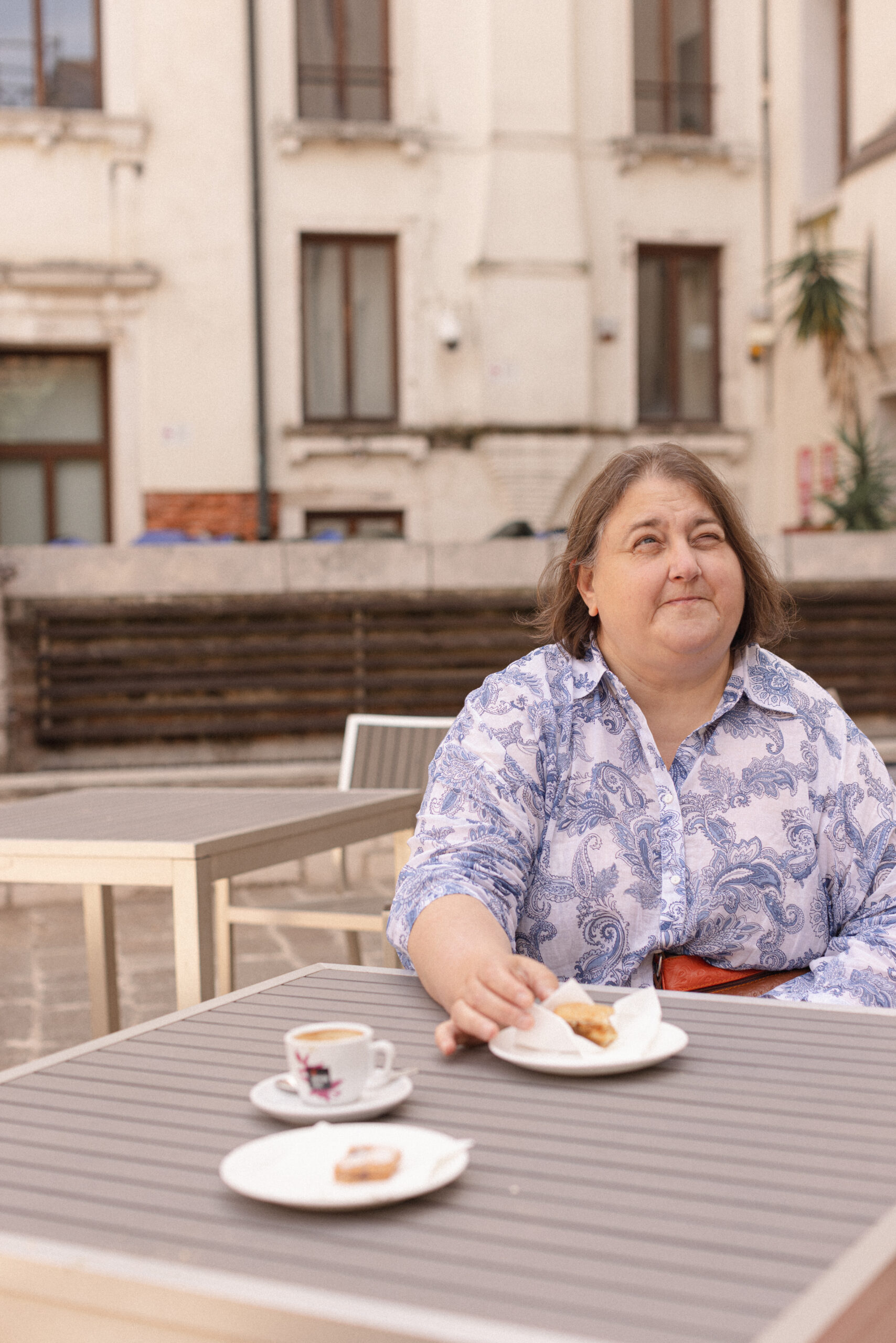
Estonian-style buns baked by my middle daughter. And typical Estonian coffee: ground coffee straight into the cup, hot water poured over it, and cream. Italians don’t really appreciate this way of making coffee, but I’ve never managed to adapt to the espresso machine at home.
The card games Plantasia and HexaLEK, produced by Sõukand’s university spin-off Locogioco, are available through several Estonian cultural and research institutions and can be borrowed free of charge from 200 Estonian libraries. In Italy, they are available in Venice and Bergamo, with online shipping across Europe via locogioco.myshopify.com.