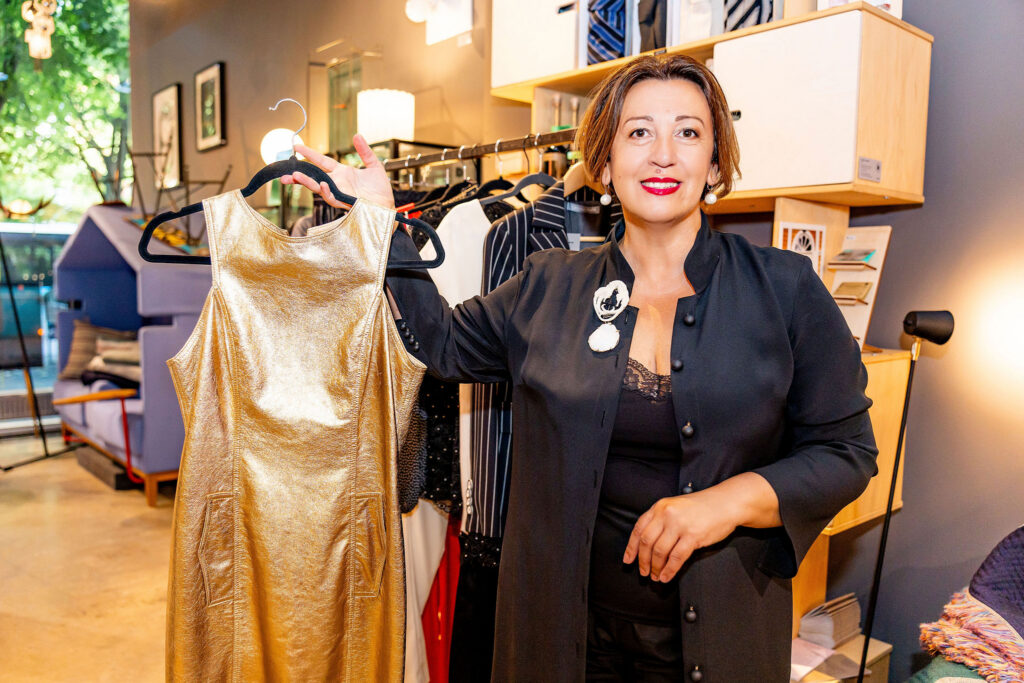
From the cut of a jacket to the shape of public policy, Oksana Tandit sees design as far more than a matter of appearances; one of Estonia’s best-known fashion designers talks slow fashion, circular thinking and why a small country should take design seriously.
Oksana Tandit is one of Estonia’s best-known fashion designers, whose work is defined by timeless elegance, impeccable tailoring and a distinctive character. Over more than two decades, she has developed a signature style in which contemporary classics meet bold ideas and design with substance.
In the interview, she discusses what inspires her, how she works, the values that guide her and what matters most to her as a designer today.
How would you describe yourself as a designer today?
I approach design much more consciously today than I did in the past. I am actively involved in education as well as cultural and design policy, which means fashion design currently accounts for around 20 per cent of my working time. The values at the heart of my work, however, have not changed.
I remain committed to high-quality natural fabrics, expert tailoring and craftsmanship, timeless design, versatility and longevity. Above all, the guiding principle remains “Made in Estonia”.
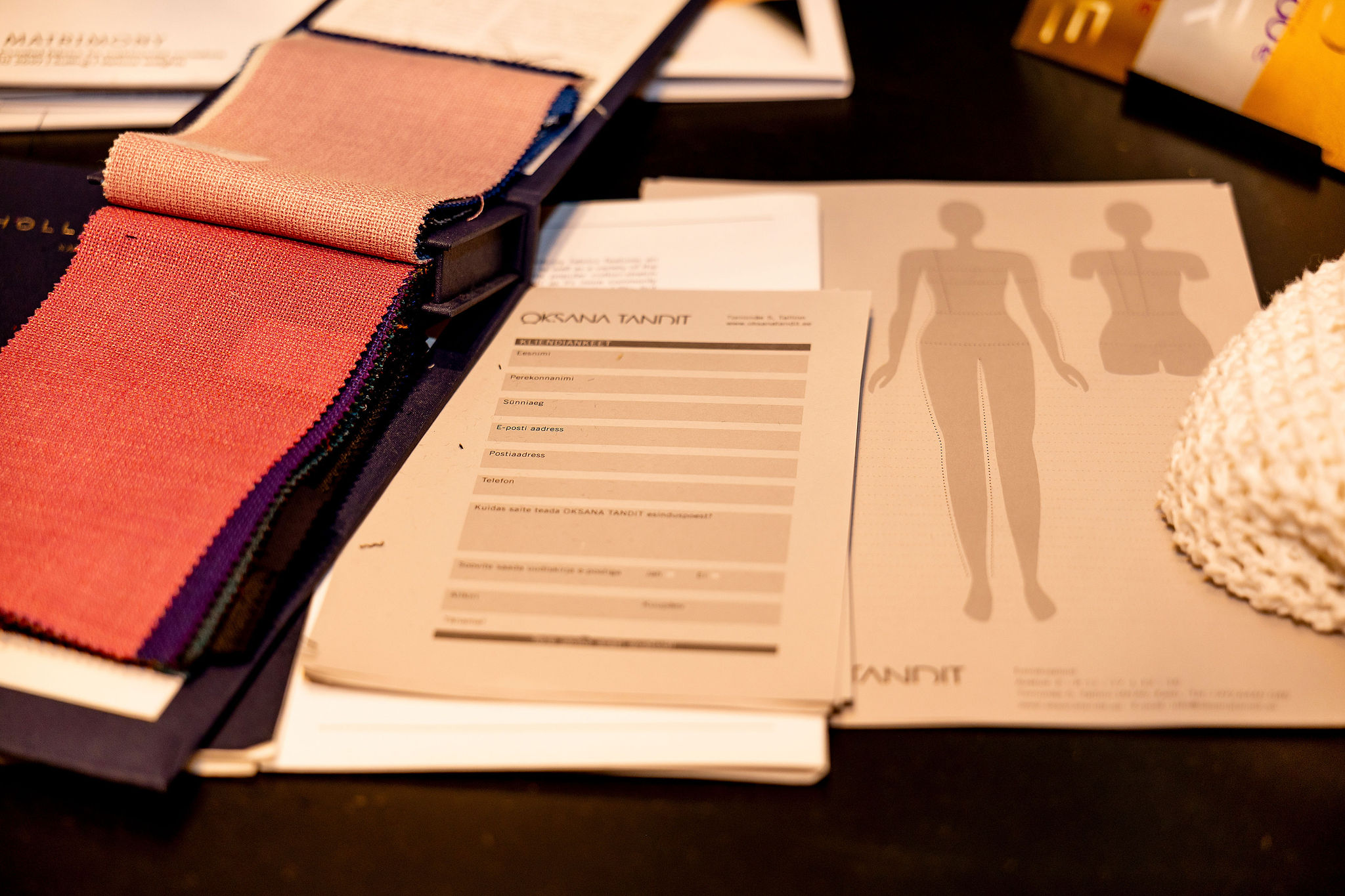
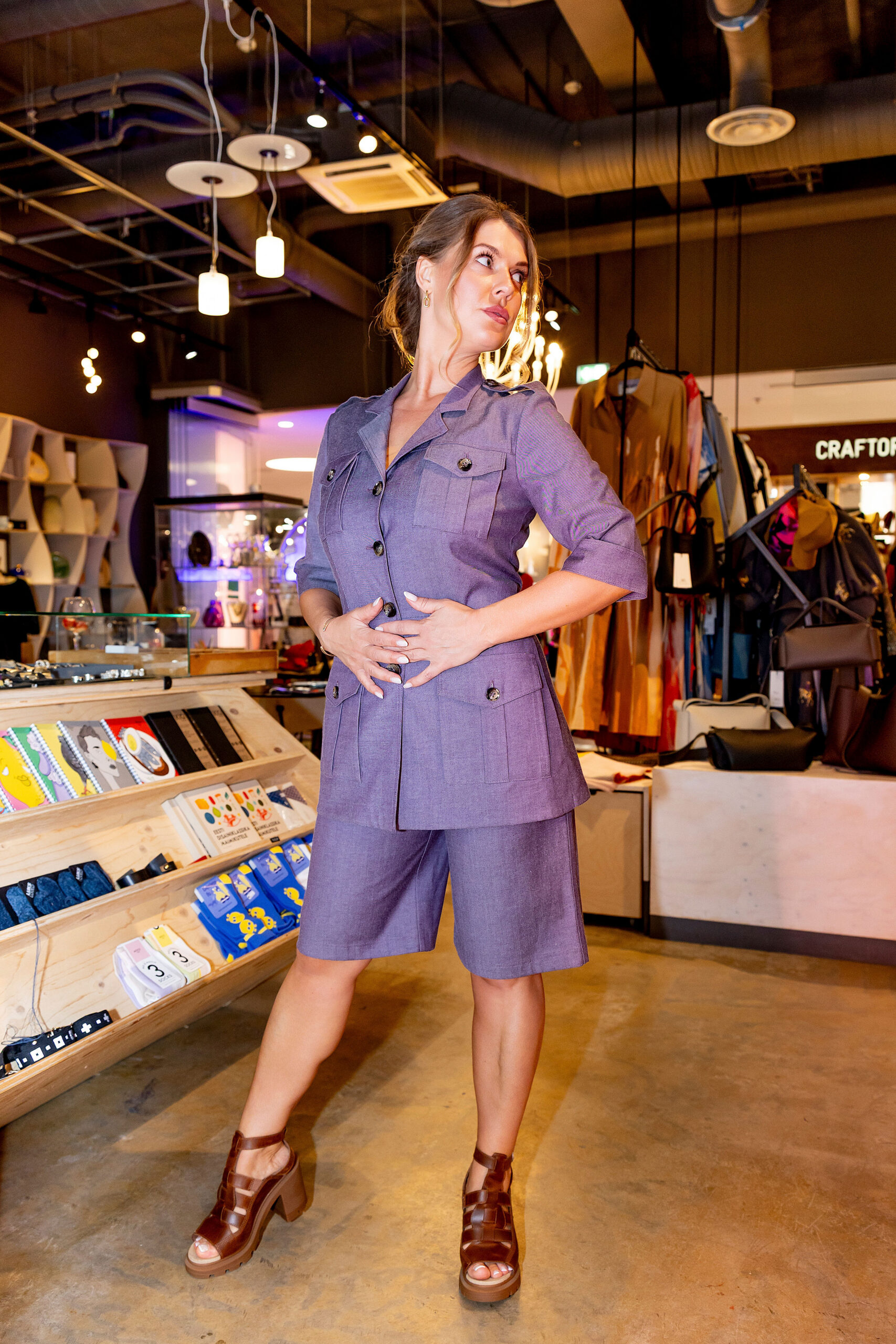
In recent years, we have focused primarily on bespoke commissions. Once or twice a year, we also produce small themed capsule collections, such as a denim range or one made from high-quality surplus fabrics sourced from Ivo Nikkolo, a long-established Estonian womenswear label.
How has your business model evolved over time?
Conscious consumption, sustainability and slow fashion are no longer merely trends; they are essential principles. I have reshaped my business model around them.
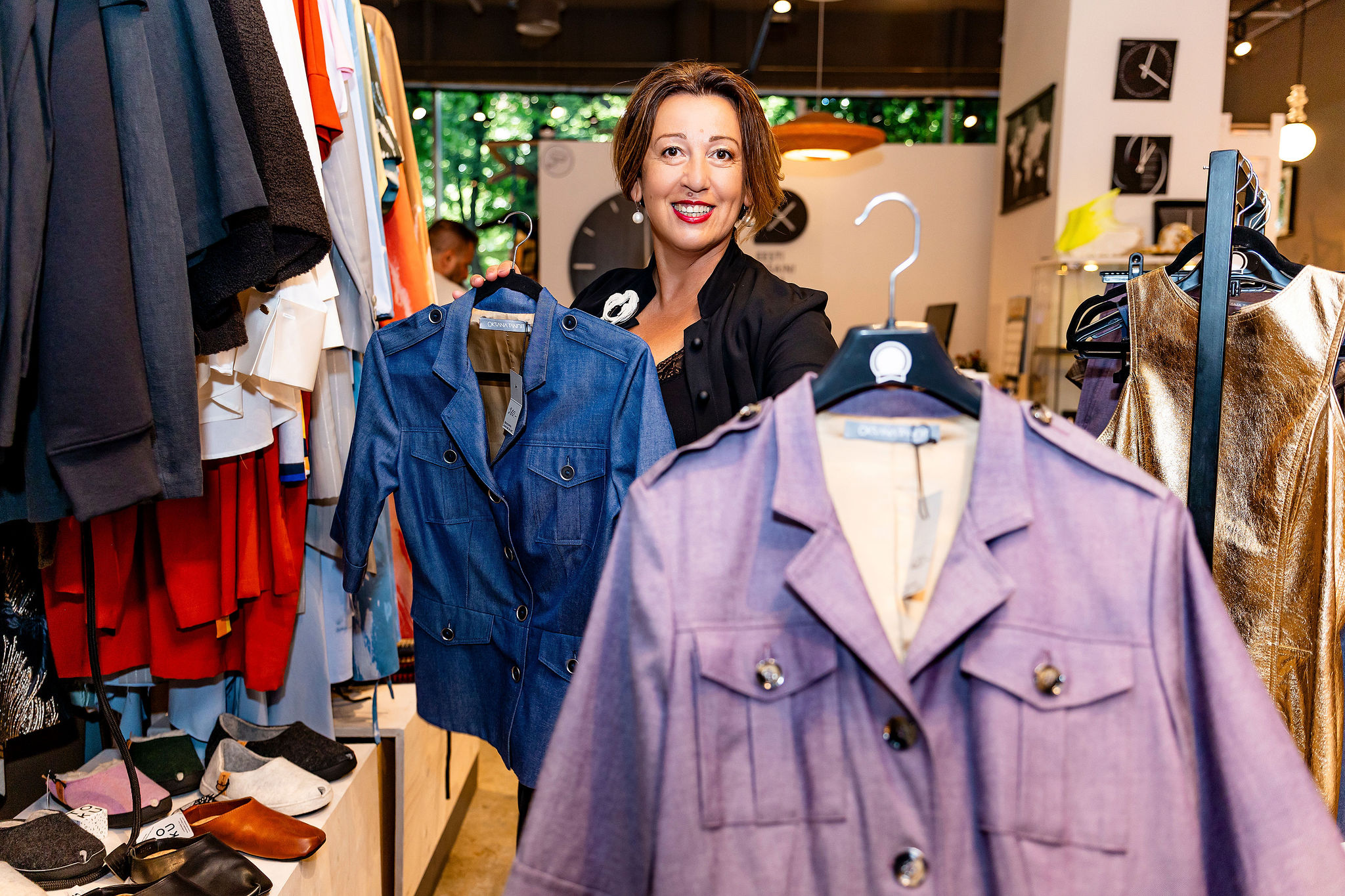
Being a good designer does not necessarily mean running your own shop or retail chain. I abandoned the idea of having a shop of my own and chose instead to entrust the sale of my ready-to-wear collections to professionals. In Estonia, the Estonian Design House has been my natural and long-standing partner.
Through my collaboration with the Estonian Design House, my work has been showcased in Washington, Toronto and New York. This kind of partnership allows designers to focus on their creative work, while international marketing, sales and networking are handled by industry professionals.
What role does cultural diplomacy play in raising the international profile of Estonian design?
Cultural diplomacy is vitally important for a small country. Achieving positive cultural and economic outcomes, however, requires a long-term, consistent and strategic policy for exporting culture and design.
Although design is increasingly described as a driver of the economy, enterprise and innovation, Estonia has still not adopted a new, comprehensive national design strategy.
International exhibitions and showcases are important, but isolated projects are not enough. Raising the profile of Estonian design requires a sustained presence, strong collaborative networks and recognition at the national level that design forms part of both economic and foreign policy.
How should Estonia develop its design policy over the next decade?
One of the foremost goals should be to strengthen the international profile of Estonian design. Design conveys Estonia’s identity, values and expertise, helping to increase both our visibility and our export potential.
Design should be integrated much more closely with economic policy and innovation. Collaboration between the public sector and designers must also be encouraged, ensuring that design is used more thoughtfully in developing public services, spaces and systems.
Sustainability and circular design need to become part of our everyday philosophy, rather than being treated as the subjects of isolated projects or campaigns. My Ring / Circle collection, for example, focused on repurposing existing garments and extending the useful life of products. The role of design is not merely to create new objects, but to find smarter ways of valuing what we already have.
What future do you envisage for culture and design in Estonia and Europe?
It is immensely encouraging to see decisions being taken and initiatives launched at European Union level that recognise the importance of culture and design.
In June, the European Union signed the joint declaration “Europe for Culture – Culture for Europe”, which makes culture a European priority and recognises it as a vital pillar of societal resilience and security.
BEDA, the network of European design associations, is also working with national design bodies to strengthen the role of design in national strategies and funding programmes.
I would like Estonia, too, to recognise culture and design more fully as strategic resources. Design is not merely about aesthetics, nor is it a luxury. It is a tool with which to shape a more sustainable economy, better public services, more competitive businesses and a stronger society.
Culture and design must be priorities for both the European Union and Estonia.
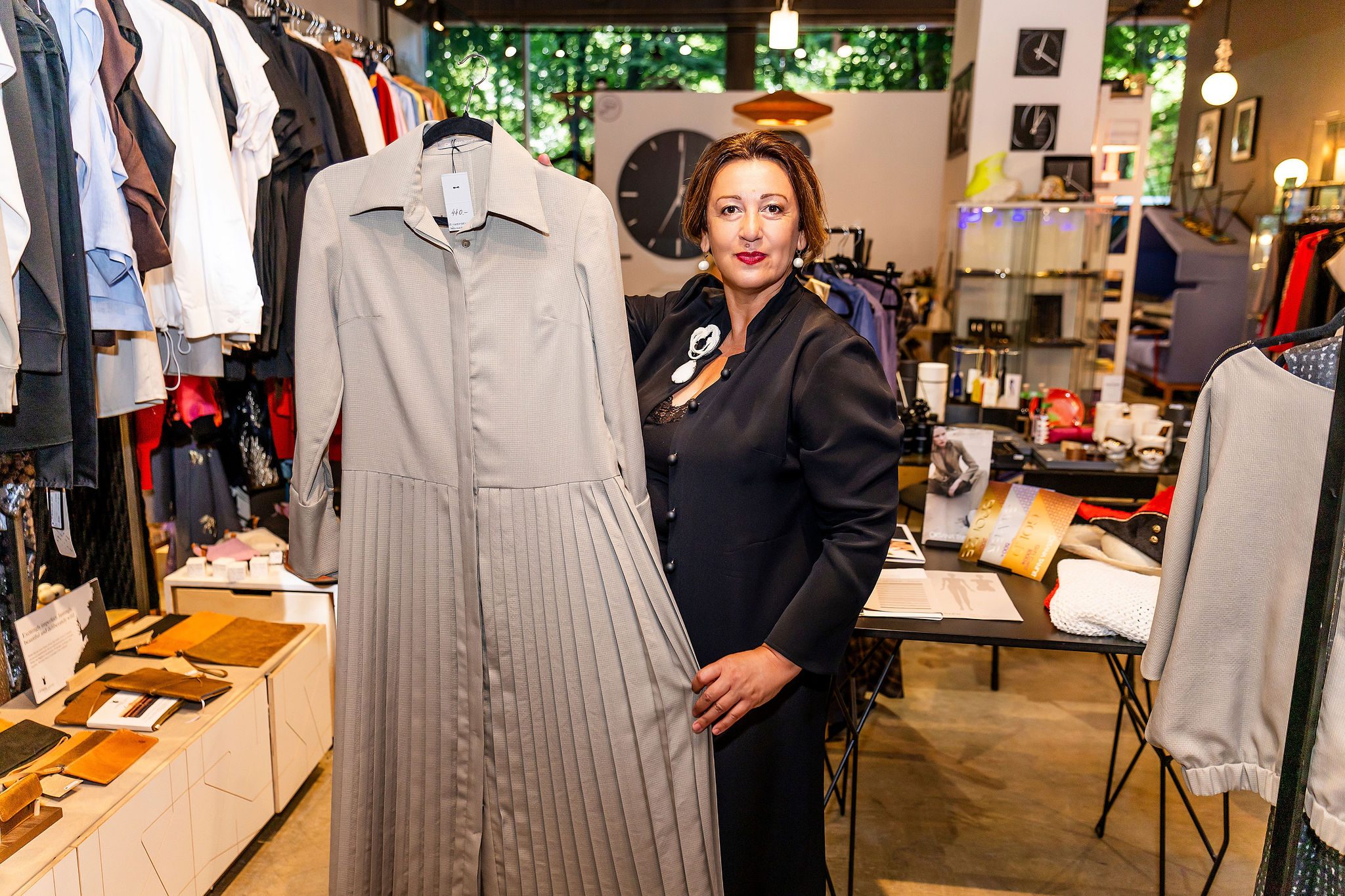
Oksana Tandit’s pop-up shop is open at the Estonian Design House in Tallinn’s Solaris Centre until 15 August.