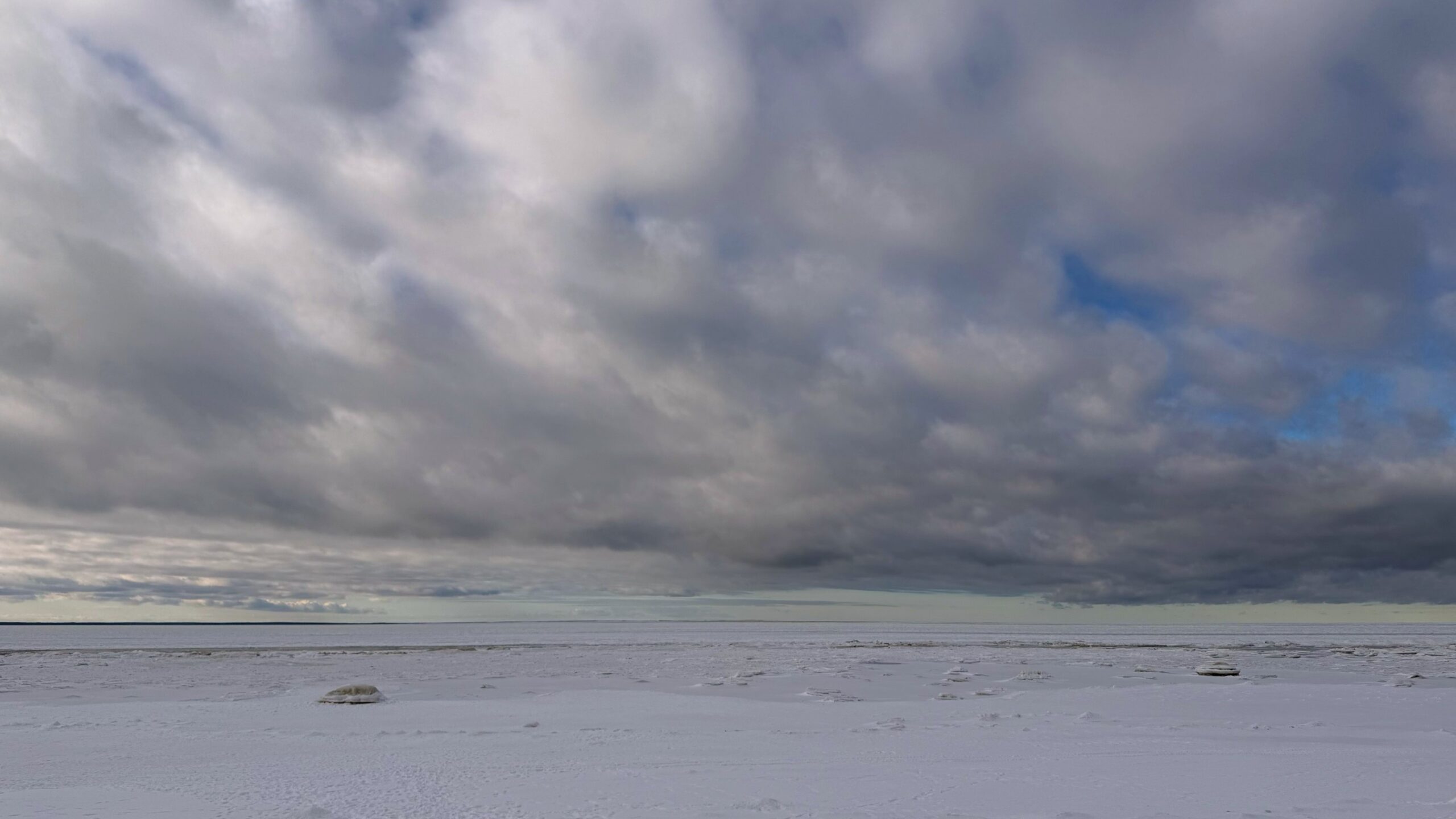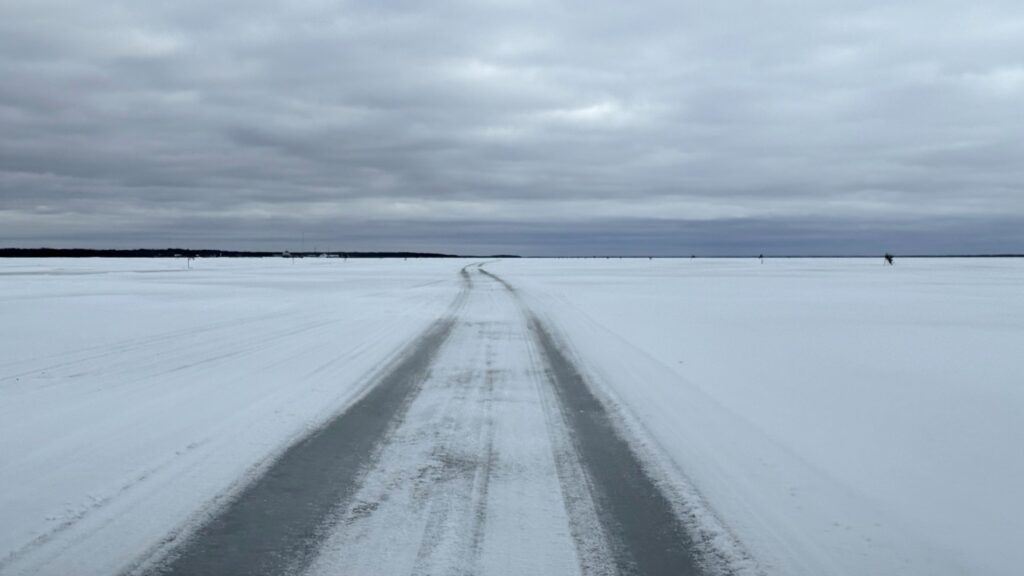
The driver behind you is the one who dies.
This winter in Estonia has been one of the coldest in recent memory, hitting minus 20°C on multiple days. It’s been dry, too. For a month there’s been no fresh snowfall and barely a cloud in the sky; at night the stars, which might twinkle gently elsewhere, seem to tremble sharply instead. One morning a couple of weeks ago my well froze, and I was up until 5am the following night nursing the pipes with a heater and a handheld hairdryer.
Amid this deep freeze came wonderful news: the government announced it was opening the ice roads.
In the far north of Europe there are only two countries that, in winter, open roads over the sea: Finland and Estonia. Many places open roads over freshwater lake ice, but the sea is different: slower to freeze, weakened by currents, flexed by tides. It is impure ice, threaded with saline channels, and less reliable than a lake. It can change within a few metres. And there’s something about travelling over the sea – that ancient source of life we all escaped, the brine and scent and depth – that creates a faint unease you don’t feel when skating across a frozen tarn.
Even in Estonia, sea-ice roads are rare, but they are treasured – held on to as something distinctive, the way Quebeckers treasure poutine.
On Estonia’s islands and shores, winter ice travel has been central to islanders’ cultural life for almost as long as Estonia has had written history. For centuries, ice roads were the only way to connect islands to the mainland in winter. They were how supplies arrived; a source of food; a route for communication and social contact; the background – and origin – of stories.
When Estonians take their quad bikes, bicycles and feet – and yes, today, also horses – out over the sea; when they walk past the end of the beach and keep going, despite the government’s gentle chastisement, they are echoing centuries of their ancestors.
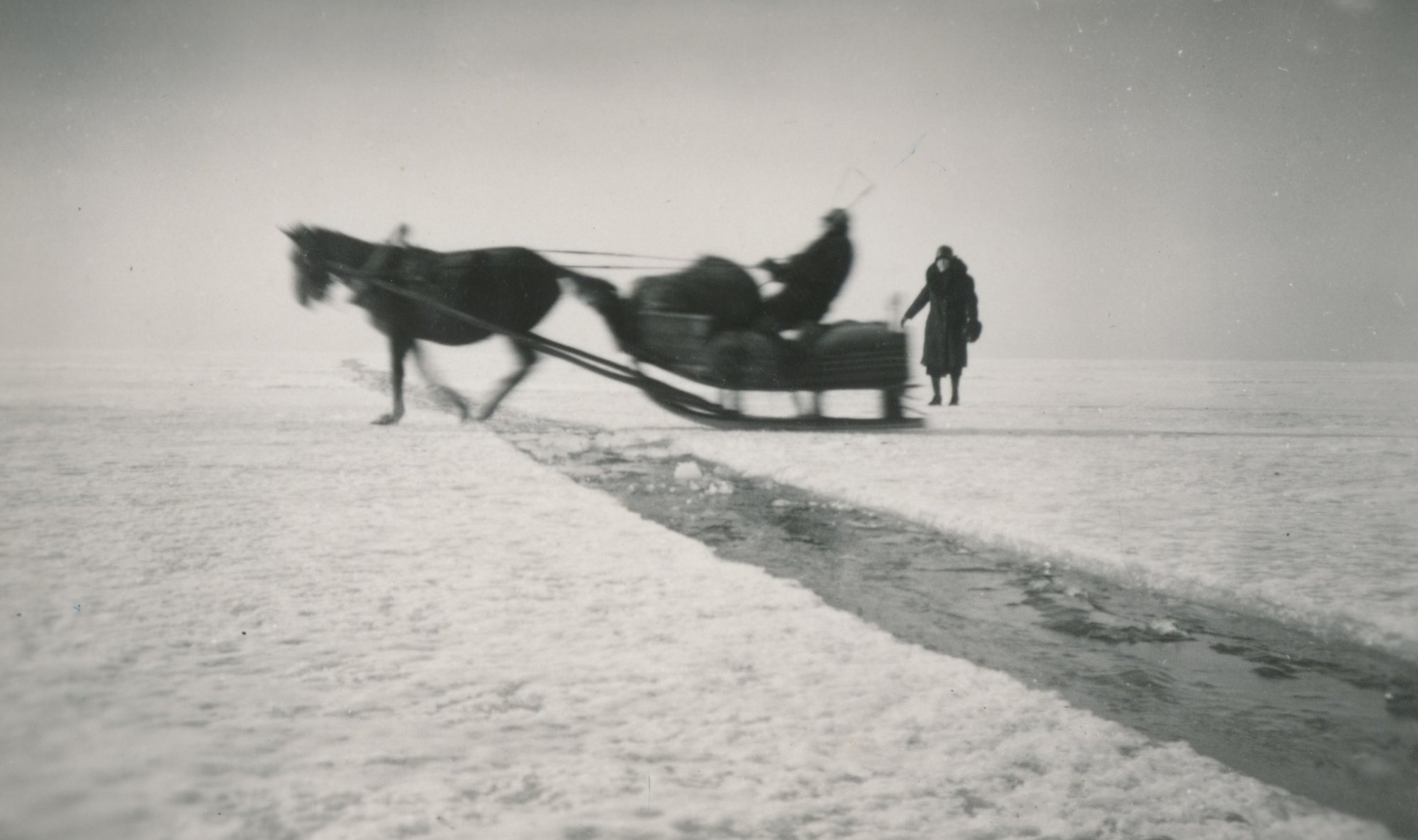
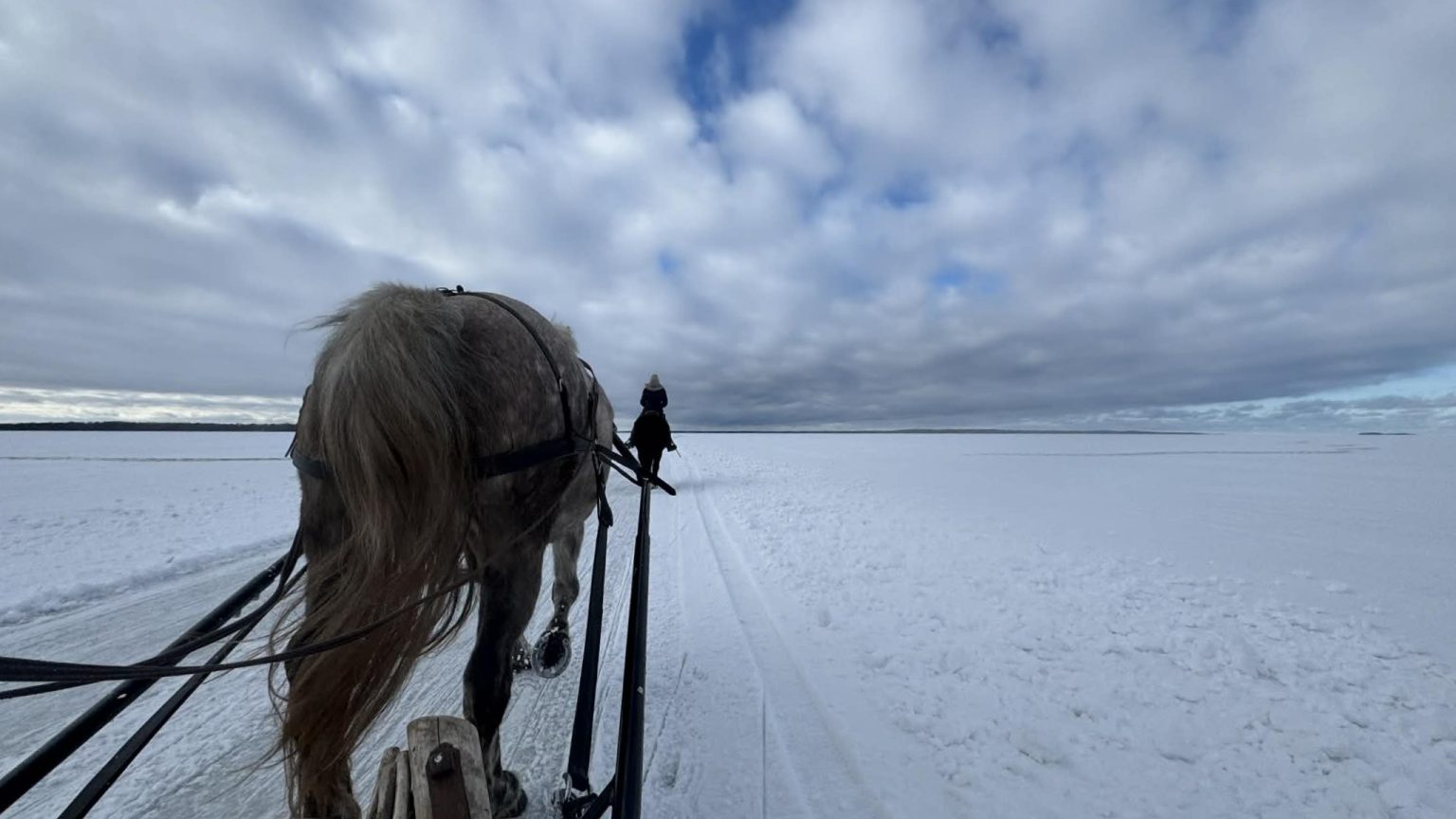
And these stories – essential supplies brought across the ice – aren’t merely history. This winter Ruhnu, an island south of Estonia, was completely cut off, with neither air nor ship access. That put food supplies at risk too. The result? An improvised ice road as residents drove over the ice to fetch what they needed. Ruhnu wasn’t alone: Prangli was cut off for weeks. Residents of other islands, including Abruka and Vilsandi, have used hovercraft – or driven – as well.
It’s been several years since Estonia had a winter cold enough for official ice roads, and this year there was no funding. Official routes cost tens of thousands of euros each. There is not – yet – widespread recognition of sea-ice travel as part of islanders’ intangible cultural heritage. In response, Estonians – defiant and independent – simply built their own. When the first official road finally opened, it made headlines worldwide.
Unusual laws
Sea ice shifts. It is weak. At the 24 centimetres it must reach to support a moving car, over the sea’s depth it has the comparative thickness of a coaster (the ice) on a kitchen table (the sea). That’s what we’re doing: driving on a thin coaster, suspended.
That kitchen table represents metres of deadly cold, semi-saline seawater. When you drive an ice road, it is illegal to wear your seatbelt: you must be able to exit quickly. Of course, that assumes you can open the doors. If a vehicle goes through, water pressure can hold the doors shut against you. Few people drive in sub-zero temperatures with the windows open – which would let seawater in and, counterintuitively, make the doors easier to open.
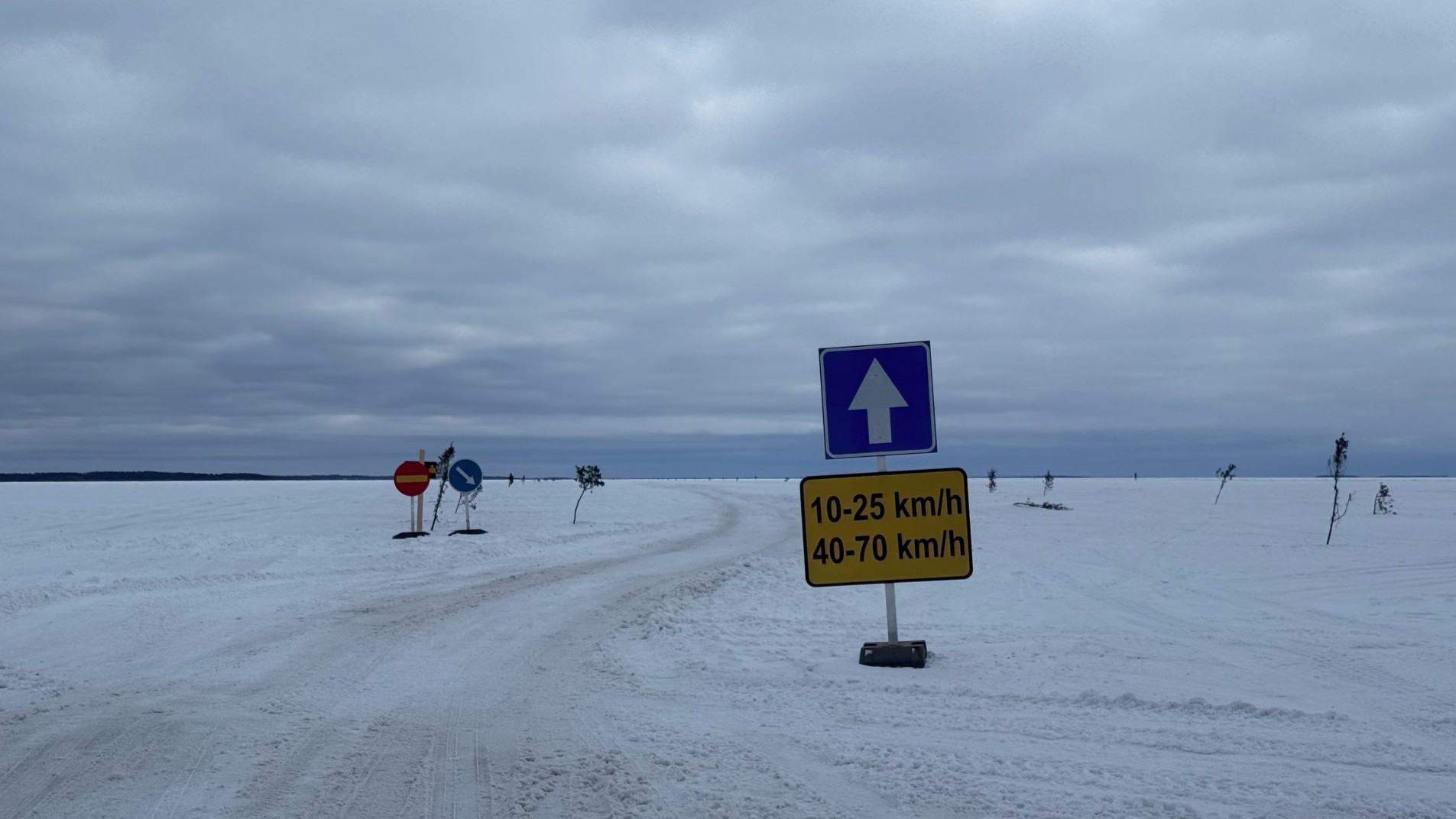
Not only are seatbelts illegal, but as you approach the ice road you’ll see the only instance I know of a double speed limit: you may drive between 10 and 25 km/h, or between 40 and 70 km/h – but not between.
Because this is the truth of an ice road: they are not safe. They may be traditional, exotic, thrilling – but fundamentally you are driving a multi-tonne metal object over a cracked shell above very cold water, often kilometres offshore and far from help.
Sometimes, there are tragic accidents. Official ice roads are constantly monitored and come with unusual rules.
The dual speed limits exist to avoid vibration that can cause fractures. Your car weighs the ice down and forms it into a very shallow bowl. As you move, this creates a wave in both the ice and the water displaced beneath it. At low speed, the wave dissipates. At high speed, you outrun it. But at mid-range speeds, you travel with the wave and amplify it. If the ice fractures, down you go.
The unseen danger isn’t only to you, but to the car behind. If a car follows too closely – even slowly – it can ride the back of your wave. Even at a supposedly “safe” speed, its presence increases the wave’s intensity. That’s why cars must be separated by several hundred metres – and why it is the driver behind who can be most at risk.
Ice road in Estonia: ice roads have strict speed bands and long gaps between cars – to stop one driver’s wake cracking the ice for the next.
Tourists are especially dangerous to themselves and others. This ERR article notes speed limits and routes not being followed, and the difficulties tourist drivers have with even the basics (not getting stuck), let alone knowing how to get unstuck. When you can be miles offshore, and when other vehicles are restricted from entering at the same time, this becomes especially problematic.
That said, the tourist business is booming, and on the island of Vormsi cafés have opened with attendance not unlike summer.
But what is driving an ice road actually like? And how do you avoid being one of those tourists?
Last weekend we drove to Haapsalu to take the sea route to Vormsi. It’s about seven kilometres – four and a half miles – from mainland to island. It’s one of three official ice roads open this winter.
If you want to drive, here are the official guidelines: read them. But below is a mix of key things to know beyond the headline rules (‘no seatbelts’ and ‘two speed limits’) that everyone’s heard.
First, look up your ice road on Tark Tee. Click it and it will show contact phone numbers. While 112 should always be used in an emergency, save these numbers in your phone for situations where you need to contact the road maintainer. If you misjudge an ice bridge and your car ends up with the wheels in water – but you’re alive, so the priority is stopping anyone else from following – call them. Don’t be the kind of tourist who tries to look the number up after it happens.
Before you enter the road, pause (there may be officials present) and ask what to expect. They’ll often tell you: at kilometre so-and-so there’s something to watch for – a large crack, for example. It’s worth keeping that in mind.
Once you leave the shore, the ice near land can be substantially different from the ice further out. Often it’s bumpier.
The road is marked with juniper branches, which poke up from the ice like salt-grown Christmas trees. In snowy conditions, when you might see random tyre tracks diverging, stick to the marked route – typically around twenty metres to your left and right.
Driving the ice road is not peaceful. It sounds as though it should be: kilometres stretching ahead, a wide white expanse. The reality is that the surface changes rapidly. One moment you’ll see deep blue ice, uncannily transparent and slightly eerie because it’s hard to judge thickness; the next, within a few metres, the snow will be thick, grinding beneath the car, and the wheels may lose traction. Then it may be smooth for kilometres. It’s hard to predict and hard to read, and driving becomes a blend of concentration and serenity – as long as you don’t lose the concentration part.
There are cracks. You will drive over cracks. Worse, there may be very wide cracks.
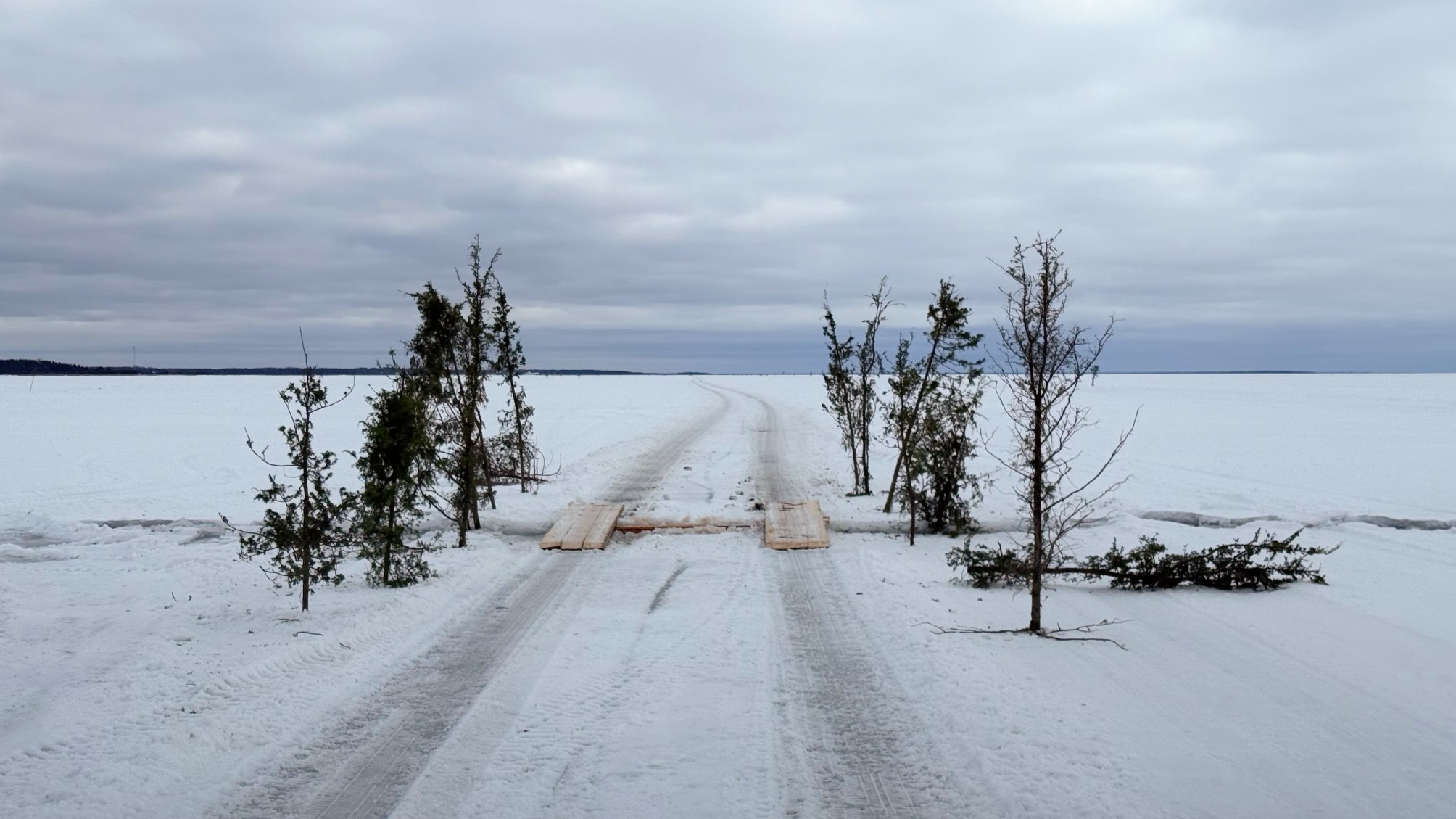
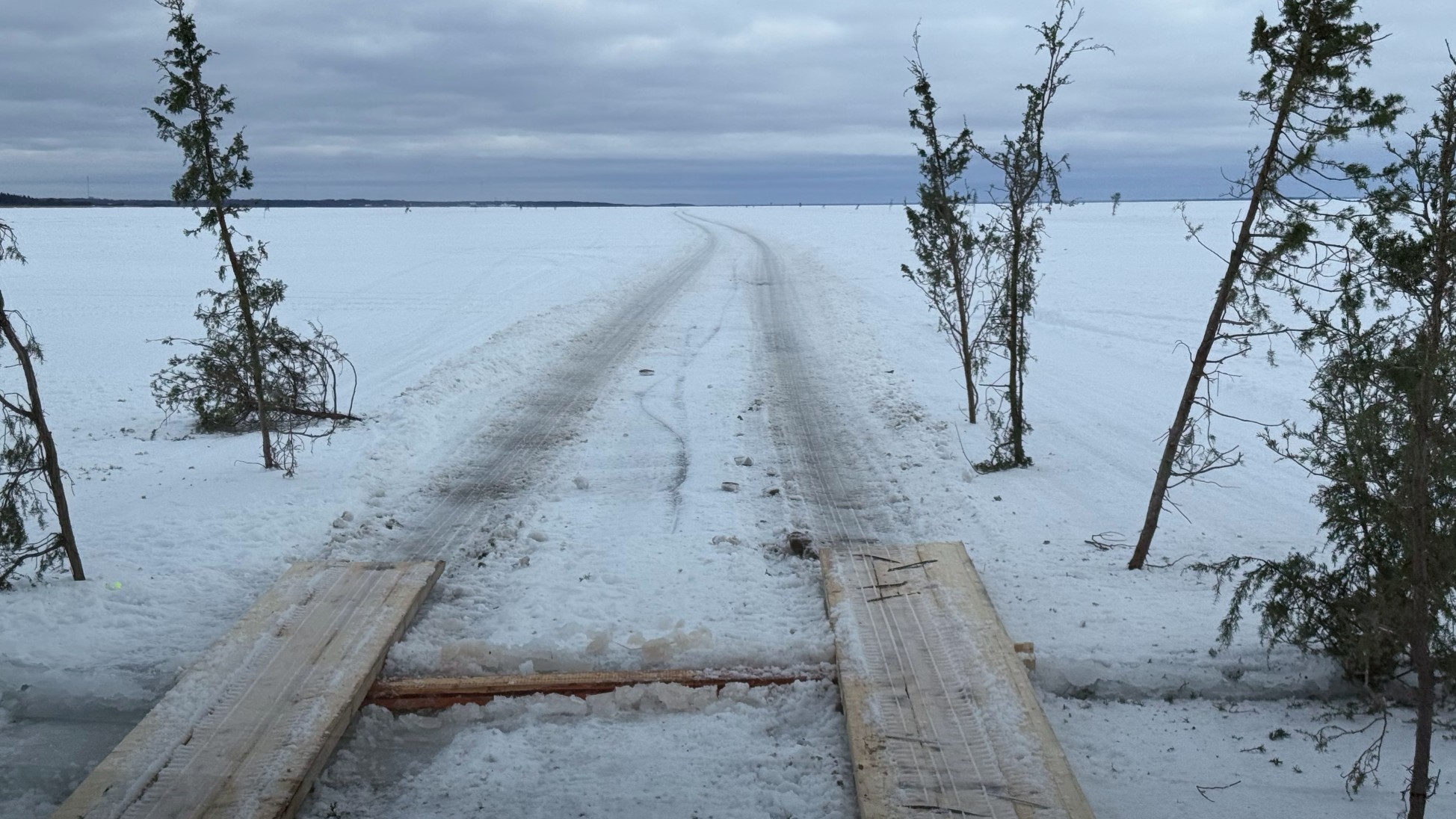
On the shore an official emphasised to me: “Drive over the bridge.” He repeated it: “Over the bridge. Not around.” I wondered how many tourists had wandered off-route and suddenly reached a gap.
A crack like this underlines how fragile and unpredictable sea ice can be. The “ice bridge” is simply two wooden planks, and on our road they didn’t even span the full width of a car – you have to line up your wheels. If you misjudge, one corner of your car drops into the sea. Suddenly something you’d be confident about on land – we all know where our wheels are, don’t we? (hello, tourist driving an unfamiliar rental) – becomes more worrying when you’re two miles offshore and there is visible open water.
There you go. Now you know everything I know about the ice road.
Intangible, dangerous, and unique
It would be irresponsible to recommend driving an ice road if you aren’t prepared. Don’t be that kind of tourist.
If you do go, take care, don’t die, and enjoy briefly becoming part of centuries of Estonian cultural heritage.