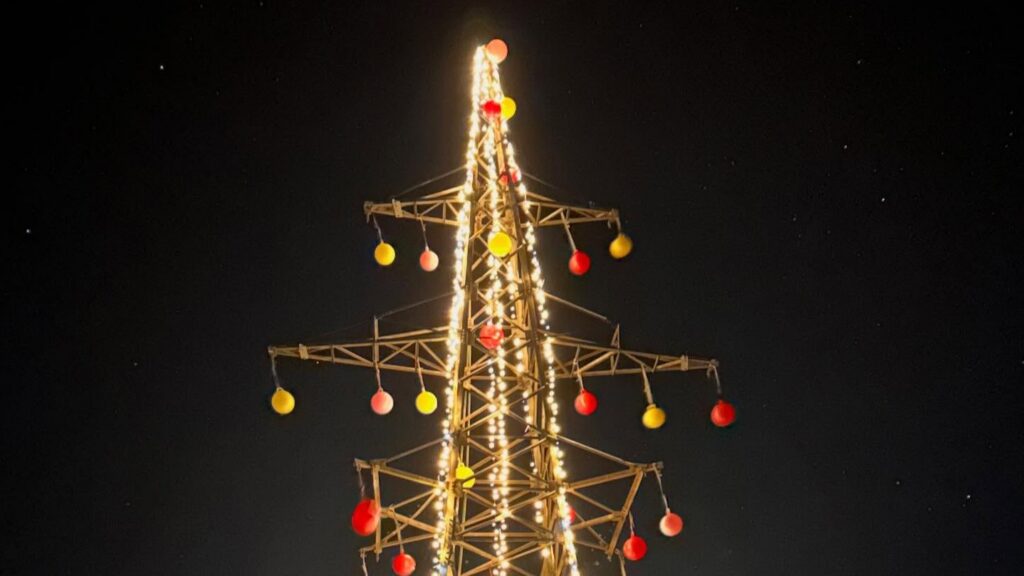
Standing 23 metres tall on Saaremaa island, the steel structure is both a festive landmark and a quiet monument to environmental change.
On the edge of Saaremaa, where the road curves towards Orissaare and the sea air sharpens the senses, a Christmas tree rises that has never known roots, sap or pine needles. Instead, it is forged from steel – a former high-voltage transmission mast – and lit with a quiet defiance that feels entirely Estonian.
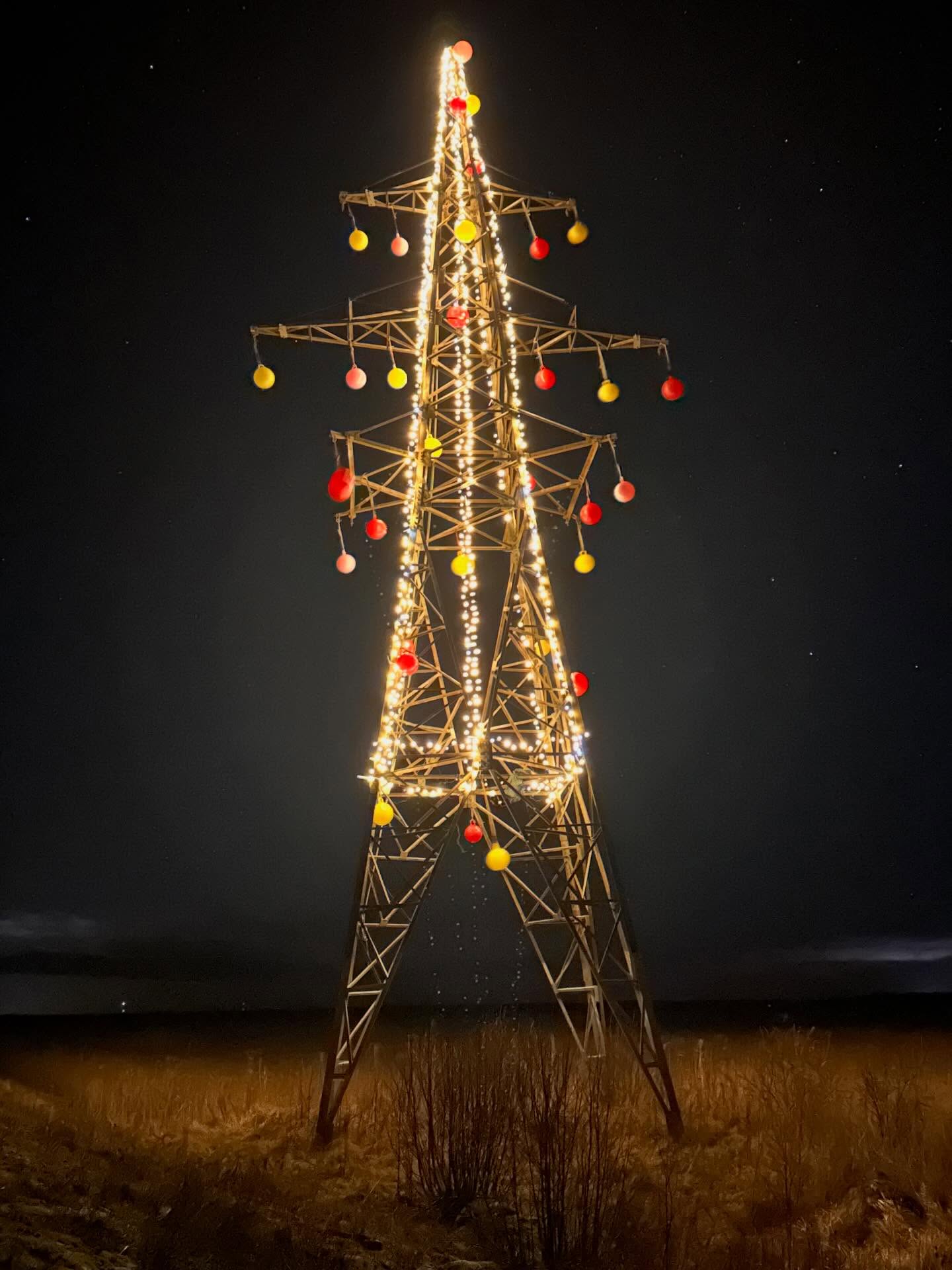
Strictly speaking, the structure standing by the Väinatamm causeway is no Christmas tree at all. It is the last remaining mast of a dismantled power line that once cut across the Väike Väin strait. Yet in December, symbolism matters more than botany. Draped with warm LED lights cascading from a height of 23 metres and dotted with red and yellow baubles, the iron pylon takes on the unmistakable silhouette of a Christmas tree – visible in darkness to all who travel to Saaremaa.
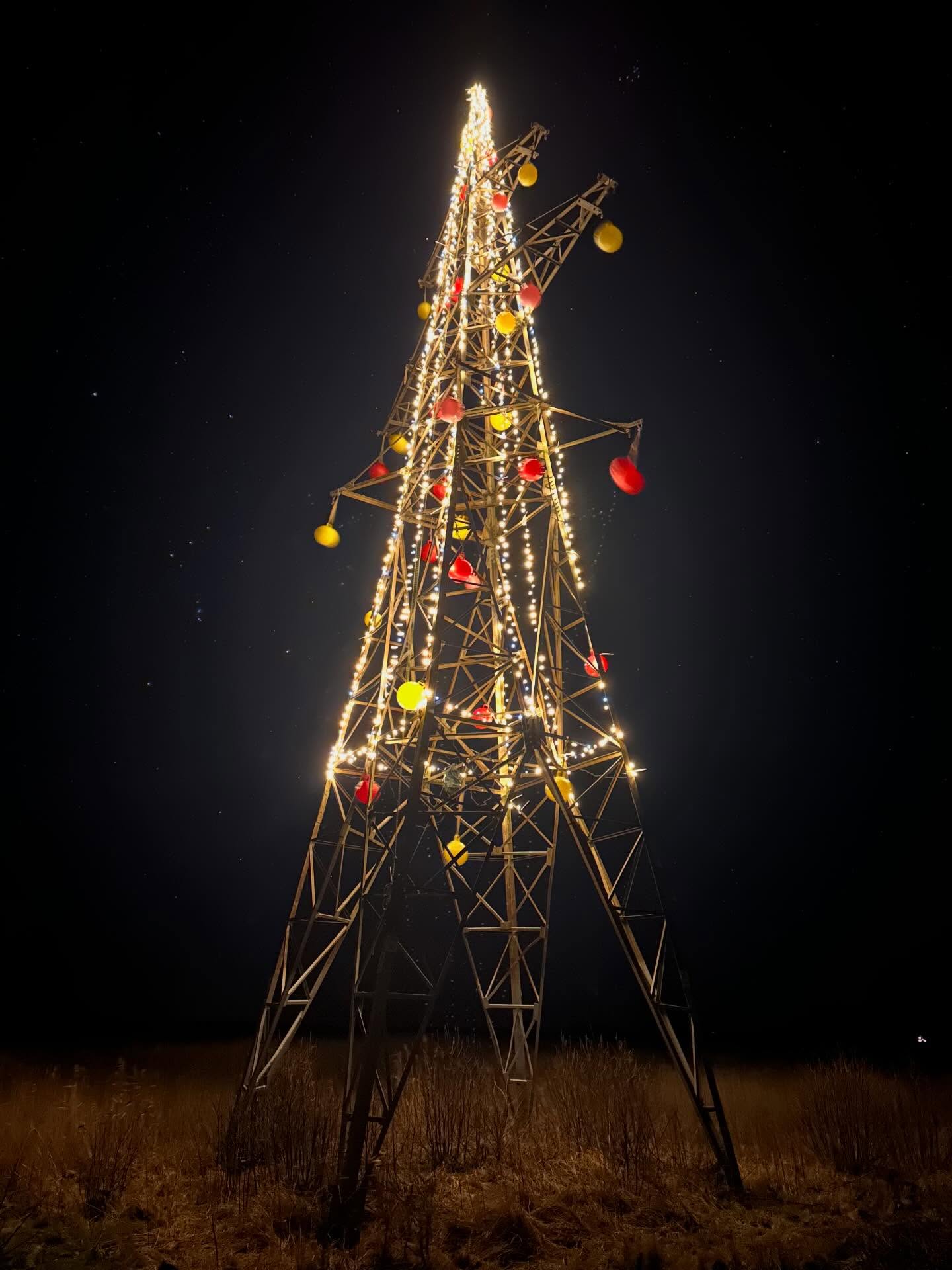
Last year, the mast was decorated only with 34 brightly coloured spheres. This winter, the addition of vertical strands of light has transformed it. Against the black Baltic sky, the structure glows – not garish, not commercial, but strangely restrained. A beacon rather than a spectacle.
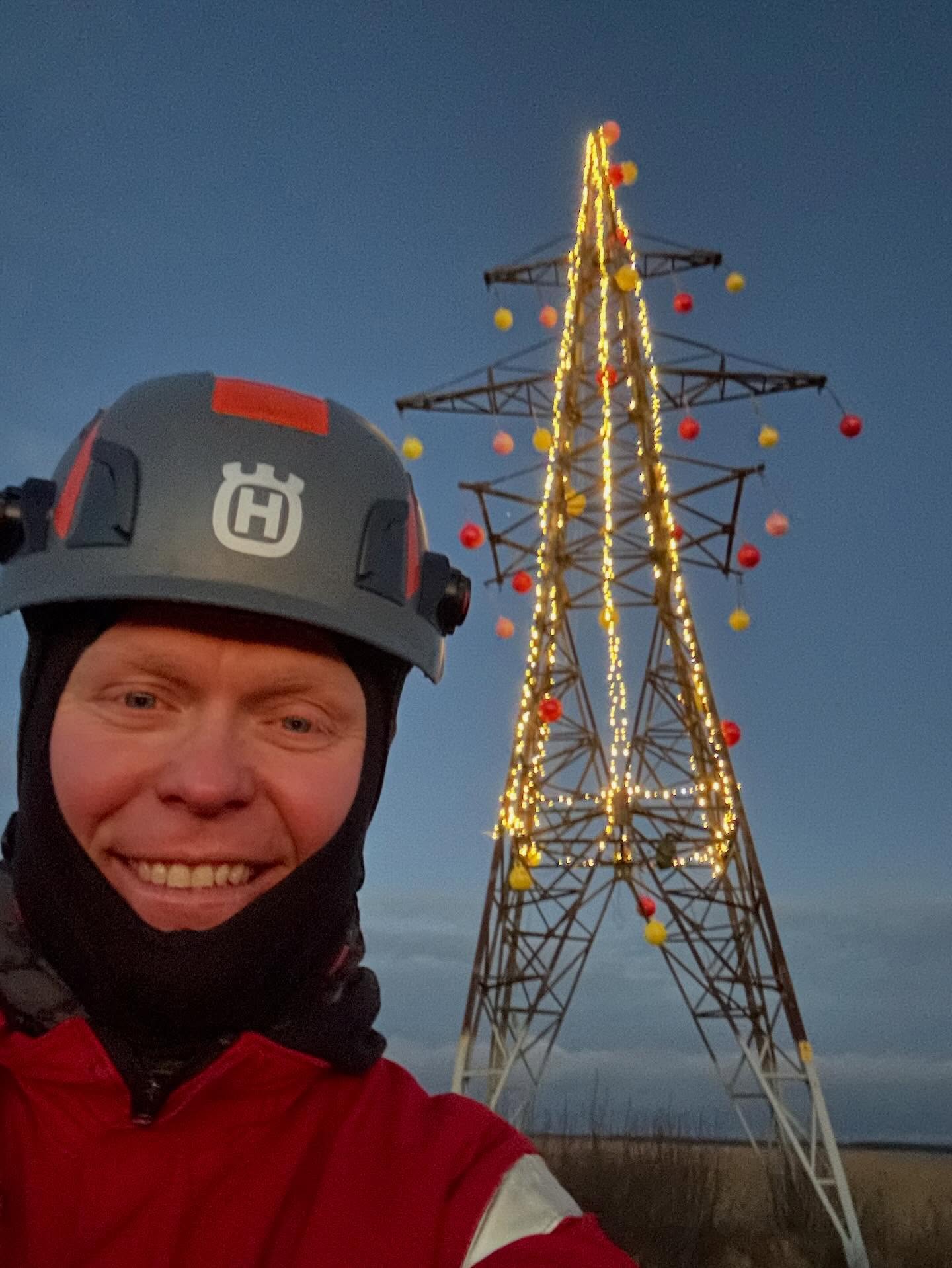
“It may be the tallest Christmas tree in Estonia – perhaps even in the Baltics or Scandinavia,” says Heiki Hanso, the man responsible for its seasonal metamorphosis. “But more importantly, it is unique.”
That uniqueness lies not only in its height or materials, but in what it represents. The mast once carried overhead power lines through a Natura 2000 bird protection area, posing a deadly threat to migratory birds and marring one of Saaremaa’s most sensitive landscapes. After years of civic pressure and voluntary advocacy by the Väike Väin Association – founded by Hanso and his father in 2015 – the lines were finally dismantled. Two subsea cables now run beneath the strait instead.
What remains is the mast: disconnected, redundant, and for Hanso, a quiet monument to citizen-led environmental change.
“In a protected area like this, nothing tall or distinctive would ever be allowed to be built again,” he explains. “If this mast were removed, there would be nothing to mark the gateway to Saaremaa.” Long before the lines came down, the association asked the Estonian grid operator Elering for permission to keep the structure – to give it a second life.
Originally, Hanso imagined a birdwatching tower and a hiking trail. Legal complications and institutional resistance stalled those plans. But Christmas, it turns out, offers its own loophole.
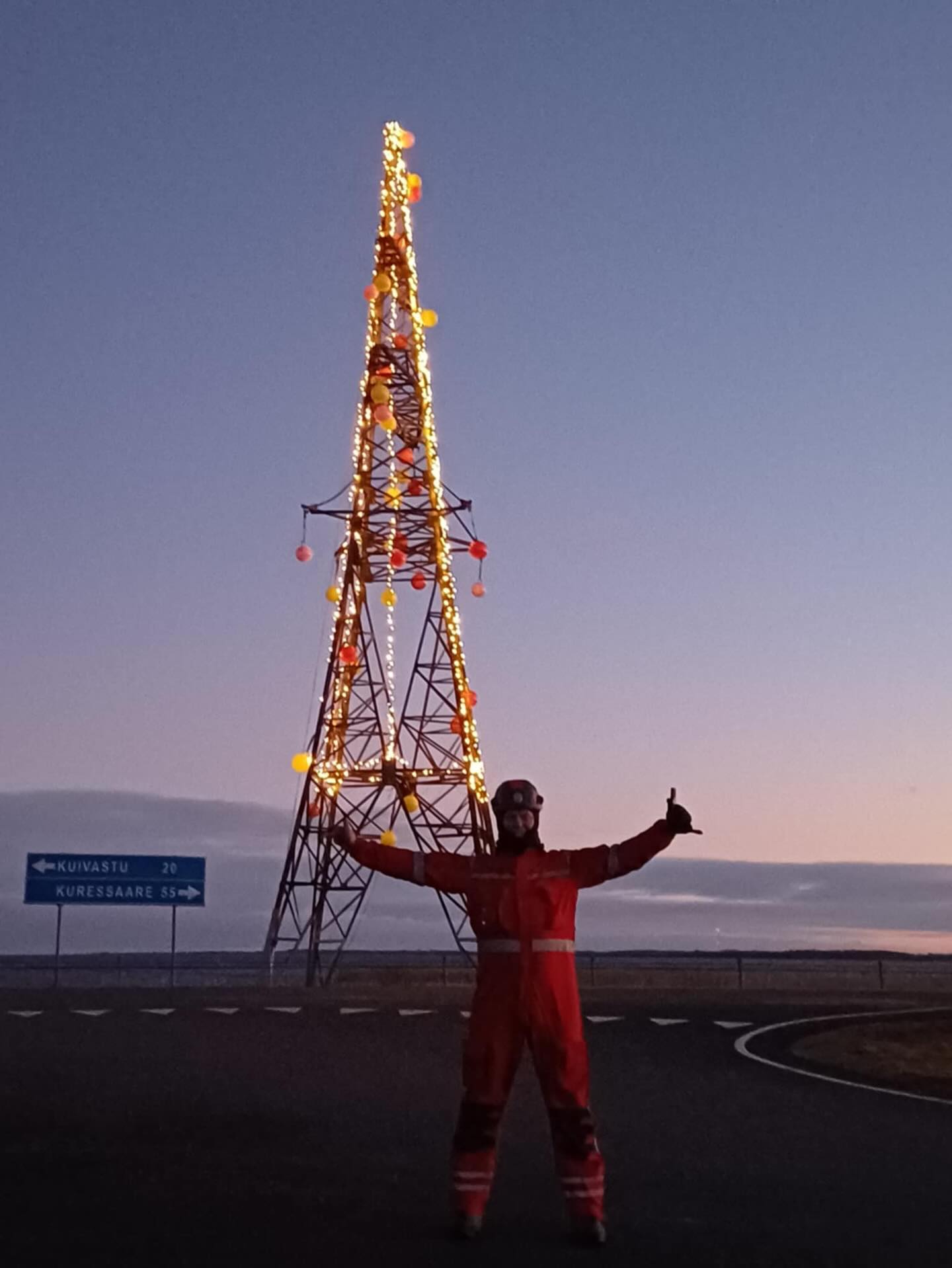
The baubles adorning the mast are children’s bouncing balls. Last year, once the lights were taken down, they were donated to kindergartens in Orissaare, Tornimäe and Liiva on Muhu. This year, sponsors returned: a toy shop supplied the balls, a lifting-equipment company the LED lights. Hanso himself acts as caretaker, running a generator and refuelling it by hand to keep the lights glowing through the long island nights.
It is, by his own admission, a modest gesture. Yet it carries an outsized emotional weight.
“The wish is simple,” he says. “To offer joy. Christmas joy, peace of mind, a sense of togetherness – especially to those islanders returning home for the holidays.”
Until Epiphany, on 6 January, the steel tree will remain lit. Then the decorations will come down, and the mast will stand bare once more – a silent reminder that environmental victories are often incremental, imperfect, and deeply human.
In the meantime, Saaremaa has a Christmas tree that could not be bought, planted or logged. It had to be argued for, defended, and – finally – reimagined.