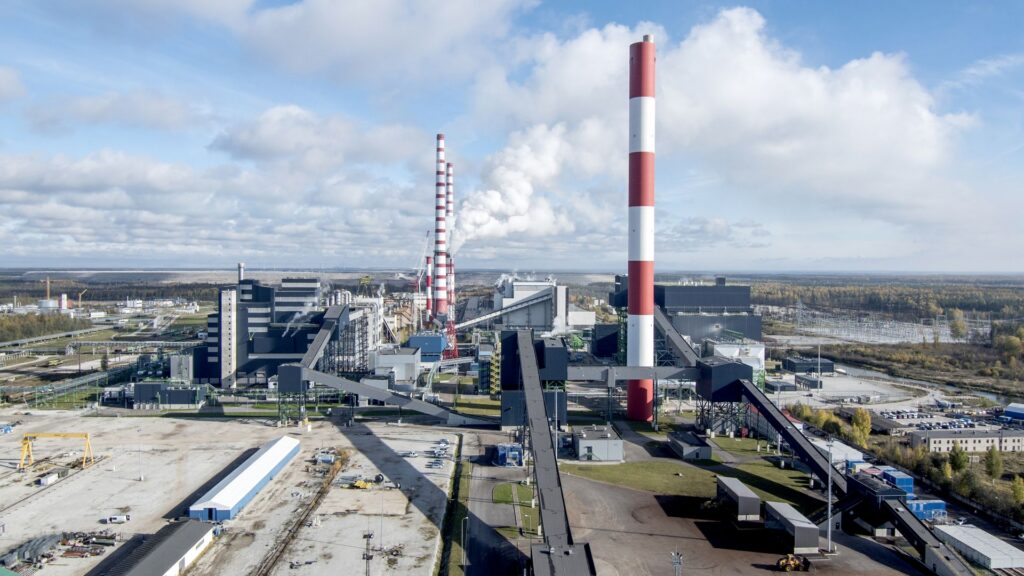
A drone that entered Estonia from Russian airspace struck the chimney of the Auvere power plant in the early hours of Wednesday, in an incident that underlined how the war in Ukraine is spilling dangerous consequences into the wider region.
No one was injured and Estonia’s electricity system was not damaged, according to the authorities and Enefit Power. Enefit’s Auvere power plant is in north-eastern Estonia, in Ida-Viru County near Narva, close to the Russian border.
The Estonian Internal Security Service said the drone hit the plant’s chimney at 3.43am on 25 March. Rescue Board explosive ordnance disposal specialists were sent to the scene, while the Office of the Prosecutor General opened proceedings and the Internal Security Service began an investigation.
Astrid Asi, Estonia’s prosecutor general, said that, on the basis of the information currently available, the drone had not been directed at Estonia.
“Initial procedures are now under way, and the investigation will establish the precise circumstances,” she said.
Several drones violated Estonian airspace
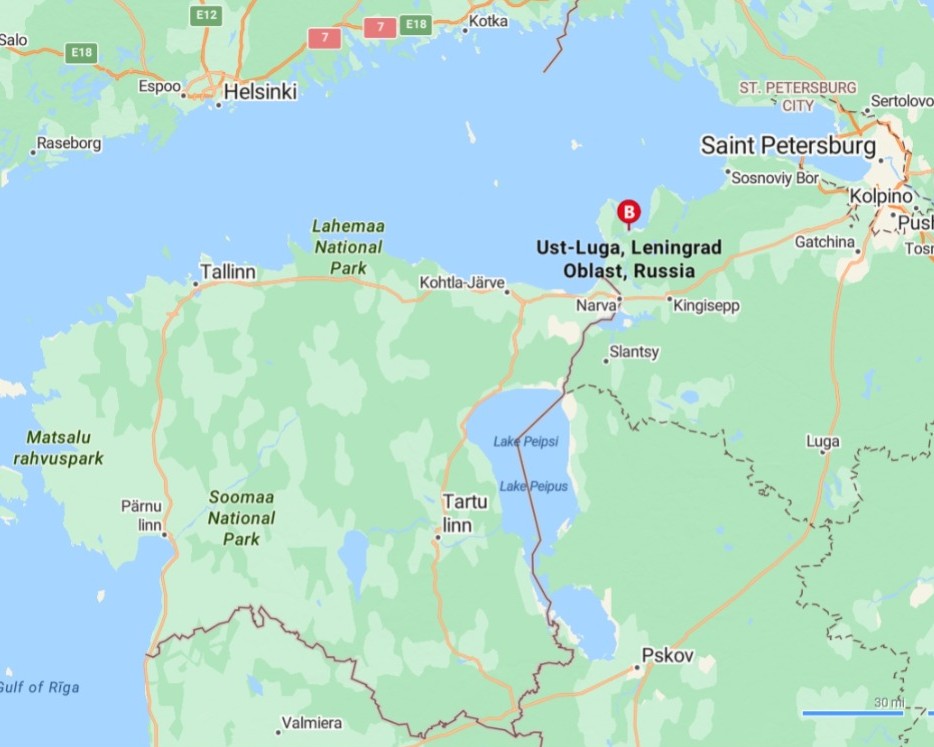
The strike came as Ukraine attacked targets in Russia overnight, including the port of Ust-Luga in Leningrad Oblast. At a press conference on Wednesday, the Estonian prime minister, Kristen Michal, said the Ukrainian attack had unfolded in three waves – at about 3am, 6am and 8am – and that drones from those waves had also moved towards Estonia.
According to Michal, the nationwide alert sent later in the morning was linked to the final wave.

The scale of the episode became clearer later in the day, when ministers said the Auvere strike had not been an isolated breach. Estonia’s defence minister, Hanno Pevkur, said several drones had violated the country’s airspace. One, he said, came down in Latvia; one struck the chimney at Auvere; and several others crossed Estonia’s maritime border over the Gulf of Finland.
Pevkur said Baltic air policing had been activated during the night and that a no-fly zone had been imposed over eastern Estonia for several days, although flights to and from Tartu, Estonia’s second-largest city, could continue. He added that if residents of Ida-Viru County had heard fighter aircraft flying low in the early morning, that had been deliberate allied activity.
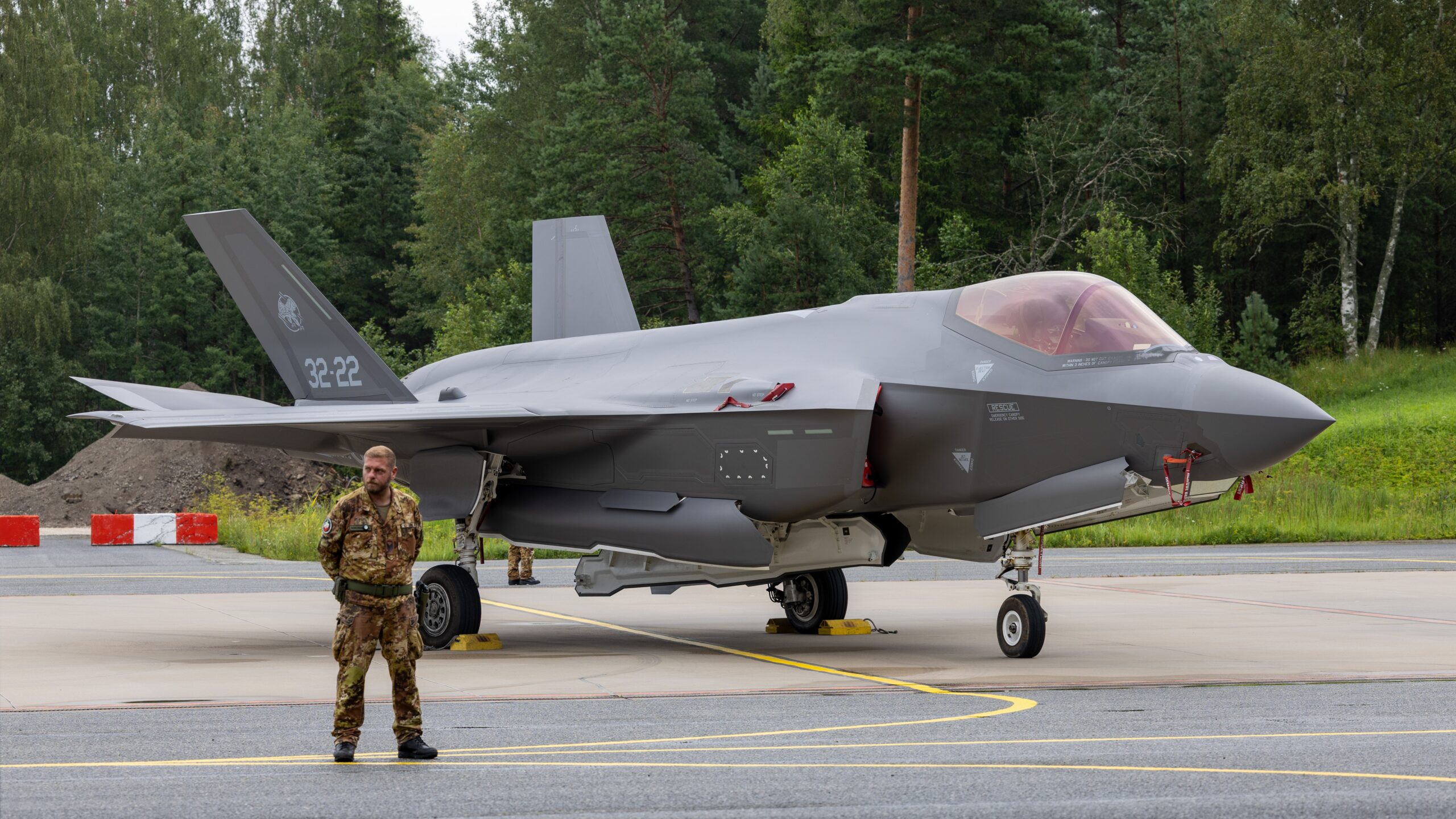
He declined to say exactly when the Italian jets, currently stationed at Estonia’s Ämari Air Base as part of the Baltic air policing mission, were scrambled, but said they had remained airborne for some time.
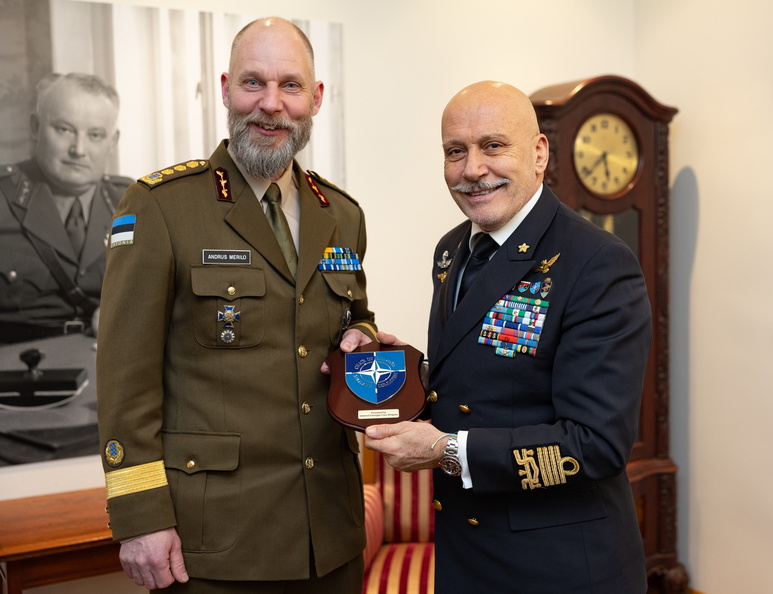
Andrus Merilo, the commander of the Estonian Defence Forces, said the threat of war to Estonia had not increased and described the incident as spillover from Russia’s war of aggression beyond Ukraine’s borders.
Merilo said Russian air defence had been actively engaging the drones and that Russian electronic warfare, including GPS interference, had probably contributed to some of them losing their bearings and straying into Estonian airspace.
He added that, although the exact type of drone would be determined by the Internal Security Service investigation, the Defence Forces could already say with considerable confidence that it had not been a surveillance drone, but rather an explosive-bearing attack drone or a decoy drone.
Margo Palloson, director general of the Internal Security Service, said the drone struck the chimney a couple of minutes after entering Estonian airspace and exploded on impact. He added that an initial inspection of the wreckage indicated that it was a drone of Ukrainian origin, although the investigation is continuing.
Similar incidents may occur again
Palloson urged anyone who might have footage or recordings of the drones to pass them to the authorities. He also said that, for as long as Russia’s war against Ukraine continues, similar incidents may occur again.
“This is one of the effects of Russia’s full-scale war of aggression,” Palloson said. “It is reasonable to assume that we will see more incidents of this kind.”
Enefit Power said its preliminary assessment showed no immediate damage to the plant and no significant effect on Estonia’s electricity system.

Later, Andrus Durejko, chief executive of Eesti Energia, said the Auvere plant remained operational and was currently in reserve because of electricity prices. The full extent of the damage would be established through further analysis, he said, but the incident had not interfered with the plant’s operation.
According to Durejko, the company had received prior warning and its control centre reacted after the explosion. Once the debris had been found, the Rescue Board and the Internal Security Service were called in.
Confusion over the public alert
The authorities also appealed to the public for caution. The Internal Security Service asked anyone who may have seen the drone to come forward with information, and warned people not to approach the scene or any debris, as the wreckage could contain explosive material. Any such finds should be reported by calling 112.
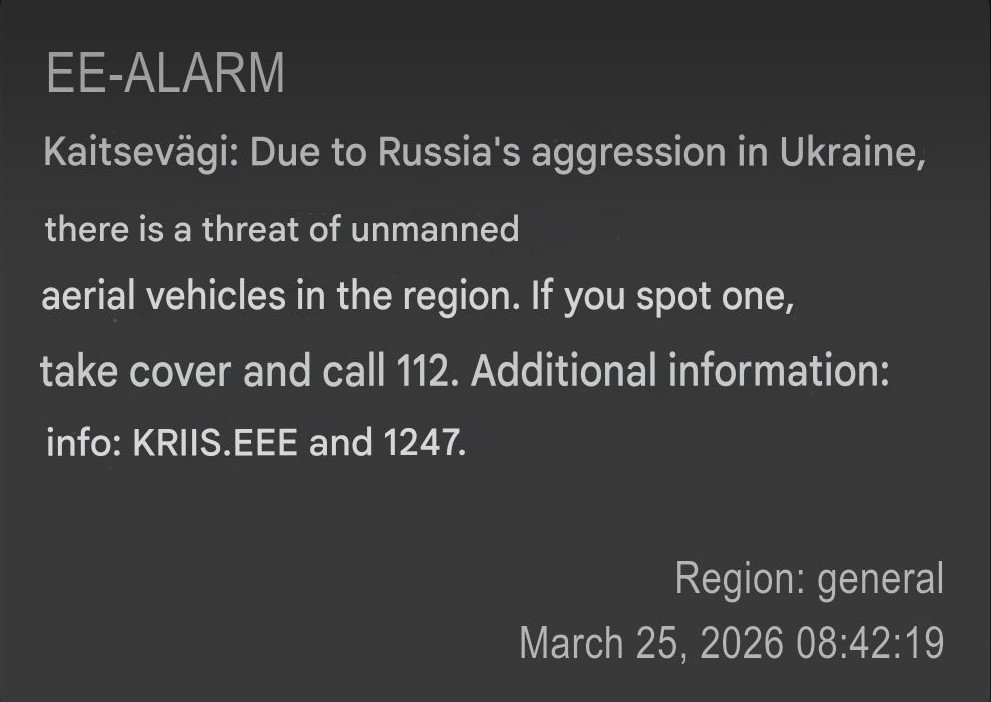
The official public messaging, however, caused confusion. At 8.43am on Wednesday, the EE-ALARM emergency warning system sent a message to mobile phones across Estonia saying: “Defence Forces: due to Russia’s war of aggression against Ukraine, there is an associated drone threat in the area. If you see one, take shelter and call 112. More information at KRIIS.EE and 1247.”
The alert did not specify which area was under threat. Nor was it clear what exactly people were being asked to look for before taking shelter.
A resident of Narva shared a screenshot of an alert received at 8.42am via the Ole Valmis app, which was even more stark: “Air danger! Take shelter!”
The warnings triggered a surge of calls from alarmed members of the public. At 9.24am, the Emergency Response Centre said that both the emergency number 112 and the state information line 1247 were experiencing unusually heavy demand, meaning callers would have to wait for the first available operator or adviser.
At 9.35am, EE-ALARM sent out a second message clarifying the situation: “Updated information! The danger areas are Ida-Viru County and Lääne-Viru County. If you see a drone, take shelter and report it to 112.”
Michal later said the alert should have been sent only to the Ida-Viru region, but had instead gone out across the whole of Estonia, creating additional confusion. Even so, he said, it was better for the alert to be sent too widely than for the alert system not to work at all.
Estonia has abandoned the term “drone wall”
Estonia’s interior minister, Igor Taro, said the country remained in peacetime conditions and that critical sites were being protected using peacetime means and capabilities. He also said Estonia had abandoned the term “drone wall”, because dangerous drones might not approach only from the border.
It was also wrong, Taro said, to suggest that drones were flying across the whole country. Surveillance data had repeatedly shown such devices moving along Estonia’s border. Because Russia was using countermeasures such as GPS jamming and spoofing, he added, aerial objects could stray into Estonian territory, and that was likely to continue.
Michal said it would be unrealistic to suggest that every drone coming from Russia could be intercepted.
“It is not sensible to create the impression that we could build some kind of wall between ourselves and Russia so that nothing ever crosses it. No one can create such a border or such a fortress,” he said.
Merilo said the Defence Forces had taken additional measures in response to the situation, including deploying some units outside their normal permanent peacetime locations in order to carry out detection and, if necessary, protective tasks against threats of this kind. He said the public might therefore notice additional defence personnel moving in different areas.
He also warned that the attack wave might not yet be over and that Estonia had to remain prepared for the possibility that another drone could enter its airspace and pose a threat.
Merilo said Estonia would not shoot down drones near the border if there were any risk that the effects of such action could spill into Russian territory.
“Our aim is to avoid any unintended escalation, so we certainly cannot act against drones where there is even the slightest risk that our action could extend into Russian territory,” he said.
He added that peacetime conditions also limited the means available for bringing down drones and said the Defence Forces had proposed restricting flights in eastern Estonia until Friday to make it easier, if necessary, to engage airborne targets there.
Ilmar Raag: the drone should have been shot down

Writing on social media, the filmmaker and security commentator Ilmar Raag said there was no cause for panic, but described the incident as a serious warning. He said the likeliest explanation was a military accident linked to Ukrainian drone strikes in Leningrad Oblast, with electronic interference causing the aircraft to lose its bearings.
While he said deliberate Russian action could not be ruled out entirely, he argued that Estonia had not in fact been attacked and was not in immediate danger. Even so, he said, such a drone should have been shot down, noting that similar threats had been discussed for years and were likely to recur.
Riho Terras: Estonia’s surveillance systems failed

Riho Terras, Estonia’s former commander of the Defence Forces and now a Member of the European Parliament for Isamaa, said the situation was serious and should not be dismissed as a mere accident.
“We must respond in the most professional way possible and remain in close contact with our European allies. If this does indeed prove to have been a deliberate attack on our energy infrastructure – something that cannot yet be said, but which must be seriously considered as a possibility – then it is an attack on Nato and the European Union,” he wrote.
Terras added that Estonia’s surveillance systems had failed.
“Drones must be detected before they reach their target. In this case, one struck the power plant’s chimney. Our counter-drone capability is inadequate and needs urgent investment,” he said.
Meelis Oidsalu: Estonia’s drone defence is not strong enough

Writing in Delfi, the security analyst Meelis Oidsalu said Estonia’s drone defence was still not strong enough and argued that the Auvere incident should bring the changed reality of modern war into sharper focus for politicians.
He said the intensifying air war between Russia and Ukraine made such episodes a natural development, and noted that Ukrainian drones had in recent days come down in all three Baltic states. Although Estonia has begun strengthening its monitoring and counter-drone systems, he wrote, a more substantial peacetime capability is not expected before 2027 or 2028.
For now, he argued, Estonia may be able to manage limited incidents such as the one at Auvere, but it still lacks a convincing answer to large-scale drone warfare and the wider protection of critical infrastructure.
This is a developing story.