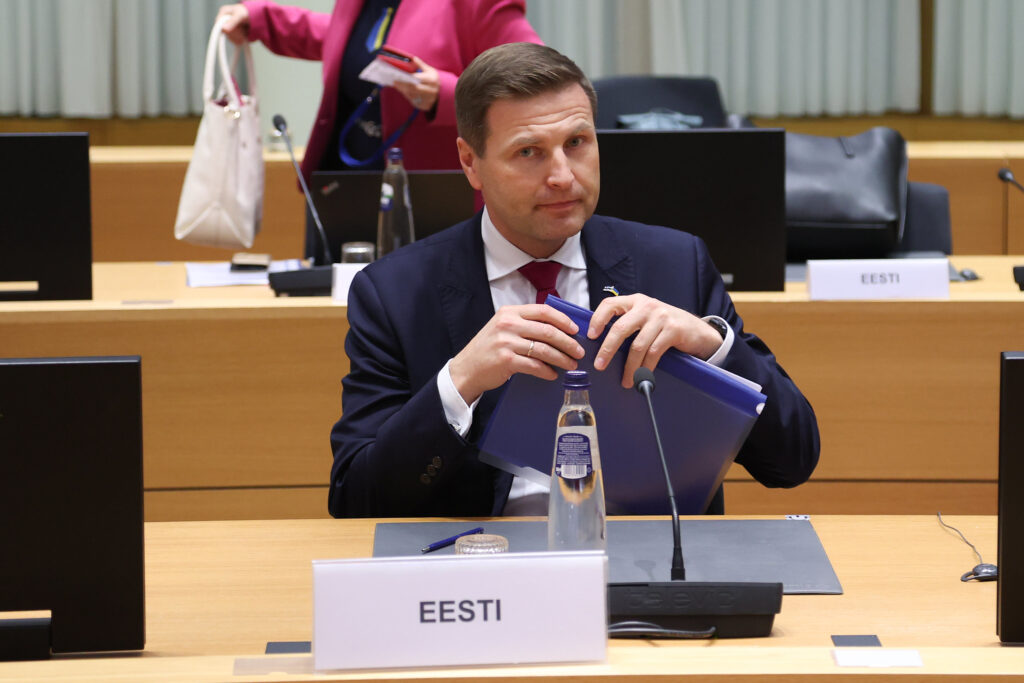
The Estonian defence minister, Hanno Pevkur, has accepted political responsibility and resigned after an Estonian state agency paid almost €70 million in advance to an Indian-run Italian company that had never previously sold a shell, in a procurement intended to arm Ukraine.
Pevkur announced his resignation on 2 September after revelations about a failed ammunition procurement deepened a wider crisis over the defence establishment’s financial controls.
The Estonian Centre for Defence Investments, known as ECDI, signed four contracts with Datasel S.R.L., a small Italian company acquired by an Indian defence business, and paid about €70 million in advance for artillery shells intended for Ukraine. The ammunition did not reach Ukraine and Estonia is now pursuing the company through the Estonian courts and international arbitration.
Pevkur, a senior member of the governing Reform Party, said he was taking political responsibility even though he did not regard the failings as personal.
“A leader must have both the courage and the stature to accept responsibility,” he told the Estonian Television’s current-affairs programme Aktuaalne kaamera. “I am ready to accept responsibility, I do accept it and the prime minister must find a new defence minister.”
He later told the Estonian outlet Delfi that it had become clear he no longer commanded the support of a parliamentary majority. He will remain in office until a successor is appointed, which is expected after the Estonian parliament returns from its summer recess on 14 September.
The resignation followed an investigation by Estonian weekly Eesti Ekspress into the shell contracts and a damning National Audit Office report on the management of money and assets by the defence ministry, the ECDI and the Estonian Defence Forces.
A supplier transformed in weeks
The history of the supplier has become central to the controversy.
Datasel was founded in 2005 by Sandro Pazzini, an Italian businessman with experience in defence electronics and software but not ammunition. In 2023, the company had only a few employees and a turnover of just over €120,000. Its office was in an unremarkable corner of the port city of La Spezia, between a Nissan dealership and an electrical-goods shop.
On 10 January 2024, Datasel changed its registered activity to the wholesale trade in weapons, weapons systems and military ammunition. The ECDI entered into a confidentiality agreement with it the following month.
On 6 March 2024, Datasel was acquired by Neco Defence Munitions, an Indian company controlled by the cousins Anand and Avneesh Jayaswal. Their family is behind Jayaswal Neco Industries, a metallurgical group with annual turnover of more than €600 million.
The family’s defence interests had previously sold security equipment, bulletproof vests and scanning systems to police and security companies. Neco announced plans to manufacture rifles in 2021 and later advertised an extensive range of shells, mines, tank ammunition and aerial bombs. According to Ekspress, however, its website confirmed that it was authorised to manufacture only small-calibre ammunition; shells and bombs were presented as an ambition.
Neither Datasel nor its new owners had previously sold an artillery shell.

Yet by August 2024, the ECDI had signed its first supply contract with Datasel and transferred €15 million. A second agreement followed in October, accompanied by another advance payment of more than €10 million. Two further contracts were concluded at the end of the year, taking the total advance payments to about €70 million.
By then, the first delivery was already in difficulty. Ammunition due to reach Ukraine in November had been delayed, although officials said they had received documentary evidence that goods or components were moving through the supply chain.
The urgency of arming Ukraine
The contracts were negotiated at a moment when Ukraine was desperately short of artillery ammunition and European governments were searching the world for available shells.
Estonia had become an active procurement agent, brokering more than €500 million in military equipment for Ukraine. Much of the funding came through the European Peace Facility from proceeds generated by frozen Russian assets, with further contributions from European Union member states.
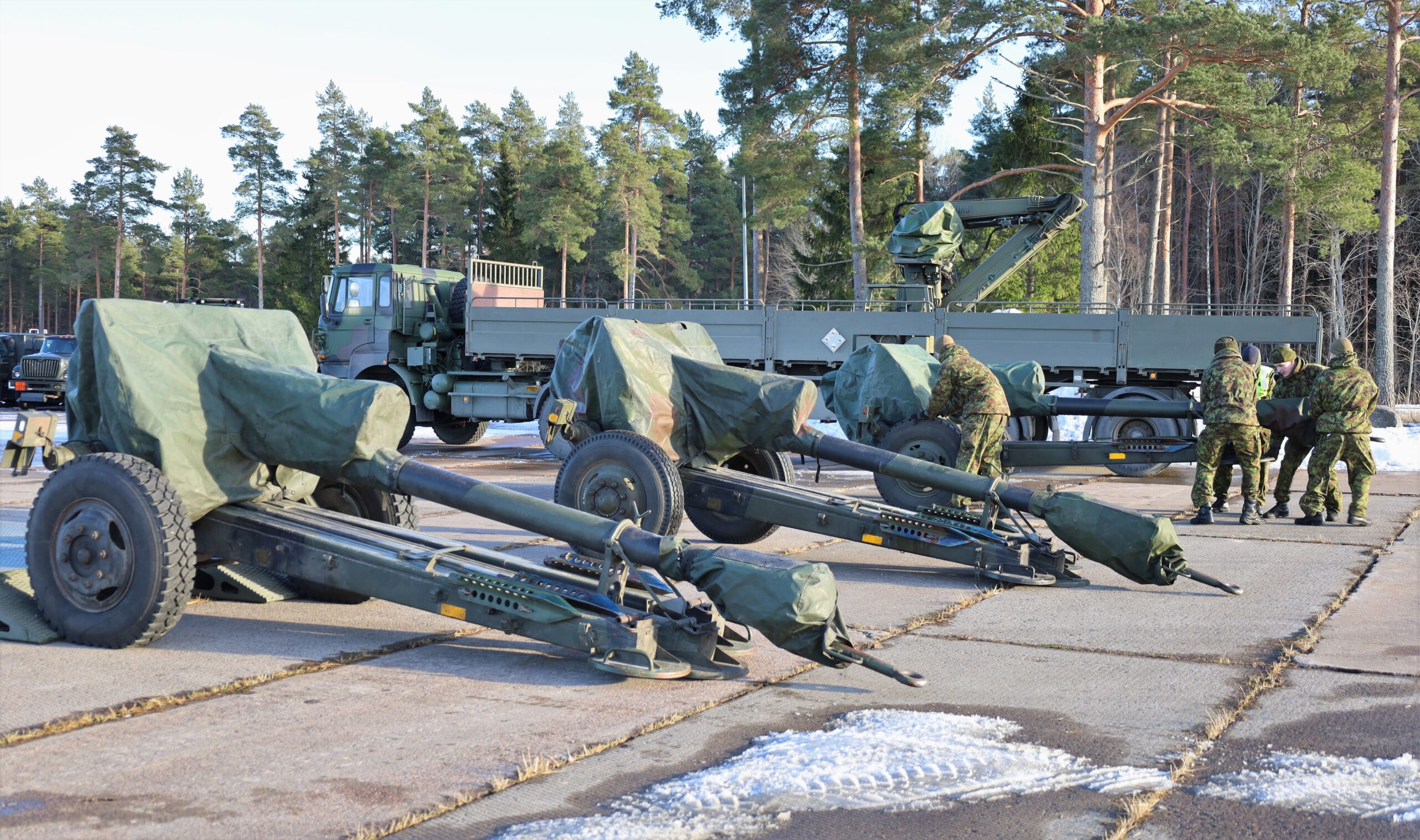
Pevkur said supplies were often offered through intermediaries because manufacturers in Africa, Asia and the Balkans did not want their involvement in arming Ukraine to become public. Other contracts carrying similarly high risks had been completed successfully, he said.
“The larger objective must be kept in view: to support Ukraine as quickly and as extensively as possible,” Pevkur said.
The current head of the ECDI, Elmar Vaher, nevertheless said the Datasel agreements should not have been signed.
“When I read the material, even a fairly cursory background check made it clear to me that there were many unanswered questions,” Vaher said. He claimed the decision had been taken within a narrow circle and that even the centre’s head of procurement had known nothing about it.
Magnus-Valdemar Saar, who led the ECDI when the contracts were concluded, strongly disputes the suggestion that the centre acted alone. He said every major decision was approved by senior defence ministry officials and that the risks were set out at ministerial decision meetings attended by Pevkur and the ministry’s secretary general.
Saar said the complete contracts and supporting documents had been printed and delivered to both men. “If somebody cannot find those documents, I can go and show them where they are,” he said.

Pevkur acknowledged that the procurements had been discussed, but said ministers had considered the principle of buying ammunition for Ukraine rather than payment schedules or detailed contractual terms.
“The defence minister does not negotiate contracts; the defence minister does not count socks and cartridges,” he said. “The preparatory work for negotiating contracts and finding contractual partners is the ECDI’s task.”
The shells that never reached Ukraine
Some goods were eventually delivered to an undisclosed warehouse in Europe, but Estonian officials said the ammunition was of inadequate quality and incomplete.
Kaimo Kuusk, the defence ministry’s secretary general, described the consignment as “wholly incomplete”. A complete artillery round requires a fuze, a propellant charge and a primer; without all of them, it cannot be used.
Pevkur was careful to distinguish between ammunition that was useless and a delivery that was incomplete.
“Tens of millions of euros’ worth of the ammunition has been delivered and is sitting in a warehouse in a European country,” he told the Estonian Television. “The product supplied by the manufacturer is not of sufficient quality.”
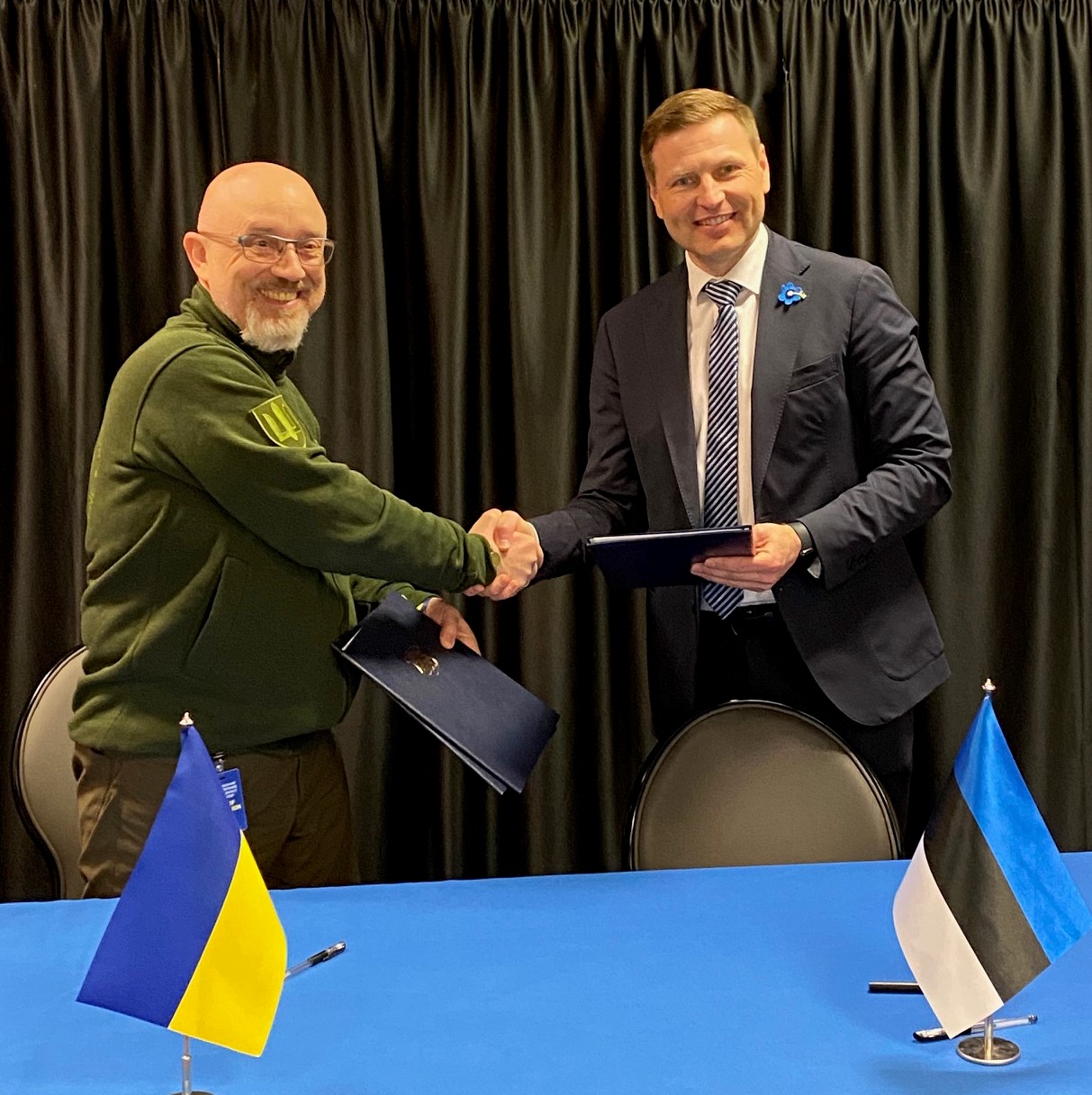
After warnings and contractual penalties failed to resolve the dispute, the ECDI terminated the contracts in November 2025 and demanded repayment. Datasel’s representatives returned to Tallinn in April 2026 and promised delivery the following month, but Estonia refused to reopen negotiations.
Parts of the dispute are now before the Estonian courts, while the principal case is expected to be heard by the European Court of Arbitration in Strasbourg. A guarantee issued in India is said to protect Estonia if Datasel becomes insolvent, although officials have not disclosed its scope.
The sums themselves are contested. The ECDI says about €70 million is tied to the failed procurement, while Pevkur put the advance payments directly connected with Datasel at about €60 million. Datasel says it received €59 million and supplied goods for which it invoiced €58 million. No public explanation has yet reconciled the difference.
In a statement issued through its lawyer, Datasel said it was the party that had suffered loss. It rejected Estonia’s account of the quality problems, claiming the goods had been inspected and no defects identified under the terms of the contracts.

The company acknowledged delays but blamed a complicated international supply chain and, in part, the ECDI’s own conduct. It said goods were already in production or ready for delivery when Estonia terminated the agreements.
“Datasel remains committed to performing the remaining contract and is prepared to complete it, provided the ECDI meets its financial obligations,” the company said.
A possible bill for Estonia
Although most of the money originated outside the Estonian state budget, the National Audit Office has warned that Estonian taxpayers may ultimately have to cover losses of about €70 million if the funds cannot be recovered.
Estonia had assured the European Commission that the equipment would reach Ukraine. The audit office said the financial risk should have been disclosed in the explanatory memorandums accompanying the 2024 and 2025 state budgets. Instead, the defence ministry told parliament that the brokerage arrangements created no risk for Estonia.
Estonian officials have asked the European Commission for more time and held talks with donor states, hoping that no repayment will be sought until the legal proceedings are concluded.
The procurement affair broke as the National Audit Office published a broader report identifying serious and persistent weaknesses in the defence sector’s accounting, contract management and inventories. It was unable to confirm the accuracy of a reported €1.2 billion in Defence Forces stocks and assets.
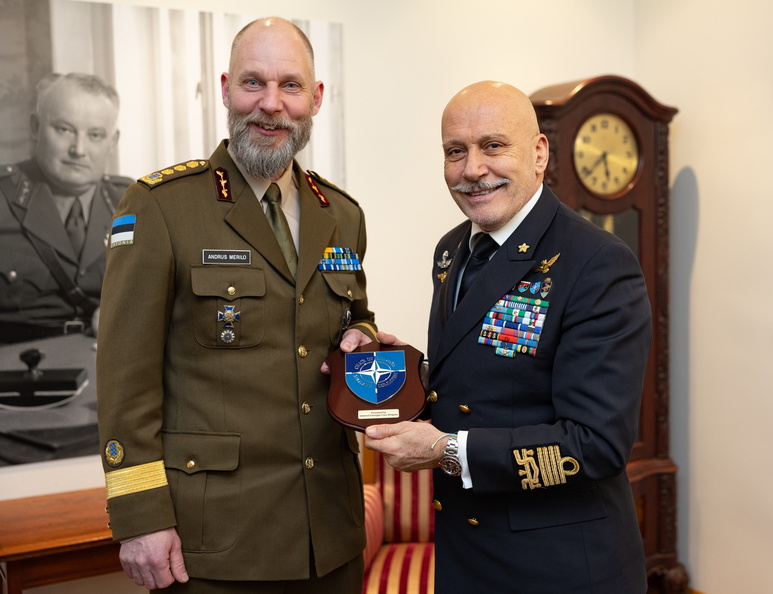
The military holds more than 200 million individual items at more than 1,100 locations. Its commander, Major General Andrus Merilo, insisted that the equipment existed but admitted that inventory work was still largely manual and that the armed forces lacked a modern warehouse-management system.
Pevkur said defence expenditure had risen from €768 million to €2.4 billion in four years while administrative systems had failed to keep pace. The ministry has drawn up an 11-page action plan and funded a ten-person team to improve its inventories.
A separate criminal investigation
The accounting failures are also the subject of a criminal investigation opened by prosecutors in October 2025. That inquiry is separate from the Datasel procurement and no one has been formally identified as a suspect.
Prosecutor General Astrid Asi said investigators were examining whether repeated failures to correct the accounts could amount to a knowing breach of accounting obligations. They are also considering whether documents requested by the National Audit Office were deliberately destroyed, concealed or withheld.
The National Audit Office said some contracts had not been made available to its auditors. The ECDI maintains that it sent the material on 5 June but that it failed to arrive because of a technical fault.
Pevkur said he had learnt of the criminal investigation only a few weeks before his resignation. He defended the decisions taken during his four years as defence minister, including raising defence spending to 5 per cent of gross domestic product, establishing an army division and procuring medium-range air defence and coastal-defence systems.
“Estonia is better defended than ever before,” he said.
The affair has nevertheless become a contest over where political responsibility ends and administrative responsibility begins. Coalition partner Estonia 200 had openly questioned whether Pevkur could remain in office, while the opposition Centre Party said it would seek support for a vote of no confidence in Prime Minister Kristen Michal.
Vaher’s verdict on the procurement was more austere. “The fundamental problem is that there are no contemporaneous records explaining why payment was made again and again and again,” he said. “Looking back, it is impossible to understand the process.”