Statistics Estonia’s latest information technology surveys show that the use of artificial intelligence increased significantly in 2026 compared with the previous year; AI use rose among both enterprises and individuals, with the use of AI tools for private purposes increasing by 53%.
The use of internet-connected devices, such as smart TVs and smartwatches, also increased.
Luisa Nuka, an analyst at Statistics Estonia, the country’s official statistics agency, said that AI use grew year on year by 1.4 times among households and 1.5 times among enterprises.
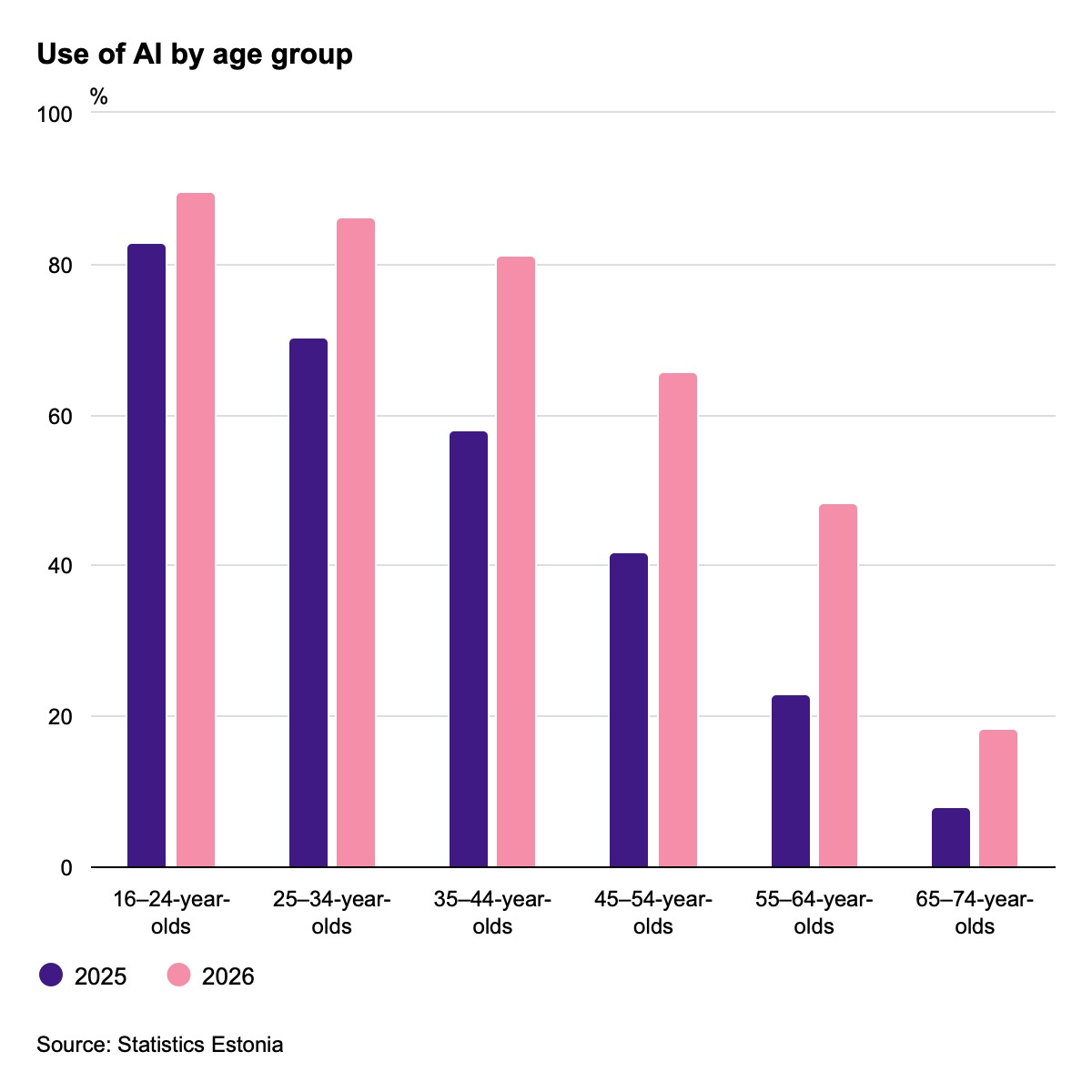
“This is probably related to the wider availability of AI-based tools and services and their integration into our daily lives. AI use increased most among people aged 65–74, with the share of users more than doubling,” Nuka said.
AI use also rose notably among people aged 35–44.
AI increasingly part of daily life
“Young people did not show the same growth in AI use, as the share of users was already high. They still have the highest proportion of AI users of any age group, at 90%,” she added.
The proportion of people who do not use AI continues to decline. The main reason they gave was that they had no need for it. Only 1.4% of non-users said they did not know AI existed, suggesting a high level of public awareness.
Enterprises are increasingly using AI to generate natural language. Compared with 2025, the share doing so rose by 11.1 percentage points. The share using AI to generate images and videos increased by seven percentage points.
“The growing use of AI by individuals and enterprises shows that these technologies are becoming more widespread and are being used both in everyday life and in work processes,” Nuka said.
TVs and wearables remain the most popular smart devices
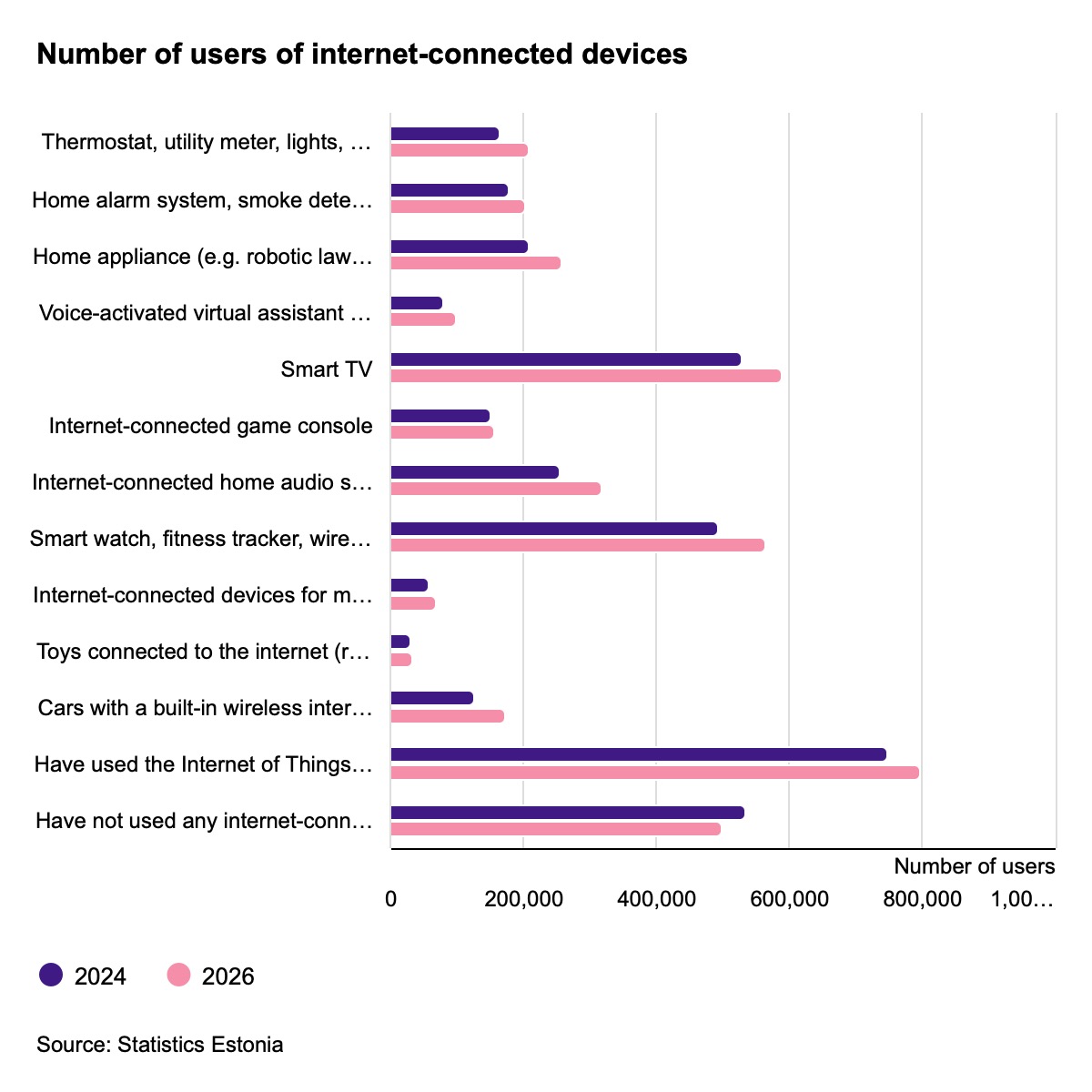
The 2026 data show a significant increase in the use of internet-connected devices compared with 2024.
“Their use has increased across all categories, suggesting that smart technologies are becoming a natural part of everyday life,” Nuka said.
Smart TVs, smartwatches and other wearable devices, and internet-connected household appliances remain the most popular connected devices. Interest in smart energy-management solutions has also grown. These include internet-connected thermostats, utility meters, lights and other devices that monitor household energy use. Their use increased by 28%.
“On the one hand, smart devices have become more affordable over time and easier to use, encouraging more people to use them. On the other, people are more aware of how these devices can help manage energy use, improve home security and automate everyday activities,” Nuka added.
Health and wellbeing devices become more common
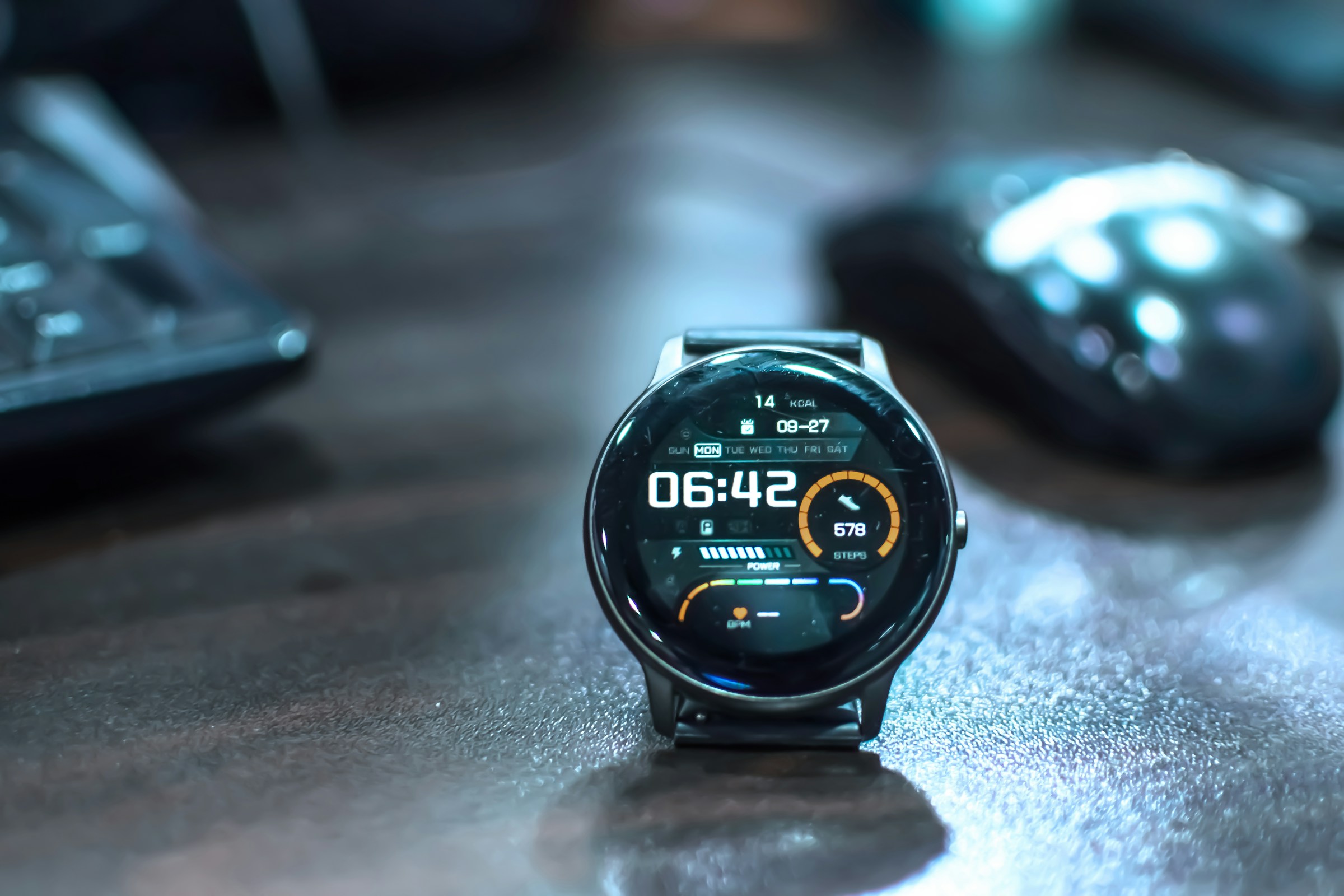
Health and wellbeing devices have also become much more common. Compared with 2024, their use rose by 14%. These include smartwatches, fitness trackers and other wearable devices that track physical activity, as well as internet-connected devices that monitor blood pressure, blood sugar or body weight.
The biggest increase since 2024 was in the use of cars with built-in wireless internet connections, which rose by 36%. Meanwhile, the share of people who had not used any internet-connected devices declined.
Compared with 2025, the use of various privacy and data-protection measures remained largely unchanged. The share of people who refused to allow their personal data to be used for advertising increased slightly, by 12%.
Awareness of data-protection measures varies considerably between age groups. Only 14% of people aged 65–74 had restricted or refused access to their location data. The figure was 69% among those aged 16–24 and 63% among those aged 35–44.
Younger people were also more likely to refuse the use of their personal data for advertising. The proportions were 63.7% among 16–24-year-olds and 64.5% among 35–44-year-olds, compared with 20.6% among those aged 65–74.
Enterprises pay more attention to security
According to Nuka, younger people are more tech-savvy and use the internet more actively, which helps explain their greater awareness of privacy and data protection.
“More frequent use of digital services and apps increases awareness of privacy risks and of how to protect personal data,” she said.
Enterprises are paying greater attention to security measures to protect their data and prevent security incidents. The measures they use most often are data backups – copies stored in a separate location – and two-factor authentication. ICT risk assessments are used much less often than technical security measures.
“This suggests that enterprises focus more on immediate protection than on systematic risk assessment and prevention,” Nuka said.