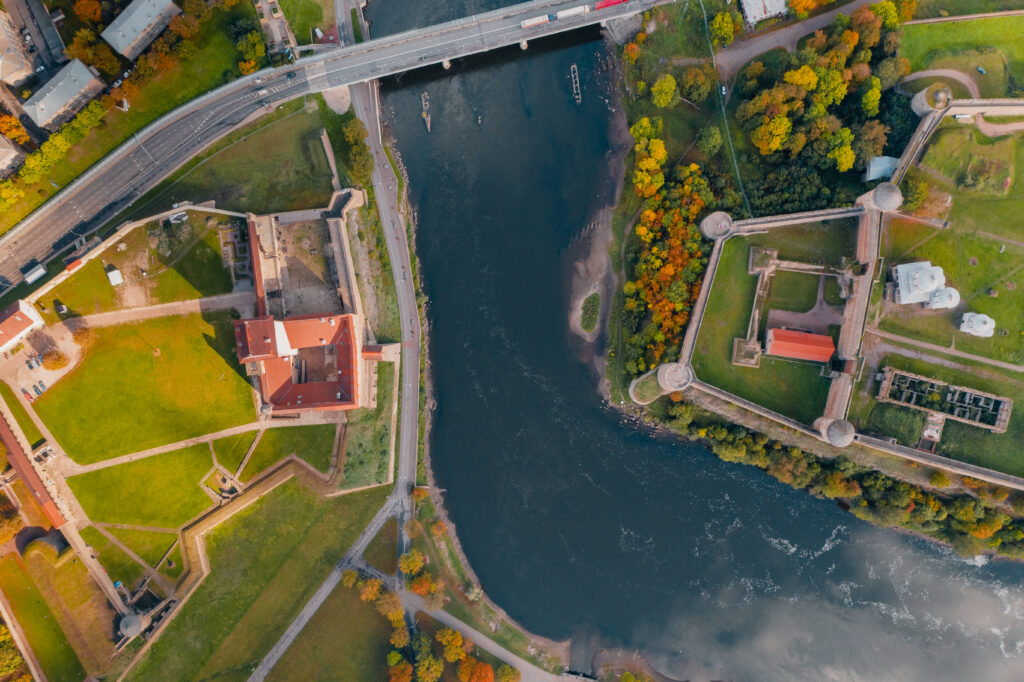
Russian border guards briefly crossed a temporary control line on the Narva River on 17 December, in what Estonian authorities have described as an illegal incursion into Estonian-controlled territory.
According to the Estonian Police and Border Guard Board, the incident occurred shortly before 10 am on 17 December at the Vasknarva breakwater. Surveillance cameras detected a hovercraft operated by the Russian Federation’s border service approaching the breakwater from the Russian side. Three Russian border guards disembarked and proceeded on foot along the structure, during which they crossed the control line from Russia towards Estonia. They then returned to their hovercraft and headed back to the Russian shore.
The head of the Border Guard Bureau of the Eastern Prefecture, Eerik Purgel, said several Estonian patrols were dispatched in response.
“The incident has been recorded by surveillance equipment, and an initial inspection was carried out on the breakwater. An official contact has been established with the border representative of the Russian Federation to obtain explanations,” Purgel said.
The Eastern Prefecture has since increased patrols in the area as a precautionary measure.
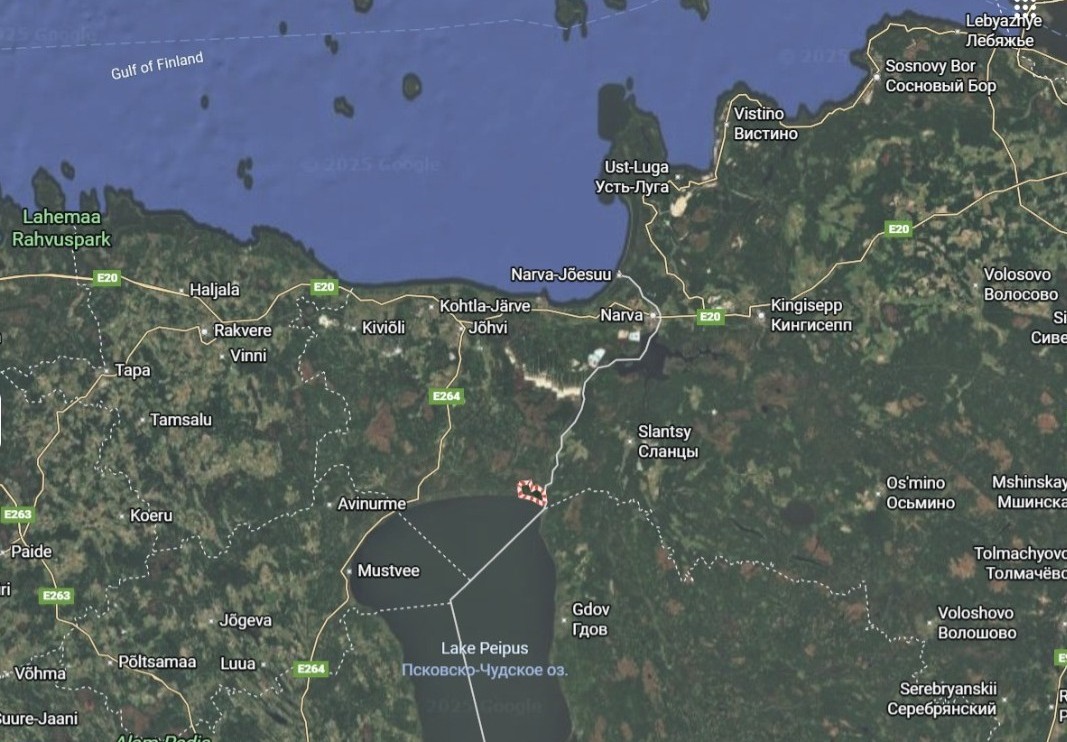
A meeting between border representatives of Estonia and the Russian Federation is scheduled for 18 December, at which Estonia expects a formal explanation for the crossing. In addition, the Estonian foreign ministry will summon the Chargé d’Affaires ad interim of the Russian Embassy in Tallinn.
The Narva River forms part of the internationally recognised border between Estonia and Russia. While temporary control lines are used in river sections pending final demarcation, Estonia considers any unauthorised crossing by foreign state officials to be a violation of its border regime.
Motives remain unclear
Estonia has yet to establish the motives behind a recent border incident involving Russian personnel, according to the interior minister, Igor Taro.
Speaking on the public broadcasting’s evening programme, Aktuaalne Kaamera, Taro said that while the incident did not pose a direct security threat, the Police and Border Guard Board had significantly increased its presence and patrols in the area.
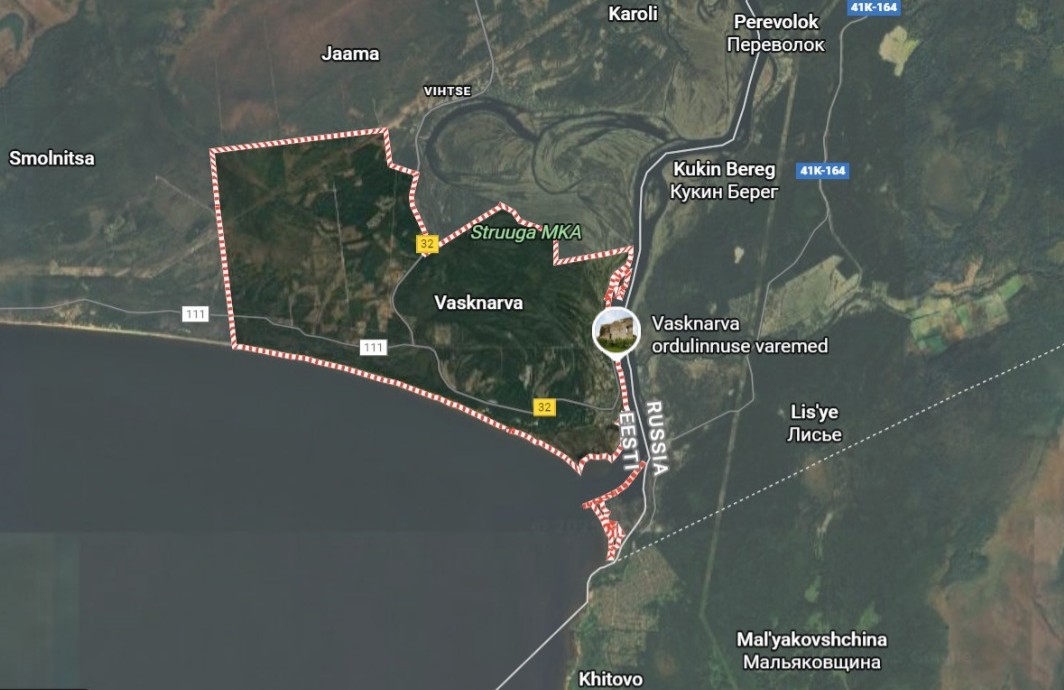
The jetty at the centre of the incident lies partly on Estonian territory and partly on Russian territory. According to Taro, those involved crossed into Estonia. He added that Estonia has growing concerns about the state of Russia’s border guard service.
“The quality of Russian border guard personnel has become extremely uneven in recent years,” Taro said. “For understandable reasons, they are suffering from a lack of staff, with personnel brought in from other regions. This has been a recurring problem.”
Taro said the individuals were not detained because they returned to Russian territory before Estonian authorities were able to intervene. “We are not able to go deep into Russian territory to apprehend them,” he said.
Asked whether the incident could be interpreted as another Russian provocation, Taro said there was no clarity on the matter.

The minister noted that the location is a sensitive stretch of the border where Russian vessels must pass through Estonian territory in order to travel from the Narva River to Lake Peipus. A long-standing agreement governs such passages, comparable to the former Saatse Boot arrangement, under which prior notification is required.
“Until now, notification has always been given,” Taro said. “This time it was not, and the incident occurred.”
Why Russian vessels must cross Estonian territory to reach Lake Peipus
It is impossible to travel by boat from the Narva River to Lake Peipus without passing through Estonian territory – a geographical and legal peculiarity that has long shaped navigation in the Vasknarva area.
Estonian Public Broadcasting reported in October on what has become known as the Vasknarva anomaly, under which Russian fishing vessels are required to seek permission from Estonia in order to reach Lake Peipus. The reason lies in the location of the control line, which in this stretch runs not along the river’s midline but along its eastern bank. As a result, all Russian vessels heading upstream must briefly enter Estonian waters.
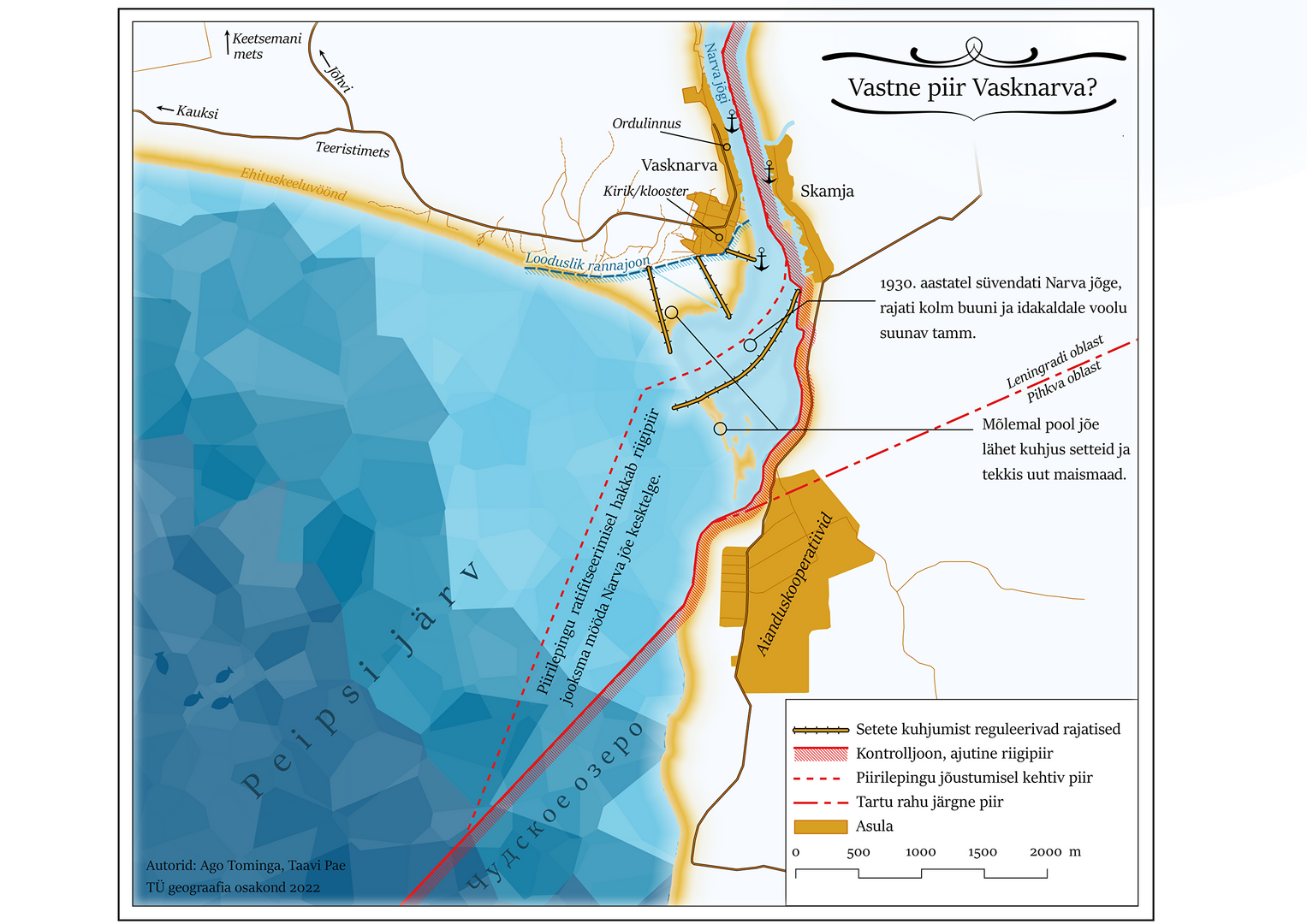
Estonia also owns a small area of land on the far bank of the Narva River, formed gradually over the past century through natural sedimentation.
The boundary dates back to the Soviet period, when it was designated as an administrative border between two Soviet republics – the Estonian SSR and the Russian SFSR. Following Estonia’s restoration of independence, the same line became the de facto control line between the two states.
According to Eerik Purgel, there have so far been no disagreements with Russia over the location of the control line.
Traffic through the area is limited. “On a daily basis, there is typically one fishing trawler on the Narva River opposite Karoli that travels to Lake Peipus to fish,” Purgel said in October. “Statistically, only around one vessel passes through the area each day.”
Russian vessels seeking permission to cross Estonian territory make contact with the Estonian border guard via marine radio.