
The assumptions underpinning Europe’s security no longer hold, and to defend itself and remain a serious global actor, the European Union must move beyond loose cooperation and towards federal unity, Silver Tambur, the publisher of Estonian World, writes.
This is a lightly amended version of an article originally published on TalTech’s portal Trialoog.
Europe stands at a historic crossroads. The policies of US president Donald Trump have sent a clear signal: Europe can no longer rely on American security guarantees. Europeans must cast aside the old, divisive dogmas that fragment us and transform the European Union into a genuine federation – one capable of defending its people and taking responsibility for its own destiny.
In his 1947 essay Towards European Unity, the English writer George Orwell warned that “there are active forces working against European unity.” He named Russia first, but, strikingly, identified the United States as a second major obstacle – despite the fact that the US had helped Western Europe defeat Nazi Germany only a few years earlier. “There is always the danger,” Orwell wrote, “that the United States will disrupt any European coalition.”
The European Union was created to secure peace, but economic and political cooperation alone are no longer sufficient. We need a unified defence policy, shared leadership, and integrated armed forces.
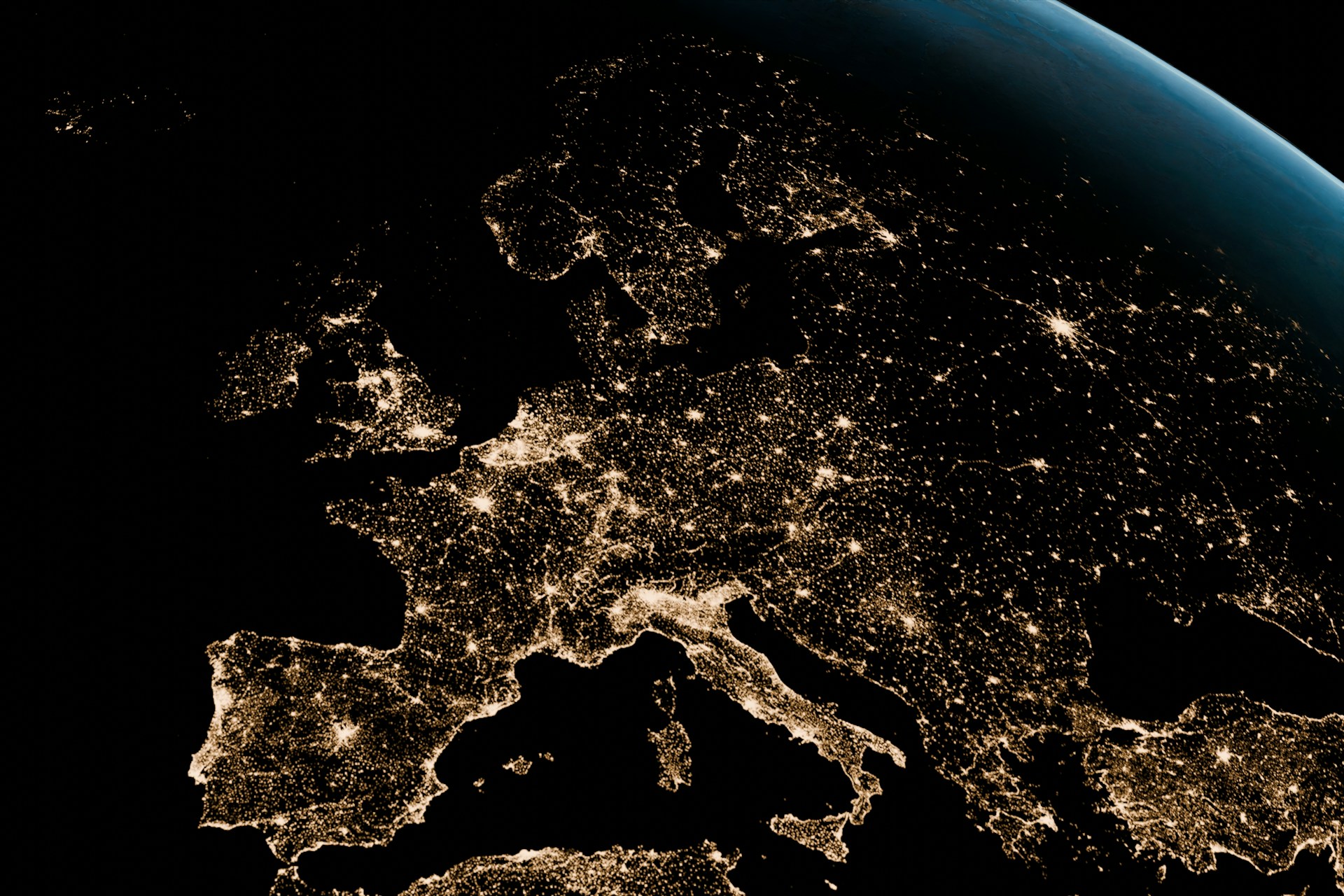
For eight decades, the United States has guaranteed Europe’s security, yet Trump’s rhetoric and his open questioning of NATO suggest that this era may be drawing to a close. Europe cannot continue to assume that NATO’s Article 5 will apply if a US president refuses to recognise it or views allies merely as “sponsors”. If we do not take control of our own fate, someone else will do it for us.
Europe’s fragmented defence capability
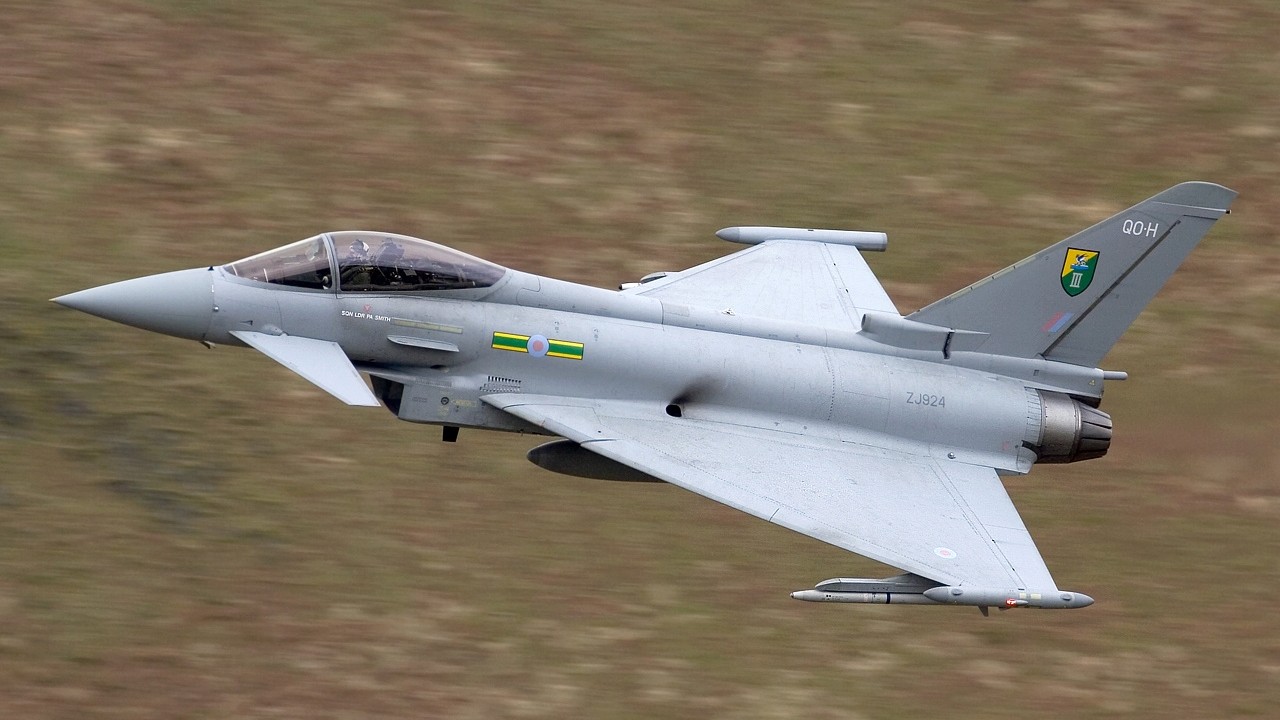
At present, Europe’s defence industry and military capabilities are extremely fragmented. Different countries operate different types of tanks, fighter jets, warships and other weapons systems, making operational cooperation difficult and defence policy inefficient.
Across Europe, at least ten different types of fighter aircraft are in use. There are roughly as many tank models. Naval forces are even more fragmented, with each country adhering to its own standards and strategies. The same applies to other weapons systems.
If the defence budgets of EU member states were combined, the defence budget of a European Federation in 2024 would amount to approximately €350 billion (or more than €400 billion if the United Kingdom were included). Even these figures fall short of the defence spending of China and wartime Russia, but unified leadership and procurement would make this sum far more effective than today’s fractured system.
In 2024, the combined GDP of EU member states stood at roughly €19 trillion. If a European Federation were to allocate 3% of GDP to defence, the common defence budget would rise to around €570 billion.
Between 2019 and 2023, approximately 55% of Europe’s arms imports came from the United States. At the same time, Europe is home to world-class defence companies, including Rheinmetall (Germany), Thales and Dassault (France), Leonardo (Italy), and BAE Systems (United Kingdom). Consolidating Europe’s defence industry within a federal framework would enable far greater cross-border synergy, the joint development of next-generation weapons systems, and a significant reduction in dependence on the US.
A federation would give Europe’s economy a formidable competitive advantage. Establishing a unified capital and lending market – something Europe still lacks – would reverse a long-standing deficiency that has driven countless start-ups abroad, often to the United States. This would provide businesses and citizens alike with cheaper, more accessible financing, strengthen the euro, help prevent eurozone crises, and create better conditions for innovation and infrastructure development.
Europe already boasts a wealth of world-class companies that could thrive even more under a federal system – particularly in healthcare and biotechnology, aerospace and space industries, financial technology and digital banking, and energy and green technologies.
Federalism as an antidote to populism
The EU’s current governance model is cumbersome and slow, as major decisions require unanimous agreement among member states. A federal system would allow Europe to respond far more swiftly to crises such as the COVID-19 pandemic or migration emergencies.
A European Federation would also be better equipped to defend its foreign policy interests and strengthen global trade relations. A unified diplomatic strategy would make Europe a more powerful geopolitical actor, enable more effective competition with the US and China, and provide stronger resistance to Russia.
One of the weaknesses of European democracy has been the rise of populism. As we have already seen in France and Germany, the emergence of extremist populist movements affects not only individual member states but European politics as a whole.
Under a federal system:
- pan-European political parties would exist, helping to smooth national extremes;
- a bicameral parliament with enhanced decision-making powers would provide stronger democratic legitimacy.
Smaller states often fear that they would lose their voice in a federation. Yet a European Federation could follow the model of the US Senate, where each state has equal representation in the upper chamber. Europe would have a bicameral parliament: in a European Upper House (the equivalent of the US Senate), each state would enjoy equal representation (two or three representatives per state), while seats in the European Parliament would be allocated according to population – preserving the principle of popular representation, as is already the case today.

European history offers too many examples of national pride turning into national tragedy. We must build a common defence, deepen economic and political integration, and ensure that Europe speaks with one voice in the world – rather than as twenty-seven contradictory whispers.
The European Federation as a historical inevitability
A European federal state is not a new idea. As early as 1946, former British Prime Minister Winston Churchill declared: “We must build a kind of United States of Europe.”
Germany’s legendary Chancellor Konrad Adenauer stressed the inevitability of European unity in a speech delivered in Brussels on 25 September 1956, warning that if Europeans failed to act quickly and decisively, Europe would disappear from world politics.
Nearly 70 years ago, Adenauer already argued that Europe could not indefinitely rely on American protection, as this prevented European nations from developing their full potential and fostered dependency. He also highlighted the geopolitical reality of superpower dominance and the rise of non-Western nations – trends that would further complicate Europe’s position in the world.
Europe’s cultural and political influence does not sustain itself automatically; it requires protection and adaptation to new circumstances. Adenauer therefore urged Europeans to abandon national prejudices and outdated traditions in order to create a strong, resilient and flexible union capable of withstanding both external and internal challenges.
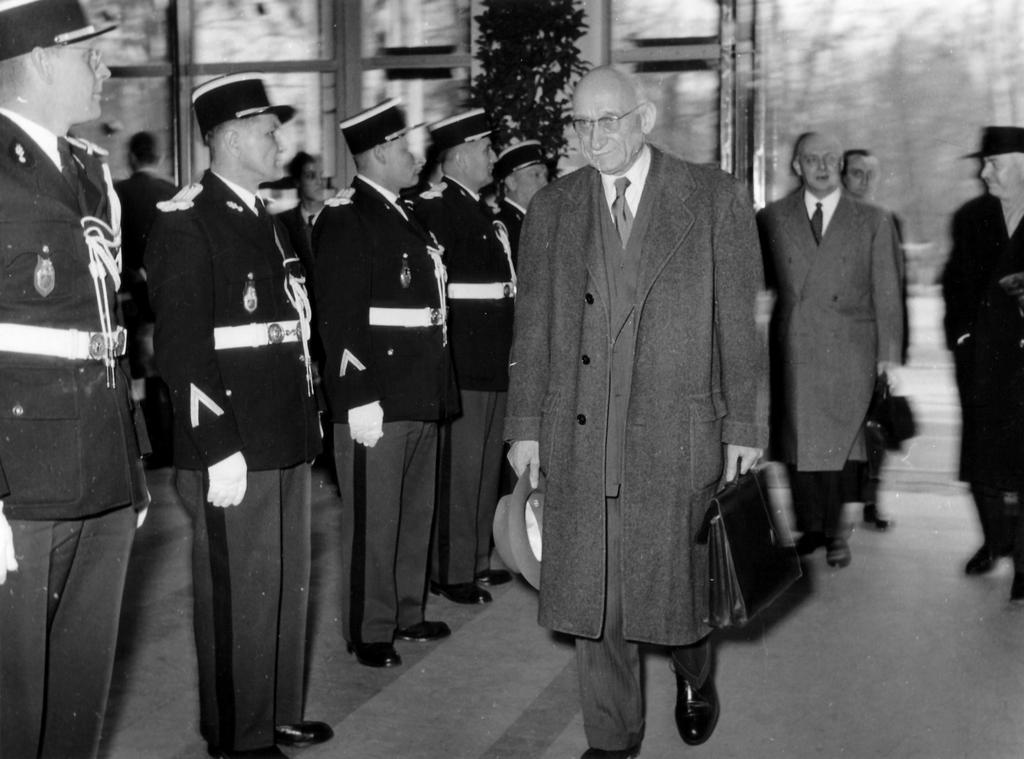
The French statesman and one of the architects of European integration, Robert Schuman, said in a speech in 1949:
“The spirit of Europe means awareness of belonging to a cultural family and a willingness to serve that community in a spirit of complete reciprocity, without hidden ambitions for hegemony or selfish exploitation of others. In the nineteenth century, feudal ideas were challenged and, with the rise of national consciousness, nations asserted themselves. Our century, which has witnessed the catastrophes caused by endless clashes of nations and nationalisms, must strive for reconciliation among peoples within a supranational union. This would preserve the distinctiveness and aspirations of each nation, coordinating them in the same way that regions are coordinated within a single national whole.”
Without unified governance, Europe will remain fragmented, dependent on external powers, and vulnerable to populism and geopolitical pressure.
The time has come to take a historic step and create a European Federation – not only for our own security, but for the freedom and prosperity of future generations. The moment has arrived for Europe’s peoples to move forward together and choose the path of federation – or remain divided and defenceless in the face of the world’s storms.
The opinions in this article are those of the author.