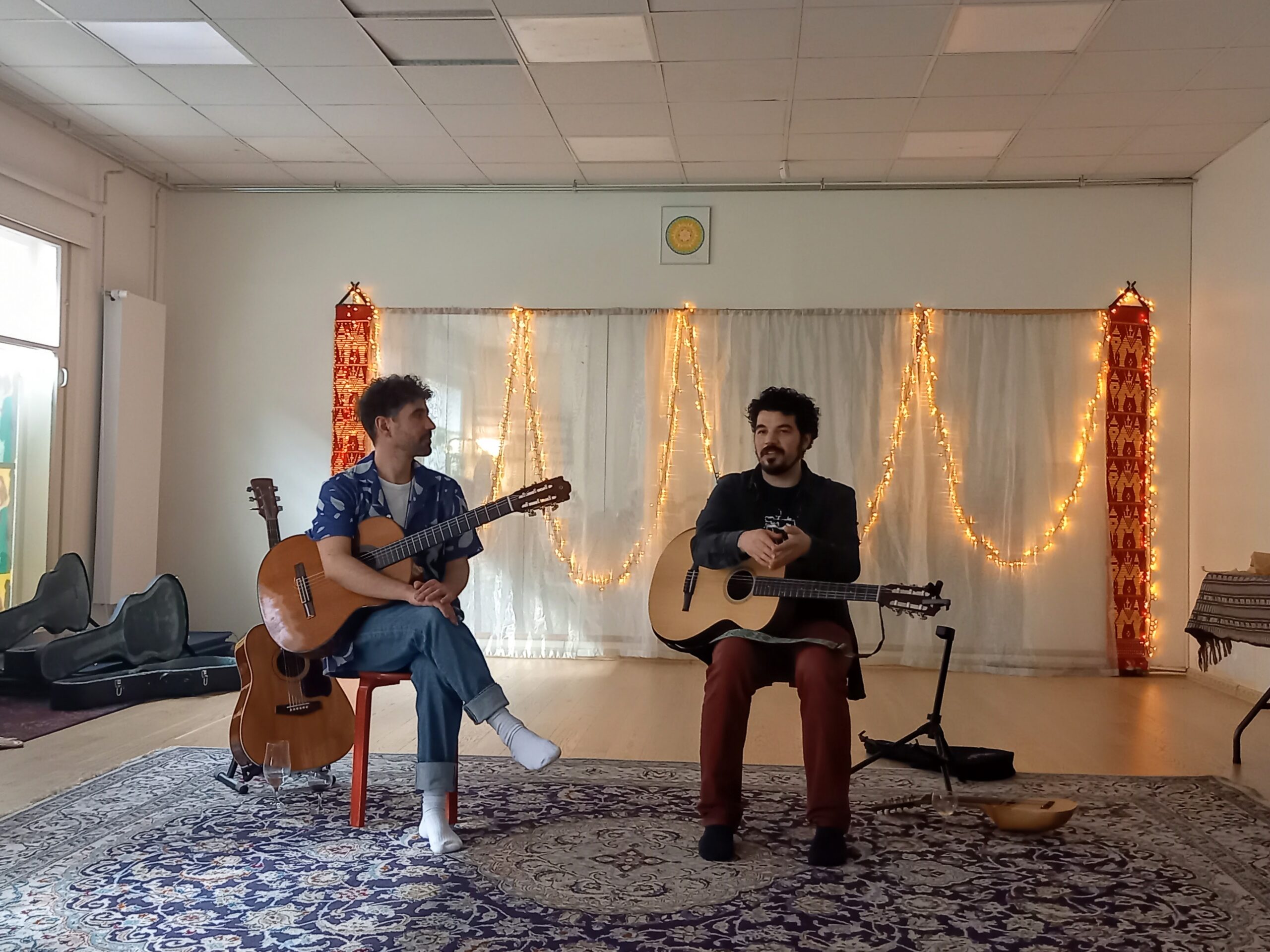
Chilean singer-songwriter Tomás del Real and Argentine musician Pepi Prieto have found a creative home in the Estonian town of Viljandi, drawing inspiration from the city’s quiet pace and close-knit music scene.
It begins with a charango, a 10-stringed South American instrument traditionally made from an armadillo shell, although modern versions are more often made of wood, which most agree sounds better. It was December in Estonia, the darkest time of the year, when Tomás del Real received a call from his friend and fellow musician Pepi Prieto about putting the finishing touches on a track. The song “Canto Oscuro” meant a lot to Pepi, who is from Buenos Aires. He wanted to get it right. He was counting on Tomás, who grew up in Santiago de Chile, to add some Latin flavour.
The charango in question, by the way, was not made of dead armadillo. It was made of wood.
“It was my charango,” recalls Tomás. “Someone brought it to me from some Argentinian luthier.”
Although not an expert charango player, he was familiar enough with the instrument to work out some parts to accompany the chord changes for “Canto Oscuro”. Soon he was ascending the hill to the recording studio at the Viljandi Culture Academy to lay down the part.
“I wanted to add backing vocals, a classical nylon guitar, and charango to ‘Canto Oscuro’,” recalls Pepi, whose given name is José and who has led an Estonian South American psychedelic band called Araukaaria for half a decade. “I felt that Tomás was the right person. He’s a dear friend, a folkie at heart, and is Chilean, like my father,” says Pepi. So it was done.
The recording was made on the same day that Tomás and Pepi were organising a Christmas loft concert with Lonitseera singers Kaisa Kuslapuu and Kristin Kaha. It was 5 December 2025.
And that’s how innovative Latin American psychedelic music was made in southern Estonia. It might seem strange, but Viljandi seems to attract such characters from around the world.
Both Pepi and Tomás say Viljandi inspires them.
The age of discovery
Pepi was born and raised in the middle of Buenos Aires. The city alone has twice the population of Estonia. It is crowded, noisy and polluted. Some parts are surely as dangerous as those of any big city. When Pepi’s mother visited him in Viljandi, she was astonished to see Estonian mothers leaving prams outside cafés. “Aren’t they afraid someone will steal them?” she asked.
As a young man, Pepi got into coding and, being something of a seeker, he wound up working in Indonesia, where he met a captivating Estonian woman at a party for expats and students. They began seeing each other. The two would explore the Indonesian roads on his motorbike.
By 2012, Pepi was already fed up with corporate life. “It was very exhausting, with long working days,” he recalls. He was also squeezing in music on the side, going to bars at weekends and jamming with bands. That Christmas, he decided to follow the young woman he had met to Estonia.
He arrived at Tallinn Airport in December 2012 wearing shorts.
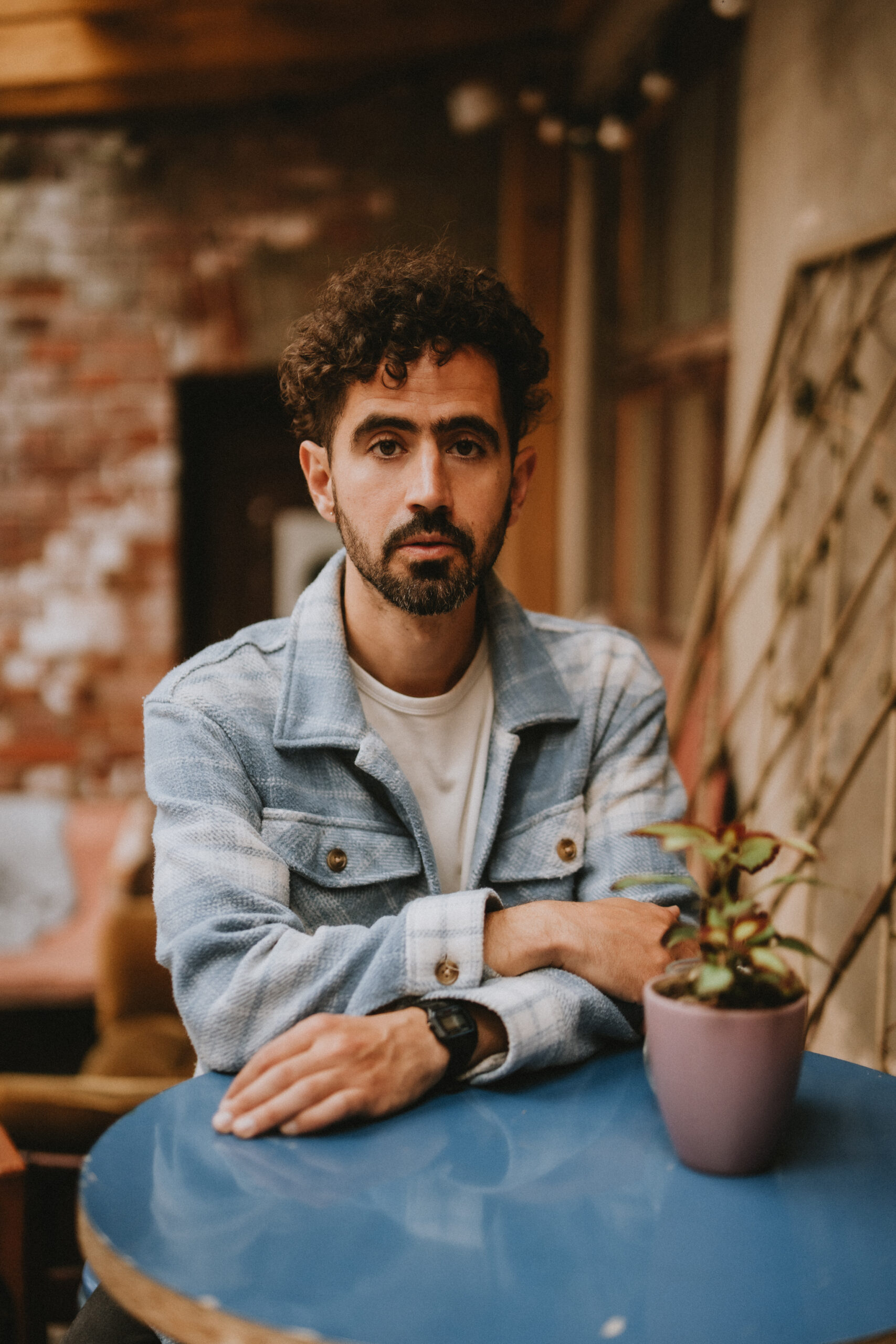
Pepi was probably the first Latin American musician to establish himself in Viljandi. Slowly, over several trips, he brought his instruments to Estonia: an acoustic guitar, an electric guitar and even a charango. In 2014, he began renting a room at the Koidu Seltsimaja, the one-time house of the Koit Society and the original home of Ugala Theatre, which operated in the building for six decades.
He needed his own creative space, and Koit, with its dusty corridors and cave-like interior, served as a quiet refuge. His guitar playing could be heard late at night. In 2018, Pepi planned to return to South America to join an accelerator programme in Chile. There was an all-star going-away party, and Pepi donned a white Indonesian costume and jammed with percussionist Rauno Vaher, who would later play in Araukaaria. Lee Taul, Tõnu Tubli and other musicians played. It was an event.
“It was like the Võnge Festival,” recalls Pepi, referring to Estonia’s travelling festival of alternative music and culture, held in a different location each summer. He was supposed to leave Estonia for a while after the concert, if not for good. But his Chilean opportunity did not pan out. He was back three months later. Some Viljandiers joked that the next time Pepi spent a weekend in Tallinn, he might rent out Ugala and throw a bigger soirée. “Don’t cry,” he would say. “I’ll be back on Monday.”
Araukaaria
Pepi travelled extensively during this period, while his Chilean father was succumbing to cancer. When his father died in May 2019, Pepi returned to Estonia for good. Whether this brush with loss and mortality played a part or not, his interest in music intensified. He began playing his songs with musician friends from Viljandi, including violinist Lee Taul, drummer Karl-Markus Kohv, bassist Indrek Mällo, guitar virtuoso Harri Heinsoo and others. They played a few concerts.
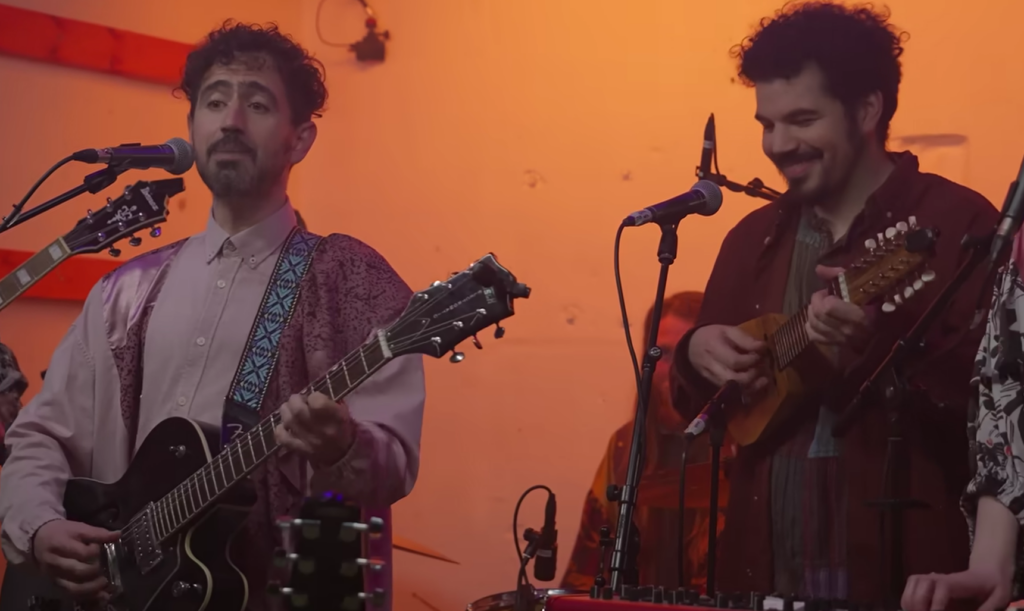
Eventually, these efforts coalesced into Araukaaria, a project named after the Andean evergreen tree. For the past five years, Pepi has remained the constant in a shifting cast of participating musicians. The current line-up consists of Pepi, Lisanna Kuningas on vocals and keyboards, Fedor Bezrukov on bass, Vaher on percussion and Heinsoo on guitar, with Tomás joining on charango when needed.
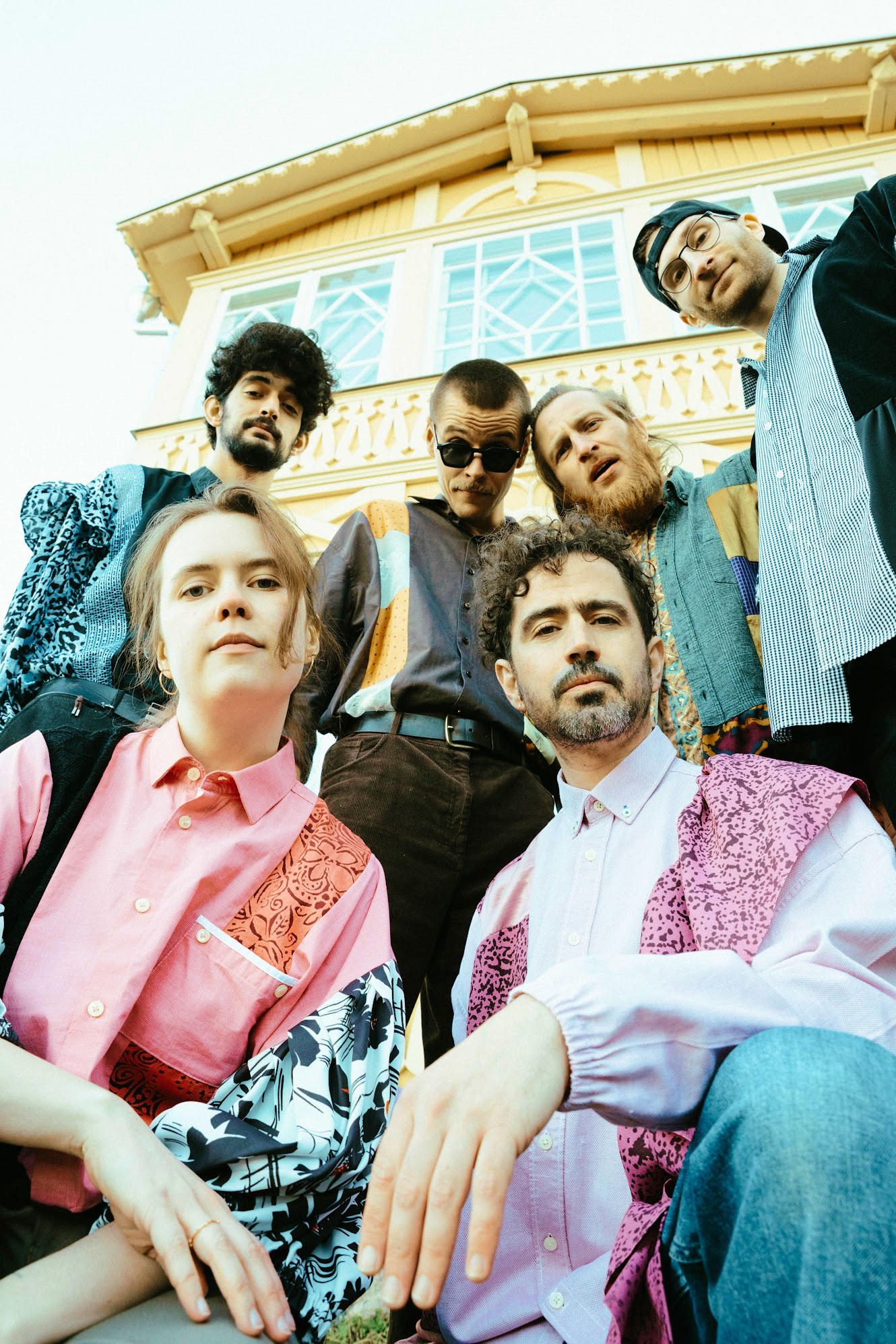
“Originally I wanted to do the typical band format, where we are all friends forever, but these are professional musicians with two or three projects apiece and full schedules,” Pepi says. “This is an evolving project where people come and go and each contributes a little bit to Araukaaria.”
The band continues to record and tour. Last year, it had a slot at Tallinn Music Week. In recent months, Pepi has also played a few separate gigs with Tomás, performing their own music as well as a cover of Charly Garcia’s “Canción para mi muerte”, an Argentine singalong classic.
Impressed by Folk
While Pepi planted his flag in Viljandi first, Tomás was not far behind. A singer-songwriter from Chile, he first visited the Viljandi Folk Music Festival in July 2014 as part of another project. Even then, he was impressed by Folk, which he describes as well organised and smoothly run.
“What also feels good is that the city is around the festival,” Tomás remarks. “The festival is the city, in a way.” He was also spellbound by the vivid setting and the characters moving through it. “I was like, where are we? Is this real?”
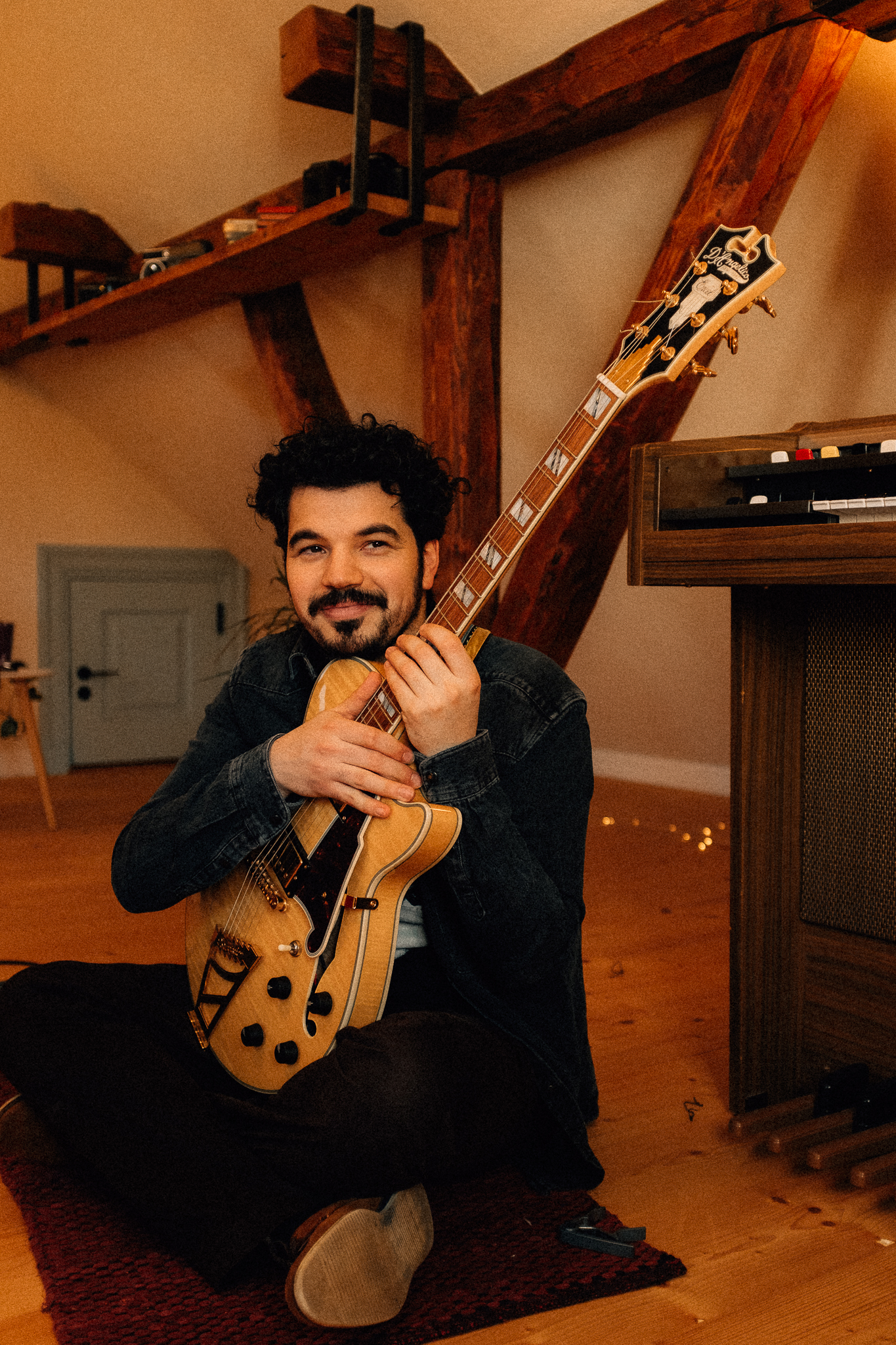
During the COVID-19 pandemic, Tomás – who has lived an adventurous musician’s life and once spent time jamming in the favelas of Brazil – applied for a residency at the Pärimusmuusika Ait, the Estonian Traditional Music Centre, which is based in a renovated barn in Viljandi. He was accepted. And that’s how Tomás del Real spent the winter of 2021–22 living in the cellar of the Ait, cooped up like a hermit, watching chunky snowflakes fall and writing lots of songs.
“This was during the pandemic,” he says. “There was nothing going on. Almost all events were cancelled. Sometimes there would be a snowstorm and I wouldn’t even bother leaving the Ait.”
A more peaceful place
All of that solitude gave Tomás the time to process what had been a crazy few years, including a social revolution in Chile and a period when he was stuck in Mexico and the US during the pandemic. “Finally, I managed to get to a more peaceful place and it all cleared out in a way,” he says.
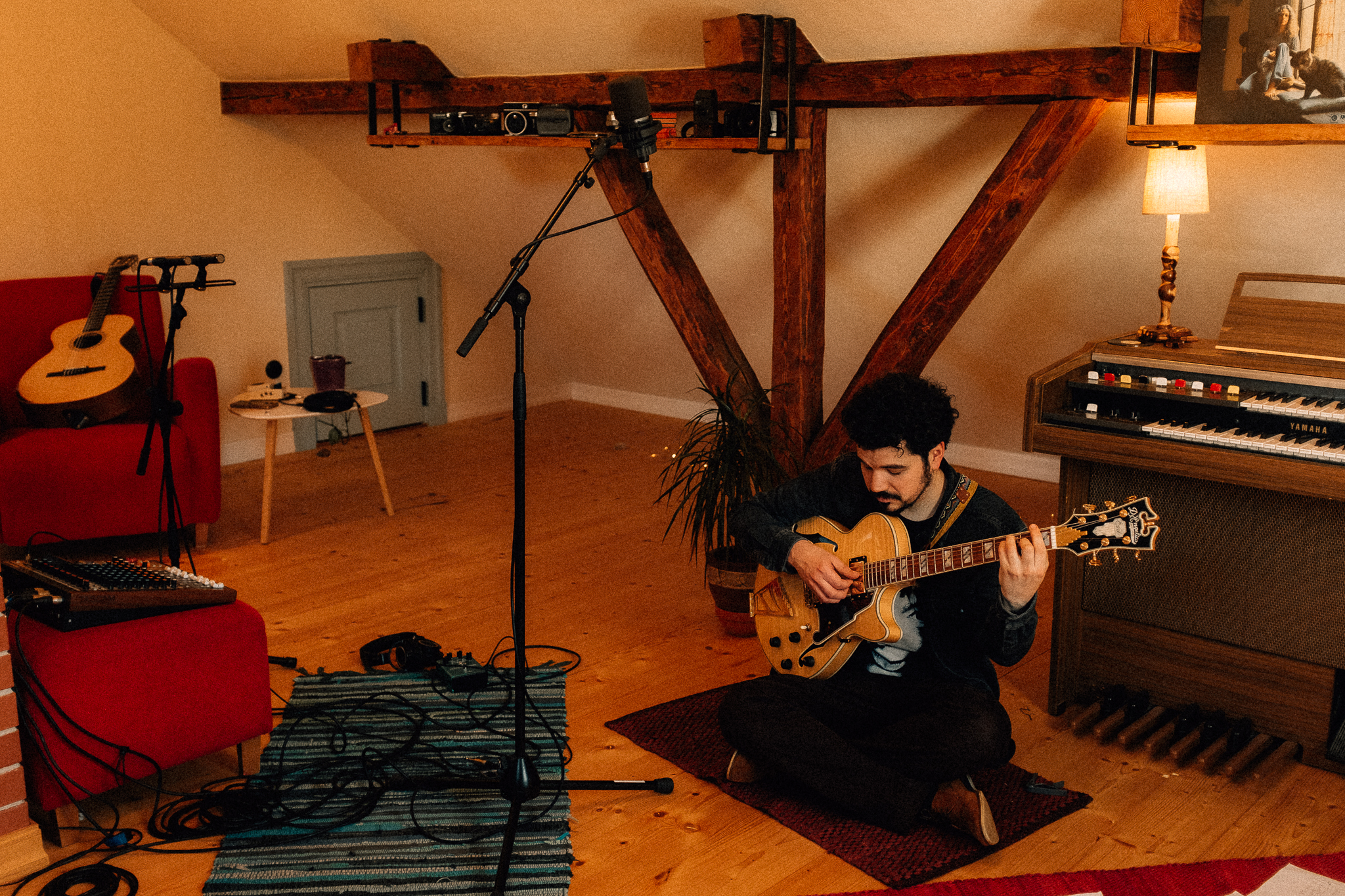
The songs started to come, in their dozens. A collaboration with Lee Taul evolved into a project called Don’t Chase the Lizard. The following year, in 2023, he released a solo album called Principios de Declaración, followed in 2024 by Notas Rotas. In addition to Taul, he has worked with Estonian musicians such as flautist Katariina Tirmaste on Notas Rotas, as well as other local and foreign musicians for whom Viljandi is a hub. He is now preparing a new album called Jakobsoni, after one of Viljandi’s main boulevards. Its first single, “Algun Dia”, has just been released.
“It’s an album about life’s everyday things,” Tomás says of the record. “We’re in a moment when people are oversaturated. Everything moves so fast and people are focused on fake, impressive things,” he says. “But why get distracted when it’s the small things that matter?” he adds. “Jakobsoni is a street, but it’s in the heart of the city. I like its iconic graffiti, which is falling apart.”
Nordic musicians and audiences
When asked whether Estonia has influenced their music, both Pepi and Tomás nod. Tomás notes that living in Estonia has taught him to deal better with silence and grow accustomed to a slower way of doing things. He was baffled at first when friends would simply say “ciao” to him in the street, then continue on their way. In Santiago, a city of six million people, if someone is lucky enough to encounter a friend in the street, they will spend the rest of the day catching up. Audiences in Estonia, and in the Nordic countries more generally, are different from those in South America.
“In Brazil, people will shout at you,” says Tomás. “They give you so much energy, even if they don’t like you. Nordic audiences don’t show you much. It’s harder to know if you are doing well.”
On the flip side, playing for Estonian audiences has encouraged Tomás to perform longer-form songs. “In South America, I might be more anxious about doing longer songs because there is this need to entertain people, but audiences here are more open to taking the time to have a nice experience.”
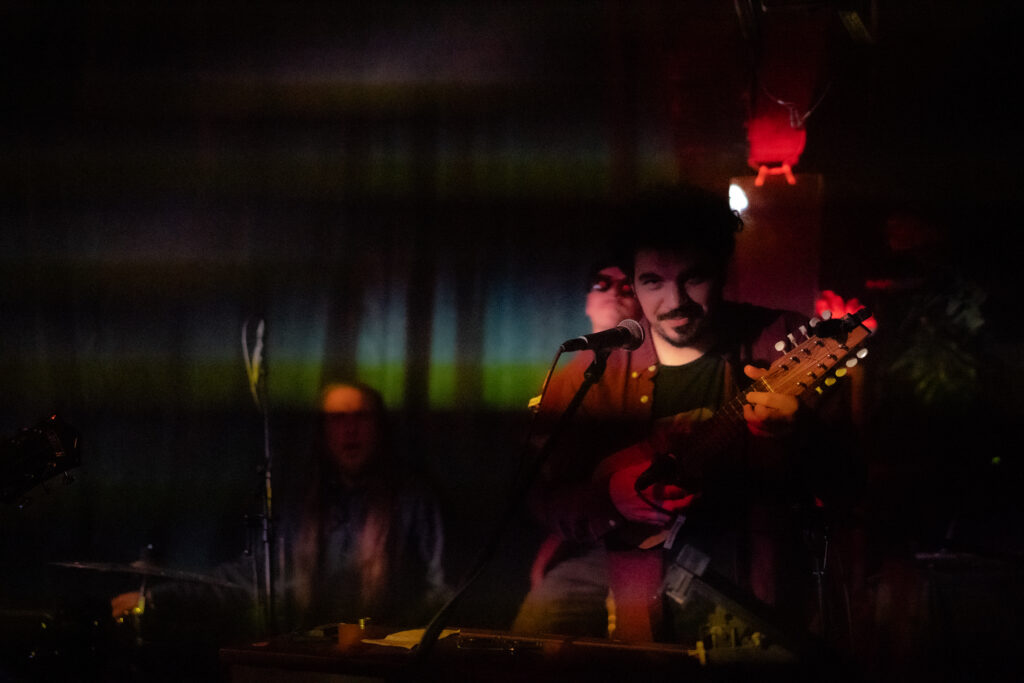
Pepi agrees and says the musicians in his band share a similarly slow-paced and thorough mindset. “The members of Araukaaria are very Nordic,” he says. “They can dive into these things and be okay with it. Especially these days, when the world moves so fast, there is this tendency to keep everything short and tight. But they are not afraid to slow things down.”
Playing in a small, quiet city like Viljandi has other perks, too. Musicians like Tomás and Pepi can try out new material, for example, and audiences are simply happy to listen to something new.
“If you go out in a wacky costume or outfit here, people will look at you and say, ‘Nice,'” Pepi says. “But in Buenos Aires, they will say, ‘Who do you think you are?'”
That same small-market advantage also applies to game and app developers, Pepi points out. In Estonia, he founded codesters.club, a digital product development programme backed by the Riesenkampff Foundation. It provides future-oriented technology education to high school students. “I am the programme director, curriculum lead and one of the mentors there,” he says.
The collaboration continues
Both also point to one final aspect of their relationship with Estonia: just as the country influences them, they can influence it. “In Viljandi, you can change or shape the city first-hand,” says Tomás. “That means that you have the ability to change things in the city, including yourself,” he says.
In a way, simply by walking up the hill toting a charango, Tomás has changed Viljandi, and so has Pepi. The two have recently played a few concerts, either with Araukaaria or as a duo. In April, for example, Tomás joined Araukaaria on stage for two songs: “Canto Oscuro” and “El Don del Águila”, strumming the charango and singing backing vocals. Tomás has since played a few more gigs with the band, and the two also performed as a duo at Eve Stuudio in Viljandi in May.
Their collaborations continue: Pepi is studying music production at Viljandi Culture Academy, while Tomás continues to gig around the world. In recent years, Tomás has played shows in Asia, North America and Europe. They have also co-authored a song called “Los Fuegos No Descansan”.
According to Pepi, another song might be in the works. “Just this weekend, we were camping out together at Viru Folk and I showed Tomás a song idea on the ukulele,” he says. “He liked it and we started working together on it. So, yes, it looks like we might have another song soon.”