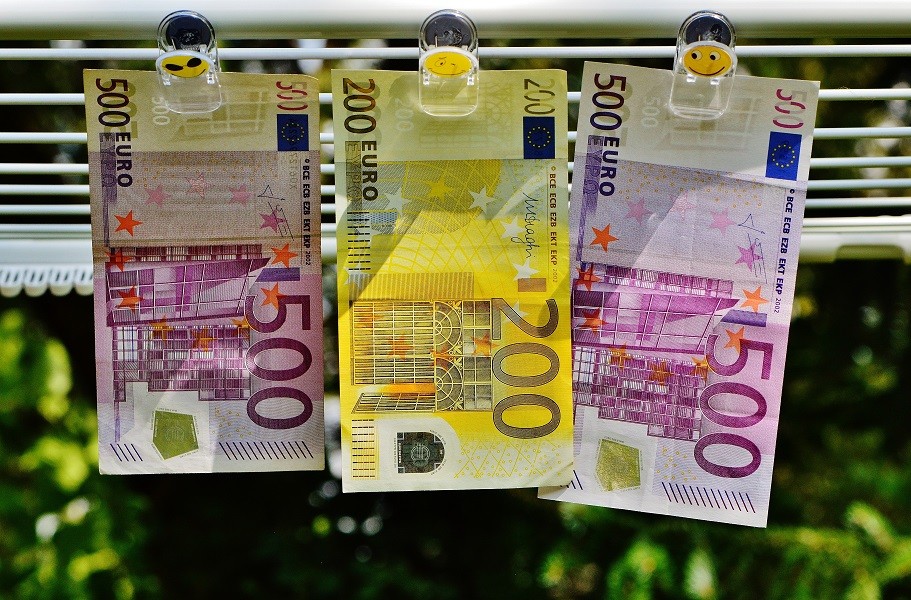
The median monthly salary in Estonia was €1,840 in the second quarter of 2026, up 6.1 per cent – or approximately €106 – from the same period in 2025.
The median gross wage is the wage level at which half of employees earn less and the other half earn more.
“Trends in median wages broadly mirror those in average gross wages, both across counties and economic sectors,” Krista Vaikmets, a senior analyst at Statistics Estonia, the country’s official statistics agency, said in a statement.
The average monthly gross wage in Estonia was €2,243 in the second quarter of 2026, up 5.5 per cent – or €117 – from the same period in 2025.
Vaikmets said average monthly gross wages had risen year on year in every county, although the pace of growth varied across the country.
Average salary the highest in Tallinn
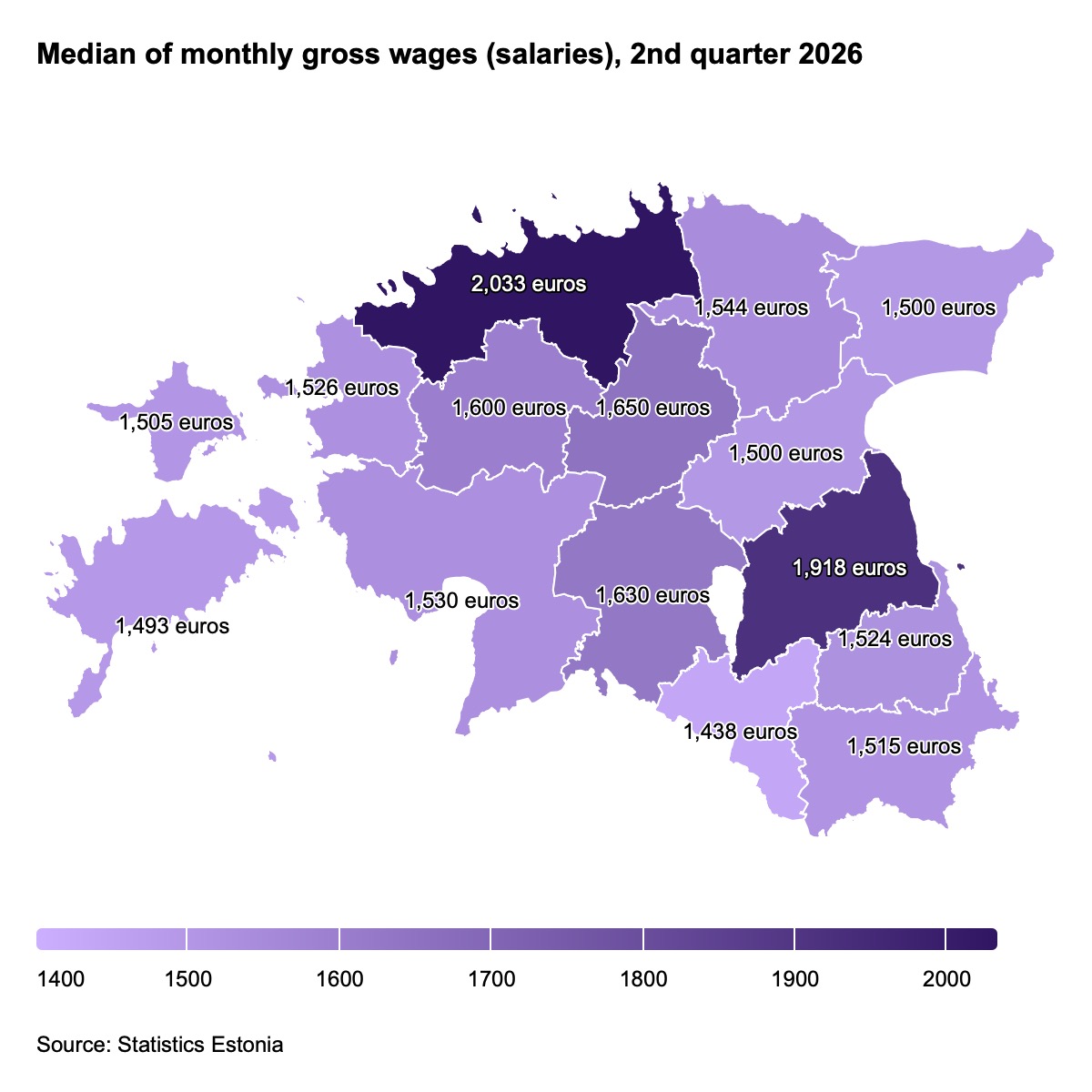
“The largest increases in average gross wages were recorded in Ida-Viru County, at 8 per cent, and Hiiu County, at 7 per cent. Growth was more modest in Põlva, Jõgeva and Valga counties, where wages rose by about 4 per cent,” she said.
Average monthly gross wages remained highest in Harju County, at €2,488, followed by Tartu County, at €2,285. In both counties, average wages rose by 5 per cent year on year in the second quarter.
“In Tallinn, the average monthly gross wage was €2,611 in the second quarter, up 5.3 per cent from €2,479 in the same period last year,” Vaikmets said.
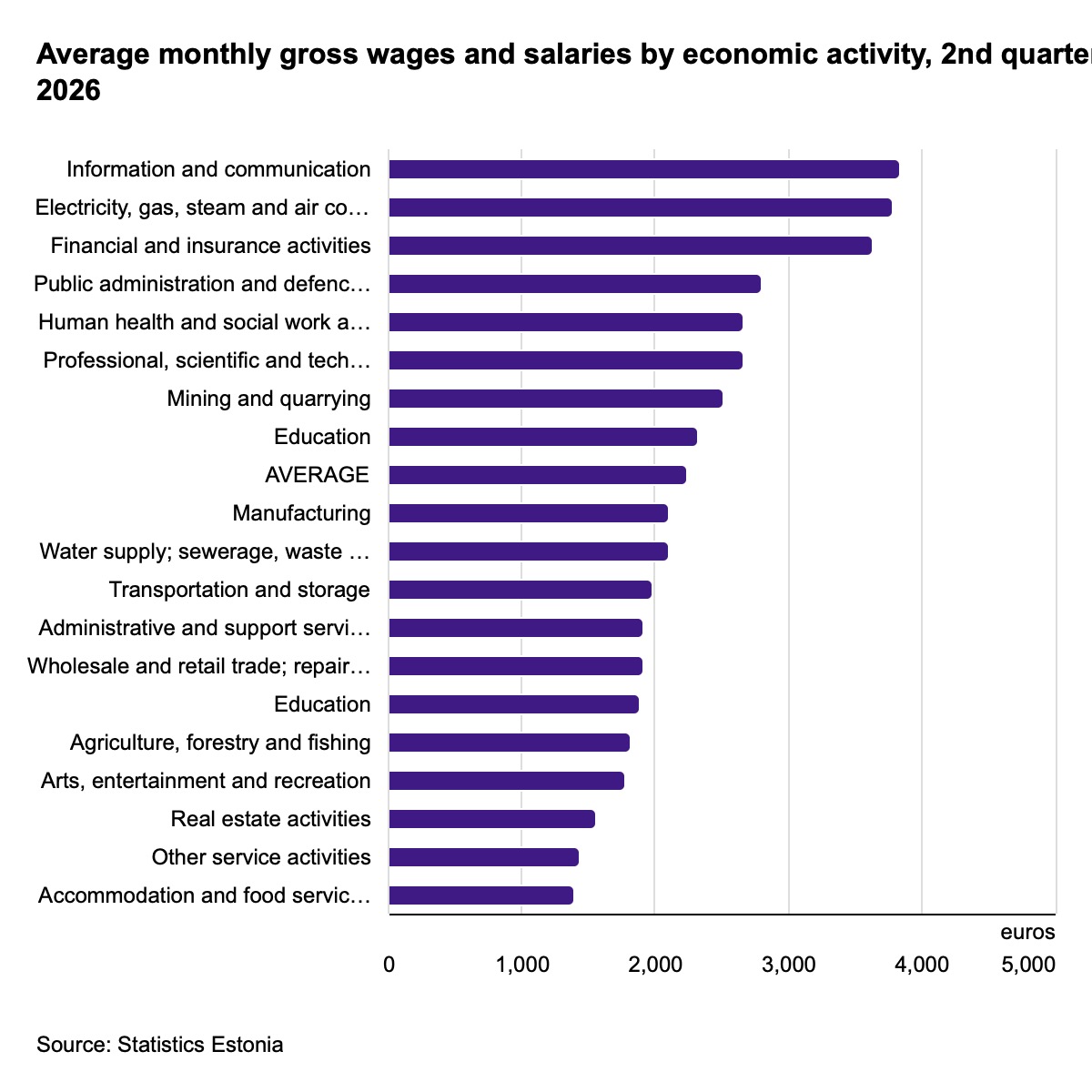
The information and communication sector recorded the highest average monthly gross wage, at €3,837 in the second quarter.
Average gross wages in the electricity, gas, steam and air-conditioning supply sector rose by 19.6 per cent year on year to €3,783 in the second quarter.
Manufacturing remains Estonia’s largest employer
The lowest average gross wage was once again recorded in accommodation and food services, at €1,389 a month. In other service activities, the average monthly wage was €1,430.
Among the larger sectors, average gross wages rose by 6 per cent in manufacturing, 5.7 per cent in trade and 5.1 per cent in construction.
There were 588,710 employees in Estonia in the second quarter, 5,183 fewer than a year earlier but 8,611 more than in the first quarter.
Manufacturing remained the country’s largest employer, with 101,085 employees, accounting for 17 per cent of the total. It was followed by wholesale and retail trade, with 85,548 employees, education, with 64,578, and human health and social work, with 48,619.