

In less than half a century, Estonia’s white-tailed eagle has risen from near-extinction to a population of about 300 breeding pairs; its return is one of Europe’s most remarkable, yet little-known, conservation successes.
On a winter morning beside Matsalu Bay, the silhouette may appear first: vast wings held above the steel-grey water, a short white tail and the measured wingbeats of a bird built to command the coast.
Half a century ago, such a sight had all but vanished from Estonia.
By the 1960s, decades of persecution, habitat loss and poisoning by organochlorine pesticides had pushed the white-tailed eagle to the brink of extinction. The same chemicals were devastating birds of prey across Europe. For several years, not a single successful nest was recorded in Estonia. The merikotkas, or sea eagle, seemed about to disappear as a breeding bird.
But the story did not end there.
Today, Estonia is home to between 290 and 330 breeding pairs, and sightings are becoming increasingly common. On Hiiumaa alone, at least 25 pairs nest regularly. Along the country’s bays, islands and wetlands, the eagles can once again be seen perched at the water’s edge or circling high above the landscape they have reclaimed.
Their return matters far beyond the survival of a single species. As a top predator, the white-tailed eagle is a sign of healthier wetlands, cleaner food chains and ecosystems recovering from decades of pollution and persecution. Its resurgence is a landmark in Estonia’s conservation history, even if the achievement remains surprisingly little known.
A bird on the edge
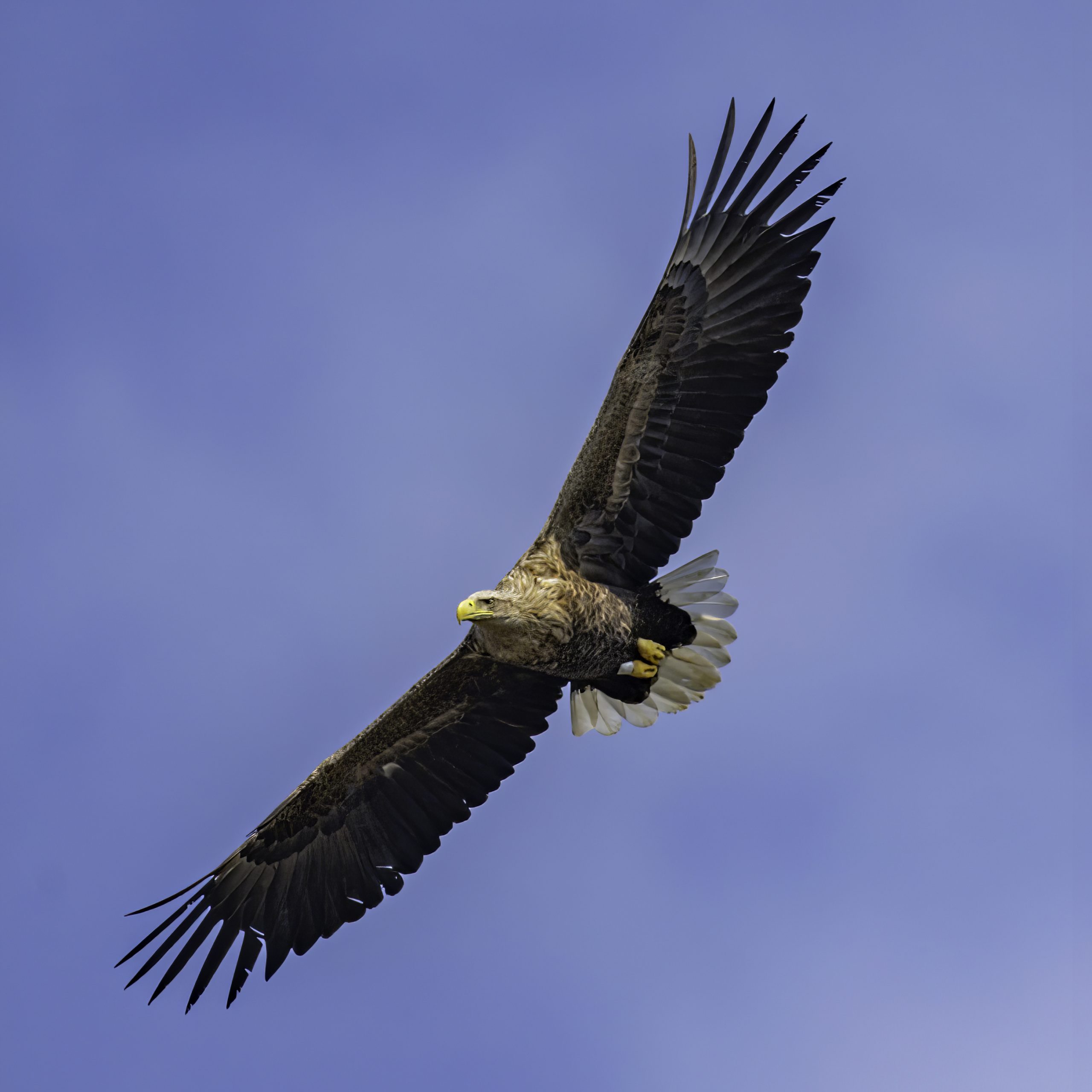
With a wingspan of up to 2.45 metres and a weight of as much as six kilograms, the white-tailed eagle (Haliaeetus albicilla) is Estonia’s largest bird of prey.
Its outline is unmistakable: broad, fingered wings, a short, wedge-shaped tail that turns white in adulthood and a slow, powerful wingbeat. In the words of the Estonian Eagle Club, the bird resembles a flying carpet.
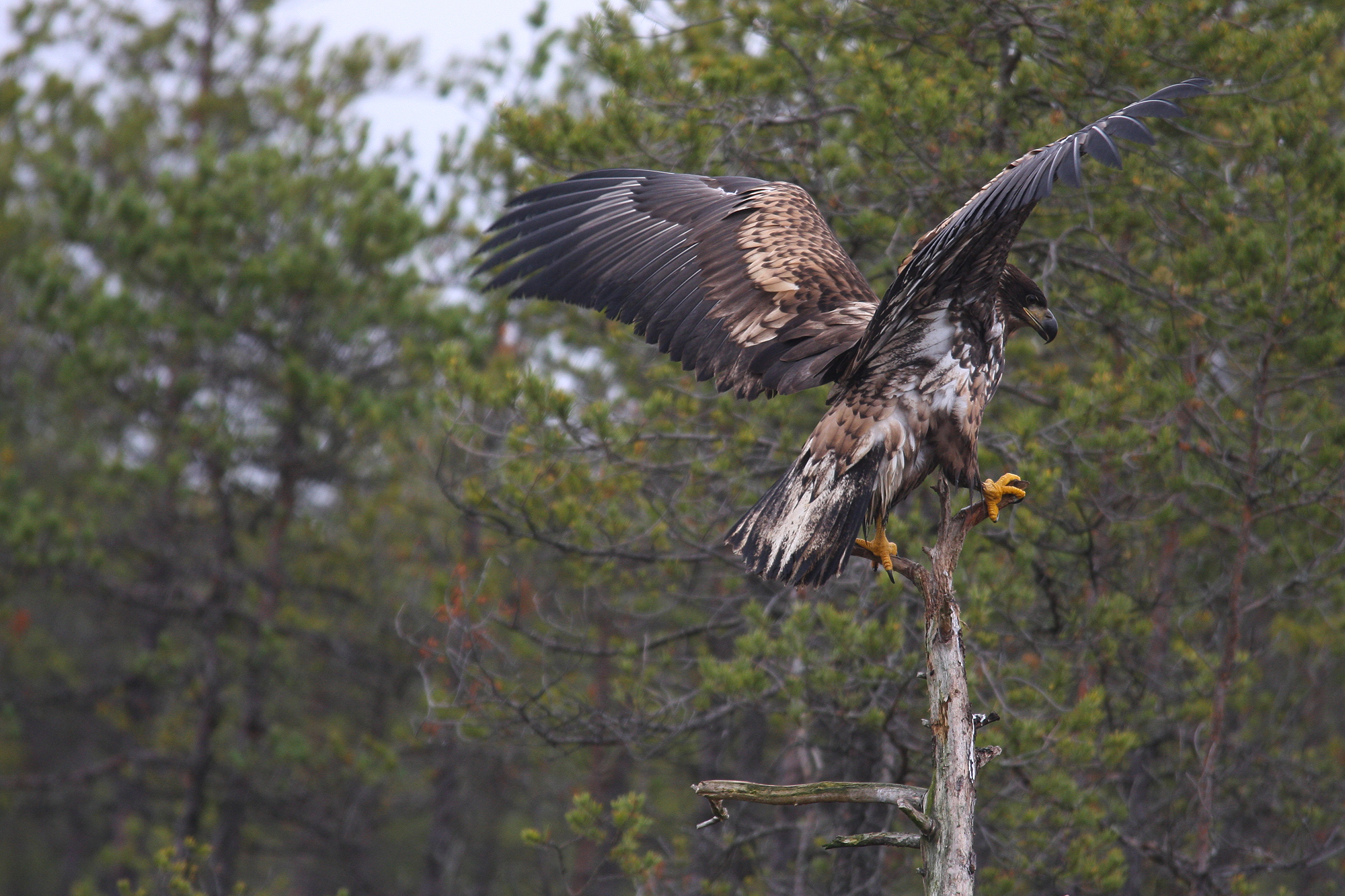
The species was once widespread across Estonia. Nineteenth-century ornithologists described the white-tailed eagle as relatively common, particularly around Lake Peipus, and its population may have numbered several hundred breeding pairs.
From the late 19th century, however, its fortunes changed sharply. Eagles were hunted, their eggs collected and poisoned bait left by farmers who regarded large raptors as a threat to livestock.
After the Second World War came an even more insidious danger. Dichlorodiphenyltrichloroethane – or DDT – and other pesticides accumulated in the food chain, thinning the eagles’ eggshells and causing widespread reproductive failure. Similar declines were unfolding across the northern hemisphere. By the 1960s, Estonia’s white-tailed eagle population had fallen to almost nothing.
The long road back
The recovery began slowly in the 1970s, as bans on the most harmful pesticides started to clear the toxins from the food chain. Ornithologists and conservationists monitored known nests, guarded breeding pairs during the vulnerable nesting season and worked to change public attitudes towards a bird once treated as vermin.
Founded in 1999, the Estonian Eagle Club has become the country’s leading organisation for eagle research and conservation. Its members monitor nesting sites, study the birds and support winter feeding programmes that have helped adult eagles survive Estonia’s harshest months.
A white-tailed eagle nest in Estonia, captured by a live camera by the Estonian Eagle Club.
The comeback extended far beyond Estonia. Across the Baltic region, the number of white-tailed eagles rose from about 670 breeding pairs in the 1990s to approximately 3,000 by 2012. Estonia followed the same remarkable arc: from almost no successful breeding in the 1960s to about 150 pairs by the mid-2000s and between 290 and 330 today.
The species’ Estonian heartland lies among the western islands and along the coast. Saaremaa, Hiiumaa, Vormsi and Muhu provide important breeding grounds, as do the wetlands of Matsalu National Park and the Silma Nature Reserve. Here, the eagles can be seen throughout the year.
Adult white-tailed eagles tend to remain close to their nesting territories, even through winter. Younger birds are wanderers. Some travel as far as the Arctic during their second summer, crossing borders and seas before eventually settling down to breed.
When an apex predator returns
A recovery of this magnitude does not pass unnoticed through an ecosystem. White-tailed eagles feed mainly on fish, waterbirds and carrion. Along Estonia’s coast, seal carcasses washed ashore provide an important source of food during winter. As the eagle population has grown, however, its influence on other species has become increasingly visible.
One striking example involves the great cormorant. Research published in 2025 found that the feeding areas of white-tailed eagles and cormorants in the Baltic Sea increasingly overlap. Raids on cormorant colonies have intensified, with eagles taking adult birds, eggs and chicks, sometimes gathering in large groups. On Hiiumaa, as many as 26 eagles have been observed targeting a single colony at the same time. In some cases, sustained pressure has caused entire colonies to relocate.
Ecologists caution against viewing this as a problem. The return of an apex predator inevitably reshapes the community around it, altering the behaviour and distribution of other species. The white-tailed eagle is also an indicator species: its presence in such numbers points to a healthier environment and a food web recovering some of its former complexity.
Watching the eagle in Estonia
Estonia is now one of the best places in Europe to see a white-tailed eagle in the wild. Matsalu National Park, on the west coast, is particularly reliable. The birds are regularly spotted at Haeska, Keemu and Põgari, as well as around Haapsalu’s Tagalaht Bay and the Silma Nature Reserve.
In winter, ice closes the shallow inner bays and the eagles move towards the coast, gathering wherever open water remains.
During the nesting season, a live camera offers an intimate view of life inside a white-tailed eagle’s nest. It is one of several wildlife cameras operated by Estonian nature organisations, drawing viewers from around the world.
A white-tailed eagle nest in Estonia, captured by a live camera by the Estonian Eagle Club.
For the greatest chance of a sighting, birdwatchers head to Saaremaa and Hiiumaa. Easily reached by ferry from the mainland, the islands support Estonia’s highest densities of breeding pairs and have become important destinations for the country’s growing nature tourism sector.
A recovery that remains fragile
Despite its remarkable comeback, the white-tailed eagle remains protected in Estonia, and conservation work continues. One of the most significant threats now comes from forestry, particularly the loss of the large, mature trees in which the birds build their nests.
Nest sites and their surroundings are protected by law. Members of the Estonian Eagle Club continue to monitor known eyries, record breeding success and respond when nesting territories are threatened.
The white-tailed eagle’s return is a reminder that even severe ecological damage can be reversed. But recovery is neither quick nor permanent. It took pesticide bans, legal protection, scientific monitoring and decades of public commitment to restore the sea eagle to Estonia’s skies. Keeping it there will require the same vigilance.
