
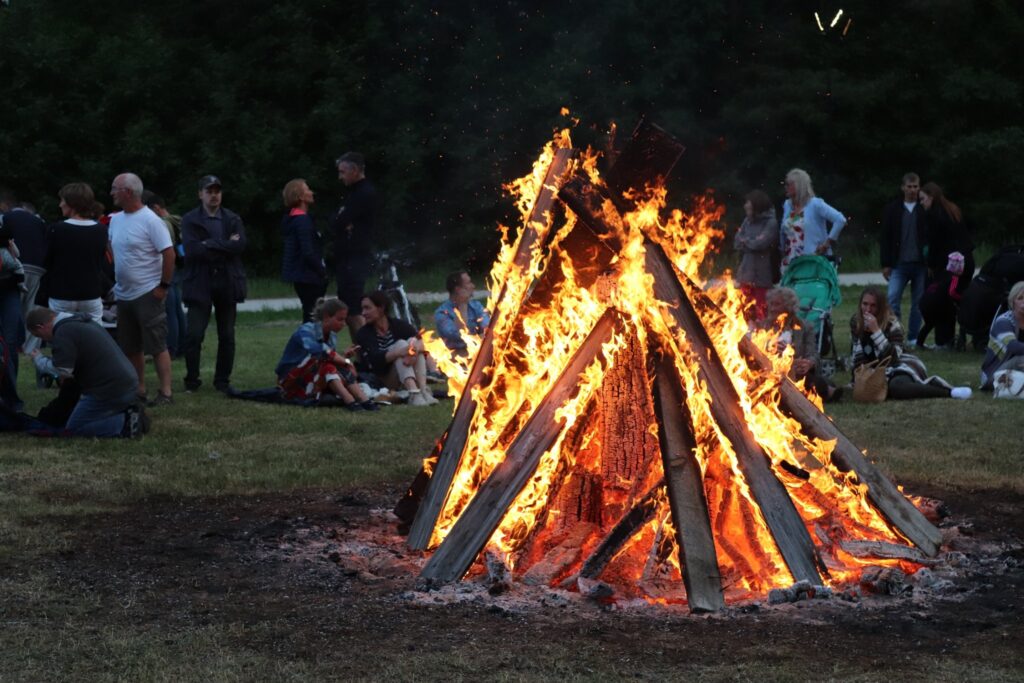
Along with Christmas, jaaniõhtu (Midsummer Eve, 23 June) and jaanipäev (Midsummer Day, or St John’s Day, 24 June) are the most important holidays in the Estonian calendar. Across the country, people gather with family or at larger public events to celebrate with singing, dancing and bonfires – as Estonians have done for centuries.*
Estonia’s short summers and bright nights hold a special significance for Estonians. Jaaniõhtu and jaanipäev come just after the longest day of the year, around 20–21 June, the summer solstice, when night almost seems to disappear.
Following pagan rituals
Jaanipäev was celebrated in Estonia long before the arrival of Christianity, although the crusaders gave the holiday its present name. Christianity, however, did not erase the older pagan beliefs and fertility rituals associated with Midsummer.
In 1578, Balthasar Rüssow, one of Estonia’s most important chroniclers, wrote with evident disgust in his Livonian Chronicle about Estonians who valued the feast more than churchgoing. He complained that even those who went to church often failed to enter, spending their time instead lighting bonfires, drinking, dancing, singing and observing pagan rituals.

After the Estonian War of Independence, the celebration of jaanipäev became intertwined with Võidupüha (Victory Day), which commemorates the victory of Estonian forces over German troops on 23 June 1919. Following this battle against Estonia’s historical oppressors, jaaniõhtu and the traditional lighting of bonfires came to be associated with the ideals of independence and freedom.
Folkloric roots
Traditionally, jaanipäev marked a turning point in the agricultural year, especially the pause between the end of spring sowing and the hard work of summer haymaking. As a result, many of the rituals associated with Midsummer Eve and Midsummer Day have deep folkloric roots.
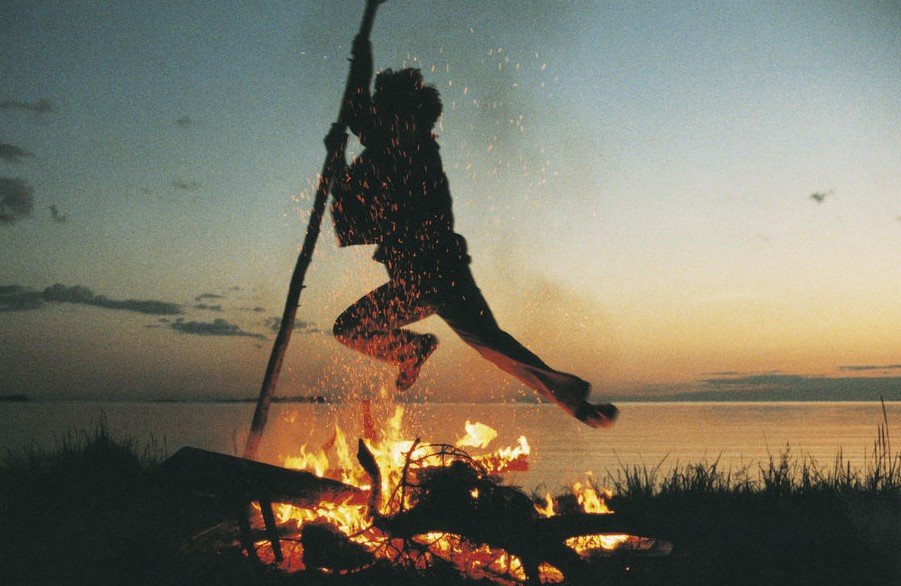
The best-known ritual is the lighting of the bonfire and jumping over it, which is believed to bring prosperity and ward off bad luck. By contrast, failing to light the fire was once thought to invite disaster, even the destruction of the house by fire. The bonfire was also believed to frighten away evil spirits and help secure a good harvest – the larger the fire, the farther away the spirits would stay.
Midsummer Eve is also associated with romance. In Estonian folklore and literature, there is a story of two lovers, Koit (Dawn) and Hämarik (Dusk), who meet only once a year and exchange the briefest of kisses on the shortest night of the year.
Earthly lovers, meanwhile, venture into the forest in search of the mythical fern flower, said to bloom only on this night. Single people may also follow a detailed set of rituals believed to reveal whom they will marry.
Free spirit
Jaaniõhtu and jaanipäev were so deeply cherished by Estonians that even during the Soviet occupation, the authorities made no serious attempt to suppress the celebrations, despite their association with the nation’s free spirit. Jaanipäev therefore continued to remind Estonians of their lost independence, even as the Soviet regime sought to erase such ideas from public life.

Before the Soviet occupation, it was customary for the Estonian president to light a ceremonial fire on the morning of Victory Day. The tradition was restored after Estonia regained its independence in 1991. From this flame, the fire of independence is carried across the country to light Midsummer bonfires. In 1992, jaanipäev became an official national holiday.
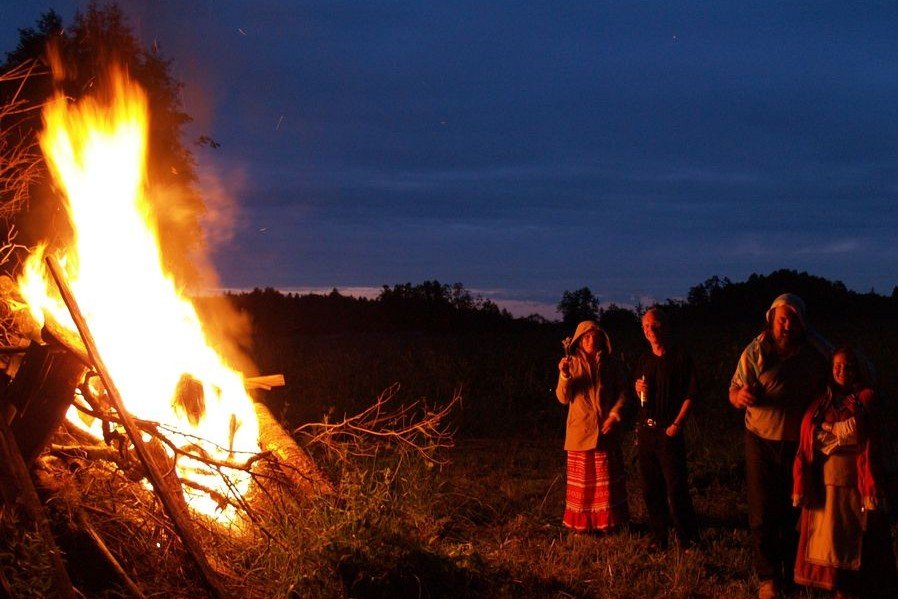
On these days, people across Estonia gather with their families or at larger public events to celebrate with singing, dancing, food, drink and bonfires, just as Estonians have done for centuries. Thousands of Estonian expatriates, however, usually mark the occasion a week or two earlier – while those who can travel to Estonia for the real thing.
Alternative perspective
Lennart Meri, the legendary writer and film director who served as Estonia’s president from 1992 to 2001, offered another perspective on jaanipäev in his book Hõbevalge (Silverwhite, 1976).
Meri suggests that jaanipäev traditions re-enact the fall of the Kaali meteorite in Saaremaa. The meteorite’s impact is also said to have inspired Nordic and Baltic mythological stories about the sun falling to earth. According to this interpretation, today’s bonfires and celebrations symbolise Estonia’s connection with its ancient past.
Read also: Why do Estonians celebrate midsummer on 23 June? and Fire, flower crowns and fern blossoms: Midsummer night in Estonia explained
* This article was originally published on 23 June 2013 and lightly edited on 22 June 2026.


Let’s hope it’s a dry one.
I have seen a couple of Jaanipeavs in Estonia, and I have to say its a amazing day and celebration! Few festival days anywhere in Europa can compare. Henrik (Norway)
https://www.youtube.com/watch?v=PNipSDt0BXw
https://www.youtube.com/watch?v=pOxO82CmP0I