
This June, Tallinn becomes the heart of the Baltic LGBTQ+ community as it hosts the Baltic Pride 2026; returning to the Estonian capital under the theme “Silence won’t defeat hate”, the festival is both a celebration of visibility and a reminder that silence can never be mistaken for safety.
For queer people, it is a reminder that hiding has never truly protected us and that visibility – or audibility – is a collective act of resistance. For heterosexual and cisgender allies, it is a call to action: do not stay silent. The safety and rights of LGBTQ+ people are strengthened when your voices join ours. Silence in the face of discrimination allows hatred to grow and harm to be erased.
A growing Baltic Pride in Tallinn
This is the fifth time the Baltic Pride has been hosted in Tallinn since its launch in 2009. The scale of the 2026 programme shows how much the Baltic queer community has grown. This year’s festival features more events, from more diverse organisers, than ever before.
The programme includes the traditional opening gala, the main march and the official Pride afterparty, as well as queer history tours and several art exhibitions. It also makes space for deeper conversations, with mental health workshops and events exploring sexuality, including kink-related gatherings.

I am among the contributors to this year’s programme, having organised and taken part in several events: a queer play party on 30 May; a pride and shame workshop, co-facilitated with Vikerteraapia think tank, on 1 June; a community panel discussion on kink and safety on 3 June; and a queer cuddle party on 14 June.
The danger of staying silent
The organisers of the Baltic Pride have stressed that hate is not limited to extreme acts of violence or abuse. It also lives in the normalisation of smaller acts: jokes, prejudice and everyday hostility that queer people are expected to endure. They have said that “silence is not merely an individual choice, but part of a broader pattern that allows hostile attitudes to persist” – a pattern that ultimately reinforces the institutional barriers faced by LGBTQIA+ people.
According to the 2026 ILGA-Europe Rainbow Map, much work remains before queer Estonians, Latvians and Lithuanians can enjoy equal rights. The Baltic countries still face significant gaps in legal protection, access to trans healthcare and recognition for same-sex families.

That is why this is also an invitation to cisgender and heterosexual allies: step up, notice where cisheteronormative standards have been treated as normal and use your voice. Our safety should not depend solely on whether we can make ourselves heard.
Allyship is also liberation
But allyship is not simply about benevolently offering support to a marginalised group. Cisheteronormativity – the idea that being straight and cisgender is normal and right, while being gay or trans is somehow wrong or deviant – harms everyone.
The same rigid social norms that tell LGBTQIA+ people we are “too loud” also dictate how anyone is allowed to express their gender, form relationships and live in their body. After all, if being straight and cisgender were the only natural human defaults, society would not need constant, aggressive policing of who gets to wear what or who is allowed to marry the person they love.

When allies speak up alongside the queer community, they are not merely making a kind gesture or performing an act of charity. They are also fighting for their own liberation from restrictive expectations around gender and sexuality. A world in which LGBTQIA+ people can live authentically is a world in which everyone is freer to embody and express their true selves without shame.
The politics of shame
From a politicised somatics perspective, one of the greatest barriers to our wellbeing is systemically sanctioned shame. Shame is not just a passing emotion; it is an embodied story born from trauma and oppression. In somatics, trauma can be understood as a condition in which we are forced to sacrifice one core human need for the sake of another. And what is oppression, if not trauma inflicted on the collective body?
For queer and trans people, safety, belonging and dignity are rarely allowed to coexist. To stay safe, or to belong in our families and workplaces, we are often forced to sacrifice our dignity by quieting our true voices. Shame whispers relentlessly, “I am bad. I am wrong.” Often, we cannot even name why. Shame makes us want to hide, shrink and avoid being heard.
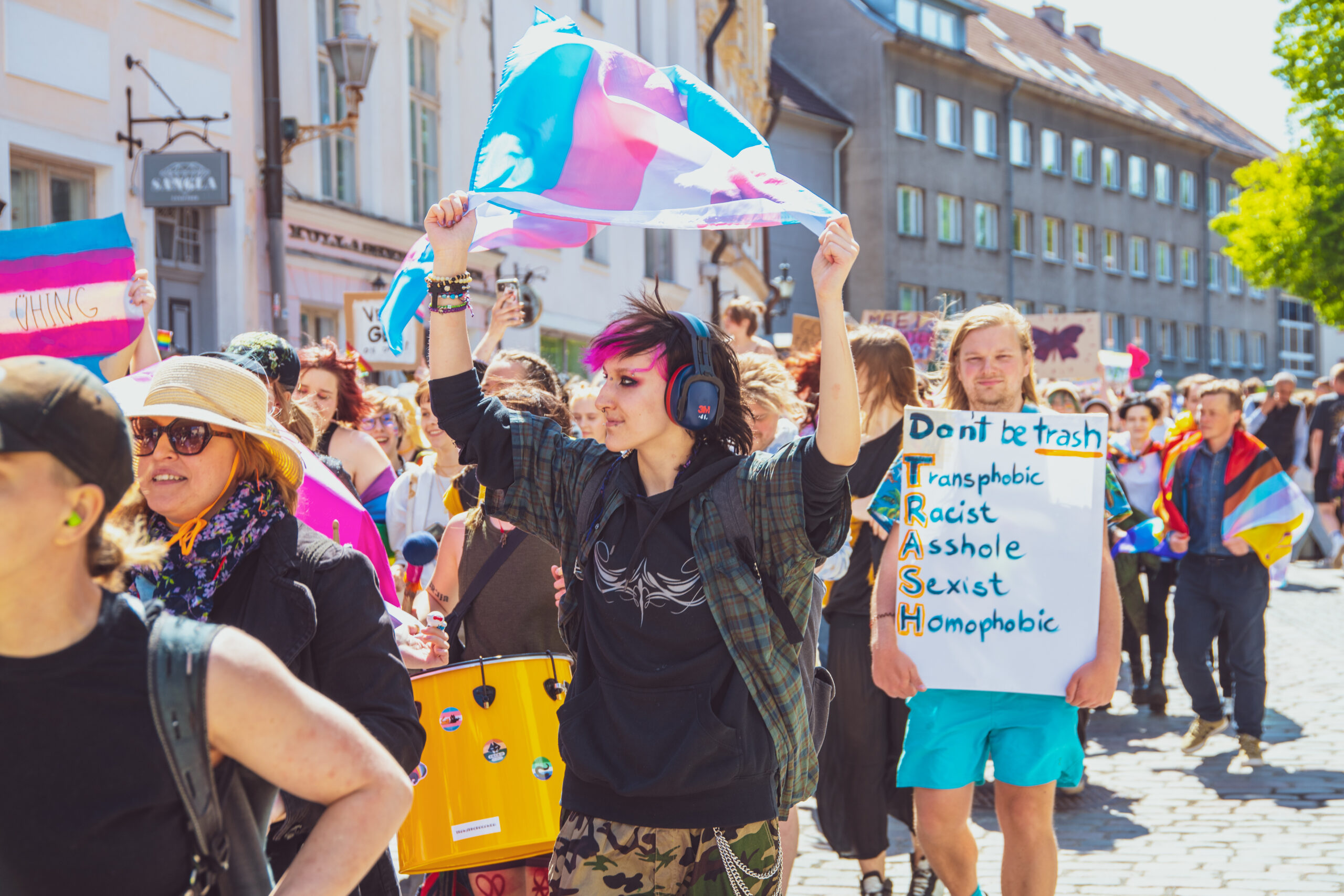
Healing from shame is a long, slow movement from “I am bad” to “I am inherently valuable.”
Pride is more than celebration
This is precisely why the Baltic Pride remains relevant. The march and its surrounding events are not only a joyful and colourful celebration, although they are certainly that too. By embodying our authentic selves in public, we reclaim our collective dignity and inherent worth.
Instead of hiding in shame, we choose to be visible and audible. We choose dignity, safety and belonging. Pride, then, is not only a celebration. It is a collective form of healing – a way of weaving together the core human needs that shame and oppression have tried to pull apart.
The opinions in this article are those of the author.