
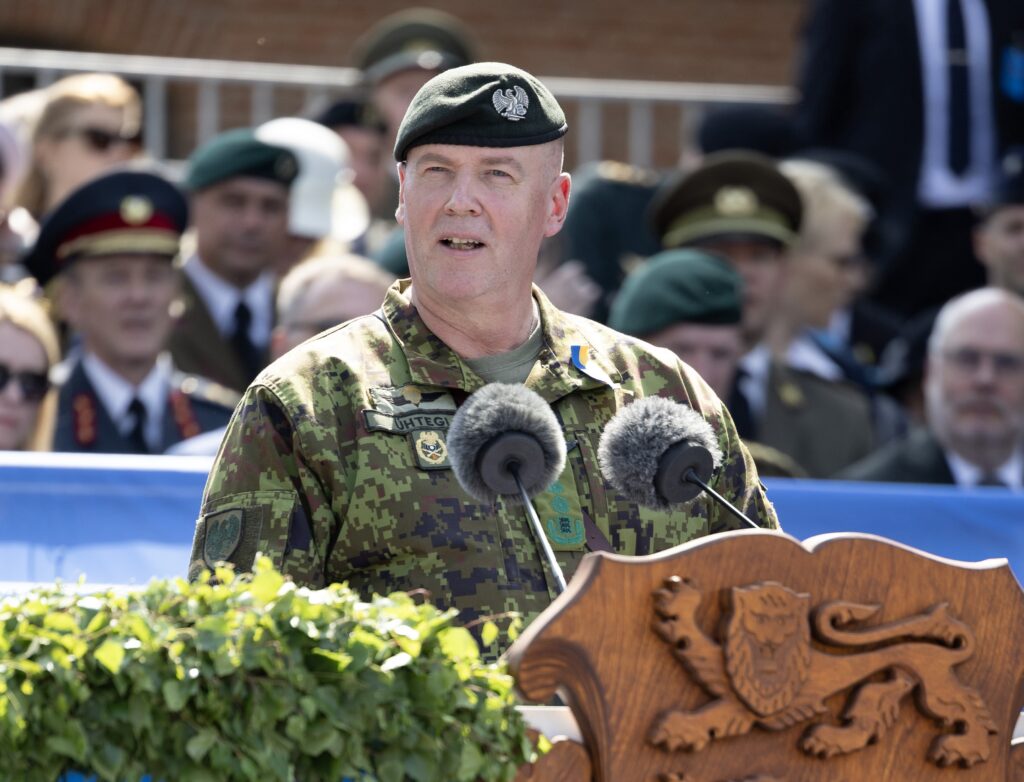
Riho Ühtegi, a retired major general, says he is ready to run for president, adding a defence-focused name to a contest in which the chancellor of justice, Ülle Madise, has so far been the leading consensus candidate.
Ühtegi, the former commander of the Estonian Defence League, has said he is ready to run for president of Estonia after five public figures proposed him as a possible candidate.
Ühtegi, a retired major general, told the Estonian media outlet Delfi that he would be prepared to stand. “Yes, of course I would,” he said. “These are difficult times for Estonia, and every citizen of the republic should be prepared to help improve the situation in some way.”
His name was put forward by composer Sven Grünberg, entrepreneur Hugo Osula, film producer Kris Taska, actor and director Hendrik Toompere, and entrepreneur and economic expert Raivo Vare.
In their statement, the five said Estonia needed a president who was not “the lowest common denominator of party agreements”, but an experienced leader able to restore trust, speak directly and understand national defence broadly.

The possible candidacy comes after president Alar Karis announced on 23 June, Estonia’s Victory Day, that he would not seek a second term.
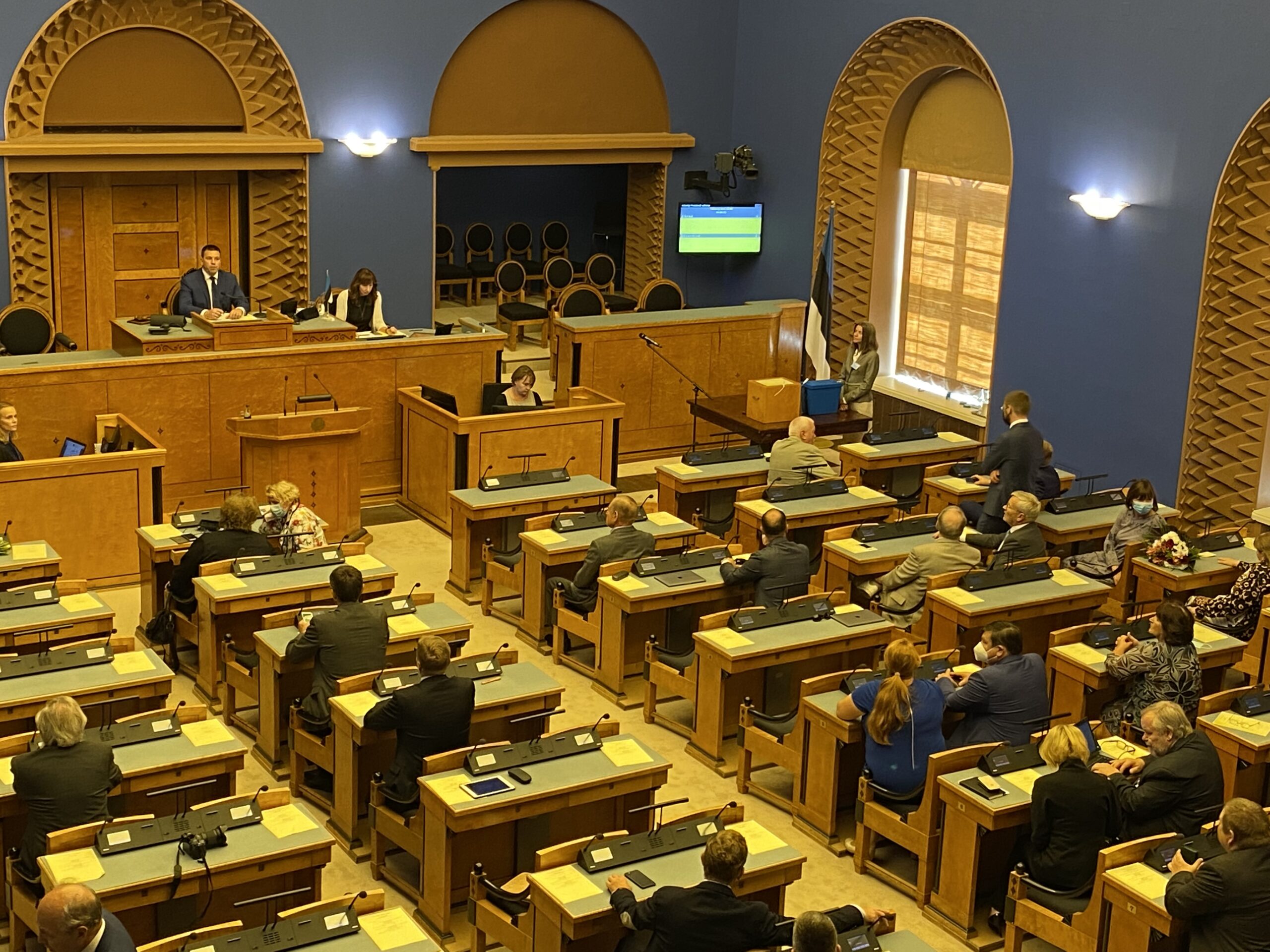
Estonia’s presidential election is due to begin in the country’s parliament on 2 September. If no candidate secures the required majority in the first round, further parliamentary rounds are expected on 3 September.
A candidate needs the support of 68 of the 101 MPs to be elected in parliament. If the parliament fails to elect a president, the decision moves to an electoral college made up of MPs and representatives of local government councils.
A defence figure
Ühtegi was born on 15 February 1964. He graduated from Elva Secondary School in 1982 and, after compulsory service in the Soviet army, worked from 1984 to 1990 as an electromechanic at the Institute of Astrophysics and Atmospheric Physics.
In 2007, he completed a master’s degree in law at the University of Tartu.
His military career began during the restoration of Estonian independence. He helped restore the Defence League’s Tartu County district and later held several senior posts in the Estonian Defence Forces.

He has served as head of the intelligence department at the Headquarters of the Estonian Defence Forces, commander of the Military Intelligence Battalion and commander of the Estonian contingent in Afghanistan.
In 2011, Ühtegi became Estonia’s defence attaché in Georgia. From late 2012, he commanded the Estonian Defence Forces Special Operations Force.
In 2019, the government appointed him commander of the Defence League. He took over the post in July 2019 and served until December 2023.
Ühtegi was promoted to brigadier general in 2019 and major general in 2023. His decorations include the Order of the Cross of the Eagle, 4th class, awarded in 1997, and the Order of the Cross of the Eagle, 2nd class, awarded in 2024.
A conservative candidate
Ühtegi told Delfi that he had spoken about a possible candidacy with people from different political parties, but not with members of the Estonian parliament.
He said the conversations had not amounted to formal negotiations about becoming president. The decision on who becomes a candidate, he noted, is made by the parliament’s Council of Elders.
He also said ordinary people had approached him in the street and at meetings to ask whether he would consider becoming the next president.
Ühtegi told the Estonian National Broadcasting, ERR, he considered himself “rather a conservative”.
He said he had known Urmas Reinsalu, the leader of Isamaa, Estonia’s conservative opposition party and a possible future prime minister, for years, but stressed that the situation was still new and that no formal decisions had been made on any possible backing from the party.
He placed strong emphasis on national unity. Referring to Karis’s final message as president, Ühtegi said Estonia needed to look inward and repair divisions in society.
“There is now a rift in society,” he said. “We have to speak to people, bring people back together and find the national unity that is today somewhat, or even quite seriously, limping.”

Ühtegi also addressed the role of foreign policy. Estonia’s president has limited executive power, but the office carries an important representative role abroad, particularly because Estonia is a NATO and EU member state bordering Russia.
Former president Toomas Hendrik Ilves has argued that, in dangerous times, Estonia’s president must focus strongly on foreign relations. Ühtegi disagreed with giving that priority over domestic unity.
He said the president “must face the people” and that foreign policy in Estonia is led primarily by the government.
“The president’s primary duty is still oversight of constitutionality and ensuring the unity of the people,” he said.
Estonia has had five presidents since 1992
Since Estonia restored its presidency under the 1992 constitution, the office has been held by Lennart Meri from 1992 to 2001, Arnold Rüütel from 2001 to 2006, Toomas Hendrik Ilves from 2006 to 2016, Kersti Kaljulaid from 2016 to 2021 and Alar Karis since 2021.
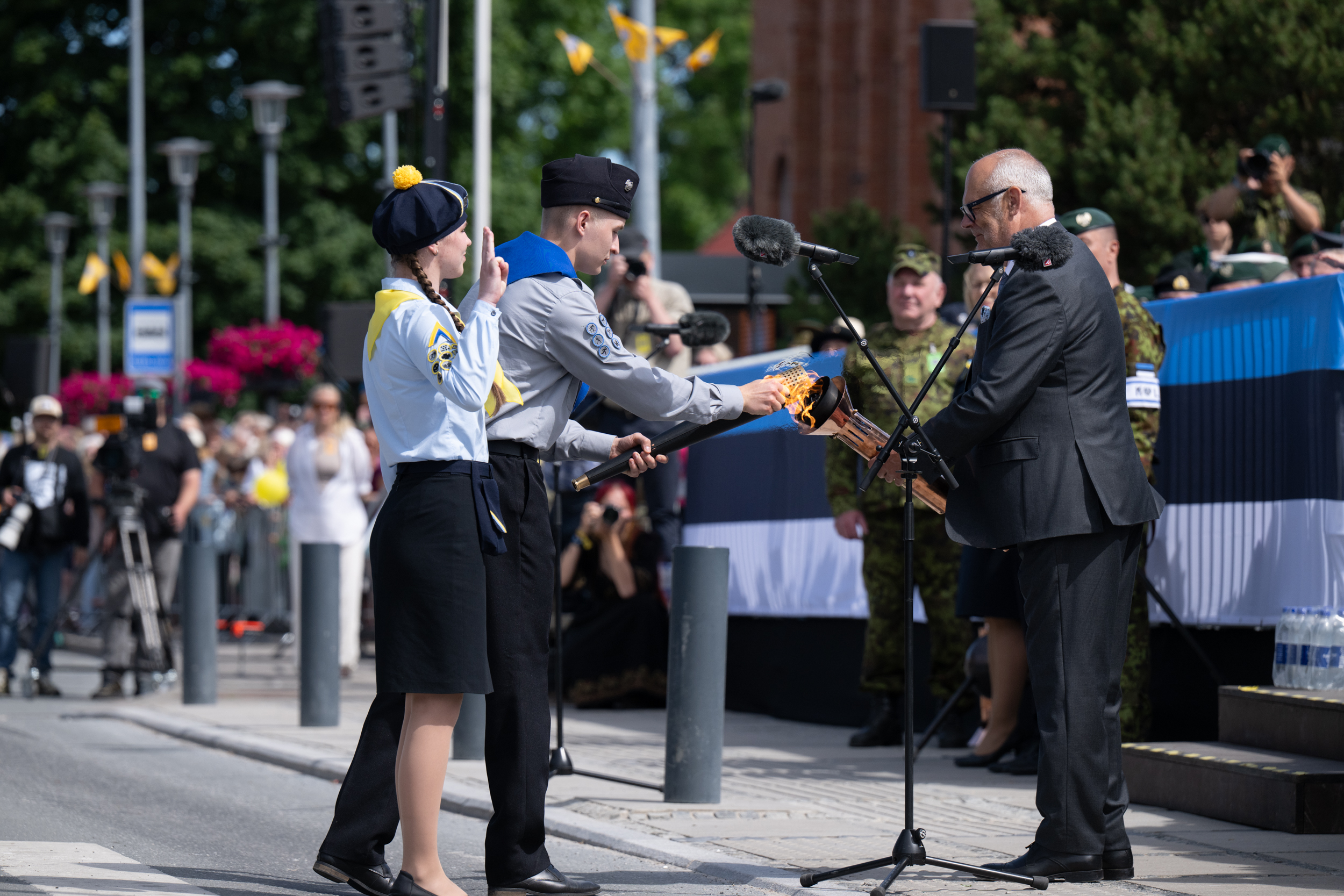
The 2026 election is likely to test two different arguments about the presidency. Madise’s supporters are presenting her as a constitutional and institutional candidate capable of winning broad parliamentary support. Ühtegi’s supporters are presenting him as a defence-minded candidate suited to a period of security pressure and political division.
For now, neither Madise nor Ühtegi has been formally registered as a candidate. Ühtegi has said he is prepared to run. Madise has not publicly said whether she would accept a nomination.


Very good article.