A consortium of Estonian defence companies led by technology firm Nortal sought to secure a €700 million government contract to build a nationwide drone defence system without a competitive tender, according to an investigation by the business newspaper Äripäev; the proposal was rejected by the defence ministry amid concerns over procurement rules and political pressure.
A plan to protect Estonia from hostile drones has exposed uncomfortable questions about the relationship between political power, private business and the rapidly expanding defence industry in a country on NATO’s eastern frontier.
The consortium, led by the Estonian software and consultancy company Nortal, proposed a seven-year agreement worth approximately €700 million to develop an integrated anti-drone shield. Rather than competing for the contract through conventional procurement procedures, the companies sought a government exemption that would have allowed the deal to proceed directly.
According to an investigation published by Äripäev on 4 November, lobbying took place at senior levels of government, while a draft press release and a detailed communications strategy had already been prepared.
The defence ministry ultimately refused to approve the arrangement, concluding that the proposed exemption would conflict with public procurement legislation.
The revelations come as Estonia, which shares a 294-kilometre (183-mile) border with Russia, is investing heavily in military capabilities and seeking to develop its domestic defence industry in response to the war in Ukraine.
Political connections raise questions
The controversy centres partly on the connections between Nortal’s owner, Priit Alamäe, and Estonia’s foreign minister, Margus Tsahkna.
The two are longstanding friends. Alamäe was also a founder and major financial backer of Estonia 200, the political party led by Tsahkna, before leaving it in autumn 2024.
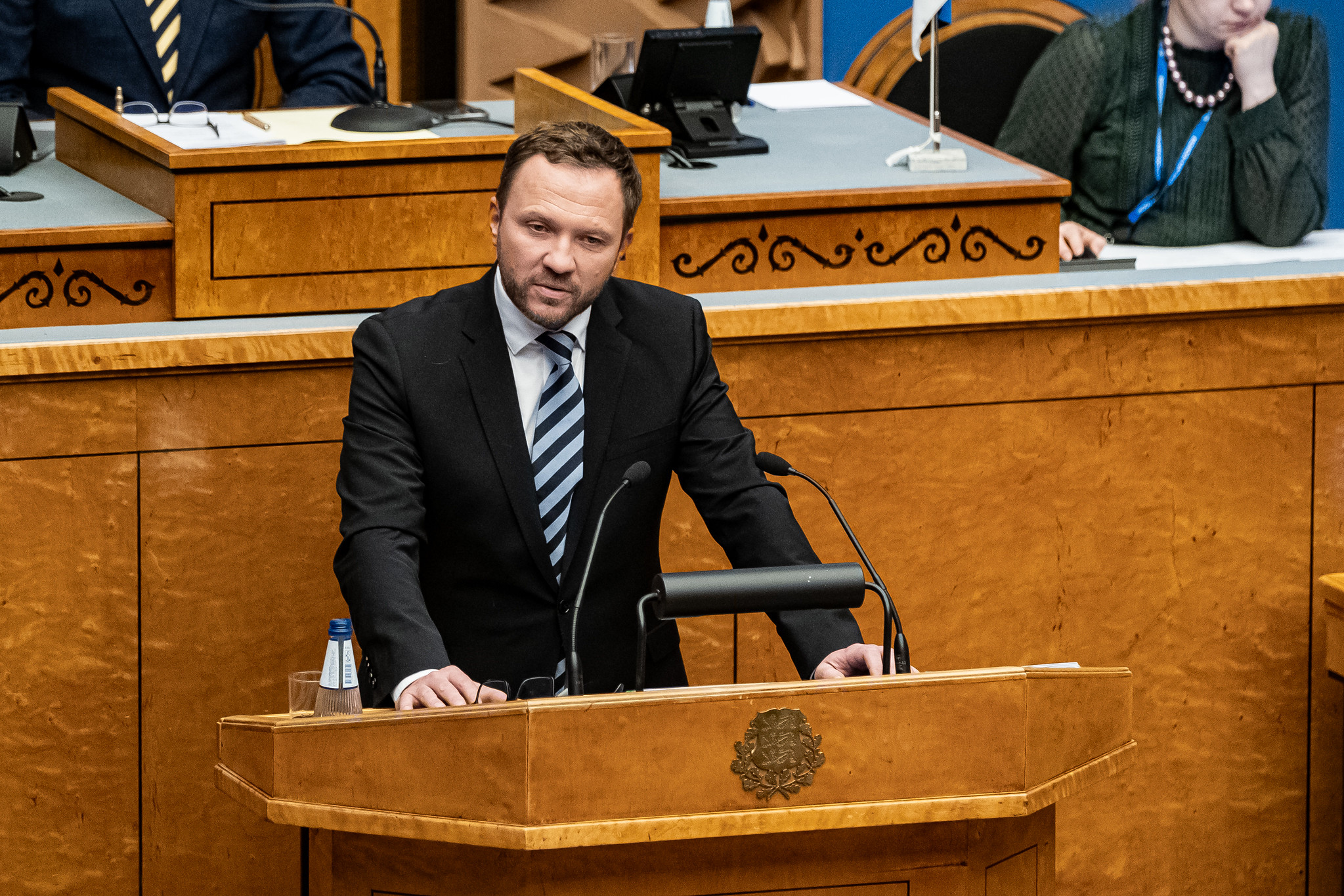
According to Äripäev, Tsahkna strongly criticised the defence ministry at a government security cabinet meeting in January, arguing that Estonia lacked a comprehensive strategy for countering drones.
Less than two weeks later, the ministry received the consortium’s proposal.
The newspaper reported that Alamäe subsequently pressed officials to make swift decisions, emphasising the urgency of establishing a national drone defence system.
Tsahkna denied discussing the consortium’s proposal with its members and rejected suggestions of a connection between his criticism of the defence ministry and the companies’ commercial interests.
“This is political spin!” he told Äripäev when questioned about the matter.
The foreign minister also objected to the disclosure of discussions from the confidential security cabinet, suggesting that the police and prosecutors should investigate the source of the information.
He acknowledged having friends and acquaintances among the consortium’s members but maintained that he had not discussed the initiative with them.
Tsahkna defended his broader position that Estonia should retain as much defence spending as possible within its domestic economy.
If Estonian companies could supply the necessary equipment and technology, he argued, the government should seek to support them rather than direct taxpayers’ money abroad.
A €700 million proposal
The consortium’s proposed agreement envisaged government expenditure of approximately €100 million annually over seven years.
Its members included Nortal, telecommunications company Telia Eesti, defence technology companies Defsecintel Solutions and Rantelon, and Frankenburg Technologies, which is developing missile production capabilities.
Frankenburg’s shareholders include businessman Margus Linnamäe, a former employer and business partner of Tsahkna.
Linnamäe also owns Postimees, one of Estonia’s largest newspapers.
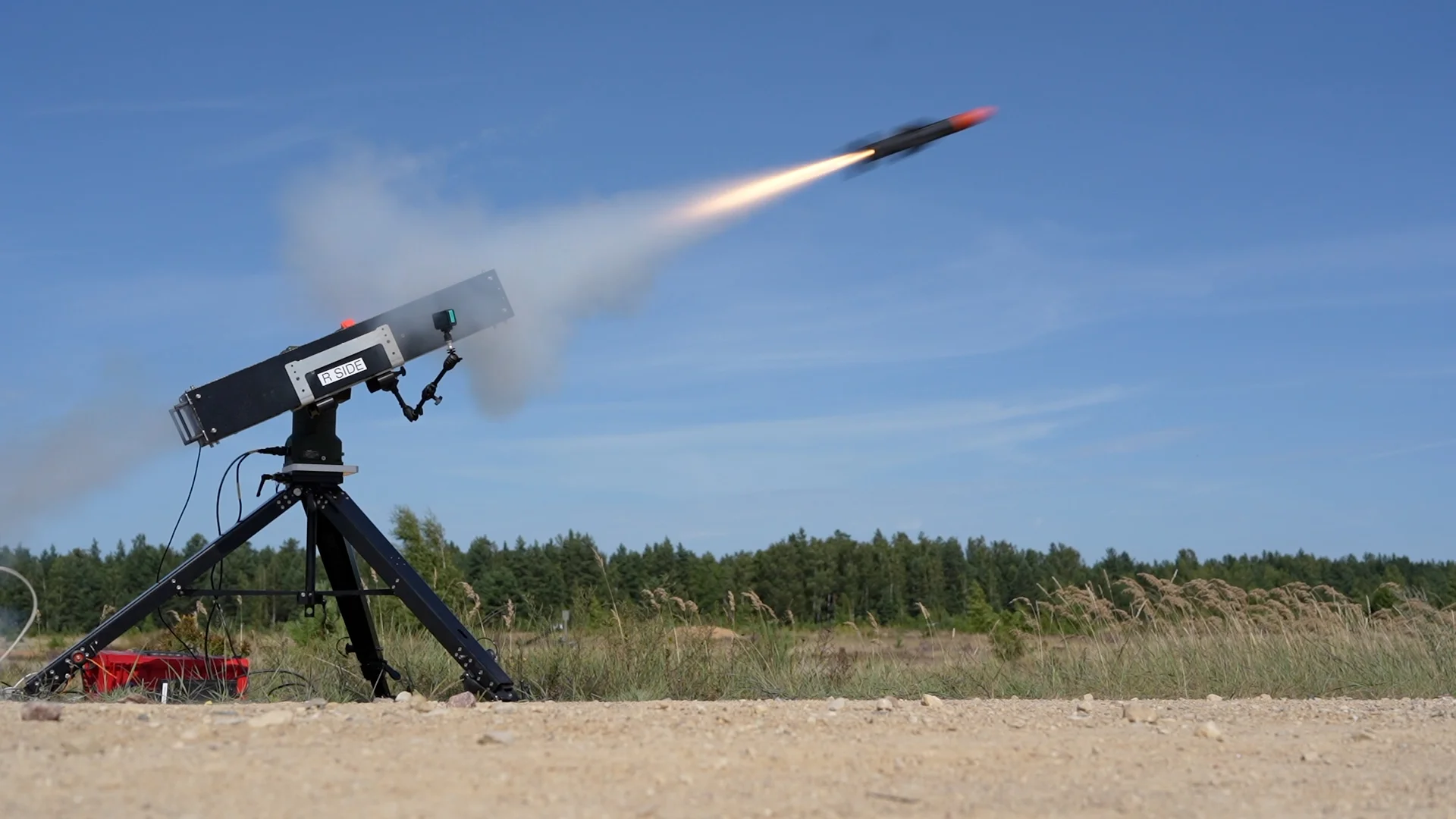
According to Äripäev, the consortium’s draft communications strategy envisaged a weekly column by the defence minister in Postimees, promoting the development of drone capabilities as a national priority.
The wider media plan proposed coordinated messaging by senior government officials and business executives, sponsored media coverage and a unified national narrative designed to build public support for the project.
A draft press release announced that Estonia would establish NATO’s first sovereign nationwide drone shield through cooperation between the government and domestic industry.
It also stated that the government had decided to adopt an exceptional procurement approach to accelerate the project.
No such agreement was ultimately concluded.
Defence ministry resisted pressure
The proposal encountered opposition from officials who questioned both its cost and the practical capabilities it would deliver.
Hanno Pevkur, Estonia’s defence minister at the time, told Äripäev that the ministry and the Estonian Defence Forces had already spent considerable time developing and testing counter-drone solutions.
He said it was difficult to establish precisely what the consortium would provide in exchange for the proposed expenditure.

Kaimo Kuusk, then the defence ministry’s secretary-general, described some of the exchanges with the companies as confrontational and said the ministry had faced pressure at the highest political level to approve the arrangement.
Despite legal arguments presented by the consortium in favour of a procurement exemption, the ministry concluded that the proposed agreement would breach the applicable rules.
The interior ministry also declined to bypass competitive procurement procedures.
Interior minister Igor Taro said he supported opportunities for Estonian companies to participate in developing national drone defences. However, the ministry’s available European funding, amounting to approximately €20 million, had to be distributed through public tenders.
The pressure intensified during the spring, when several drone incidents highlighted the vulnerability of Estonian airspace.

On 25 March, a drone arriving from the direction of Russia struck a chimney at the Auvere power station in northeastern Estonia. Days later, during another wave of Ukrainian attacks against Russia, approximately ten foreign drones were detected in Estonian airspace, with one exploding near a residential property in Tartu County.
The incidents reinforced the urgency of strengthening Estonia’s ability to detect and intercept unmanned aircraft.
The new defence minister’s previous role
The investigation also raises questions about the previous involvement of Estonia’s current defence minister, Martin Herem, with the consortium.
Herem, a former commander of the Estonian Defence Forces who became defence minister in September 2026, previously worked as an adviser to Frankenburg Technologies.
He confirmed to Äripäev that he had attended one consortium meeting and subsequently prepared a visual military threat assessment to help the companies understand the problem their proposed system would need to address.
Herem said his involvement ended there.
He maintained that he had not participated in decisions about the products, suppliers or equipment the consortium intended to offer.

The consortium’s leader, Siim Saliste, Nortal’s vice-president for defence, said he had since discussed the initiative with Herem, although he acknowledged that an immediate agreement was unlikely.
Saliste disputed the suggestion that the €700 million represented a definitive contract price, describing it as an early estimate of the cost of a complete counter-drone system if Estonia had no existing capabilities.
He argued that the principal obstacle was the absence of a clearly defined government customer, since drone defence involves several institutions with overlapping responsibilities, from the military to emergency services.
The consortium, which has reportedly expanded to 19 companies, has not abandoned the proposal.
Defence spending under scrutiny
The revelations add to scrutiny of Estonia’s defence procurement system following a separate controversy involving artillery ammunition purchases for Ukraine.
Pevkur resigned in September after criticism of the management of defence procurement, including a deal involving European Union funds and ammunition supplied by companies without an established record of manufacturing the weapons.
Herem subsequently took over the defence portfolio, promising to review how Estonia develops and acquires military capabilities.

The Nortal-led initiative presents a different but related challenge: how a small country facing a genuine security threat can accelerate defence investment while maintaining transparent competition and public accountability.
Estonia has made the development of drone technology a strategic priority, approving a roadmap intended to establish the country as a leading environment for unmanned systems by 2030.
There is also broad political support for strengthening the domestic defence industry, both to improve national security and to retain more of the economic benefits of military spending.
Yet the distinction between supporting domestic innovation and granting preferential access to public contracts remains central to the controversy.
For Estonia, the question is no longer simply how quickly it can build a drone shield. It is also how to ensure that the billions being committed to national defence are spent transparently, competitively and in the public interest.